

Can a well-designed website be the key to unlocking your business’s digital growth potential?
We believe that effective development is crucial for businesses seeking to thrive in today’s digital landscape. As we explore the building blocks of digital growth solutions, we’ll break down complex concepts into manageable parts, providing you with a clear understanding of how to drive growth through website development.
By demystifying the process and focusing on actionable strategies, we aim to empower businesses to overcome common challenges and achieve their digital goals.
Key Takeaways
- Understand the essential roles and processes involved in creating a website
- Learn how development drives digital growth and business success
- Discover the key components that make up modern websites and how they work together
- Gain insights into overcoming common challenges in website development
- Explore actionable strategies for implementing effective digital growth solutions
Understanding Website Development Fundamentals
Website development is a multifaceted process that involves several key components working in harmony to deliver a seamless user experience. At its core, website development can be divided into two primary areas: design and programming. The design aspect focuses on creating an intuitive and engaging user interface, while programming involves writing the code that brings the website to life.
What is Website Development?
Website development encompasses all the tasks involved in creating a website, from planning and designing to coding and testing. It involves a deep understanding of both the technical and creative aspects of building a website that meets business objectives.
The Importance of Web Development for Business Growth
In today’s digital age, a well-developed website is crucial for business growth. It serves as a digital storefront, providing customers with their first impression of a brand. Effective web development can enhance user engagement, improve conversion rates, and drive business success. For more insights on digital growth strategies, visit our guide on web application terminology.
Key Components of a Website
Every effective website consists of several critical components: structure, design, content, functionality, and technical infrastructure. These elements work together to create a cohesive online presence that delivers value to visitors and supports business goals.
- The structure includes HTML markup that organizes content hierarchically.
- Design components encompass visual elements and layout.
- Content includes text, images, and interactive elements.
- Functionality involves navigation systems and interactive features.
- Technical infrastructure includes hosting and security measures.
The Architecture of Web Development
The backbone of any digital presence is the architecture of web development, a complex interplay of various components that work in harmony to deliver a seamless user experience. This intricate structure is what enables websites to function efficiently, providing users with the information and services they need.
How Websites Work: Servers, Browsers, and Clients
At its core, the functioning of a website involves a dynamic interaction between servers, browsers, and clients. When a user requests a webpage, their browser (client) sends an HTTP request to the server hosting the site. The server processes this request, retrieves the necessary data, and sends it back to the browser, which then displays the webpage. This client-server model is fundamental to how websites operate, enabling the delivery of content and services over the internet.
Understanding HTTP and IP Addresses
HTTP (Hypertext Transfer Protocol) is the protocol that governs how data is communicated between clients and servers on the web. It facilitates the exchange of information, allowing users to access and share data. IP addresses, on the other hand, are unique identifiers assigned to devices on a network, enabling them to be located and communicated with. Understanding HTTP and IP addresses is crucial for web development, as they form the basis of online communication.
The Role of Cybersecurity in Web Development
Cybersecurity is an integral component of web development, protecting websites from malicious actors seeking to exploit vulnerabilities. As cyber threats evolve, so too must the security measures implemented to counter them. We emphasize the importance of embedding security considerations throughout the development lifecycle, rather than treating it as an afterthought. This includes implementing data encryption, secure authentication systems, and regular security audits to safeguard against threats.
| Security Measure | Description | Benefit |
|---|---|---|
| Data Encryption | Protects data from unauthorized access | Ensures confidentiality and integrity of data |
| Secure Authentication | Verifies user identities | Prevents unauthorized access to sensitive information |
| Regular Security Audits | Identifies vulnerabilities | Allows for timely mitigation of potential threats |
As
“Cybersecurity is not just a technical issue, but a business risk that needs to be managed at the highest level.”
, we understand that robust cybersecurity measures are essential for protecting not just data, but also the reputation and financial well-being of businesses.
Front-End vs. Back-End Development

In the realm of web development, understanding the distinction between front-end and back-end development is crucial for creating a seamless user experience. Web development encompasses various aspects, including the creation of user interfaces and server-side operations.
User Interface: Front-End Development
Front-end development focuses on creating the user interface and user experience (UI/UX) of a website or web application. It involves using technologies like HTML, CSS, and JavaScript to create visually appealing and interactive interfaces. Effective front-end development is critical for engaging users and ensuring a smooth interaction with the web application.
The Server Side: Back-End Development
Back-end development, on the other hand, involves server-side operations, database management, and API integration. It is responsible for the logic, database integration, and server-side operations that power the front-end. Back-end developers use programming languages like Python, Ruby, and PHP to create the server-side logic.
Combining Both Worlds: Full Stack Development
Full stack development combines both front-end and back-end development, enabling developers to work on all layers of a web application. Full stack developers possess a versatile skill set, allowing them to handle projects from start to finish. Common technology stacks for full stack development include MEAN, MERN, and LAMP.
| Development Type | Focus | Technologies |
|---|---|---|
| Front-End | User Interface | HTML, CSS, JavaScript |
| Back-End | Server-Side Operations | Python, Ruby, PHP |
| Full Stack | Both Front-End & Back-End | MEAN, MERN, LAMP |
Essential Web Dev Basics: Programming Languages
Programming languages form the backbone of web development, enabling developers to create dynamic and interactive web experiences. Understanding the fundamentals of these languages is crucial for building robust, scalable, and efficient web applications.
HTML: Building the Structure
HTML (Hypertext Markup Language) is the standard markup language used to create web pages. It provides the structure of the content on the web, defining the different elements such as headings, paragraphs, images, links, forms, tables, lists, and more. HTML is the foundation upon which other technologies like CSS and JavaScript are built.
CSS: Styling Your Website
Cascading Style Sheets (CSS) is a styling language used to control the layout and appearance of web pages. It handles the visual aspects, including colors, fonts, spacing, and positioning, making websites visually appealing and user-friendly. CSS works in conjunction with HTML to create a cohesive and engaging user interface.
JavaScript: Adding Interactivity
JavaScript is a high-level, dynamic, and interpreted programming language that is primarily used for client-side scripting on the web. It enables developers to add interactivity to websites, creating dynamic effects, responding to user interactions, and updating content dynamically without requiring a full page reload.
Server-Side Languages: PHP, Python, and More
Server-side languages are crucial for the back-end functionality of websites, handling tasks such as data processing, database interactions, and generating dynamic content. Popular server-side languages include PHP, known for its widespread use in content management systems like WordPress, and Python, appreciated for its readability and powerful frameworks like Django and Flask.
| Language | Description | Use Cases |
|---|---|---|
| PHP | Server-side scripting language | Content management systems, web applications |
| Python | General-purpose programming language | Web development, data analysis, AI |
| JavaScript (Node.js) | Client-side and server-side scripting | Front-end development, back-end development with Node.js |
Mastering Database Management for Web Applications
Mastering database management is key to unlocking the full potential of web applications. Effective database management ensures that data is handled efficiently, securely, and in a scalable manner, which is crucial for the success of any web application.
Relational Databases: MySQL, PostgreSQL
Relational databases have been the cornerstone of data storage for decades, offering a structured approach to data management. MySQL and PostgreSQL are two of the most popular relational database management systems. They utilize a tabular structure, making it easier to maintain data consistency and perform complex queries.
These databases are ideal for applications that require strict data consistency and support for complex transactions. For instance, financial applications often rely on relational databases to ensure data integrity and support for ACID (Atomicity, Consistency, Isolation, Durability) principles.
| Database | Key Features | Use Cases |
|---|---|---|
| MySQL | High performance, scalability, and reliability | Web applications, data warehousing |
| PostgreSQL | Advanced data types, robust security features | Complex web applications, GIS applications |
NoSQL Databases: MongoDB, Redis
NoSQL databases offer a flexible alternative to traditional relational databases, catering to the needs of modern web applications that handle large volumes of unstructured or semi-structured data. MongoDB and Redis are prominent examples of NoSQL databases.
MongoDB stores data in JSON-like documents, making it ideal for applications with evolving data structures. Redis, on the other hand, is an in-memory database known for its exceptional performance, making it suitable for real-time analytics and caching.
- MongoDB’s document-oriented approach allows for flexible data modeling.
- Redis excels in scenarios requiring high-speed data access, such as real-time analytics.
In conclusion, mastering database management involves understanding the strengths and weaknesses of both relational and NoSQL databases. By choosing the right database solution, developers can ensure that their web applications are scalable, performant, and capable of handling complex data requirements.
The Web Development Process: From Concept to Launch
The journey from concept to launch is intricate, involving multiple phases that are crucial for a website’s success. We navigate this complex process with precision, ensuring that every step is executed with care and attention to detail.
Planning and Strategy
The foundation of a successful web development project is laid during the planning and strategy phase. We define project scope, identify target audiences, and outline key performance indicators (KPIs). This stage is critical for establishing clear objectives and ensuring that the final product meets the client’s needs and expectations.
Wireframing and Prototyping
Wireframing and prototyping are essential steps that allow us to visualize the website’s structure and functionality. By creating low-fidelity wireframes and high-fidelity prototypes, we can test and refine the user interface and user experience. This iterative process ensures that the final product is both aesthetically pleasing and highly functional.
Development and Coding
The development phase is where the website begins to take shape. Our team of skilled developers writes clean, efficient code, bringing the design to life. We employ best practices and the latest technologies to ensure that the website is not only visually appealing but also robust and scalable.
Testing and Quality Assurance
Before a website is launched, it undergoes rigorous testing to ensure that it meets the highest standards of quality and performance. We implement comprehensive testing methodologies, including functional, cross-browser compatibility, and performance testing. Our quality assurance process involves identifying and resolving bugs, optimizing performance, and verifying that the website meets business requirements and user expectations. Key aspects of our testing include:
- Functional testing to ensure all features work as expected
- Cross-browser compatibility testing for a seamless user experience across different browsers
- Performance testing to optimize loading speed and server response times
- User acceptance testing (UAT) to validate that the website meets business requirements and user expectations
- Accessibility testing to ensure compliance with WCAG guidelines
By following this structured development process, we deliver high-quality websites that drive digital growth and meet our clients’ objectives.
Essential Tools and Frameworks for Web Developers
In the ever-evolving landscape of web development, the right tools and frameworks are crucial for success. Web developers rely on these essential resources to streamline their workflow, improve productivity, and deliver high-quality web applications.
Code Editors and IDEs
Code editors and Integrated Development Environments (IDEs) are fundamental tools for web developers. Popular choices include Visual Studio Code, Sublime Text, and IntelliJ IDEA, which offer features like syntax highlighting, code completion, and debugging capabilities. These tools enhance coding efficiency and reduce errors.
Front-End Frameworks: React, Angular, Vue
Front-end frameworks like React, Angular, and Vue.js have revolutionized the way web applications are built. They provide structured approaches to client-side development, offering components, templates, and state management. By leveraging these frameworks, developers can create complex, interactive user interfaces with ease.
Back-End Frameworks and Libraries
Back-end frameworks and libraries play a vital role in server-side development. Node.js, with its ecosystem of packages like Express.js, enables developers to build scalable server-side applications. Other notable frameworks include Django for Python, Laravel for PHP, and Spring Boot for Java. These frameworks simplify tasks such as routing, database interactions, and authentication, allowing developers to focus on application logic. By utilizing the right back-end frameworks and libraries, web developers can create robust, secure, and efficient server-side applications.
Content Management Systems: Simplifying Web Development
Web development has been significantly simplified with the advent of Content Management Systems (CMS). We recognize the importance of selecting the right CMS for effective web development and websites management.
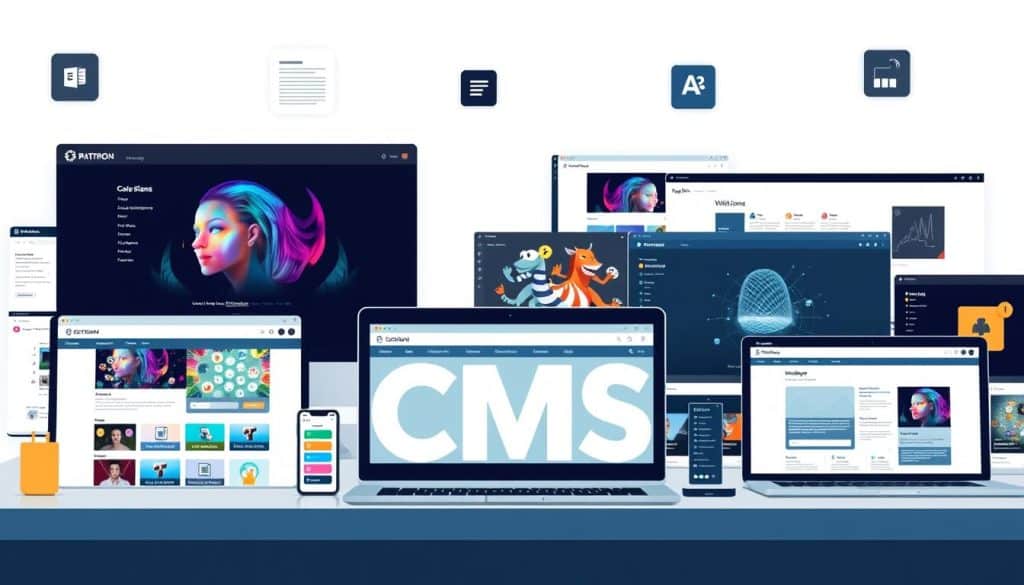
Understanding CMS Functionality
A CMS is a software application that enables users to create, edit, organize, and publish digital content on websites without requiring extensive technical knowledge. It provides a user-friendly interface for managing various aspects of a website, including text, images, and other media.
Popular CMS Platforms and Their Use Cases
Several CMS platforms are popular among developers and businesses. WordPress dominates the CMS landscape with over 40% market share, offering flexibility for websites ranging from simple blogs to complex e-commerce platforms. Other notable CMS platforms include:
- HubSpot CMS for businesses seeking integrated marketing capabilities.
- Shopify for e-commerce businesses, providing built-in payment processing and inventory management.
- Drupal for large organizations requiring enterprise-grade security and complex content relationship management.
- Headless CMS platforms like Contentful and Strapi for omnichannel publishing.
For more insights on CMS, visit Digital Silk’s CMS Guide.
Responsive Design and Mobile Optimization
With the majority of internet users accessing websites through mobile devices, the importance of responsive web design cannot be overstated. As we continue to develop and refine our digital presence, it’s crucial that our websites adapt seamlessly to various screen sizes and device capabilities.
The Importance of Mobile-First Design
Adopting a mobile-first design approach has become essential in today’s digital landscape. This strategy involves designing for smaller screens first, ensuring that the core content and functionality are preserved across all devices. By doing so, we can provide a better user experience and improve our website’s overall performance. For more insights on how effective web design can boost your ROI, visit our article on maximizing ROI with effective web design and SEO.
Techniques for Creating Responsive Websites
To create truly responsive websites, we employ several key techniques. These include using fluid grids and flexible images, as well as implementing CSS media queries to adapt layouts based on device characteristics. Additionally, we utilize CSS flexbox and grid systems to create naturally responsive layouts. Techniques such as using srcset attributes for responsive images and determining breakpoints based on content needs further enhance the user experience across different devices.
Working with Website Development Agencies
The decision to collaborate with a web development agency is a crucial one, as it can significantly impact the success of your digital endeavors. With numerous agencies available, each with their unique strengths and specializations, making an informed choice is paramount.

When to Hire a Web Development Agency
Knowing when to hire a web development agency can be the difference between a successful online presence and a lackluster one. You should consider hiring an agency when you lack the in-house expertise to develop a website that meets your business needs or when you’re looking to scale your existing online presence.
Agencies offer a range of services, from technology solutions to user experience enhancement, making them a one-stop-shop for businesses looking to grow their digital footprint.
Leading Web Development Agencies and Their Specialties
Leading web development agencies differentiate themselves through industry specialization, technological expertise, or unique development methodologies. For instance, scandiweb is renowned for its eCommerce development capabilities, having worked with major brands like The New York Times and Puma.
Other notable agencies include Corra, which specializes in creating transformative online retail experiences for luxury fashion brands, and Born Group, known for its innovative approach to eCommerce website development.
When evaluating web development agencies, it’s essential to examine their portfolio beyond visual appeal, looking at technical implementation, performance metrics, and client testimonials. This thorough analysis will help you identify an agency that can deliver a website that not only looks great but also drives business results.
Conclusion: Building Your Digital Growth Strategy
Effective web development is the foundation upon which successful digital growth strategies are built. We emphasize that a well-developed website is crucial for business success in today’s digital landscape.
To achieve success, businesses must view their website as an evolving asset that requires continuous optimization. This involves integrating web development with broader business objectives, ensuring technical decisions support revenue generation and customer acquisition. By adopting a data-driven approach to web development, businesses can refine their online presence based on user behavior and conversion metrics.
Key elements include scalable web architecture, clear key performance indicators, and ongoing attention to emerging technologies. By focusing on these aspects, businesses can maintain digital growth momentum and achieve long-term online presence success.
FAQ
What is the difference between front-end and back-end development?
Front-end development focuses on creating the user interface and user experience of a website, using programming languages like HTML, CSS, and JavaScript. Back-end development, on the other hand, involves server-side development, working with databases, and ensuring the overall functionality of the website.
How do I choose the right programming languages for my web development project?
The choice of programming languages depends on the specific needs of your project. For instance, if you’re building a simple website, HTML, CSS, and JavaScript might be sufficient. However, if you’re developing a complex application, you may need to consider server-side languages like PHP, Python, or Ruby.
What is the role of database management in web development?
Database management is crucial in web development as it enables the storage, retrieval, and manipulation of data. A well-designed database ensures that your website or application can handle large amounts of data efficiently and securely.
What is responsive design, and why is it important?
Responsive design is an approach to web development that ensures a website’s layout and visual elements adapt to different screen sizes and devices. This is crucial in today’s mobile-first world, as it provides a seamless user experience across various devices.
How do I ensure the security of my website or application?
Ensuring the security of your website or application involves implementing robust cybersecurity measures, such as encryption, secure protocols, and regular updates. It’s also essential to follow best practices for secure coding and to stay informed about potential vulnerabilities.
What is full stack development, and what skills are required?
Full stack development involves working on both the front-end and back-end of a website or application. To become a full stack developer, you’ll need to possess a range of skills, including proficiency in programming languages like HTML, CSS, JavaScript, and server-side languages, as well as knowledge of database management and cybersecurity.
How do I optimize my website for search engines?
Optimizing your website for search engines involves a range of techniques, including keyword research, on-page optimization, and link building. It’s also essential to ensure your website is mobile-friendly, has fast loading speeds, and provides high-quality, relevant content.
What is a content management system, and how does it simplify web development?
A content management system (CMS) is a software application that enables users to create, edit, and manage content on a website without requiring extensive technical knowledge. A CMS simplifies web development by providing a user-friendly interface for managing content, as well as a range of customizable templates and plugins.