

In today’s digital landscape, a well-designed website is crucial for businesses aiming to thrive online. With millions of websites competing for attention, search engine optimization becomes a vital component of digital success.
We understand that creating a website that balances user experience and search engine visibility is key. Our approach focuses on developing SEO-friendly solutions that satisfy both search algorithms and human visitors, driving measurable business growth.
By combining technical SEO elements with creative content and intuitive navigation, we craft websites that not only rank well in search results but also engage and convert visitors into customers.
Key Takeaways
- Balancing user experience and search engine visibility is crucial for digital success.
- Our SEO website design approach focuses on satisfying both search algorithms and human visitors.
- We create websites that rank well in search results and provide intuitive navigation and compelling content.
- Technical SEO elements are implemented while maintaining creative design principles.
- Our comprehensive approach ensures your website drives measurable business growth.
Understanding SEO Website Design
To succeed online, businesses need a website that is both visually appealing and optimized for search engines. A well-designed website is crucial for capturing the attention of potential customers and driving organic traffic. At its core, SEO website design combines aesthetic appeal with technical optimization to improve search engine rankings.
What Is SEO Web Design?
SEO web design refers to the process of creating websites that are both user-friendly and optimized for search engines. This involves a combination of design elements, content creation, and technical optimization to ensure that a website ranks highly in search engine results pages (SERPs). By incorporating SEO principles into the design process, businesses can improve their online visibility and attract more targeted traffic.
Why SEO-Friendly Website Design Matters
SEO-friendly website design is crucial because it determines how visible a business is to potential customers searching for its products or services online. Without proper SEO implementation, even the most visually stunning website will struggle to attract organic traffic. Our approach focuses on positioning your website to capture high-intent visitors who are actively searching for solutions you provide.
The benefits of SEO-friendly website design are numerous. Some key advantages include:
- Increased online visibility through improved search engine rankings
- Targeted traffic that is more likely to convert into leads or sales
- Cost-effective marketing compared to paid advertising channels
- Long-term value through sustained organic traffic
| SEO Benefits | Description | Impact |
|---|---|---|
| Increased Visibility | Improved search engine rankings | More potential customers can find your business |
| Targeted Traffic | Attracting high-intent visitors | Higher conversion rates into leads or sales |
| Cost-Effective | Sustained organic traffic | Reduced marketing costs over time |
Balancing User Experience and Search Engine Optimization
The synergy between user experience and search engine optimization is key to creating a successful online presence. As we navigate the complexities of digital marketing, it becomes evident that UX and SEO are not mutually exclusive, but rather complementary elements that together create exceptional websites.
Investing in user experience yields significant returns; every dollar spent on UX can potentially return $100, highlighting the substantial ROI of prioritizing user-centric design. Moreover, Google’s algorithm increasingly values user experience metrics such as dwell time, mobile usability, and bounce rate when determining search rankings.
The Conflict Between Creative Design and SEO
Creative design and SEO often seem at odds, as the former focuses on aesthetics and user engagement, while the latter is concerned with technical optimization for search engines. However, this perceived conflict can be mitigated by implementing SEO best practices that enhance rather than detract from user experience.
For instance, our approach ensures that technical SEO elements like site structure, page speed, and metadata are implemented in ways that improve rather than compromise the user journey. By doing so, we create websites that satisfy both human visitors and search engines.
Finding Common Ground Between UX and SEO
By recognizing that UX and SEO share common goals, we can create websites that achieve sustainable search visibility while delivering exceptional user experiences. Content quality is a prime example, as well-written, valuable content keeps users engaged while signaling relevance to search engines.
| UX Metric | SEO Benefit | Impact on User Experience |
|---|---|---|
| Dwell Time | Improves search rankings | Engaging content keeps users on the site |
| Mobile Usability | Enhances search visibility | Provides a seamless experience across devices |
| Bounce Rate | Affects search engine ranking | Relevant content reduces bounce rates |
As illustrated in the table, there’s a clear interdependence between UX metrics and SEO benefits. By focusing on these areas, we can create a website that not only ranks well in search engines but also provides a superior user experience.
Key Benefits of Best SEO Website Design
Effective SEO website design is the cornerstone of a successful digital marketing strategy. By integrating SEO principles into your website design, you can significantly enhance your online visibility and drive more conversions.
Increasing Organic Traffic
A well-optimized website can increase organic traffic by improving search engine rankings. This means more potential customers will find your site when searching for related products or services. For more insights on elevating your online presence, visit our guide on SEO mastery.
Attracting High-Intent Visitors
SEO website design helps attract high-intent visitors by ensuring your site appears in search results for relevant queries. This targeted approach means you’re more likely to convert visitors into customers.
Improving ROI on Marketing Efforts
Our SEO website design approach delivers an exceptional return on investment compared to other marketing channels. By creating a foundation for ongoing organic visibility with minimal maintenance costs, we help businesses maximize their marketing budget. Key benefits include:
- Compounding returns as your SEO-optimized website gains authority and visibility over time.
- Comprehensive training and resources to maintain and build upon the SEO foundation we establish.
- Sustainable SEO strategies that continue working long after the initial investment.
By focusing on these aspects, we ensure that your website not only attracts more visitors but also provides a strong foundation for long-term digital success.
Essential Technical SEO Elements for Your Website
Technical SEO is the backbone of a successful online presence, ensuring that your website is both visible and accessible tosearch engines. A well-structured technical SEO strategy is crucial for improving your website’s visibility, driving more organic traffic, and ultimately boosting your online success.
To achieve this, several key elements must be considered. Let’s dive into the critical components that make up a robust technical SEO foundation.
Mobile-Friendly Design
In today’s digital landscape, a mobile-friendly design is no longer a luxury, it’s a necessity. With the majority of users accessing websites through mobile devices, a responsive design ensures that your website provides a seamless user experience across various screen sizes and devices. This not only improves user engagement but also contributes to better search engine rankings, as Google prioritizes mobile-friendly websites in its search results.
Website Speed Optimization
Website speed is another critical factor that impacts both user experience and search engine rankings. A slow-loading website can lead to high bounce rates and lower engagement. We optimize website speed by compressing images, leveraging browser caching, and minifying CSS and JavaScript files, ensuring that your website loads quickly and efficiently.
Proper Sitemap Implementation
A sitemap is a file that lists the URLs for a website, making it easier for search engines like Google to discover and crawl your web pages. We implement comprehensive XML sitemaps that serve as roadmaps for search engines to discover and index all valuable content on your website. This includes:
- Ensuring that even deep pages or those with few internal links are properly discovered and crawled by search engines.
- Structuring sitemaps to prioritize your most important content while including all relevant pages, images, videos, and other media assets.
- Regularly updating sitemaps and submitting them to search engines to ensure new content is discovered quickly.
- Implementing both HTML and XML sitemaps to improve user navigation and facilitate more efficient search engine crawling.
By focusing on these technical SEO elements, you can significantly improve your website’s visibility, drive more organic traffic, and enhance your overall online presence. For more insights on optimizing your website, visit https://oldy2.cres.vip/.
Creating an SEO-Friendly Website Structure
The backbone of any successful website is its structure, which must be both intuitive and SEO-friendly. A well-designed website structure not only enhances user experience but also improves search engine crawlability and indexing.
We understand that a logical hierarchy is crucial for organizing content effectively. This involves categorizing content into clear sections and subsections, making it easier for both users and search engines to navigate.
Organizing Content with Logical Hierarchy
Organizing content with a logical hierarchy is essential for a user-friendly and SEO-optimized website. This involves creating clear categories and subcategories, ensuring that related content is grouped together. By doing so, we make it easier for users to find what they’re looking for and for search engines to understand the site’s structure.
URL Structure Best Practices
A well-planned URL structure is vital for both user experience and SEO. We recommend using descriptive, concise URLs that include target keywords. This not only helps search engines understand the content of the page but also makes it easier for users to remember and share URLs.
| URL Structure Element | Description | Example |
|---|---|---|
| Descriptive | Clearly indicates the page content | example.com/seo-friendly-url |
| Concise | Keeps URLs short and manageable | example.com/short-url |
| Keyword Inclusion | Includes relevant keywords for SEO | example.com/seo-optimization |
Navigation Design for Users and Search Engines
Effective navigation is critical for both user satisfaction and search engine optimization. We design navigation systems that are intuitive for users while also providing clear pathways for search engine crawlers to important content. This includes strategic internal linking and breadcrumb navigation to reinforce site hierarchy.
By implementing these strategies, we can create a website structure that not only enhances user experience but also improves search engine rankings.
Best SEO Website Design Practices for Content
Crafting content that resonates with both users and search engines is crucial for a successful SEO website design. At the heart of any effective SEO strategy is high-quality, engaging content that not only attracts but also retains visitors.
To achieve this, we implement sophisticated keyword strategies that balance search optimization with natural, engaging content. Our approach incorporates primary and secondary keywords in strategic locations without compromising readability or creating awkward phrasing.
Creating Compelling and Useful Content
Creating compelling and useful content is the foundation of any successful SEO strategy. We focus on developing content that addresses the needs and concerns of our target audience, providing value and insights that keep users engaged.
Optimizing Headings and Text Structure
Optimizing headings and text structure is crucial for both user experience and search engine crawling. We use clear, descriptive headings and subheadings to organize content, making it easier for users to navigate and for search engines to understand the structure and relevance of our content.
Balancing Keywords and Readability
Balancing keywords and readability is a delicate task. We conduct comprehensive keyword research to identify relevant terms and phrases, then incorporate them naturally into our content, ensuring that it remains readable and engaging for our audience.
By focusing on these best SEO website design practices for content, we can create a website that not only ranks well in search engines but also provides a great user experience, driving digital success for our clients in Qatar and beyond.
Image and Video Optimization Techniques
By implementing effective image and video optimization techniques, you can significantly enhance your website’s search engine performance. Optimizing visual content is crucial for improving user experience and driving engagement on your site.
Best Practices for Image SEO
To optimize images for search engines, we implement several best practices. First, we use descriptive alt text for all images, ensuring that both search engines and users with visual impairments can understand the image content and context. Our approach includes creating unique, contextually relevant alt text that incorporates target keywords naturally when appropriate. For instance, if you’re optimizing an image related to “SEO website design,” your alt text could be “SEO website design best practices.”
We also optimize image filenames with descriptive, keyword-rich text separated by hyphens before uploading. This further enhances search engine understanding of the image content. For example, instead of using a generic filename like “image1.jpg,” we would use “seo-website-design-best-practices.jpg.” This practice is supported by experts in the field, who emphasize the importance of image optimization for overall SEO success.
Video Optimization for Better Rankings
Video content is becoming increasingly important for engaging users and improving search engine rankings. To optimize videos, we focus on several key factors. First, we ensure that video content is relevant to the page it’s hosted on and provides value to the user. We also optimize video titles, descriptions, and tags with relevant keywords to help search engines understand the content.
Additionally, we consider the hosting platform for videos. While YouTube is a popular choice, hosting videos directly on your website can improve user experience and increase engagement. We also use video schema markup to provide search engines with additional context about the video content, potentially enhancing its visibility in search results.
Using Alt Text and Descriptive Filenames
As mentioned earlier, using descriptive alt text and filenames is crucial for image optimization. Alt text helps search engines understand the content of an image and its relevance to the surrounding content. It also provides a description for users with visual impairments who use screen readers. When writing alt text, it’s essential to be descriptive and concise, incorporating relevant keywords where appropriate.
Descriptive filenames serve a similar purpose, providing context for search engines about the image content before it’s even uploaded to the page. By using keyword-rich filenames separated by hyphens, we can improve the image’s visibility in search engine results, particularly in image search results.
Metadata Optimization for Better Search Visibility
In the realm of SEO, metadata optimization stands out as a critical factor for better search visibility. Metadata serves as a crucial bridge between your website’s content and search engine algorithms, providing essential information that helps search engines understand and rank your pages effectively.
To maximize your website’s search engine presence, we focus on optimizing key metadata elements. This includes crafting compelling title tags, writing persuasive meta descriptions, and implementing schema markup to enhance search result features.
Crafting Effective Title Tags
Title tags are a vital component of metadata optimization. They provide a concise summary of a webpage’s content and are displayed in search engine results pages (SERPs) as the clickable headline for a given result. We ensure that title tags are descriptive, include relevant keywords, and are concise enough to display properly in search results. For more detailed guidance on optimizing metadata, you can refer to resources like https://correctdigital.com/how-optimize-metadata/.
Writing Compelling Meta Descriptions
Meta descriptions offer a brief summary of a webpage’s content and play a significant role in enticing users to click through from search engine results. We craft meta descriptions that are not only informative but also compelling, ensuring they accurately reflect the page content while encouraging click-throughs.
Using Schema Markup for Rich Results
Schema markup is a powerful tool in metadata optimization, allowing us to provide search engines with structured data about your content. By implementing appropriate schema types, such as organization, local business, product, or article markup, we can enhance the likelihood of rich results features appearing in search results. This includes features like star ratings, price information, or FAQ snippets, which can significantly improve your website’s visibility and click-through rates.
By strategically applying schema markup and ensuring proper formatting and validation according to schema.org standards, we can maximize your content’s visibility potential in evolving search landscapes.
Link Building Strategies for SEO Success
Link building remains a vital component of a successful SEO strategy, driving website visibility and credibility. Effective link building involves a combination of internal linking best practices, acquiring high-quality external links, and managing anchor text effectively.
Internal Linking Best Practices
Internal linking is crucial for helping search engines understand your site structure and content hierarchy. We implement a logical internal linking strategy that facilitates easy navigation for both users and search engines, ensuring that all relevant pages are accessible and indexed.
To optimize internal linking, we focus on creating a clear site architecture, using descriptive anchor text, and linking to relevant content that adds value to the user experience.
Building Quality External Links
Acquiring high-quality external links from authoritative sources is essential for enhancing your website’s authority and search engine rankings. We achieve this by creating linkable assets, such as informative content and resources, that attract links from other reputable sites.
For more insights on effective link building strategies, you can explore resources like Backlinko’s link building strategies, which provide valuable information on building a robust link profile.
Managing Anchor Text Effectively
Anchor text plays a significant role in link building, as it provides context to search engines about the linked content. We manage anchor text by maintaining a diverse profile that includes branded terms, naked URLs, and natural phrases, avoiding over-optimization penalties.
Our approach to anchor text management includes using nofollow attributes for sponsored content and non-endorsed external resources, ensuring a natural link pattern that supports your website’s ranking potential.
Top SEO Website Builders for Digital Success
To improve your website’s visibility, it’s essential to choose a website builder that excels in SEO. We analyze the top website builders that can help you achieve digital success.

Wix: All-in-One SEO Package
Wix offers a comprehensive SEO package that includes tools for optimizing your website. With its user-friendly interface, you can easily manage your SEO settings and improve your site’s search engine rankings.
Squarespace: SEO Support for Creatives
Squarespace is known for its sleek designs and robust SEO features. It provides creatives with the tools they need to optimize their websites without requiring extensive technical knowledge.
Shopify: SEO for Online Stores
Shopify is a popular choice for e-commerce businesses, offering a range of SEO features to help online stores improve their visibility. From customizable title tags to automated sitemap generation, Shopify has you covered.
Hostinger: AI-Powered SEO Support
Hostinger stands out for its AI-powered SEO support, making it an excellent choice for beginners and budget-conscious businesses. Its affordable plans don’t compromise on key SEO features, and it has shown exceptional performance in site speed tests.
Hostinger’s AI SEO assistant helps users create optimized title tags and meta descriptions, identify relevant keywords, and automatically handles technical SEO elements like sitemaps and performance optimization.
Measuring Your SEO Website Performance
To achieve digital success, it’s crucial to measure your website’s SEO performance effectively. This involves tracking key metrics, analyzing data from various tools, and interpreting the results to inform your digital strategy.
Essential SEO Metrics to Track
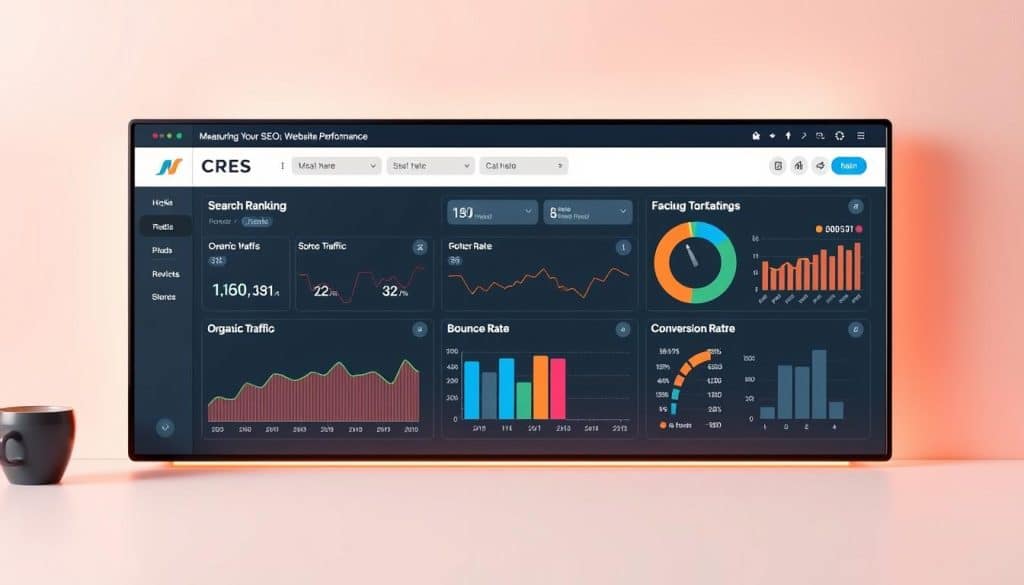
Tracking the right SEO metrics is vital for understanding your website’s performance. Key metrics include organic traffic, search engine rankings, and site engagement. By monitoring these metrics, you can identify areas that need improvement and optimize your SEO efforts accordingly. Our approach involves analyzing these metrics to provide actionable insights that drive continuous improvement in your website’s search performance and user experience.
Using Google Analytics and Search Console
Tools like Google Analytics and Search Console are indispensable for measuring SEO performance. Google Analytics provides insights into your website’s traffic, user behavior, and conversion rates, while Search Console offers data on search engine rankings, impressions, and clicks. By leveraging these tools, you can gain a comprehensive understanding of your site’s performance and make data-driven decisions. We transform complex analytics data into actionable insights that drive continuous improvement in your website’s search performance and user experience.
Interpreting Data for Continuous Improvement
Interpreting the data from your SEO metrics and tools is crucial for refining your optimization strategies. This involves identifying patterns and correlations between SEO efforts and performance outcomes. By segmenting performance data by device type, user demographics, and traffic sources, you can uncover specific optimization opportunities for different audience segments. Our data interpretation process includes competitive benchmarking that contextualizes your performance metrics against industry standards and direct competitors, ensuring you stay ahead in the digital landscape.
Common SEO Website Design Mistakes to Avoid
To maximize your website’s potential, it’s essential to steer clear of common SEO website design pitfalls. A well-designed website that incorporates sound SEO principles can significantly enhance your online visibility and drive business growth. At our core, we emphasize the importance of a holistic approach to website design, one that balances aesthetics with SEO best practices.
Several critical mistakes can undermine your website’s SEO. Let’s examine some of the most common oversights:
Neglecting Mobile Optimization
In today’s mobile-first world, a website that isn’t optimized for mobile devices is at a significant disadvantage. Mobile-friendliness is now a key ranking factor, and search engines like Google prioritize sites that provide a seamless user experience across all devices. Ensuring that your website is responsive and loads quickly on mobile is crucial.
Slow Page Load Times
Page speed is another critical factor that can impact your website’s SEO. Slow-loading pages not only frustrate users but also negatively affect your search engine rankings. Optimizing images, leveraging browser caching, and minimizing code are some strategies to improve page load times.
Poor Site Structure and Navigation
A well-organized site structure and intuitive navigation are vital for both users and search engines. A clear hierarchy helps search engines understand your site’s content and can improve crawlability. Moreover, it enhances the user experience, encouraging visitors to explore your site further.
Ignoring Technical SEO Elements
Technical SEO involves the behind-the-scenes elements that make your website function effectively. This includes having a secure website (HTTPS), using the right tags, and ensuring search engines can read your site correctly. Effective SEO strategies often involve comprehensive technical SEO audits to identify and address foundational issues before they impact your site’s performance.
- Common technical oversights include missing or improper implementation of canonical tags, robots directives, and XML sitemaps.
- Security issues like missing HTTPS implementation can trigger browser warnings, increasing bounce rates and harming user trust.
- Structured data opportunities are frequently missed, preventing sites from qualifying for enhanced search features that increase visibility.
SEO Strategies Tailored for Qatar Businesses
In Qatar’s competitive business landscape, a tailored SEO strategy is crucial for digital success. We understand that businesses operating in Qatar require a unique approach to SEO that takes into account the local market conditions, cultural nuances, and consumer behavior.
To effectively optimize your website for search engines in Qatar, it’s essential to consider local SEO considerations. This includes optimizing your website for region-specific keywords, creating content that resonates with the local audience, and ensuring that your website is accessible to search engines.
Local SEO Considerations for Qatar
When it comes to local SEO in Qatar, there are several key factors to consider. These include:
- Implementing cultural and regional optimization strategies that align your website with Qatar’s unique business environment and consumer expectations.
- Developing content calendars that leverage important regional events and holidays like Ramadan, Eid celebrations, and Qatar National Day to drive seasonal relevance.
- Conducting region-specific keyword research to capture the unique linguistic patterns and search behaviors of Qatar’s diverse population.
Cultural and Regional Optimization Tips
Cultural and regional optimization is critical to ensuring that your website resonates with the local audience in Qatar. Our approach includes:
- Sensitivity to local cultural norms and values, ensuring content respects Islamic traditions and Qatari customs.
- Incorporating multilingual elements to reach expatriate communities when appropriate for your business.
- Optimizing for regional search engines beyond Google when relevant to your target audience.
- Developing content that addresses Qatar’s specific business regulations, economic initiatives, and Vision2030 goals when relevant to your industry sector.
By incorporating these strategies into your SEO plan, you can improve your website’s visibility, drive more targeted traffic, and ultimately achieve digital success in Qatar’s competitive business landscape.
Implementing Your SEO Website Design Plan
To achieve digital success, it’s essential to have a clear plan for implementing your SEO website design strategy. This involves not just understanding the technical and creative aspects of SEO, but also effectively executing them.
Step-by-Step Implementation Guide
Our approach to implementing your SEO website design plan is methodical and thorough. We start by conducting a comprehensive audit of your current website, identifying areas for improvement in terms of SEO. This includes assessing your site’s structure, content, and technical performance. We then develop a customized plan that addresses these areas, ensuring that your website is optimized for search engines.
Key steps in our implementation guide include:
- Conducting keyword research to inform your content strategy
- Optimizing on-page elements such as meta tags, headings, and content
- Improving your website’s technical performance, including page speed and mobile responsiveness
- Creating high-quality, engaging content that resonates with your target audience
Timeline and Resource Allocation
We understand that implementing an SEO website design plan requires careful planning and resource allocation. Our team works closely with you to develop a realistic timeline that accounts for the complexity of your project and the resources available.
| Phase | Timeline | Resources Required |
|---|---|---|
| Audit and Planning | 2 weeks | SEO Specialist, Project Manager |
| On-page Optimization | 4 weeks | Web Developer, SEO Specialist |
| Content Creation | 6 weeks | Content Creator, SEO Specialist |
| Technical Optimization | 4 weeks | Web Developer, SEO Specialist |
By following this structured approach, we can ensure that your SEO website design plan is implemented effectively, setting your business up for success in the digital landscape.
Conclusion
Our journey through the world of SEO website design has highlighted the importance of balancing technical optimization with user experience. We’ve explored how best SEO website design creates a foundation for sustainable digital success by balancing technical optimization with exceptional user experiences.
A comprehensive approach to SEO addresses all critical elements, from technical infrastructure and site architecture to content quality and performance measurement. This ensures that your website serves both human visitors and search engine algorithms effectively.
Effective SEO website design requires ongoing attention and refinement as search engines evolve and user expectations change. By viewing SEO website design as a strategic marketing investment, businesses can avoid costly redesigns and enjoy sustainable competitive advantages.
Our approach to SEO website design in Qatar incorporates both global best practices and regional considerations to maximize your digital success. We commit to creating SEO website design solutions that not only improve your search visibility today but position your business for long-term digital success.
By focusing on quality content, user experience, and technical optimization, you can create a website that drives revenue growth and maintains a strong online presence.
FAQ
What is the importance of meta descriptions in search engine optimization?
Meta descriptions play a crucial role in search engine optimization as they provide a summary of a webpage’s content, influencing click-through rates and search engine rankings. We ensure that our meta descriptions are compelling, informative, and optimized for relevant keywords.
How does user experience impact search engine rankings?
User experience is a key factor in search engine rankings, as search engines like Google prioritize websites that provide a seamless and engaging experience for users. We focus on creating websites that are intuitive, fast, and mobile-friendly to improve search engine rankings.
What is the role of content in search engine optimization?
High-quality, relevant, and informative content is essential for search engine optimization, as it provides value to users and helps search engines understand the context and relevance of a webpage. We create content that is optimized for relevant keywords and provides a great user experience.
How can I improve my website’s loading speed?
Improving website loading speed can be achieved through various techniques, including optimizing images, minifying code, leveraging browser caching, and using content delivery networks. We analyze your website’s performance and implement strategies to improve loading speed and overall user experience.
What is the significance of internal linking in search engine optimization?
Internal linking helps search engines understand the structure and hierarchy of a website, improving crawlability and indexing. We use internal linking strategies to help users and search engines navigate your website and find relevant content.
How do I measure the success of my SEO efforts?
Measuring SEO success involves tracking key metrics such as organic traffic, search engine rankings, and conversion rates. We use tools like Google Analytics and Search Console to monitor your website’s performance and make data-driven decisions to improve your SEO strategy.
What are some common SEO mistakes that businesses make?
Common SEO mistakes include neglecting mobile optimization, ignoring technical SEO elements, and failing to create high-quality, relevant content. We help businesses avoid these mistakes and implement effective SEO strategies to drive digital growth.
How can I optimize my website for local search?
Optimizing for local search involves using location-specific keywords, creating content relevant to your local audience, and ensuring your website is listed in local directories and citations. We help businesses optimize their website for local search and improve their online visibility.