
In Qatar’s rapidly evolving digital landscape, a stunning user interface is no longer a luxury, but a necessity for businesses to stay ahead of the competition. With internet penetration rates soaring to 97% in 2022, and online shopping growth rates reaching 30% in the same year, it’s clear that effective UI design plays a critical role in capturing the attention of the digitally savvy Qatari audience.
At our company, we understand the importance of creating intuitive and visually appealing digital products that resonate with both local and international audiences. Our team of expert designers combines deep technical skills with cultural understanding to craft user experiences that drive business growth. By leveraging industry-standard tools and methodologies, we deliver exceptional website design and SEO services that enhance brand perception and convert visitors into customers.
Key Takeaways
- Expert UI design services tailored for Qatar’s dynamic market environment
- Intuitive and visually appealing digital products that drive business growth
- Deep technical skills combined with cultural understanding
- Industry-standard tools and methodologies for exceptional results
- Enhanced brand perception and conversion rates through effective UI design
Understanding Graphic UI Design in the Digital Age

As technology continues to evolve, the importance of graphic UI design in creating intuitive digital interfaces cannot be overstated. The digital age has transformed the way businesses interact with their customers, making it crucial for companies to have a strong online presence. Graphic UI design plays a pivotal role in this context, combining aesthetic principles with usability considerations to create engaging digital experiences.
To understand the significance of graphic UI design, we first need to define what it entails. Graphic design is an artistic discipline that uses visual content to communicate messages, encompassing both print and digital media. However, UI design is a digital-only discipline focused on creating interactive digital interfaces.
What Is Graphic UI Design?
Graphic UI design represents the intersection of visual communication and functional digital interface creation. It involves designing the visual elements of digital interfaces, such as buttons, icons, and typography, to create an intuitive user experience. Effective graphic UI design requires a deep understanding of both design principles and human-computer interaction.
The key aspects of graphic UI design include:
- Combining aesthetic appeal with functional usability
- Creating intuitive digital interfaces
- Understanding user behavior and expectations
The Evolution of UI Design
The evolution of UI design has been remarkable, transforming from basic command-line interfaces to sophisticated visual systems. This evolution reflects broader technological shifts, from desktop-centric approaches to responsive designs that work across multiple devices and platforms.
| Era | Characteristics | Impact on Users |
|---|---|---|
| Command-Line Interfaces | Text-based, required technical knowledge | Limited accessibility |
| Graphical User Interfaces (GUIs) | Visual elements, intuitive navigation | Increased user engagement |
| Modern UI Design | Responsive, user-centered, adaptive | Enhanced user experience across devices |
Understanding this evolution is crucial for businesses seeking to create effective digital solutions. By mastering modern UI design principles, companies can develop digital products that compete effectively in both local and global markets.
Graphic Design vs. UI Design: Key Differences
In the realm of digital design, understanding the divergence between graphic design and UI design is crucial for businesses aiming to create effective digital interfaces. While both disciplines are concerned with aesthetics, they differ significantly in their focus, application, and required skills.
Focus and Purpose
Graphic design primarily focuses on visual communication and aesthetics, using visual content to convey messages. In contrast, UI design prioritizes functionality, usability, and creating intuitive user experiences. This fundamental difference in focus dictates the approach and skills required for each discipline.
Medium and Application
Graphic design applies to both print and digital media, whereas UI design is exclusively focused on digital interfaces. This distinction means that graphic designers need to be versatile in handling various media, while UI designers specialize in digital interaction design. For more insights on the differences, visit this detailed comparison.
Skills and Tools Required
The skills required for graphic design and UI design overlap but have distinct differences. Graphic designers need strong visual composition skills, while UI designers must understand user behavior and interaction patterns. The tools used also reflect their different purposes: graphic designers often use Adobe Creative Suite, while UI designers employ specialized prototyping and interaction design tools.
| Design Discipline | Primary Focus | Typical Tools |
|---|---|---|
| Graphic Design | Visual Communication, Aesthetics | Adobe Creative Suite |
| UI Design | Functionality, Usability, User Experience | Prototyping and Interaction Design Tools |
Understanding these differences helps businesses make informed decisions about the type of design expertise they need for specific projects. By recognizing the unique strengths of graphic design and UI design, companies can better leverage these disciplines to achieve their digital goals.
The Impact of Quality Graphic UI Design on Qatar Businesses
The impact of quality graphic UI design on Qatar businesses is multifaceted and far-reaching. As the digital landscape continues to evolve, businesses in Qatar are recognizing the importance of investing in high-quality UI design to stay competitive.
Enhancing Brand Perception
Professional UI design significantly enhances brand perception, establishing credibility and trust with Qatari consumers who increasingly expect sophisticated digital experiences. By investing in quality graphic design, businesses can create a strong brand identity that resonates with their target audience.
Improving User Engagement
Effective UI design drives measurable improvements in user engagement metrics, including time on site, pages per session, and ultimately, conversion rates. By creating intuitive and user-friendly interfaces, businesses can improve the overall user experience, leading to increased customer satisfaction and loyalty.
Gaining Competitive Advantage
Thoughtful UI design creates competitive advantages by reducing friction in the customer journey and facilitating seamless interactions. Businesses that invest in quality UI design, such as those offered by professional SEO website design services, position themselves as forward-thinking and customer-centric, important differentiators in Qatar’s rapidly evolving digital ecosystem.
By prioritizing quality graphic UI design, Qatar businesses can drive business growth, improve customer engagement, and establish a strong online presence.
Essential Elements of Effective UI Design
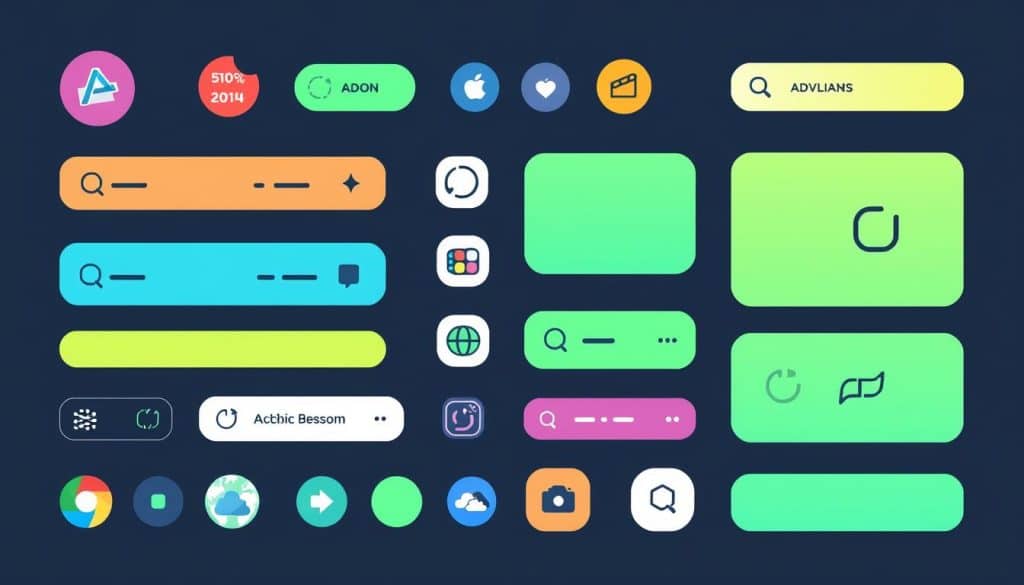
The key to creating an intuitive and user-friendly interface lies in understanding the essential elements of effective UI design. Every user interface has the same general coded components, though they may not always be visible onscreen.
These UI elements include input controls, informational components, navigational components, and containers. Input controls allow the user to communicate with the product by entering information, while informational components provide information to the user.
Visual Components
Visual components form the foundation of any interface, including carefully designed buttons, icons, typography, and color schemes that align with brand identity while ensuring accessibility. For instance, UI design principles emphasize the importance of visual design in creating an engaging user experience.
Interactive Elements and Navigation
Interactive elements determine how users engage with digital products, encompassing everything from form fields and dropdown menus to sliders and toggles that facilitate user input. Navigational components help the user find their way through the product, requiring thoughtful information architecture and intuitive wayfinding mechanisms.
Consistency and Branding
Consistency across all interface elements creates a cohesive experience that reduces cognitive load and helps users quickly learn how to interact with the product. For Qatar businesses, understanding these essential elements provides a foundation for creating digital experiences that resonate with local users while meeting international standards, as seen in effective web design and SEO integration.
10 UI Design Principles for Creating Exceptional User Experiences
Exceptional user experiences are built on a foundation of well-established UI design principles that guide the design process. We present Nielsen and Molich’s influential 10 UI design principles that have become the foundation for creating exceptional user experiences across digital platforms.
Visibility of System Status
The visibility of system status principle ensures users always know what’s happening through appropriate feedback within reasonable time, building trust and confidence in the interface. This principle is crucial for maintaining user engagement and satisfaction.
Match Between System and Real World
Matching between system and real world involves using concepts and language familiar to users rather than system-oriented terms, making interfaces intuitive and reducing learning curves. This approach facilitates a more natural interaction between the user and the digital product.
User Control and Freedom
User control and freedom provides clear “emergency exits” for when users make mistakes, including undo and redo functions that prevent frustration and encourage exploration. By giving users more control, we enhance their overall experience.
Consistency and Standards
Consistency and standards across the interface reduce cognitive load by maintaining uniform patterns, terminology, and behaviors throughout the digital product. This consistency is key to creating a seamless user experience.
Error Prevention
Error prevention focuses on eliminating conditions likely to cause mistakes through careful design and confirmation requests before potentially destructive actions. By preventing errors, we improve user satisfaction and reduce frustration.
Recognition Rather Than Recall
Recognition rather than recall minimizes memory load by making objects, actions, and options visible, helping users navigate without having to remember information from previous screens. This principle enhances usability and streamlines the user journey.
Flexibility and Efficiency of Use
Flexibility and efficiency of use accommodates both novice and expert users through features like shortcuts, personalization options, and accelerators that enhance the experience for frequent users. By catering to different user needs, we create a more inclusive and effective interface.
By applying these 10 UI design principles, designers can create user interfaces that are not only aesthetically pleasing but also highly functional and user-friendly. The result is an exceptional user experience that drives engagement and conversion.
The Graphic UI Design Process for Qatar Projects
To create effective UI designs for Qatar businesses, we follow a structured design process that combines market research, user feedback, and innovative design principles.
Research and Understanding Qatar's Market Needs
Our research phase involves deep market analysis, competitor evaluation, and user research to understand the specific needs and expectations of Qatar’s diverse population. We emphasize understanding both local Qatari preferences and international best practices to create interfaces that resonate with the target audience.
Wireframing and Prototyping
The wireframing and prototyping stage allows for early visualization and iteration of concepts before significant resources are invested in development. This stage is crucial in creating a user interface design that is both functional and aesthetically pleasing.
Testing and Implementation
Our testing methodology incorporates both usability testing with local users and technical validation to ensure interfaces perform optimally across devices common in the Qatar market. Implementation follows a structured approach with close collaboration between designers and developers to maintain design integrity throughout the development process.
Maintenance and Updates
We establish ongoing maintenance and update protocols to ensure interfaces remain current with evolving user expectations and technological capabilities. This systematic process ensures Qatar businesses receive UI designs that are not only visually appealing but strategically aligned with their business objectives and user needs.
UI Design Tools and Technologies for Modern Businesses
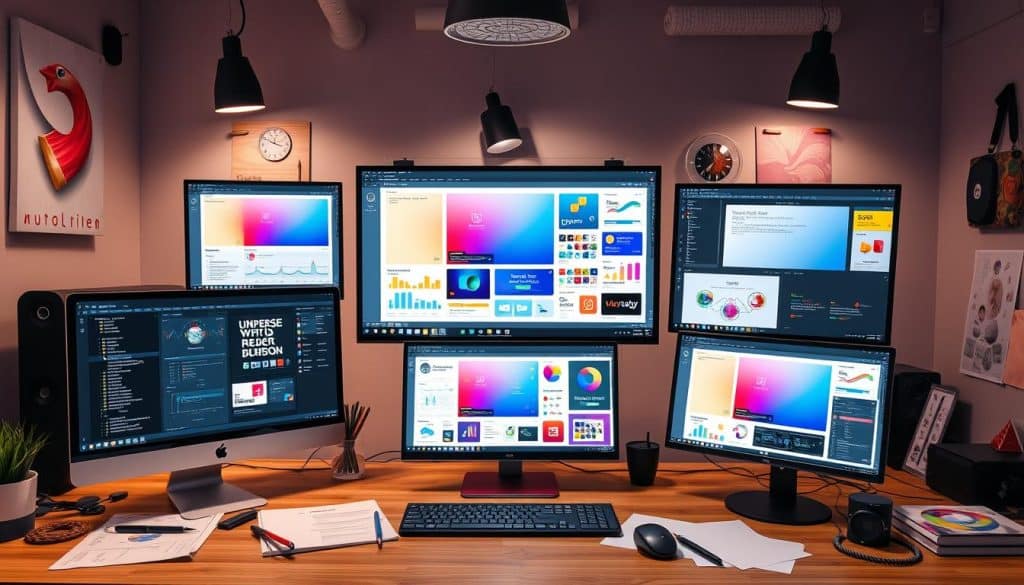
To deliver top-notch digital products, Qatar businesses must leverage the most effective UI design tools and technologies available today. We provide an overview of the essential tools and technologies that modern UI designers use to create exceptional digital experiences for Qatar businesses.
Industry-Standard Design Software
Industry-standard design software like Adobe XD, Sketch, and Figma form the foundation of professional UI design workflows, offering powerful features for creating visually compelling interfaces. These tools have evolved to support the complete design process, from initial concept development through to final asset production and developer handoff.
Prototyping and Collaboration Tools
Prototyping tools enable designers to create interactive simulations of the final product, allowing stakeholders to experience the interface before development begins. Collaboration features have become increasingly important, especially for teams working with international clients or remote team members—a common scenario for Qatar-based projects.
Testing and Analytics Tools
Testing and analytics tools provide critical insights into user behavior, helping designers make data-driven decisions that improve interface performance and user satisfaction. By leveraging these tools, Qatar businesses can ensure that their digital products meet the highest standards of usability and user experience.
For Qatar businesses, investing in the right design technology stack ensures efficient workflows and higher-quality outcomes for their digital products. By utilizing the best UI design tools and technologies, businesses can significantly enhance their digital presence and user engagement.
Cultural Considerations for UI Design in Qatar
In Qatar’s diverse digital landscape, UI design must be tailored to accommodate local cultural preferences and expectations. As businesses strive to create engaging digital experiences, understanding the cultural nuances of the Qatari market becomes increasingly important.
Arabic Language and Right-to-Left Interface Design
The Arabic language is a critical component of UI design in Qatar, necessitating specialized knowledge of right-to-left (RTL) interface design principles. This affects various aspects, from text alignment and navigation flow to information hierarchy. Effective RTL design ensures that digital interfaces are intuitive and user-friendly for Arabic-speaking users. We must consider typography choices that accommodate both Arabic and English content, often requiring careful selection of font families that maintain readability and aesthetic harmony across both languages.
As Hugo advises, “Stay up on the content accessibility guidelines.” This is particularly relevant when designing for RTL languages, where factors like text, color, contrast, and tabbing order play a crucial role in user experience. Incorporating an accessibility expert into the design team can help guide these principles and ensure compliance with evolving standards.
“UI design is constantly evolving, particularly with things like text, color, contrast, or tabbing order.”
Color and Imagery in Qatari Context
Color preferences in Qatar reflect both traditional cultural values and contemporary influences. Certain colors carry specific cultural connotations that must be considered in interface design. For instance, understanding the significance of colors like green, which is often associated with prosperity and good fortune, can help designers create more culturally resonant interfaces.
| Color | Cultural Significance in Qatar |
|---|---|
| Green | Prosperity and good fortune |
| White | Purity and innocence |
| Red | Danger or warning |
Balancing Global Standards with Local Preferences
Successful interfaces for Qatar businesses balance adherence to global design standards with thoughtful incorporation of local preferences and expectations. This involves understanding the diverse demographic makeup of Qatar, with its mix of local citizens and expatriate communities, and addressing this complexity through inclusive design approaches.
For businesses looking to enhance their digital presence in Qatar, we drive social media engagement through tailored strategies that resonate with local audiences. More information on our approach can be found in our detailed guide on driving social media engagement for Qatar.
Conclusion: Investing in Professional UI Design for Long-Term Success
As the digital age continues to evolve, investing in high-quality UI design is crucial for Qatar companies seeking long-term success. The compelling business case for professional graphic UI design services lies in their ability to drive user experience and engagement. By investing in quality UI design, Qatar businesses can enjoy a significant return on investment through increased user interaction, higher conversion rates, reduced support costs, and stronger brand loyalty.
Our team of experienced designers combines technical expertise with cultural understanding to create interfaces specifically optimized for Qatar’s unique market environment. We emphasize the importance of viewing UI design as an ongoing strategic investment in digital presence, rather than a one-time expense. For Qatar businesses competing in global markets, professional UI design serves as a critical differentiator that communicates quality, attention to detail, and customer-centricity.
We invite businesses to contact us for a consultation to discuss how our professional UI design services can help achieve their specific digital objectives and business goals. The future success of digital initiatives in Qatar’s competitive landscape will increasingly depend on the quality of user interfaces and the experiences they facilitate.
FAQ
What is the primary goal of user interface (UI) design?
The primary goal of UI design is to create an intuitive and seamless interaction between the user and the digital product, enhancing the overall user experience.
How does UI design differ from graphic design?
UI design focuses on creating interactive elements and interfaces for digital products, whereas graphic design encompasses a broader range of visual communication and aesthetics.
What are the key elements of effective UI design?
Effective UI design comprises visual components, interactive elements, and navigation, all working together to provide a cohesive and user-friendly experience.
How do UI designers ensure a product is user-friendly?
UI designers conduct user research, create wireframes and prototypes, and test the product to ensure it meets the end user’s needs and expectations, ultimately driving business success.
What role do principles play in UI design?
UI design principles, such as visibility of system status and user control, guide designers in creating interfaces that are both aesthetically pleasing and functional, resulting in a better user experience.
How do cultural considerations impact UI design in Qatar?
Cultural considerations, such as Arabic language support and local preferences, are crucial in UI design for Qatar, ensuring that digital products are tailored to the local market and resonate with the target audience.
What tools do UI designers typically use?
UI designers often utilize industry-standard design software, prototyping and collaboration tools, and testing and analytics tools to streamline their workflow and create high-quality digital products.
How does UI design contribute to a company’s success?
Well-crafted UI design can significantly enhance brand perception, improve user engagement, and drive conversion rates, ultimately contributing to a company’s revenue growth and long-term success.