

Did you know that effective visual design can increase usability by up to 47% and significantly influence user engagement and emotional response? At the heart of successful digital products lies a well-crafted user experience that not only captivates users but also drives business growth. We understand that visual design in UX is a critical factor that influences how users perceive and interact with digital platforms.
Our approach integrates aesthetic excellence with strategic functionality to create interfaces that deliver measurable results. By leveraging the principles of scale, visual hierarchy, balance, contrast, and Gestalt, we help businesses in Qatar and beyond achieve their digital growth objectives through our expertise in SEO website design solutions.
Key Takeaways
- Visual design significantly influences user engagement and emotional response.
- Effective visual design can increase usability and strengthen brand perception.
- Our approach combines aesthetic excellence with strategic functionality.
- We help businesses achieve their digital growth objectives through optimized visual design.
- Our expertise has helped numerous clients improve engagement metrics and conversion rates.
Understanding Visual Design in UX

The impact of visual design on user experience cannot be overstated, as it directly affects how users perceive and engage with digital interfaces. As we delve into the world of UX, it’s essential to understand the role of visual design in creating engaging and user-friendly digital products.
What is Visual Design in UX?
Visual design in UX refers to the process of creating a visually appealing and functional digital product that enhances the overall user experience. It involves a combination of aesthetics and functionality, where designers carefully balance layout, color, typography, and imagery to create an intuitive and engaging interface. Effective design is crucial for capturing users’ attention and guiding them through the product seamlessly.
Why Visual Design Matters for Digital Growth
Understanding and applying visual design principles is vital for driving digital growth. By doing so, businesses can increase usability, provoke positive emotions, and strengthen brand perception. Our research highlights several key benefits, including:
- Companies investing in superior visual design experience up to 32% higher revenue growth.
- Visual design directly impacts key performance indicators such as time on site, bounce rates, and conversion rates.
- Users form judgments about website credibility within 50 milliseconds, making visual design a critical first impression factor.
By leveraging design as a strategic tool, businesses can reduce cognitive load for users, making complex processes feel effortless and intuitive. In competitive digital marketplaces, particularly in Qatar’s growing digital economy, visual design excellence provides a competitive edge in both local and international markets.
The Core Elements of Visual Design

The core elements of visual design are fundamental to creating a digital product that is both aesthetically pleasing and functional. These elements work together to create an engaging user experience that drives digital growth.
Line and Shape
Lines and shapes are the building blocks of visual design. They are used to create composition, guide the user’s eye, and convey meaning. Different shapes can evoke different emotions and convey different messages.
Space and Volume
The effective use of space and volume is crucial in design. It helps to create a clear hierarchy, guide the user’s attention, and enhance the overall aesthetic appeal of the product.
Color and Value
Color and value are critical components of visual design. They can be used to evoke emotions, convey meaning, and create contrast. A well-designed color scheme can significantly enhance the user experience.
Texture
Texture refers to the surface quality of an object. In digital design, we work with implied textures, as screens cannot produce tactile textures. Texture is used to create depth, evoke sensory associations, and differentiate functional areas.
| Element | Description | Example |
|---|---|---|
| Line and Shape | Building blocks of composition | Geometric shapes in logos |
| Space and Volume | Creates hierarchy and guides attention | Whitespace in minimalist designs |
| Color and Value | Evokes emotions and creates contrast | Color schemes in branding |
| Texture | Adds depth and sensory experience | Implied textures in digital interfaces |
Essential Visual Design Principles
Our approach to visual design is rooted in a deep understanding of the key principles that make a design not only look great but also work effectively. These principles are fundamental to creating interfaces that are both aesthetically pleasing and functional.
Unity and Gestalt
The principle of unity in visual design refers to the way various elements of a design come together to create a cohesive whole. This is closely related to the Gestalt principles, which suggest that the whole is greater than the sum of its parts. By applying Gestalt principles, we can create designs that are intuitive and easy to navigate.
Hierarchy and Balance
Establishing a clear visual hierarchy is crucial for guiding the user’s attention through the interface. This involves creating a hierarchy of elements based on their importance and using size, color, and positioning to draw attention to key elements. Balance is also essential, as it ensures that the design feels stable and visually appealing.
Contrast and Scale
Contrast and scale are powerful tools in visual design. Contrast helps to differentiate between various elements, making the interface more readable. Scale is used to create emphasis and guide the user’s attention to specific parts of the design.
Dominance
Creating hierarchy involves making certain elements dominant. We achieve this through the use of color, shape, contrast, scale, and positioning. For example, a prominent “hero” image on a website uses dominance to capture the user’s attention. It’s crucial to balance dominance with unity and balance to avoid a disorienting experience.
| Principle | Description | Application |
|---|---|---|
| Unity and Gestalt | Creating a cohesive whole | Intuitive and easy navigation |
| Hierarchy and Balance | Guiding user attention | Clear visual hierarchy |
| Contrast and Scale | Differentiating elements | Readability and emphasis |
| Dominance | Creating focal points | Capturing user attention |
The Psychology Behind Visual Design
Visual design is not just about aesthetics; it’s deeply rooted in psychology, influencing how users perceive and interact with a product. By understanding the psychological principles behind visual design, designers can create user experiences that are both engaging and effective.
How Users Perceive Visual Elements
Users’ perception of visual elements is significantly influenced by the principles of visual design. According to the principles of visual design, certain elements such as line, shape, color, and texture can draw attention, convey meaning, and create emotional connections. For instance, the strategic use of color can guide users through a product, highlighting key features and creating a visual hierarchy.
Emotional Responses to Visual Design
Emotional responses to visual design are critical in shaping the user experience. Beautiful things elicit positive emotions, and this aesthetic-usability effect means that users are more forgiving of minor usability issues when they find a design visually appealing. Our designers develop visual systems that evoke specific emotional states aligned with product goals, such as excitement for entertainment products or trust for financial services. We’ve measured how emotional design elements directly impact key metrics, including time-on-site, return visits, and conversion rates across various product categories.
| Design Element | Emotional Response | Product Category |
|---|---|---|
| Color Scheme | Excitement, Energy | Entertainment |
| Minimalist Layout | Clarity, Simplicity | Productivity Tools |
| Professional Typography | Trust, Reliability | Financial Services |
By leveraging the aesthetic-usability effect and implementing emotional design triggers, we create memorable moments and foster positive associations with the brand, ultimately enhancing the overall user experience and driving digital growth. For more information on how we apply these principles, visit our website.
Visual Design in UX: Creating User-Centered Experiences
To create digital products that resonate with users, we must prioritize visual design in UX. Effective visual design is not just about aesthetics; it’s about crafting meaningful user experiences that drive engagement and conversion.

Balancing Aesthetics and Functionality
When working in visual design, we must balance aesthetics with functionality. This means using dominance while maintaining unity and balance to avoid a disorienting experience for users. For enterprise applications with complex functionality, we apply Gestalt principles to create visual groupings that help users quickly identify related functions and information.
Designing for Different User Contexts
We design with a deep understanding that users interact with digital products across vastly different contexts. Our visual design systems adapt intelligently to different device capabilities, environmental conditions, and user circumstances. We implement context-aware visual design strategies that consider factors such as screen size, input method, and potential distractions in the user’s environment.
For more insights on creating effective digital strategies, visit our guide on effective social media branding strategies.
Optimizing Visual Design for Digital Growth
Optimizing visual design for digital growth involves a multi-faceted approach that encompasses various elements. Effective visual design is crucial for businesses in Qatar looking to enhance their digital presence.
By focusing on key aspects such as conversion-focused design, brand consistency, and measuring visual design impact, businesses can significantly improve their digital growth.
Conversion-Focused Visual Design
Conversion-focused visual design is about creating an interface that guides users towards a specific action. This can be achieved by using clear typography, intuitive layouts, and prominent calls-to-action. For more insights on the relationship between visual design and user experience, visit GeeksforGeeks.
Brand Consistency and Recognition
Maintaining brand consistency is vital for building trust and recognition among users. A consistent visual design language across all touchpoints reinforces the brand’s identity and message. Our approach ensures that the visual design elements are aligned with the brand’s overall strategy, enhancing user engagement and loyalty.
Measuring Visual Design Impact
To understand the impact of visual design on digital growth, it’s essential to measure its effectiveness. We utilize advanced analytics techniques, including heat mapping and attention tracking, to gauge user interaction with visual design elements. This data-driven approach helps in making informed decisions to optimize the visual design further.
| Visual Design Element | Impact on Users | Measurement Metric |
|---|---|---|
| Color Scheme | Emotional Response | Engagement Rate |
| Typography | Readability | Time on Page |
| Layout | User Navigation | Conversion Rate |
By implementing a data-driven visual design strategy, businesses can maximize their ROI. For a comprehensive digital marketing strategy that incorporates visual design, check out our approach at Cres.vip.
Practical Applications: Case Studies
The power of visual design in driving digital growth is best illustrated through case studies that showcase its potential in different contexts. By examining real-world examples, we can gain insights into how design strategies are effectively implemented to enhance user experiences and achieve business objectives.
E-commerce Visual Design Optimization
In an e-commerce context, visual design plays a crucial role in capturing users’ attention and guiding them through the shopping process. For instance, a leading online retailer revamped its website’s visual design, resulting in a significant increase in user engagement and conversion rates. By optimizing product displays, simplifying navigation, and enhancing the overall aesthetic appeal, the retailer was able to create a more intuitive and enjoyable shopping experience for its users.
SaaS Platform Visual Redesign
A SaaS platform specializing in project management tools underwent a comprehensive design overhaul to improve its interface and enhance user satisfaction. The redesign focused on creating a more streamlined and intuitive interface, making it easier for users to navigate and utilize the platform’s features. As a result, the platform saw a notable improvement in user retention and overall customer satisfaction.
Mobile App Visual Enhancement
For a mobile banking application, we implemented strategic visual design enhancements that led to an 86% increase in active users within three months. Our approach included developing a design system that balanced comprehensive financial information with simple, approachable interfaces. By prioritizing frequently used functions and creating a custom icon system, we improved feature recognition and reduced cognitive load, providing a better example of effective visual design in a financial app.
Tools and Resources for Visual Design in UX
The design process is significantly enhanced by leveraging the best tools and resources available. As visual designers, we understand the importance of staying updated with the latest design software, platforms, and learning resources.
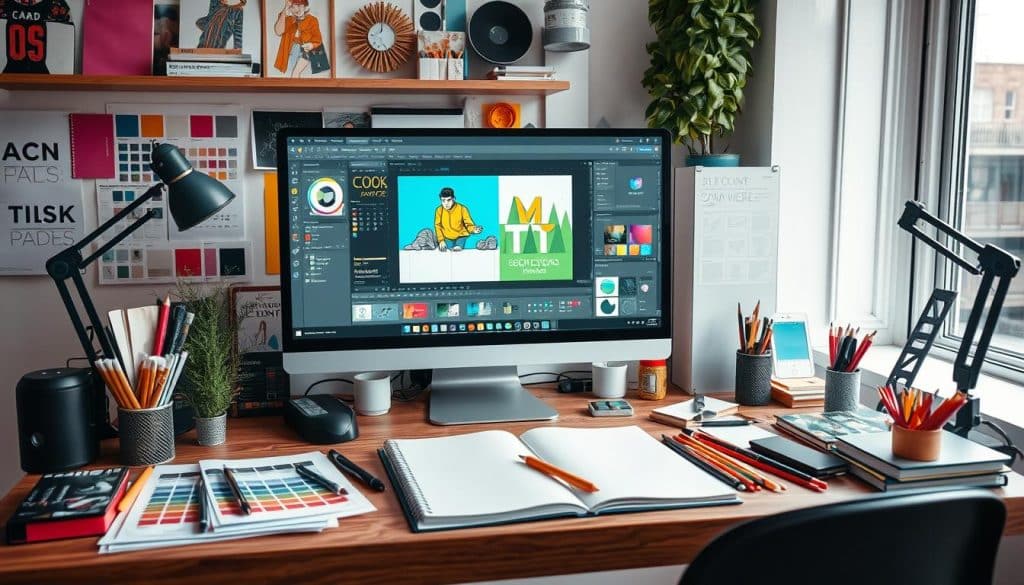
Design Software and Platforms
Our designers utilize a range of design software and platforms to create and refine visual design elements. These tools enable us to streamline the design process and produce high-quality results.
- We’ve curated an extensive library of visual design resources that our team continuously updates with the latest research, case studies, and best practices from leading industry sources.
- Our internal knowledge sharing platform includes hundreds of documented visual design patterns with implementation guidelines and performance metrics from past projects.
Learning Resources and Communities
To stay at the forefront of visual design, our designers actively participate in global design communities, including AIGA and Interaction Design Foundation. We also maintain partnerships with educational institutions to access academic research and emerging design methodologies.
- We’ve developed specialized learning paths for different aspects of visual design, from color theory to animation principles, ensuring our designers maintain comprehensive expertise.
- Our team regularly contributes to the design community through published articles, conference presentations, and open-source design resources.
Conclusion
As we conclude our exploration of visual design in UX, it’s clear that strategic design decisions are pivotal for digital growth. Throughout this guide, we’ve demonstrated how visual design serves as a critical driver of digital success, transforming ordinary digital products into powerful business assets.
Our approach integrates aesthetic excellence with measurable performance improvements, ensuring that visual design investments deliver tangible returns for our clients. We’ve shown that effective design is not subjective—it follows established principles that can be systematically applied and objectively measured.
By understanding and applying these principles, businesses can create digital products that resonate with users. We invite businesses in Qatar and beyond to consider how strategic visual design optimization could transform their digital presence and drive sustainable growth. For more information on how to leverage design for digital excellence, visit our services page.
FAQ
What role does contrast play in effective visual design?
Contrast is crucial for creating a clear hierarchy and guiding users’ attention through the interface, making it easier to distinguish between different elements and prioritize content.
How do designers achieve balance in their designs?
Designers achieve balance by arranging elements in a way that creates a sense of stability and harmony, often using principles like symmetry, asymmetry, or the rule of thirds to create a visually appealing composition.
What is the significance of color in visual design?
Color plays a vital role in evoking emotions, conveying meaning, and creating brand recognition, as different colors can elicit different emotional responses and associations in users.
How does the principle of dominance contribute to effective visual design?
The principle of dominance helps create a clear focal point, drawing users’ attention to the most important element or call-to-action, thereby enhancing the overall user experience.
What is the relationship between aesthetics and functionality in UX?
Aesthetics and functionality are intertwined, as a well-designed interface must be both usable and visually appealing to provide a positive user experience and drive digital growth.
How can designers measure the impact of their visual design decisions?
Designers can measure the impact of their visual design decisions by tracking key metrics such as conversion rates, user engagement, and overall user satisfaction, using data to inform future design improvements.
What is the importance of brand consistency in visual design?
Brand consistency is essential for creating a cohesive brand identity and reinforcing recognition across different touchpoints and user interactions.
How do different user contexts influence visual design decisions?
Different user contexts, such as varying screen sizes, devices, or environments, require designers to adapt their visual design approach to ensure an optimal user experience across diverse scenarios.