
In today’s digital landscape, user experience is paramount. A staggering number of users abandon digital products due to poor design, highlighting the critical role of user interface design in driving business success.
We are witnessing a significant surge in demand for skilled professionals who can craft intuitive, engaging interfaces that enhance user satisfaction and drive measurable results. In Qatar’s rapidly expanding digital landscape, this demand presents significant opportunities for professionals who can blend aesthetic sensibility with technical expertise.
As businesses seek competitive advantage through superior user experience, the role of visual interface designers becomes increasingly vital. We will explore how these designers contribute to business success by creating digital experiences that bridge users and technology through thoughtful, strategic design solutions.
Key Takeaways
- Visual interface designers play a crucial role in crafting user-centric digital solutions.
- The demand for skilled visual interface designers is growing rapidly in Qatar’s digital landscape.
- Intuitive, engaging interfaces drive business success by enhancing user satisfaction.
- Blending aesthetic sensibility with technical expertise is essential for success in this field.
- Superior user experience is a key competitive advantage in today’s digital ecosystem.
Understanding the Role of a Visual Interface Designer

Visual Interface Designers play a pivotal role in crafting digital products that are both aesthetically pleasing and functional. As we delve into the specifics of their role, it becomes clear that their work is crucial in creating interfaces that are not only visually appealing but also intuitive and user-friendly.
Definition and Core Responsibilities
A Visual Interface Designer is responsible for creating the visual aspects of digital products, such as websites, apps, and software. Their primary focus is on designing interfaces that are both beautiful and functional, requiring a balance between aesthetic considerations and technical constraints.
The core responsibilities include designing interactive elements, understanding user behavior patterns, and ensuring that the digital product is usable and provides a good user experience. Effective visual interface design is critical in enhancing user engagement and overall satisfaction with digital products.
How Visual Interface Design Differs from Other Design Disciplines
Visual interface design is distinct from other design disciplines in its focus on interactive elements and user behavior patterns. Unlike graphic design, which focuses on static visual communication, visual interface design is concerned with creating dynamic and interactive digital interfaces.
It differs from UX design, which encompasses the overall user journey, by specifically addressing the visual and interactive aspects of digital products. Understanding these distinctions is crucial for businesses to select the right design talent for their digital transformation needs, especially in competitive markets like Qatar.
The Evolution of Visual Interface Design
The evolution of visual interface design reflects the dynamic interplay between technological capabilities, user expectations, and design principles. As we continue to navigate the digital landscape, understanding this evolution is crucial for appreciating the current state of the industry.
Historical Context and Development
Visual interface design has its roots in the early days of computing, when user interfaces were primarily text-based. The advent of graphical user interfaces (GUIs) marked a significant turning point, enabling users to interact with digital products through visual elements like icons, menus, and windows. Over time, the field has continued to evolve, influenced by advancements in technology, changes in user behavior, and the emergence of new design trends.
The role of the visual interface designer is relatively new and has been growing rapidly. According to the US Bureau of Labor Statistics (BLS), jobs in the web development and digital design industry are projected to grow 8 percent between 2023 and 2033, which is faster than average. This growth underscores the increasing importance of visual interface design in creating engaging and user-friendly digital experiences.
Current State of the Industry in Qatar and Globally
The current state of visual interface design is characterized by rapid growth, driven in part by national initiatives like Qatar National Vision 2030, which emphasizes technological advancement and innovation. This has led to a surge in demand for skilled visual interface designers who can create interfaces that are both aesthetically pleasing and functional.
- Qatar’s digital design industry is experiencing rapid growth, driven by initiatives like Qatar National Vision 2030.
- Global trends in visual interface design, such as minimalism and dark mode interfaces, are being adopted in Qatar.
- The demand for skilled visual interface designers in Qatar outpaces supply, creating excellent career opportunities.
| Trend | Description | Impact on Qatar |
|---|---|---|
| Minimalism | Focus on simplicity and clarity in design | Adoption in local digital products |
| Dark Mode Interfaces | Designs optimized for reduced eye strain | Increasing popularity among users |
| Microinteractions | Subtle animations and feedback | Enhancing user engagement |
For more insights on the importance of user interface design in website development, visit Digital Products DP. Additionally, professional website design and SEO services in Qatar can be found at Cres VIP.
Essential Skills for Visual Interface Designers
The role of a visual interface designer demands a mix of technical skills and soft skills to effectively design user-centric digital solutions. As design continues to evolve, the importance of having a comprehensive skill set cannot be overstated.
Technical Skills and Proficiencies
Visual interface designers must be proficient in a range of technical skills. This includes proficiency in design tools such as Sketch, Figma, Adobe XD, and InVision. They should also have a good understanding of front-end development principles, including HTML, CSS, and JavaScript. Moreover, familiarity with design systems and the ability to create responsive designs that work across various devices and screen sizes is crucial. As part of their work, designers must stay updated with the latest design trends and technologies.
Soft Skills and Collaborative Abilities
Beyond technical skills, visual interface designers must possess a range of soft skills to effectively collaborate with cross-functional teams. As Michael Worthington, founding partner of Counterspace, notes, “A big part of being a UI designer is that you are part of a team.” Effective communication is key, allowing designers to articulate their design decisions and work in concert with others, including those involved in back-end development, marketing strategies, and UX research. Empathy is also crucial, enabling designers to understand user needs and create interfaces that address real pain points. Other essential soft skills include problem-solving, adaptability, presentation skills, time management, and receptiveness to feedback.
By combining technical proficiency with these soft skills, visual interface designers can create design solutions that are both aesthetically pleasing and functional, meeting the needs of both the business and the user. This balanced skill set is essential for success in the field, allowing designers to navigate the complexities of their role and contribute to the development of effective digital products.
Visual Interface Designer: Key Responsibilities and Daily Tasks
Visual interface designers bring digital products to life by designing interfaces that are not only visually appealing but also highly functional. Their role is crucial in ensuring that the user’s interaction with the product is seamless and intuitive.
Design Process and Workflow
The design process for visual interface designers involves several key steps, starting with understanding the project’s objectives and user needs. We work closely with UX designers to ensure that the visual elements support the overall user experience and information architecture. UI designers then add interactivity to their designs, determining what happens when a user interacts with different elements.
For instance, on an e-commerce website, a visual interface designer decides what the user sees or hears when they click the “Load more” button. This involves creating a cohesive visual language that enhances the user experience.
Collaboration with Other Team Members
Collaboration is a critical aspect of a visual interface designer’s role. We work with various team members to ensure that the design aligns with the product’s overall vision and objectives.
- Visual interface designers work closely with UX designers to ensure visual elements support the overall user experience and information architecture.
- Collaboration with developers is essential to ensure designs can be implemented efficiently while maintaining visual integrity across different platforms.
- Regular communication with product managers helps align interface design with business objectives and feature priorities.
- Visual interface designers often partner with content strategists to create layouts that effectively showcase different types of content.
- Working with marketing teams ensures interface designs support brand messaging and campaign objectives.
- Collaboration with user researchers provides valuable insights that inform design decisions and validate design effectiveness.
- In Qatar’s multicultural business environment, visual interface designers must collaborate with localization experts to ensure interfaces work well for diverse user groups.
To learn more about the importance of collaboration in design, visit our website for additional resources and insights.
| Team Member | Role in Collaboration |
|---|---|
| UX Designers | Ensure visual elements support overall user experience |
| Developers | Implement designs efficiently across platforms |
| Product Managers | Align interface design with business objectives |
| Content Strategists | Create effective content layouts |
| Marketing Teams | Support brand messaging and campaign objectives |
| User Researchers | Inform design decisions with valuable insights |
| Localization Experts | Ensure interfaces work well for diverse user groups |
Fundamental Principles of User-Centric Interface Design
User-centric interface design is rooted in several key principles that ensure digital products are both aesthetically pleasing and functional. We believe that effective design is grounded in a set of fundamental principles that prioritize both the aesthetic appeal and the functionality of digital products.
Nielsen and Molich's Ten User Interface Guidelines
Nielsen and Molich’s Ten User Interface Guidelines provide a foundational framework for designing interfaces that are intuitive and user-friendly. These guidelines emphasize the importance of visibility of system status, match between system and the real world, and user control and freedom, among other critical factors.
By adhering to these guidelines, designers can create interfaces that are not only visually appealing but also highly functional, thereby enhancing the overall user experience.
| Guideline | Description |
|---|---|
| Visibility of system status | Keep users informed about what’s happening through feedback |
| Match between system and the real world | Use language and concepts familiar to the user |
| User control and freedom | Provide clear and easy ways to undo and redo actions |
Balancing Aesthetics and Functionality
Successful visual interface design strikes a delicate balance between aesthetic appeal and functional utility. We recognize that beauty without usability fails users. A well-designed interface should guide users through the product using visual hierarchy, which is achieved by manipulating size, color, contrast, and spacing to indicate the relative importance of elements.
Key considerations in achieving this balance include:
- Using white space effectively to improve readability and create a sense of sophistication
- Applying color psychology to influence user perception and behavior
- Incorporating microinteractions to enhance usability and add personality to digital experiences
- Ensuring accessibility from the outset to cater to diverse user abilities
- Being culturally sensitive in visual design elements, particularly in multicultural contexts like Qatar
By focusing on these aspects, we can create interfaces that not only look appealing but also provide an intuitive and seamless user experience, ultimately enhancing the overall design and layout of digital products.
Essential Tools and Software for Visual Interface Designers

To create seamless user experiences, visual interface designers utilize a range of industry-standard software. The right design tools are crucial for crafting interfaces that are both aesthetically pleasing and highly functional.
Industry-Standard Design Software
Visual designers and UI designers often use similar design software, such as Adobe Illustrator and Adobe XD, Photoshop, Figma, and InDesign. These tools enable designers to create high-quality visual elements and prototypes. For instance, Adobe XD allows for the creation of interactive prototypes, while Figma facilitates real-time collaboration among team members.
Prototyping and Collaboration Tools
Beyond design software, prototyping tools like Principle, Framer, and ProtoPie enable designers to create high-fidelity interactive prototypes that simulate real product behavior. Additionally, collaboration platforms such as Miro and Mural facilitate remote design workshops and visual collaboration. These tools are essential for distributed teams to work together effectively.
By leveraging these design tools, visual interface designers can streamline their workflow, enhance collaboration, and ultimately deliver better user experiences. As the field continues to evolve, staying updated with the latest design trends and learning design best practices is crucial.
The Visual Interface Design Process
Crafting an effective visual interface requires a systematic approach that encompasses research, design, and testing. We believe that a well-structured design process is crucial for developing interfaces that are both intuitive and engaging. This process involves several key stages that work together to ensure the final product meets user needs and expectations.
Research and User Analysis
The foundation of any successful visual interface design lies in thorough research and user analysis. We conduct in-depth studies to understand our target audience, their behaviors, and their preferences. This stage is critical in informing our design decisions and ensuring that the interface is user-centric. By understanding the needs and pain points of our users, we can create designs that are tailored to their requirements.
Wireframing and Prototyping
Once we have a clear understanding of our users, we proceed to create wireframes and prototypes. Wireframes provide a basic layout of the interface, while prototypes bring these wireframes to life with interactivity. Tools like effective web design and SEO integration play a crucial role in this stage, enabling us to test and refine our designs before they are developed.
Testing and Iteration
Testing is a vital part of the visual interface design process. We conduct various types of testing, including usability testing, A/B testing, accessibility testing, and performance testing. These tests provide invaluable feedback on the effectiveness of our designs and highlight areas for improvement. By iterating on our designs based on this feedback, we can ensure that our interfaces are not only aesthetically pleasing but also functional and user-friendly.
| Testing Type | Purpose | Benefits |
|---|---|---|
| Usability Testing | Evaluate interface effectiveness with real users | Identifies areas for improvement, enhances user experience |
| A/B Testing | Compare different design solutions | Enables data-driven design decisions |
| Accessibility Testing | Ensure compliance with international accessibility standards | Makes interfaces usable for users with disabilities |
By following this structured design process, we can create visual interfaces that are not only visually appealing but also meet the needs of our users. This approach ensures that our designs are both effective and engaging, providing a solid foundation for successful digital products.
Visual Interface Design vs. UX Design: Understanding the Differences
In the realm of digital product creation, Visual Interface Design and UX Design play complementary yet distinct roles. While they are closely related and often overlap, each discipline has its unique responsibilities and contributions to the design process.
Overlapping Areas and Unique Aspects
Visual Interface Design focuses on creating the visual aspects of a product, including the layout, typography, color scheme, and overall aesthetic appeal. It takes the wireframes created by UX designers and enhances them with visual elements to create a user-friendly and engaging interface. UX Design, on the other hand, is concerned with the overall user experience, encompassing a broader scope that includes user research, user journey mapping, wireframing, and usability testing.
While UX designers establish the structural foundation of a product, visual interface designers bring this structure to life with visuals and interactivity. This collaboration is crucial for creating a product that is both functional and aesthetically pleasing.
| Design Aspect | Visual Interface Design | UX Design |
|---|---|---|
| Primary Focus | Visual elements and interface aesthetics | User experience and overall product functionality |
| Key Responsibilities | Creating visual designs, prototypes, and high-fidelity designs | User research, wireframing, usability testing, and user journey mapping |
| Collaboration | Works closely with UX designers and front-end developers | Collaborates with visual interface designers, product managers, and stakeholders |
How These Roles Collaborate in Product Development
Effective product development involves a collaborative workflow where UX designers and visual interface designers work together to create a seamless user experience. Visual interface designers work closely with product managers to ensure that the interfaces support business objectives while meeting user needs. Collaboration with developers throughout the design process ensures technical feasibility and accurate implementation of design intentions.
Some key aspects of their collaboration include:
- Design systems created by visual interface designers provide a shared language that facilitates collaboration across disciplines.
- Regular design critiques involving multiple disciplines help refine interfaces and ensure alignment with overall product goals.
- In agile development environments, visual interface designers must adapt to rapid iteration cycles while maintaining design quality.
Career Path and Education for Aspiring Visual Interface Designers
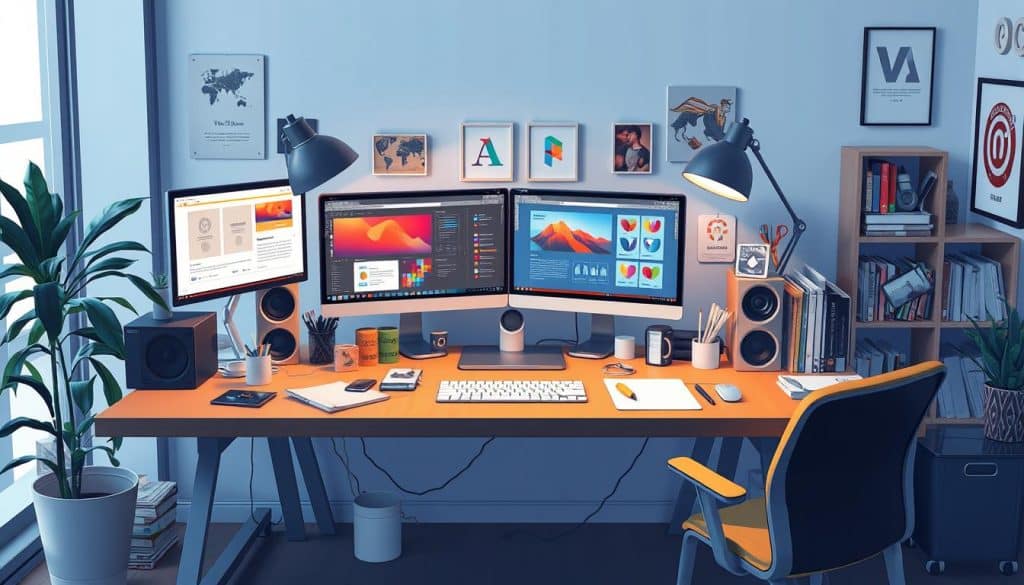
Embarking on a career as a visual interface designer requires a strategic blend of education, skill development, and practical experience. As the demand for skilled designers continues to grow, particularly in regions like Qatar, understanding the educational pathways and career opportunities becomes increasingly important.
Educational Requirements and Certifications
A career in visual interface design typically begins with formal education in design or a related field. Degrees in graphic design, interaction design, or human-computer interaction are highly relevant. Additionally, certifications in specific design tools or methodologies can enhance a designer’s marketability. We recommend exploring visual interface design courses that cover both theoretical foundations and practical skills.
Building a Portfolio and Finding Opportunities
A strong portfolio is perhaps the most critical asset for aspiring visual interface designers, as it demonstrates both technical skills and design thinking. Online platforms like Dribbble, Behance, or Coroflot offer convenient ways to showcase designs. Key elements of a compelling portfolio include:
- A diverse range of projects that demonstrate versatility and creativity
- Case studies that outline the design process and problem-solving strategies
- Personal projects that showcase initiative and passion for design
Networking with established designers, participating in design events, and contributing to open-source projects are also valuable strategies for building connections and gaining experience. In Qatar’s growing design community, these activities can open doors to new opportunities, including collaborations with international teams.
Future Trends in Visual Interface Design
As we look to the future, visual interface design is poised to undergo significant transformations driven by emerging technologies and evolving user expectations. The industry is on the brink of a revolution, with innovative design approaches and technologies redefining the way we interact with digital products.
Emerging Technologies and Their Impact
The integration of advanced technologies is set to transform visual interface design. We are witnessing a shift towards more sophisticated interactive elements that enhance user experience. According to the US Bureau of Labor Statistics, jobs in web development and digital design are projected to grow 8 percent between 2023 and 2033, indicating a strong demand for skilled designers.
- Users increasingly expect personalized experiences that adapt to their preferences and behaviors.
- Micro-interactions and animation are becoming essential components that provide feedback and enhance usability.
- Dark mode interfaces have become a standard feature, requiring design systems to work equally well in light and dark variants.
Evolving User Expectations and Design Approaches
As users become more digitally savvy, their expectations evolve, driving the need for more intuitive and accessible user interfaces. We must prioritize accessibility, making it a fundamental requirement rather than an afterthought. Moreover, ethical design considerations are gaining prominence, with users becoming more concerned about privacy and digital wellbeing.
- Design systems are becoming more sophisticated, enabling consistent experience across expanding product ecosystems.
- In Qatar’s diverse market, cultural sensitivity in design is increasingly important.
- Ethical design considerations are crucial as digital products reach more diverse user groups.
Conclusion
In conclusion, visual interface designers play a vital role in shaping the digital experiences that are both aesthetically pleasing and functionally effective. The field offers exciting career opportunities in Qatar’s rapidly developing digital landscape, with demand for skilled professionals continuing to grow. To succeed, visual interface designers must combine technical skills, design principles, and collaborative abilities. As technology evolves, they must adapt their approaches while maintaining focus on fundamental user needs. By doing so, they create interfaces that delight users while achieving business objectives, driving revenue growth through digital excellence.
FAQ
What is the primary role of a visual interface designer?
We craft user-centric digital solutions by creating interactive elements, wireframes, and prototypes that enhance the overall user experience.
How does user research impact the design process?
User research informs our design decisions, enabling us to create products that meet the needs and expectations of our target audience.
What skills are essential for a visual interface designer to possess?
Key skills include proficiency in design tools, understanding of user experience principles, and the ability to collaborate with developers and other team members.
How do visual interface designers balance aesthetics and functionality?
We strive to create designs that are both visually appealing and functional, ensuring a seamless user experience through the use of typography, icons, and buttons.
What is the difference between visual interface design and UX design?
While there is some overlap, visual interface design focuses on the visual aspects of the product, whereas UX design encompasses a broader range of factors, including user research and interaction design.
What tools and software do visual interface designers typically use?
Industry-standard design software, such as Sketch and Figma, are commonly used, along with prototyping and collaboration tools like InVision and Adobe XD.
How do visual interface designers stay up-to-date with industry trends?
We engage in ongoing education and professional development, attending conferences, workshops, and online courses to stay current with emerging technologies and design approaches.
What is the typical career path for a visual interface designer?
Many visual interface designers start with a degree in design or a related field, build a portfolio, and gain experience through internships or entry-level positions, eventually moving into senior roles or leadership positions.