

In the digital age, businesses are constantly seeking innovative ways to connect with their target audience. A staggering statistic reveals that digital advertising spending is projected to reach $786.2 billion by 2026, underscoring its pivotal role in modern marketing strategies.
We are witnessing a significant shift in how businesses approach advertising. Online advertising has emerged as a powerful tool, offering unprecedented targeting capabilities and cost-effectiveness compared to traditional methods. The evolution of digital advertising has transformed simple banner ads into sophisticated, AI-driven campaigns that adapt to user behavior.
By leveraging various digital advertising formats, businesses can significantly boost brand visibility, customer engagement, and ultimately drive revenue growth. As we explore the landscape of electronic advertising, it becomes clear that an integrated strategy is crucial for businesses aiming to thrive in today’s competitive market.
Key Takeaways
- Digital advertising offers advanced targeting capabilities and real-time performance tracking.
- Businesses can expect increased reach and better ROI through strategic digital advertising.
- Electronic advertising has evolved to include sophisticated AI-driven campaigns.
- An integrated digital advertising strategy can significantly boost brand visibility and customer engagement.
- Cost-effectiveness and measurable results are key benefits of digital advertising.
The Digital Advertising Revolution
Digital advertising has come a long way since AT&T pioneered the first banner ad in 1994, marking the beginning of a new era in advertising. The rapid evolution of digital advertising has transformed the way businesses connect with their target audiences.
Evolution of Advertising Strategies
The journey from simple banner ads to sophisticated AI-driven campaigns has been remarkable. Initially, digital advertising was about static displays, but it has now evolved into dynamic, interactive experiences that engage users across multiple touchpoints. Technological advancements have enabled advertisers to create more targeted, relevant, and effective ads.
The rise of programmatic advertising and real-time bidding systems has significantly improved the efficiency of ad placement. According to a recent study, businesses that adopt AI-driven advertising strategies see a significant increase in ROI compared to traditional methods.
As Forbes notes, “The future of advertising is inextricably linked with the evolution of AI and machine learning technologies.” This emphasizes the importance of staying ahead in the digital advertising landscape.
Why Businesses Need Digital Advertising
In today’s digital marketplace, businesses of all sizes need to embrace electronic advertising to remain competitive. The key advantages include reach, targeting precision, and measurability. Digital advertising provides unprecedented data collection capabilities, allowing businesses to refine their marketing strategies based on actual performance metrics.
Unlike traditional advertising methods, digital campaigns offer flexibility and adaptability, making them ideal for businesses seeking growth. As the digital advertising revolution continues to democratize marketing, smaller businesses can now compete with larger corporations through strategic ad placement and messaging.
“The best advertising is not about selling something; it’s about telling a story that resonates with your audience.” This highlights the shift towards more personalized and engaging advertising strategies.
Types of Electronic Advertising: A Comprehensive Overview
The realm of electronic advertising encompasses a diverse range of formats, each with its unique strengths and applications. As businesses navigate the complex digital landscape, understanding these various types is crucial for developing effective marketing strategies.
The Evolution of Digital Ad Formats
The digital advertising ecosystem has witnessed significant transformations over the years, driven by advancements in technology and changing user behaviors. From traditional banner ads to sophisticated AI-driven campaigns, the evolution of digital ad formats has been remarkable. Today, we have eight major types of online advertising that are performing exceptionally well: Native advertising, Video mobile advertising, Display ads, Full-screen interstitials, Expandable ads, Audio ads and CTV, DOOH ads, and In-game ads. These formats have emerged as the most effective ways to reach and engage target audiences in digital marketing.
Choosing the Right Advertising Mix for Your Business
Selecting the optimal mix of electronic advertising types is critical for achieving marketing objectives. Businesses must consider factors such as target audience, budget constraints, campaign goals, and industry norms when choosing their advertising mix. By understanding the unique characteristics and strengths of each ad format, companies can create a synergistic marketing strategy that engages customers across multiple touchpoints. For instance, combining native advertising with video mobile advertising can enhance brand visibility and drive conversions. It’s essential to test various ad formats to determine which types generate the highest engagement and conversion rates for your specific business model and audience.
By adopting a data-driven approach and continuously monitoring the performance of different ad formats, businesses can refine their advertising strategies to maximize ROI. This involves analyzing the effectiveness of various advertising types across different industries and adjusting the marketing mix accordingly.
Social Media Advertising: Platform-Specific Strategies
The rise of social media platforms has revolutionized the way businesses approach advertising. With billions of users across Facebook, Instagram, LinkedIn, and Twitter, these platforms offer unparalleled opportunities for advertisers to reach their target audiences.
Facebook, Instagram, LinkedIn, and Twitter Ad Formats
Each social media platform provides a unique advertising ecosystem with distinct ad formats. For instance, Facebook offers a wide range of ad formats, from image and video ads to carousel and collection ads, allowing businesses to showcase their products or services in various ways. Instagram, with its visually-driven platform, is ideal for businesses with strong visual content, offering formats like photo ads, video ads, and stories ads.
LinkedIn is geared towards B2B advertising, offering sponsored content, sponsored InMail, and display ads that help businesses reach professionals and decision-makers. Twitter provides promoted tweets, promoted accounts, and promoted trends, enabling businesses to increase their brand visibility and engagement.
Setting Up Effective Social Media Ad Campaigns
To set up effective social media ad campaigns, businesses must first define their objectives, whether it’s driving website traffic, generating leads, or boosting sales. Effective paid media strategies can significantly amplify online marketing efforts. Target audience selection is also crucial, using demographics, interests, behaviors, and even life events to ensure ads reach the right people.
Creating compelling ad creative and setting appropriate budgets are also key steps. By continuously monitoring and optimizing ad performance, businesses can improve their return on ad spend (ROAS) and achieve their marketing goals.
Display Advertising: Visual Marketing Tactics

Visual marketing tactics have evolved significantly with the advent of display advertising. This form of online advertising allows businesses to reach their target audience through various visual means, enhancing brand awareness and driving conversions.
Banner Ads, Responsive Ads, and Rich Media
The landscape of display advertising is diverse, offering multiple ad formats to suit different marketing objectives. Banner ads are traditional and widely used, while responsive display ads automatically adjust to fit available ad spaces, ensuring a seamless user experience. Rich media ads, on the other hand, provide an interactive experience, engaging users with animations, videos, or other dynamic content.
Google Display Network vs. Programmatic Display
The Google Display Network (GDN) is a vast network spanning over 2 million websites, offering extensive reach and targeting capabilities. It allows advertisers to show their ads to a targeted audience, whether they’re browsing websites, watching YouTube, or using mobile apps. In contrast, programmatic display advertising uses automated technology to buy and sell ad space, offering real-time targeting and optimization. While GDN provides a managed service with robust targeting options, programmatic display advertising offers flexibility and efficiency through automation.
When choosing between these options, advertisers must consider their campaign goals, budget, and targeting requirements. Both approaches have their unique advantages and can be effective in the right context.
Video Advertising: Capturing Audience Attention

In today’s digital landscape, video advertising stands out as a highly effective method for businesses to capture audience attention. With the proliferation of video content across various platforms, businesses are leveraging video ads to engage with their target audiences more effectively.
Pre-Roll, Mid-Roll, and Post-Roll Video Ads
Video ad placement options include pre-roll (before content), mid-roll (during content), and post-roll (after content). Each placement has its strategic advantages. For instance, pre-roll ads are effective for brand awareness, while mid-roll ads can be more engaging as they are placed within relevant content. Post-roll ads, being less intrusive, can be used for call-to-action purposes.
Creating Compelling Video Ad Content
To create effective video ad content, businesses must focus on communicating their message clearly and concisely. The Hero, Hub, Help content model is a useful framework for this purpose. It involves creating content that is either entertaining (Hero), informative (Hub), or helpful (Help). Additionally, optimizing video length, ensuring mobile compatibility, and capturing viewers’ attention in the first few seconds are crucial for the success of video advertising campaigns.
By understanding the unique characteristics of different video advertising platforms, such as YouTube, TikTok, and social media channels, businesses can tailor their video ads to meet platform-specific best practices and audience expectations. Effective video advertising also involves targeting the right audience through demographic, interest-based, and contextual targeting strategies.
Search Engine Marketing: PPC Strategies
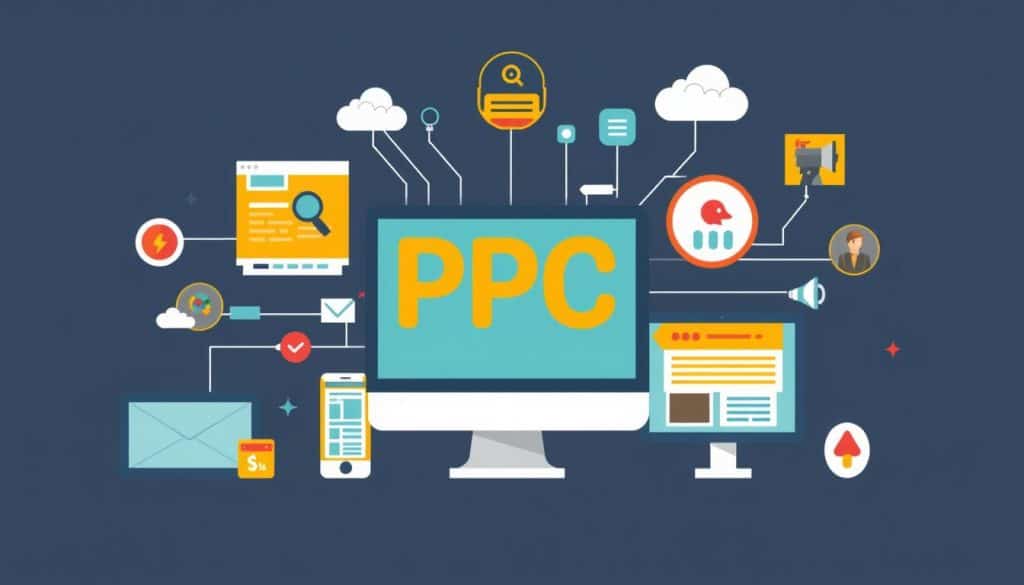
In the realm of digital advertising, Search Engine Marketing (SEM) stands out as a powerful strategy for connecting businesses with intent-driven audiences. We examine the fundamental principles of SEM and pay-per-click (PPC) advertising, explaining how these strategies connect businesses with users actively searching for relevant products or services.
Campaign Structure for Google Ads and Bing Ads
Effective campaign structures are crucial for both Google Ads and Bing Ads. This includes account organization, campaign types, ad group development, and ad creation best practices. A well-structured campaign helps in maximizing the return on ad spend by ensuring that the ads are relevant to the search queries.
Keyword Targeting and Bid Management Strategies
Advanced keyword targeting strategies, including match types, negative keywords, and search query analysis, are vital for maximizing campaign relevance and efficiency. Additionally, bid management approaches such as manual bidding, automated bidding strategies, and bid adjustments based on device, location, and time of day help optimize budget allocation. For more insights on maximizing ROI with PPC strategies, visit maximizing ROI with PPC strategies.
Understanding the critical role of quality score in search advertising success is also essential. Quality score influences ad relevance and landing page experience, directly impacting the campaign’s performance. For a deeper dive into the types of search engine marketing, you can refer to types of search engine marketing.
Native Advertising: Blending Content with Promotion

The digital landscape is witnessing a significant shift towards native advertising, a strategy that blends promotional content with the natural user experience. Native advertising refers to publishing ads meant to resemble the publication’s editorial content, thereby enhancing user engagement and reducing ad fatigue.
Sponsored Content and Recommendation Widgets
Sponsored content and recommendation widgets are two popular formats of native advertising. Sponsored content involves creating articles, videos, or podcasts that are relevant to the target audience and align with the publisher’s content style. Recommendation widgets, on the other hand, suggest content or products based on user behavior and preferences.
For instance, a famous website like Search Engine Land might run a sponsored article about spotting new search marketing opportunities, which is an effective example of native advertising. These formats allow businesses to reach their target audience in a non-disruptive manner.
Creating Effective Native Ad Campaigns
To create effective native ad campaigns, businesses must focus on producing high-quality, engaging content that adds value to the user’s experience. This involves understanding the target audience, selecting the right publishing platforms, and ensuring transparency through clear disclosure of sponsored content.
By doing so, businesses can leverage the full potential of native advertising, driving engagement and conversion while maintaining audience trust. A well-crafted native ad campaign can significantly enhance a brand’s online presence and credibility.
Mobile Advertising: Reaching Customers on Smartphones
As smartphones continue to dominate our daily lives, mobile advertising has emerged as a vital component of modern marketing strategies. We analyze the critical importance of mobile advertising in today’s smartphone-dominated digital landscape, examining how mobile-specific strategies can reach consumers during their most engaged moments throughout the day.

In-App Advertising and Mobile Web Ads
Mobile advertising encompasses both in-app advertising and mobile web ads, each offering unique advantages and targeting capabilities. Mobile advertising can be targeted in various ways, including through apps and mobile websites. We’ll explore the diverse mobile ad formats available to advertisers, including banner ads, interstitials, native ads, video ads, and rewarded ads.
Location-Based and Geo-Targeting Strategies
Advanced location-based and geo-targeting strategies leverage mobile devices’ unique capabilities, from geofencing and proximity marketing to location-based audience segmentation and competitive conquesting. We examine mobile-specific targeting parameters beyond location, including app category targeting, mobile carrier targeting, and device-specific targeting that enables highly personalized advertising experiences.
To measure the effectiveness of mobile advertising, we consider mobile-specific attribution models, cross-device tracking challenges, and the integration of online-to-offline measurement for businesses with physical locations. By optimizing mobile ads and leveraging the right targeting strategies, businesses can drive revenue growth through digital excellence.
Email Advertising: Direct Digital Marketing

As a direct digital marketing channel, email advertising has proven its effectiveness in reaching and engaging customers. Email advertising is distinct from email marketing, focusing on highly-promotional emails that users agree to receive.
Promotional Emails vs. Newsletter Sponsorships
Email advertising encompasses two primary strategies: sending promotional emails to your subscriber list and sponsoring newsletters to leverage third-party audiences. Promotional emails are ideal for nurturing existing customer relationships and driving conversions, while newsletter sponsorships allow you to tap into established audiences.
When deciding between these strategies, consider your business objectives. For instance, if you’re launching a new product, promotional emails can create buzz among your existing customers. Conversely, newsletter sponsorships can expand your reach to new audiences interested in specific niches.
Measuring Email Campaign Performance
To gauge the success of your email advertising efforts, it’s crucial to measure campaign performance effectively. Key metrics include open rates, click-through rates, conversion rates, and revenue attribution. By analyzing these metrics, you can refine your email advertising strategy to improve ROI.
For example, if your open rates are low, you might need to optimize your subject lines or sender names. Similarly, if your click-through rates are high but conversion rates are low, your landing page or call-to-action might need improvement.
Retargeting Advertising: Converting Interested Prospects
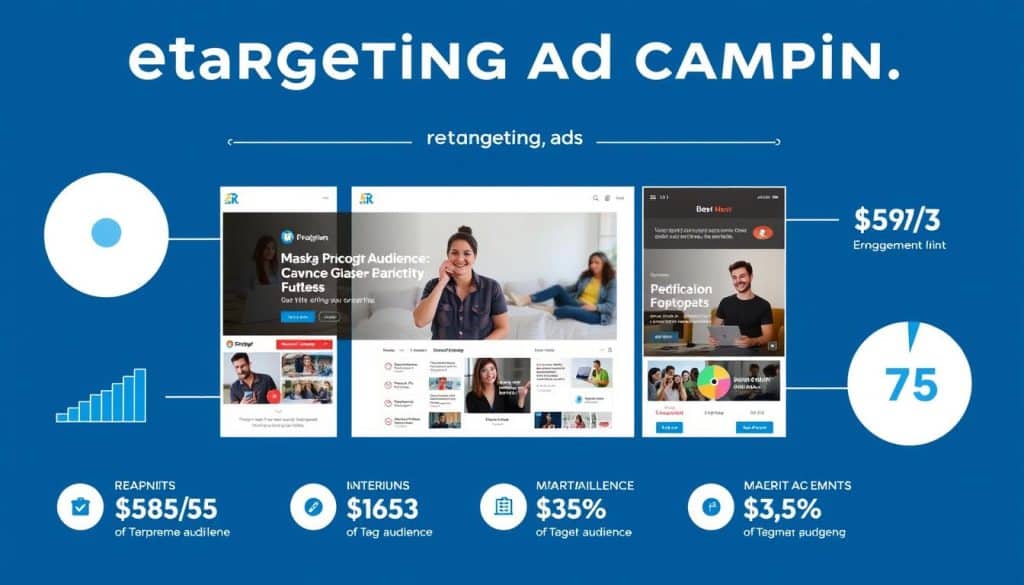
Retargeting campaigns offer a strategic approach to re-engage potential customers who have shown interest in a brand. By serving targeted ads to users who have previously interacted with a business, retargeting advertising aims to bring back potential customers and increase conversion rates.
Pixel-Based and List-Based Retargeting
There are two primary methods of retargeting: pixel-based and list-based. Pixel-based retargeting involves tracking website visitors through code snippets, allowing for targeted ads to be served to them later. On the other hand, list-based retargeting targets known contacts through uploaded customer lists. Each approach has its unique applications and performance expectations.
Frequency Capping and Creative Rotation
To maintain the effectiveness of a retargeting campaign, it’s crucial to implement frequency capping and creative rotation. Frequency capping ensures that users are not overwhelmed with the same ads, preventing ad fatigue. Creative rotation involves changing the ads to keep the messaging fresh and engaging. This balance is key to maintaining a positive brand perception throughout the retargeting experience.
By understanding the different retargeting strategies and implementing them effectively, businesses can significantly improve their advertising ROI and reconnect with interested prospects through targeted ads.
Digital Out-of-Home (DOOH): Modern Billboard Advertising
Outdoor advertising has evolved, and digital out-of-home (DOOH) is at the forefront. This modern form of billboard advertising is transforming traditional outdoor media into dynamic, contextually relevant experiences.

DOOH encompasses various channels, including digital billboards, transit displays, retail kiosks, elevator screens, and venue-specific signage. Marketers can choose the most effective channels based on audience movement patterns.
Smart Billboards and Interactive Displays
Technological advancements are driving DOOH innovation. Smart billboards adjust content based on environmental factors, while interactive displays engage audiences through touch, motion sensing, and mobile integration.
These interactive elements not only capture attention but also provide valuable data on consumer engagement.
Programmatic DOOH Buying
The emergence of programmatic DOOH buying platforms has brought the efficiency, targeting capabilities, and measurement standards of digital advertising to out-of-home media purchasing.
This development allows for more precise targeting and measurement of DOOH campaigns, enhancing their effectiveness.
Audio Advertising: Podcasts and Streaming Services
With the surge in popularity of podcasts and music streaming, audio advertising has become an essential component of digital marketing strategies. We analyze the growing significance of audio advertising in the digital media landscape, examining how the surge in podcast listenership and streaming service adoption has created valuable new channels for reaching engaged audiences during screen-free moments.

Major Audio Advertising Platforms
Audio advertising opportunities are available across major platforms, including Spotify, Pandora, and Apple Podcasts. Each platform offers unique audience characteristics and advertising capabilities. For instance, Spotify allows for targeted advertising based on user listening habits, while Apple Podcasts offers a vast reach across various genres.
We’ll explore the diverse audio ad formats available to advertisers, from traditional pre-recorded spots to host-read endorsements and interactive audio experiences that leverage voice technology.
Creating Effective Audio Ad Content
To capture attention in an audio-only environment, advertisers must focus on script writing techniques, voice talent selection, sound design considerations, and call-to-action optimization. Effective audio ad content is crucial for engaging listeners and driving results.
Best practices include using compelling narratives, selecting appropriate voice talents, and incorporating clear calls-to-action. By doing so, advertisers can enhance the impact of their audio ads.
Overcoming Digital Advertising Challenges
The digital advertising landscape is fraught with challenges, from ad fraud to privacy concerns, that advertisers must navigate. As we explore these challenges, it’s clear that understanding and addressing them is crucial for the success of online advertising campaigns.
Ad Fraud, Ad Blocking, and Privacy Concerns
Ad fraud is a significant issue, with estimates suggesting that advertisers lost $100 billion in 2023 due to fraudulent activities. This includes ad stacking, domain spoofing, non-human traffic, and invalid traffic, all of which can severely impact campaign effectiveness. Moreover, the rise of ad blocking technology further complicates the digital advertising ecosystem, as it directly affects ad visibility. Privacy concerns, driven by regulations like GDPR and CCPA, are also reshaping how advertisers target and measure their campaigns.
To combat these challenges, advertisers must adopt sophisticated strategies. For instance, detecting and preventing ad fraud requires advanced tools and a deep understanding of the digital advertising ecosystem. Similarly, addressing ad blocking involves creating more user-friendly ad experiences that respect consumer preferences while still delivering business results.
| Challenge | Description | Potential Solution |
|---|---|---|
| Ad Fraud | Fraudulent activities like ad stacking and domain spoofing | Advanced fraud detection tools |
| Ad Blocking | Users blocking ads, reducing visibility | User-friendly ad formats |
| Privacy Concerns | Regulations impacting targeting and measurement | First-party data strategies and privacy-preserving measurement |
Strategies for Improving Ad Viewability and Engagement
Improving ad viewability and engagement is critical for maximizing the return on advertising investments. This involves optimizing ad placements, selecting the right ad formats, and implementing technical best practices. Additionally, strategies like creative refreshment, audience segmentation, and frequency management can help reduce ad fatigue and maintain campaign effectiveness over time.
By adopting these strategies and staying abreast of the evolving digital landscape, advertisers can better navigate the challenges of online advertising and achieve their marketing goals.
Conclusion: Building an Integrated Electronic Advertising Strategy
To maximize ROI indigital advertising, businesses need to leverage a combination of tactics and channels. As we conclude our exploration of various electronic advertising types, it’s essential to synthesize the key insights into a cohesivestrategy.
We emphasize the importance of aligningadvertisingefforts with broader business objectives, ensuring that tactical execution supports strategic goals, from brand awareness and customer acquisition to retention and loyalty. A well-integratedadvertisingstrategy enables businesses to create synergistic effects across different channels, amplifying their overall impact.
A consistent measurement framework and attribution models play a critical role in evaluating the holistic impact of integratedadsefforts. By moving beyond channel-specific metrics, businesses can gain a deeper understanding of cross-channel influences and customer journey impacts. For practical guidance on budget allocation across electronicadvertisingchannels, businesses can determine optimal investment levels based on performance data, business objectives, and competitive factors.
Effective execution of integratedadvertisingstrategies requires the right organizational structures and team capabilities, from specialized channel expertise to cross-functional collaboration models. Continuous testing and optimization are also crucial fordigital advertisingsuccess, establishing processes for systematic experimentation and performance improvement across all channels and tactics.
For more insights on developing a comprehensivedigital marketing strategy, we invite you to explore our in-depth guide. As we look to the future, emerging technologies, evolving consumer behaviors, and industry trends will continue to shapeadvertisingstrategies. By staying informed and adaptable, businesses can navigate the ever-changing landscape of electronicadsand achieve their goals.
FAQ
What are the most effective social media platforms for advertising?
The most effective social media platforms for advertising include Facebook, Instagram, LinkedIn, and Twitter, as they offer a wide range of ad formats and targeting options to reach diverse audiences.
How do I measure the success of my online advertising campaign?
To measure the success of your online advertising campaign, track key performance indicators (KPIs) such as click-through rates, conversion rates, and return on ad spend (ROAS), and adjust your strategy accordingly.
What is the difference between display ads and video advertising?
Display ads are visual ads that appear on websites, apps, and social media platforms, while video advertising involves using video content to promote a product or service, often in a more engaging and memorable way.
How can I ensure my digital advertising is seen by the right people?
To ensure your digital advertising is seen by the right people, use targeting options such as demographics, interests, behaviors, and lookalike audiences to reach your desired audience.
What is native advertising, and how does it work?
Native advertising involves creating ads that match the form and function of the platform they appear on, such as sponsored content and recommendation widgets, to provide a more seamless user experience.
How can I optimize my search engine marketing campaigns for better results?
To optimize your search engine marketing campaigns, focus on keyword research, ad copywriting, and bid management, and continually monitor and adjust your campaigns for improved performance.
What are the benefits of using retargeting advertising?
Retargeting advertising allows you to reach users who have previously interacted with your brand, increasing the likelihood of conversion and improving overall campaign effectiveness.
How can I create effective video ad content?
To create effective video ad content, focus on telling a compelling story, using eye-catching visuals, and including a clear call-to-action, and optimize your video ads for different platforms and devices.