

Are you struggling to increase your online visibility and drive qualified traffic to your digital properties in Qatar? Effective SEO strategies can be the game-changer your business needs.
We help businesses thrive in the digital landscape by leveraging proven SEO techniques that drive measurable growth. By understanding what makes your website eligible to appear on Google Search, you can significantly improve your online presence.
Our comprehensive guide will break down the fundamental elements of effective SEO, from on-page optimization to technical requirements that search engines prioritize. By implementing strategic SEO techniques, you can increase your website’s visibility in search results and drive qualified traffic to your digital properties.
Key Takeaways
- Understand the fundamental elements of effective SEO for digital growth.
- Learn how to increase your website’s visibility in search results.
- Discover the importance of content quality and user experience in SEO.
- Develop a holistic SEO strategy for sustainable business growth.
- Stay up-to-date with the latest best practices in SEO.
What SEO Is and Why It Matters for Digital Growth
In the digital landscape of 2023, understanding SEO is crucial for businesses aiming to thrive online. As search engines continue to evolve, the importance of a well-implemented SEO strategy cannot be overstated.
Defining Search Engine Optimization in 2023
Search Engine Optimization (SEO) is the process of improving the visibility and ranking of a website in search engines through various techniques. Google, a fully automated search engine, uses programs called crawlers to explore the web constantly, looking for pages to add to its index. This means that businesses don’t need to submit their sites manually; instead, they should focus on creating high-quality content that is easily discoverable by these crawlers.
The evolution of SEO has transformed it from a simple keyword-matching exercise to a sophisticated process that evaluates content quality, user experience, and technical performance. This shift underscores the importance of a holistic SEO strategy that encompasses both on-page and off-page optimization techniques.

The Business Impact of Effective SEO
Effective SEO has a direct and significant impact on business growth. By improving a website’s visibility in search engines, businesses can increase organic traffic, enhance brand visibility, and achieve higher conversion rates. Moreover, SEO is a cost-effective marketing strategy compared to paid advertising, offering a sustainable path to digital growth.
| SEO Benefits | Business Impact |
|---|---|
| Increased Organic Traffic | Higher Visibility, More Leads |
| Improved Brand Visibility | Enhanced Credibility, Trust |
| Higher Conversion Rates | Increased Sales, Revenue Growth |
By leveraging SEO as a core digital growth strategy, businesses in Qatar and globally can achieve long-term success in the competitive online landscape.
Essential Search Engine Optimization (SEO) Techniques for Success
The foundation of a successful digital strategy lies in mastering SEO techniques that drive visibility and growth. To achieve this, it’s crucial to understand the three core components that form the backbone of any effective SEO strategy.
On-Page SEO Fundamentals
On-page SEO involves optimizing the quality and structure of the content on a webpage. This includes focusing on content quality, strategic keyword placement, and optimizing HTML tags. By ensuring that each element is well-optimized, businesses can significantly improve their content’s visibility on search engines.
Off-Page SEO Strategies
Off-page SEO is about building your website’s authority and reputation through external means. Key strategies include acquiring high-quality backlinks, leveraging brand mentions, and utilizing social signals. These factors signal to search engines that your website is a trusted and relevant source of information.
Technical SEO Requirements
Technical SEO is critical for ensuring that search engines can properly crawl, index, and understand your website’s content. This involves improving site security with SSL certificates, enhancing user experience (UX), and optimizing your website’s structure. By addressing these technical aspects, businesses can improve their website’s overall performance on search engines.
To illustrate the impact of these SEO techniques, consider the following comparison of their effects on website visibility and ranking:
| SEO Technique | Primary Focus | Impact on Visibility |
|---|---|---|
| On-Page SEO | Content Quality & Structure | High |
| Off-Page SEO | Backlinks & Reputation | High |
| Technical SEO | Site Security & UX | Medium |
By combining these three essential SEO techniques, businesses can create a robust digital strategy that drives sustainable growth and improves their online presence. For more insights on launching a successful SEO strategy, visit our SEO strategy page.
Mastering Keyword Research for SEO Success

Keyword research stands at the core of any successful SEO strategy, enabling businesses to reach their target audience effectively. The first step in search engine optimization is to determine what keywords you’re optimizing for. These are terms that your ideal website visitors are likely to type into Google or other search engines.
Each page on your site should target a different keyword cluster so they don’t compete with each other. Start by listing out the words and phrases your ideal customers are typing into Google. Think about their interests, desires, pain points, and goals, and think in terms of the language they’re using, which may be different from what you (as the expert) use.
Identifying High-Value Keywords for Your Niche
To identify high-value keywords specific to your niche, you need to balance search volume with competition levels for optimal results. We’ll guide you through proven methodologies for achieving this balance, ensuring that your SEO strategy is effective and targeted.
Using professional keyword research tools is crucial for uncovering untapped opportunities and evaluating the commercial potential of different search terms. These tools help you understand what your target audience is searching for and how you can tailor your content to meet their needs.
Understanding Search Intent and Keyword Difficulty
Understanding search intent is critical for creating content that resonates with your audience and performs well in search engine rankings. It’s about understanding the purpose behind searches and tailoring your content accordingly.
Assessing keyword difficulty helps you determine which terms represent realistic ranking opportunities for your website’s current authority level. By understanding both search intent and keyword difficulty, you can develop a more effective SEO strategy that drives traffic and achieves success.
Creating Content That Ranks and Converts
In the digital landscape, content that ranks and converts is the cornerstone of any effective SEO strategy. To achieve this, you need to focus on creating content that is not only compelling and useful but also optimized for search engines.
Compelling content generally shares certain attributes: it’s easy to read, well-organized, unique, up-to-date, and helpful. Ensuring your content meets these criteria is crucial for both user experience and search engine rankings.
Implementing E-E-A-T Principles in Your Content
Google’s E-E-A-T principles (Experience, Expertise, Authoritativeness, and Trustworthiness) are fundamental to creating content that search engines recognize as valuable and authoritative. To implement these principles, focus on showcasing your expertise through well-researched, accurate content that demonstrates a deep understanding of the subject matter.
For instance, using expert sources or experienced voices in your content can significantly enhance its credibility and trustworthiness. This not only improves your content’s authority but also makes it more relatable and useful to your audience.
Strategic Keyword Placement Without Stuffing
Strategic keyword placement is critical for SEO success. This involves integrating your target keywords naturally throughout your content, ensuring that the density remains optimal (around 1-2%) to avoid keyword stuffing penalties.
Effective keyword placement includes using keywords in headings, subheadings, and throughout the body of your content in a way that feels natural and readable. It’s also important to use variations of your keywords and related terms to enhance the content’s semantic richness.
Content Formats That Drive SEO Results
Different content formats can significantly impact your SEO results. Formats such as comprehensive guides, case studies, and data-driven research are particularly effective because they provide substantial value to readers and are often shared and linked to.
Experimenting with various content formats can help you identify what works best for your audience and adjust your content strategy accordingly. Remember, the goal is to create content that not only ranks well but also engages and converts your visitors.
On-Page Optimization Techniques That Boost Rankings
On-page optimization plays a pivotal role in enhancing your website’s search engine rankings and driving organic traffic. By fine-tuning various elements on your webpage, you can significantly improve your site’s visibility and appeal to both users and search engines.

Crafting Compelling Title Tags and Meta Descriptions
Title tags and meta descriptions are crucial on-page optimization elements that directly influence your website’s click-through rates from search results. A well-crafted title tag should incorporate your target keyword while being descriptive and enticing. For instance, a title tag like “Discover Effective SEO Strategies for Digital Growth” effectively communicates the content’s focus. The optimal length for title tags is around 55-60 characters to ensure they display fully in search results.
Similarly, meta descriptions should be concise, compelling summaries of your page’s content, typically within 155-160 characters. They function as “ad copy” for your page in search results, making it essential to include your target keywords and a clear call-to-action. For example, a meta description like “Learn how to boost your website’s rankings with our expert on-page optimization techniques. Get started today!” can significantly improve click-through rates.
Optimizing Header Tags and Content Structure
Proper use of header tags (H1, H2, H3, etc.) is vital for creating a clear content structure that both users and search engines can appreciate. The H1 tag should be reserved for the main title, while H2 and H3 tags are used for subheadings, helping to organize and break up the content. For instance, using H2 tags for main sections and H3 tags for subsections can enhance readability and highlight key points.
As we explore in our guide on on-page SEO, a well-structured content hierarchy not only improves user experience but also aids search engines in understanding the context and relevance of your content.
Image Optimization Best Practices
Image optimization is another critical aspect of on-page optimization that can enhance your page’s load speed, user experience, and visibility in image search results. To optimize images, start by using descriptive file names that include target keywords. For example, “on-page-optimization-techniques.jpg” is more descriptive than “image1.jpg.”
Additionally, using alt tags that accurately describe the image content and include relevant keywords can improve your image’s visibility in search results. Compressing images to reduce file size without compromising quality is also essential for maintaining fast page load speeds.
Link Building Strategies for Digital Authority
Link building remains a cornerstone of SEO, enabling websites to gain authority and visibility online. As we navigate the complexities of digital marketing in 2023, it’s clear that a well-crafted link building strategy is essential for businesses aiming to enhance their online presence.
Acquiring Quality Backlinks in 2023
Acquiring high-quality backlinks is a critical component of any successful link building strategy. In today’s competitive landscape, businesses must focus on creating content that is not only valuable and relevant but also worthy of being linked to. This involves understanding what types of content attract links and how to effectively promote your content to potential linkers.
- Develop content-driven link acquisition strategies that focus on creating high-quality, linkable assets.
- Utilize digital PR to increase your brand’s visibility and attract links from authoritative sources.
- Engage in relationship-based outreach to secure backlinks from relevant and high-authority websites.
Google evaluates link quality based on factors such as domain authority, relevance, and anchor text. By understanding these factors, businesses can prioritize their link acquisition efforts on high-value opportunities that will significantly impact their website’s authority and ranking potential.

Internal Linking Architecture for SEO Success
A well-planned internal linking architecture is crucial for distributing page authority throughout your site and improving user navigation. By strategically linking to other relevant pages on your website, you can enhance the user experience and help search engines understand your site’s structure.
To optimize your internal linking, focus on creating a clear hierarchy of pages and using descriptive anchor text that indicates the content of the linked page. This not only aids in user navigation but also sends powerful relevance signals to search engines, further enhancing your site’s SEO.
For more insights on creating a website that boosts your online presence, visit this resource for valuable information.
Technical SEO Techniques for Better Site Performance
In today’s competitive online market, optimizing your website’s technical SEO is vital for better site performance and user engagement. Technical SEO encompasses various techniques that improve your site’s visibility, credibility, and overall user experience. By focusing on technical SEO, you can enhance your website’s performance, drive more traffic, and increase conversions.
Improving Site Speed and Page Load Times
Site speed is a critical factor in user experience and search engine rankings. To improve site speed, focus on optimizing images, minifying code, leveraging browser caching, and enhancing server response times. Optimizing images can significantly reduce page load times, while code minification helps reduce the overall file size. You can check if your website has good SEO by analyzing its performance using tools like our expert guide.
Optimizing for Mobile-First Indexing
With the majority of users accessing websites through mobile devices, ensuring a seamless mobile experience is crucial. Google’s mobile-first indexing approach prioritizes mobile-friendly websites in search results. To optimize for mobile-first indexing, ensure your website is responsive, has fast loading speeds, and provides a smooth user experience across all devices.
Enhancing Core Web Vitals and User Experience
Core Web Vitals are a set of metrics used by Google to measure user experience, focusing on loading performance, interactivity, and visual stability. The three key metrics are Largest Contentful Paint (LCP), First Input Delay (FID), and Cumulative Layout Shift (CLS). To provide a good user experience, aim for an LCP of 2.5 seconds or less, FID of 100 milliseconds or less, and CLS of 0.1 or less. By optimizing these metrics, you can improve your website’s overall performance and search engine rankings.
Local SEO Strategies for Qatar Businesses

For Qatar-based businesses, a well-planned local SEO strategy is the key to unlocking their full online potential. In the diverse and competitive Qatar market, businesses need to adopt specialized local SEO strategies to stand out and attract local customers.
Google Business Profile Optimization for Qatar Market
Optimizing your Google Business Profile is crucial for maximum visibility in Qatar. This involves using region-specific best practices for categories, attributes, and business descriptions. By accurately representing your business, you can improve your chances of appearing in local search results.
To optimize your Google Business Profile, ensure that your business information is accurate, complete, and consistent. This includes your business name, address, phone number, and hours of operation. Additionally, using relevant categories and attributes will help your business appear in more specific search queries.
Building Local Citations and Managing Reviews in Qatar
Local citations play a significant role in Qatar’s business ecosystem. Building a consistent NAP (Name, Address, Phone) presence across relevant directories is essential for improving your local search visibility. Moreover, managing reviews is critical for building trust with potential customers and enhancing your local SEO.
To build local citations, identify relevant directories and ensure that your business is listed consistently across these platforms. Managing reviews involves responding promptly to customer feedback, both positive and negative, to demonstrate your commitment to customer satisfaction.
By implementing these local SEO strategies, Qatar businesses can improve their online presence, attract more local customers, and ultimately drive revenue growth. For more information on our local SEO services in Qatar, feel free to explore our offerings.
Measuring and Analyzing Your SEO Performance
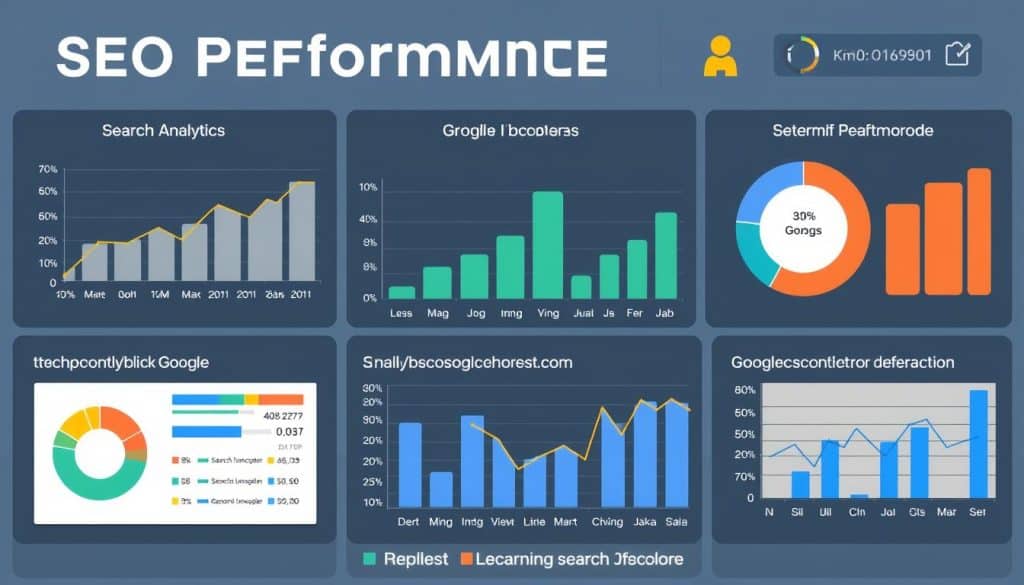
Understanding your SEO performance is key to making informed decisions that drive digital growth. To achieve this, you need to measure and analyze your performance regularly. We will guide you through setting up the right tools and identifying the key metrics that matter for SEO success.
Setting Up Proper Tracking with Google Analytics and Search Console
To measure your SEO performance effectively, you need to set up Google Analytics and Google Search Console. Google Analytics is the gold standard for website traffic analytics, providing insights into metrics such as traffic, time on page, engagement, and more. Google Search Console, on the other hand, is essential for content-focused and technical SEO, helping you identify pages that may need a refresh.
To get started, ensure that both tools are properly configured. For Google Analytics, this means setting up goals and events that align with your SEO objectives. For Google Search Console, verify your site ownership and submit your sitemap to ensure accurate data collection.
Key Metrics to Monitor for SEO Success
Once you have set up your tracking tools, it’s crucial to focus on the right metrics. Organic traffic is a primary indicator of SEO success, as it shows how many visitors are reaching your site through search engines. Other key metrics include average session duration, bounce rate, and pages per session, which provide insights into user engagement and content relevance.
Additionally, monitor your search console data to understand how your site appears in search results, including impressions, clicks, and click-through rates. By analyzing these metrics, you can refine your SEO strategy to improve performance and drive more qualified traffic to your site.
Advanced SEO Techniques for Competitive Markets
To dominate competitive markets, businesses must leverage advanced SEO strategies that go beyond standard optimization practices. In crowded digital landscapes, merely having a well-optimized website is not enough; what is required is a sophisticated approach that incorporates cutting-edge techniques to enhance visibility and drive growth.
Capturing Featured Snippets and Rich Results
One of the most effective ways to increase your online presence is by capturing featured snippets and rich results. Featured snippets are short answers that appear at the top of search results, providing users with quick and relevant information. To capture these, you need to identify opportunities where your content can be the best answer. This involves analyzing your current rankings, identifying gaps in the existing featured snippets, and formatting your content to directly answer the search queries.
For instance, you can use tools like Site Explorer to find keywords where you rank in the top 10 but don’t have a featured snippet. By optimizing your content for these keywords and structuring it in a way that Google favors, you can increase your chances of being featured. Rich results, on the other hand, provide additional information such as reviews, prices, and availability, making your content more appealing and informative.
| SEO Technique | Description | Benefit |
|---|---|---|
| Featured Snippets Optimization | Structuring content to directly answer search queries | Increased visibility at the top of search results |
| Rich Results Markup | Adding schema markup to provide additional information | Enhanced search result listings with extra details |
Implementing Schema Markup for Enhanced Visibility
Schema markup is a powerful tool that helps search engines understand the context and content of your webpage, making it eligible for rich results and enhanced visibility. By implementing schema markup correctly, you can provide search engines with additional information about your content, such as reviews, events, and FAQs, which can then be displayed in search results, attracting more users.
To implement schema markup effectively, you need to identify the types of schema that are relevant to your content and business. For example, if you have a product page, you can use schema markup to highlight product details such as price, availability, and reviews. For more information on how to maximize your online visibility with advanced SEO techniques, you can visit this resource.
By combining these advanced SEO techniques, businesses can not only improve their search engine rankings but also enhance their overall online presence, driving more traffic and conversions.
Common SEO Mistakes That Hurt Your Rankings
As we navigate the complex world of Search Engine Optimization (SEO), it’s crucial to identify common mistakes that can significantly impact your website’s rankings. SEO is a critical component of digital marketing, and even minor errors can lead to significant losses in search visibility and traffic.
Black Hat Techniques to Avoid
One of the most detrimental SEO mistakes is employing black hat techniques that violate search engine guidelines. Tactics like keyword stuffing, cloaking, and link schemes may promise quick results but ultimately lead to penalties that can devastate your online presence. These manipulative strategies are designed to deceive search engines, but Google’s increasingly sophisticated algorithms can detect and penalize them, resulting in lost rankings and reduced traffic.
Technical SEO Pitfalls and Their Solutions
Beyond black hat techniques, many SEO pitfalls stem from technical SEO issues. Common problems include crawlability issues, duplicate content, and mobile optimization failures. To address these challenges, it’s essential to implement practical solutions. For instance, ensuring your website is mobile-friendly and has a clear site architecture can significantly improve user experience and search engine crawling. Regularly auditing your site for technical issues and optimizing pages for speed can also enhance your SEO performance over time.
By avoiding these common SEO mistakes and focusing on best practices, you can protect your website’s rankings and maintain a strong online presence.
Conclusion: Building a Sustainable SEO Strategy for Long-Term Growth
As we conclude our comprehensive guide on SEO techniques, it’s essential to synthesize the key insights into a framework for sustainable digital growth. A well-crafted SEO strategy is crucial for achieving long-term growth and maintaining a competitive edge in the digital landscape.
To build a sustainable SEO strategy, you must balance quick wins with strategic initiatives designed to build lasting search visibility. This involves being adaptable and responsive to algorithm updates and evolving search behaviors. By doing so, you can ensure that your website remains optimized for search engines, driving traffic and supporting your overall digital growth objectives.
Effective SEO also requires integrating with other marketing channels to create a cohesive digital strategy. This integration amplifies results across all customer touchpoints, enhancing your overall online presence. To achieve this, it’s essential to allocate resources effectively, determining where to invest time and budget for maximum impact based on your business objectives.
By following the techniques outlined in this guide and staying focused on your target audience, you can develop a robust SEO strategy that drives sustainable digital growth. As you move forward, remember that ongoing effort and adaptation are key to maintaining a competitive edge in the ever-evolving digital landscape.
To further enhance your online presence, consider promoting your website through offline channels, such as including your URL on business cards, letterhead, and other marketing materials. Additionally, leveraging newsletters to inform your audience about new content can be beneficial, as long as it’s done thoughtfully to avoid fatigue or perceived manipulation.
FAQ
What is the primary goal of Search Engine Optimization?
The primary goal of SEO is to increase the quality and quantity of website traffic by ranking higher in search results for specific keywords, ultimately driving revenue growth.
How does keyword research impact SEO success?
Keyword research is crucial in identifying high-value keywords and understanding search intent, enabling businesses to create content that resonates with their target audience and ranks higher in search results.
What is the significance of E-E-A-T principles in content creation?
E-E-A-T principles (Experience, Expertise, Authoritativeness, Trustworthiness) are essential in creating high-quality, credible content that search engines favor, improving the chances of ranking higher.
How can businesses optimize their website’s on-page elements for better rankings?
Businesses can optimize their website’s on-page elements by crafting compelling title tags and meta descriptions, optimizing header tags and content structure, and implementing image optimization best practices.
What is the role of link building in SEO, and how can businesses acquire quality backlinks?
Link building is a critical aspect of SEO, as it helps establish a website’s authority and credibility. Businesses can acquire quality backlinks by creating high-quality, relevant content and leveraging internal linking architecture.
How can businesses measure and analyze their SEO performance?
Businesses can measure and analyze their SEO performance by setting up proper tracking with Google Analytics and Search Console, monitoring key metrics such as keyword rankings, traffic, and conversions.
What are some common SEO mistakes that can hurt website rankings?
Common SEO mistakes include using black hat techniques, neglecting technical SEO, and failing to optimize for mobile-first indexing, all of which can negatively impact website rankings and credibility.
How can businesses stay ahead of the competition in SEO?
Businesses can stay ahead of the competition by implementing advanced SEO techniques, such as capturing featured snippets and rich results, and leveraging schema markup for enhanced visibility.