

In today’s digital landscape, a staggering 93% of online experiences begin with a search engine, making it imperative for businesses to have a strong online presence. We understand that establishing a robust digital footprint is crucial for success, particularly in competitive markets like Qatar.
A strategically created website with effective SEO can dramatically enhance your online visibility, driving more targeted traffic to your site. By integrating SEO during the website development process, businesses can significantly reduce marketing costs while expanding their reach to potential customers.
Key Takeaways
- Understanding the critical relationship between website development and search engine optimization.
- The importance of proper SEO implementation during website creation for business success.
- How a well-optimized website can reduce marketing costs and increase online reach.
- The competitive advantage of having a strategically created website with good SEO in Qatar’s digital marketplace.
- A step-by-step guide to building a website that search engines can easily discover and rank favorably.
Understanding the Fundamentals of SEO
At the heart of a successful online presence lies a profound understanding of SEO fundamentals. As we navigate the complexities of digital marketing, it’s crucial to grasp the core principles that drive search engine optimization.
What is SEO and Why It Matters
SEO, or Search Engine Optimization, is about making your website more visible and understandable to search engines, thereby helping users find your site when they search for related content. “The ultimate goal of SEO is to drive quality traffic to your website,” a notion that underscores the importance of aligning your online presence with the algorithms and preferences of major search engines like Google.
SEO isn’t just about improving your website’s ranking; it’s about connecting your business with potential customers who are actively searching for the products or services you offer. By optimizing your website for search engines, you’re enhancing its ability to reach the right audience at the right time.
The Balance Between User Experience and Search Engines
A key principle of modern SEO is striking a balance between optimizing for search engine algorithms and providing an exceptional user experience. This involves understanding how search engines use automated crawlers to discover, index, and rank content based on numerous ranking factors. As search engines evolve, content quality and relevance have become paramount, as they directly impact how well your website is understood and ranked.
The relationship between technical website elements and content quality forms the foundation of effective SEO. By focusing on creating a seamless user experience while adhering to SEO best practices, businesses can improve their online visibility and drive meaningful engagement with their target audience.
As we continue to explore the intricacies of SEO, it’s clear that the discipline has evolved significantly, moving beyond keyword stuffing to a more sophisticated approach that prioritizes user experience, content quality, and technical excellence.
Key Elements of a Website Created With Good SEO
To establish a strong online presence, your website must be designed with SEO best practices in mind. When you built your website, you likely created it with your users in mind, trying to make it easy for them to find and explore your content. One of those users is a search engine, which helps people discover your content.
Technical Foundation for Search Visibility
The technical architecture of your website determines how easily search engine crawlers can discover and index your content, directly impacting your search results placement. We’ll identify the critical technical elements that form the foundation of a website optimized for search engine visibility from the ground up.
- Proper site structure allows search engines to understand your website’s hierarchy and content organization.
- Clean code ensures that search engine crawlers can efficiently crawl and index your website’s pages.
- Optimized metadata, such as title tags and meta descriptions, provides search engines with essential information about your content.
Content Quality and Relevance
Content quality and relevance have become the cornerstone of modern SEO, with search engines increasingly able to evaluate content based on expertise, authoritativeness, and trustworthiness. Understanding how to create content that satisfies both search engine algorithms and user needs is essential for websites seeking to rank well.
- Content depth and comprehensiveness contribute to better search visibility and user engagement.
- Uniqueness and originality of content help to differentiate your website from competitors and improve its credibility.
The synergy between technical optimization and content quality creates a powerful foundation for sustained SEO performance.
Planning Your SEO Strategy Before Building
Before diving into the development of your website, it’s crucial to lay the groundwork with a well-planned SEO strategy. A comprehensive plan ensures that your website is optimized for search engines from the start, setting you up for success in the competitive online landscape.
Setting Clear Goals and KPIs
Setting clear, measurable goals and key performance indicators (KPIs) provides the strategic direction for your SEO implementation. This step allows for proper performance evaluation and helps in making data-driven decisions to optimize your website further. By establishing these goals, you can align your SEO efforts with your overall business objectives.
Identifying Your Target Audience in Qatar
Understanding your target audience in Qatar requires comprehensive research into local search behaviors, cultural preferences, and digital consumption patterns. Developing buyer personas specific to the Qatari market helps tailor your content strategy to address the unique needs and search behaviors of your potential customers. This targeted approach enhances user experience and improves search engine rankings.
Competitor Analysis and Market Research
Conducting an effective competitor analysis and market research provides valuable insights into search trends, customer needs, and potential content opportunities. This research informs your website structure and content strategy, helping you identify opportunities and gaps in the market. By understanding your competitors and the market landscape, you can develop a more effective SEO strategy.
- Outline the critical pre-development planning process for your website with SEO in mind.
- Set clear, measurable goals and KPIs for your SEO implementation.
- Understand your target audience in Qatar through comprehensive research.
- Conduct effective competitor analysis to identify opportunities and gaps.
Keyword Research: The Foundation of SEO Success

Effective keyword research is the cornerstone of a successful SEO strategy, enabling businesses to connect with their target audience in Qatar. By understanding what your potential customers are searching for, you can tailor your content to meet their needs, thereby enhancing your website’s visibility in search engine results.
Finding High-Value Keywords for Your Industry
Identifying high-value keywords involves analyzing search volume, competition, relevance, and commercial intent to prioritize the most valuable search terms. To do this effectively, we use advanced keyword research techniques that help identify long-tail keywords with lower competition but high conversion potential. For instance, instead of targeting broad terms, focusing on specific phrases like “Qatari digital marketing services” can yield better results.
By leveraging tools and analytics, we can uncover keyword trends specific to the Qatari market and your industry, identifying seasonal opportunities and emerging search patterns. This insight allows us to create a comprehensive content strategy that addresses various search intents, from informational to transactional.
Understanding Search Intent and Keyword Mapping
Understanding search intent is crucial for creating content that resonates with your audience. We categorize keywords by informational, navigational, commercial, and transactional intent to develop appropriate content. For example, a user searching for “how to improve website SEO” has an informational intent, while someone searching for “SEO services in Qatar” has a commercial intent.
Keyword mapping strategically assigns target keywords to specific pages on your website, ensuring that your content strategy is coherent and effective. By doing so, we can create content that satisfies both search engines and users, ultimately driving more qualified traffic to your website.
Creating an SEO-Friendly Website Structure
The structure of your website plays a significant role in how search engines crawl and index your content. A well-organized site not only enhances user experience but also improves your site’s visibility on search engines.
When setting up or redoing your site, organizing it in a logical way can significantly impact how both users and search engines understand your content. This involves grouping topically similar pages into directories, which helps search engines like Google comprehend the relationship between different pages on your site.
Logical Site Hierarchy and Navigation
A logical site hierarchy is crucial for both user experience and SEO. By organizing content from general to specific, you help search engines understand the relationship between different pages and topics on your site. This can be achieved by creating clear categories and subcategories that make it easy for users to navigate your site.
Implementing clear and consistent navigation is also vital. It not only helps users find what they’re looking for but also provides search engines with clear pathways to discover your content. A well-planned site hierarchy ensures that your website is both user-friendly and SEO-friendly.

URL Structure and Internal Linking Strategy
Creating SEO-friendly URL structures is another critical aspect of a well-structured website. Using descriptive, keyword-rich slugs in your URLs improves both user experience and search engine understanding of your content. For instance, a URL like “example.com/seo-tips” is more informative than “example.com/page1.”
Strategic internal linking practices are also essential. By linking relevant pages together, you distribute page authority throughout your site and create topical relevance clusters. This not only helps search engines understand your site’s structure but also enhances user experience by providing additional relevant content. For more insights on website architecture, visit Backlinko’s guide on SEO architecture.
On-Page SEO Optimization Techniques

On-page SEO is the foundation of a successful SEO strategy, enabling your website to rank higher in search engine results. By optimizing individual web pages, you can improve your website’s visibility, drive more traffic, and increase your online presence.
Title Tags, Meta Descriptions, and Headings
Title tags, meta descriptions, and headings are crucial on-page SEO elements that help search engines understand your website’s content. Title tags serve as the primary clickable headline in search results, requiring strategic keyword placement while remaining compelling to users. A good title tag is unique to the page, clear, concise, and accurately describes the contents of the page.
Meta descriptions function as “ad copy” for your pages in search results, needing to include relevant keywords while encouraging clicks through value propositions. It’s essential to write unique and descriptive meta descriptions for each page on your website.
Content Optimization and Keyword Placement
Strategic keyword placement throughout your content requires balance. You need to incorporate keywords naturally without sacrificing readability or risking over-optimization. Content optimization extends beyond keywords to include readability, formatting, multimedia integration, and comprehensive topic coverage.
To optimize for featured snippets and other SERP features, structure your content to directly answer common questions in your industry. This involves using a clear and concise format, such as lists or tables, and providing valuable insights that address the user’s search intent.
Technical SEO Implementation
Implementing technical SEO is crucial for ensuring your website is crawlable and indexable by search engines. A well-implemented technical SEO strategy enhances your site’s visibility and ranking. We will guide you through the essential technical SEO implementations that should be addressed during website creation.
One critical aspect is creating and submitting comprehensive XML sitemaps. A sitemap is a file that contains all the URLs on your site that you care about. Some content management systems (CMS) may even do this automatically for you. Submitting a sitemap helps search engines discover and understand the structure and importance of pages on your website.
Creating and Submitting Sitemaps
To create a sitemap, you can use various online tools or plugins available for your CMS. Once created, you’ll need to submit it to search engines like Google through their webmaster tools. This process ensures that your website pages are crawled and indexed efficiently.
Setting Up Robots.txt and Canonical Tags
Configuring robots.txt files correctly is vital for guiding search engine crawlers on which parts of your site to crawl and which to ignore. Additionally, implementing canonical tags correctly prevents duplicate content issues by specifying the preferred version of similar or identical pages.
Implementing Schema Markup
Schema markup, or structured data, provides search engines with explicit information about your content, enabling rich results and enhanced SERP features. By adding schema markup to your website, you can improve how your pages are represented in search results, potentially increasing click-through rates.
By focusing on these technical SEO implementations, you can significantly improve your website’s SEO and overall performance in search engines.
Mobile Optimization: A Critical SEO Factor
The shift towards mobile-first indexing by search engines has made mobile optimization a critical SEO factor. As of 2023, there were 6.47 billion active mobile internet users, highlighting the importance of having a mobile-friendly website. A responsive website not only improves SEO but also ensures a seamless user experience across devices.
Responsive Design Best Practices
Implementing responsive design is crucial for adapting to different screen sizes and devices. This approach ensures optimal user experience and is favored by search engines. Key considerations include touch-friendly navigation and appropriate font sizes. A well-designed responsive website rearranges content to suit smaller screens without compromising the user flow, making it intuitive for users to navigate and complete actions like searching for products and checking out.
Mobile Page Speed Optimization
Mobile page speed optimization is critical for reducing loading times on mobile networks. Techniques such as image optimization and code minification are essential. Moreover, optimizing for Core Web Vitals, Google’s metrics for measuring page experience on mobile devices, is vital. Accelerated Mobile Pages (AMP) can further enhance mobile performance for certain types of content.
By focusing on mobile optimization, businesses can improve their SEO, enhance user experience, and ultimately drive more conversions. It’s about creating a seamless experience across all devices, ensuring that users can easily access and navigate your website, regardless of how they choose to visit it.
Website Speed and Performance Optimization

Website speed and performance optimization have become critical factors in determining online success. A study from Unbounce found that nearly 70% of consumers admit that page speed impacts their willingness to buy from an online retailer. If your website takes too long to load, people will get frustrated and leave. Search engines notice this and might rank your site lower.
Image Optimization and File Compression
Image optimization techniques include proper sizing, format selection, compression, and lazy loading to dramatically reduce page weight without sacrificing visual quality. By optimizing your website’s images, you can significantly improve page speed and enhance user experience.
Minimizing Code and Leveraging Browser Caching
Code optimization strategies, such as minification, combining files, and eliminating render-blocking resources, can improve page rendering speed. Implementing browser caching correctly allows returning visitors to experience significantly faster page loads by storing static resources locally, thus enhancing overall website performance.
Content Delivery Networks (CDNs)
Content Delivery Networks (CDNs) distribute your website across global servers to reduce latency and improve loading times for users worldwide. By using a CDN, you can ensure that your website loads quickly and efficiently, regardless of the user’s location, thereby improving SEO and search rankings.
By implementing these strategies, you can significantly improve your website’s speed and performance, leading to better search engine rankings, enhanced user experience, and ultimately, improved conversion rates. Regularly monitoring and optimizing your website’s performance is crucial for maintaining a competitive edge in the digital landscape.
Creating High-Quality, SEO-Friendly Content
High-quality content is the backbone of any effective SEO strategy, driving both user engagement and search engine rankings. We understand that creating content that people find compelling and useful will likely influence your website’s presence in search results more than any other factor.
Content Strategy for Search Engines and Users
A well-planned content strategy forms the cornerstone of effective SEO, requiring a delicate balance between search engine requirements and user needs. To achieve this balance, we need to create a comprehensive content plan based on keyword research and user intent mapping. This ensures that our website addresses the full spectrum of our audience’s information needs.
High-quality content that satisfies both search engines and users should possess certain characteristics, including expertise, authoritativeness, trustworthiness, comprehensiveness, and uniqueness. By focusing on these attributes, we can improve both the readability and search engine understanding of our content.
- Proper heading structure
- Optimal paragraph length
- Effective use of bulleted lists
By incorporating these content formatting best practices, we can enhance the overall user experience and improve our search engine rankings.
Incorporating Multimedia and Visual Elements
Incorporating multimedia elements like images, videos, and infographics can significantly enhance the value of our content, increase user engagement, and capture additional search visibility. To maximize the SEO benefits of multimedia content, it’s essential to optimize file names, alt text, transcripts, and structured data.
| Multimedia Element | Optimization Techniques |
|---|---|
| Images | Use descriptive file names, alt text, and captions |
| Videos | Optimize titles, descriptions, and transcripts |
| Infographics | Use alt text, and provide a descriptive summary |
Link Building Strategies for New Websites

Link building is a vital component of SEO that can significantly impact the visibility and credibility of new websites. As we explore effective link building strategies, it’s essential to understand that links serve as a crucial resource for search engines to discover new pages and potentially rank them in search results.
For new websites, building a robust link profile can be challenging, but focusing on quality over quantity is key. We outline effective link building strategies specifically designed for new websites that lack the authority and visibility of established domains.
Building Quality Backlinks
Backlinks are considered “votes of confidence” that signal to search engines the credibility and value of your content. To build quality backlinks, we focus on content-driven link building strategies that create valuable resources worthy of natural links. This involves producing high-quality, engaging content that addresses the needs of your target audience. For more insights on effective link building techniques, visit SEO link building techniques that work.
Building relationships with industry publications, influencers, and complementary businesses creates opportunities for authentic link acquisition. By leveraging these connections, new websites can acquire backlinks from authoritative sources, enhancing their SEO.
Local Link Building in Qatar
For businesses operating in Qatar, local link building is crucial for boosting local search visibility. We discuss local link building strategies specific to Qatar, including partnerships with local businesses, chambers of commerce, and community organizations. By engaging in local events, sponsorships, and community involvement, businesses can build geographically relevant backlinks.
Understanding how to leverage local SEO opportunities is vital for new websites targeting a Qatari audience. By focusing on local link building, businesses can improve their online presence and attract more local customers.
Measuring SEO Success with Analytics
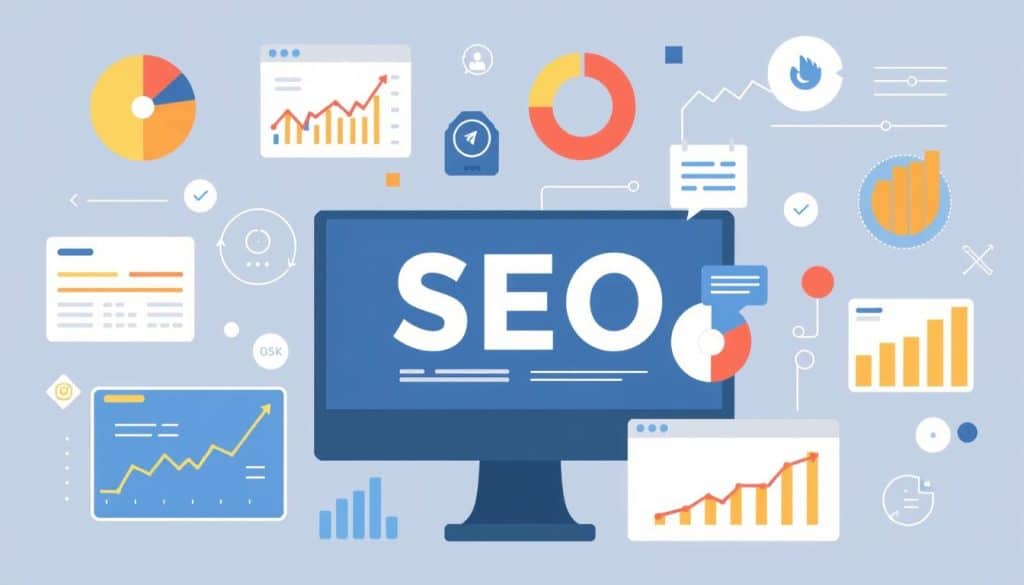
Analytics play a pivotal role in determining the success of your SEO strategy by providing insights into user behavior and website performance. By leveraging analytics tools, you can identify areas for improvement in your website’s structure, content, and user experience.
Setting Up Google Analytics and Search Console
To measure and track your website’s SEO performance, setting up Google Analytics and Search Console is essential. Google Analytics provides insights into user behavior, traffic sources, and conversion patterns, while Google Search Console helps monitor search performance, identify technical issues, and understand how Google sees your website.
Proper configuration of these tools enables you to make data-driven decisions to optimize your SEO efforts. We’ll guide you through the setup process to ensure you’re capturing the right data.
Key Metrics to Track and Analyze
Understanding which key performance indicators (KPIs) to track is crucial for focusing your SEO efforts on metrics that directly impact business results. Key metrics include search traffic quality, engagement metrics, conversion rates, and revenue attribution.
By analyzing these metrics, you can measure the true SEO ROI and identify optimization opportunities. Creating custom dashboards and automated reports ensures stakeholders receive relevant performance data without getting lost in technical details.
Common SEO Mistakes to Avoid
When building a website, it’s crucial to avoid common SEO mistakes that can negatively impact your search engine rankings. Neglecting mobile optimization, slow page load times, and ignoring on-page SEO elements are just a few errors that can hurt your online presence.
Technical Pitfalls
Technical SEO errors can severely limit your website’s search visibility. Some common technical pitfalls include improper redirects, broken links, duplicate content, and crawl blocks. To avoid these issues, ensure that your website’s technical foundation is solid. For instance, a study found that nearly 70% of consumers admit that page speed impacts their willingness to buy from an online retailer. You can learn more about common SEO mistakes on https://www.seo.com/blog/seo-mistakes/.
| Technical Issue | Impact on SEO | Solution |
|---|---|---|
| Improper Redirects | Can lead to crawl errors and loss of link equity | Use 301 redirects for permanent changes |
| Broken Links | Can negatively impact user experience and crawlability | Regularly audit and fix broken links |
| Duplicate Content | Can lead to penalties and reduced visibility | Use canonical tags to specify preferred versions |
Content and User Experience Errors
Content-related mistakes, such as thin content, keyword stuffing, and duplicate content, can trigger algorithmic penalties or result in poor rankings. Additionally, user experience errors like intrusive interstitials, misleading titles, and poor mobile optimization can indirectly impact SEO performance. To avoid these issues, focus on creating high-quality, engaging content that provides value to your users. For expert tips on elevating your business with lead generation, visit https://oldy2.cres.vip/elevate-your-business-with-expert-lead-generation-tips/.
By understanding and avoiding these common SEO mistakes, you can improve your website’s search engine rankings and drive more traffic to your site. Regular SEO audits can help identify and address issues before they significantly impact your search performance.
Conclusion: Maintaining Long-Term SEO Success
As we conclude our comprehensive guide on creating a website with good SEO, it’s clear that a well-planned strategy is crucial for long-term success. We’ve explored the comprehensive process of creating a website with good SEO, from initial planning through technical implementation and content creation. Maintaining SEO success requires ongoing commitment to monitoring, analyzing, and adapting your strategy as search algorithms and user behaviors evolve.
To achieve sustained online presence and competitive advantage, regular content updates, technical audits, and performance analysis are essential. By integrating SEO into your overall digital marketing strategy and building a culture of SEO awareness, you can drive revenue growth through improved search visibility and increased organic traffic, ultimately enhancing your website’s performance in the Qatari market.
FAQ
What is the importance of keyword research in SEO?
Keyword research is crucial in SEO as it helps identify relevant terms and phrases your target audience uses, enabling you to optimize your content and increase search engine rankings.
How does user experience impact search engine rankings?
User experience plays a significant role in search engine rankings, as search engines like Google prioritize websites that provide a seamless and engaging experience for users, including factors like page speed, mobile responsiveness, and content quality.
What is the role of backlinks in SEO?
Backlinks are essential in SEO, as they signal to search engines that your content is authoritative and trustworthy, with high-quality backlinks from relevant sources contributing to improved search engine rankings.
How often should I update my website’s content?
Regularly updating your website’s content is vital to maintaining a strong online presence, with a recommended frequency of at least once a month, focusing on fresh, high-quality, and relevant content that resonates with your target audience.
What is the significance of local link building in Qatar?
Local link building in Qatar is crucial for businesses targeting a local audience, as it involves acquiring backlinks from local sources, such as directories, partnerships, and community involvement, to improve search engine rankings and drive local traffic.
How do I measure the success of my SEO efforts?
To measure SEO success, we use tools like Google Analytics and Search Console to track key metrics, including organic traffic, search engine rankings, and conversion rates, providing insights to refine and optimize your SEO strategy.
What are common SEO mistakes to avoid?
Common SEO mistakes to avoid include keyword stuffing, duplicate content, poor mobile usability, slow page speed, and neglecting local SEO, as these can lead to penalties, decreased rankings, and a negative user experience.
How does content quality impact SEO?
High-quality, engaging, and informative content is essential for SEO, as it not only resonates with your target audience but also signals to search engines that your website is a trusted and authoritative source, improving search engine rankings.