

Are you wondering how top businesses in Qatar achieve seamless digital experiences and drive growth through their web applications? The secret lies in understanding the synergy between frontend and backend development. In today’s digital landscape, a robust web presence is crucial, and it all starts with the right development strategy.
We specialize in delivering comprehensive web development services that encompass both frontend and backend expertise. Our team of skilled developers crafts engaging user interfaces and builds powerful backend systems that drive business success. By leveraging the latest technologies and trends, we create web applications that are not only visually appealing but also functionally robust, enhancing user experience.
Key Takeaways
- Comprehensive expertise in both frontend and backend development services.
- Seamless user experiences through expert frontend development.
- Robust functionality through powerful backend systems.
- Understanding the relationship between frontend and backend development is crucial.
- Expertise in both areas is essential for successful digital products.
For more insights on web application terminology, visit our resource onessential terms for digital growth.
Understanding the Two Sides of Web Development

At the heart of every web application lies the intricate relationship between the client-side and server-side. This synergy is what enables users to interact with websites seamlessly.
What Makes a Website Function
A website functions through the constant dialogue between the client-side (frontend) and the server-side (backend). Whenever you fill out a contact form, type in a web address, or make a purchase, your browser sends a request to the server side, which returns information in the form of frontend code that the browser can interpret and display.
| Component | Role |
|---|---|
| Client-Side (Frontend) | User interface and experience, handling user interactions. |
| Server-Side (Backend) | Manages data, processes requests, and returns responses. |
The Client-Side and Server-Side Relationship
The client-side and server-side maintain a constant dialogue through requests and responses. When users interact with a web application, their actions trigger requests to the server, which processes the information and returns appropriate responses. This relationship is fundamental to all dynamic web experiences, from e-commerce to social media platforms. Developers must optimize this communication to ensure fast load times and smooth user experiences. Understanding this relationship is crucial for diagnosing issues and improving performance in web applications.
Front End Development: Creating the User Experience
Creating a seamless user experience is the primary goal of front end development, and it requires a deep understanding of various technologies and a keen eye for design and user interface details.
We believe that front end development is not just about writing code; it’s about crafting an experience that engages users and drives conversions. To achieve this, front end developers rely on a range of core technologies.
Core Technologies in Front End Development
Front end development is built on a foundation of three core technologies: HTML, CSS, and JavaScript. Understanding these fundamentals is crucial for any aspiring front end developer.
HTML, CSS, and JavaScript Fundamentals
HTML provides the structure of a website, CSS handles the layout and visual styling, and JavaScript adds interactivity. Together, they form the backbone of front end development. As we discussed in our article on optimizing visual design in UX, a well-designed user interface is critical for digital growth.
Popular Front End Frameworks and Libraries
Beyond the basics, front end developers often leverage frameworks and libraries like React, Angular, and Vue.js to streamline development and enhance functionality.
The Role and Responsibilities of Front End Developers
Front end developers are responsible for translating designs into functional user interfaces. Their key responsibilities include:
- Implementing user interface components that are both visually appealing and functional.
- Ensuring websites are responsive, accessible, and perform well across different devices and browsers.
- Collaborating closely with designers and back end developers to create cohesive user experiences.
As noted by a leading expert, “The best front end developers are those who can balance technical skills with an understanding of user needs.”
“The best front end developers are those who can balance technical skills with an understanding of user needs.”
To illustrate the importance of front end development, let’s look at some key statistics:
| Statistic | Value |
|---|---|
| Percentage of users who stop using an app due to poor performance | 47% |
| Average bounce rate for websites with poor user experience | 55% |
| Increase in conversions due to improved user experience | Up to 200% |
Back End Development: Powering the Application

Back end development services are essential for building the server-side components that drive web applications, ensuring they are efficient, secure, and scalable. We specialize in creating robust back end solutions that meet the complex needs of modern businesses.
Server-Side Technologies and Languages
The choice of server-side technologies and languages is critical in back end development. It determines the application’s performance, scalability, and security.
Popular Programming Languages for Back End
We utilize popular programming languages such as Java, Python, and Ruby to develop robust back end applications. These languages offer extensive libraries and frameworks that simplify development.
Database Management Systems
Effective database management is crucial for any web application. We design and implement database structures using systems like MySQL and MongoDB, ensuring efficient data storage and retrieval.
The Role and Responsibilities of Back End Developers
Our back end developers are responsible for creating and maintaining the server-side components, designing database structures, and implementing business logic. They work closely with front end developers to ensure seamless integration and optimal application performance.
Key Differences Between Back End and Front End Development
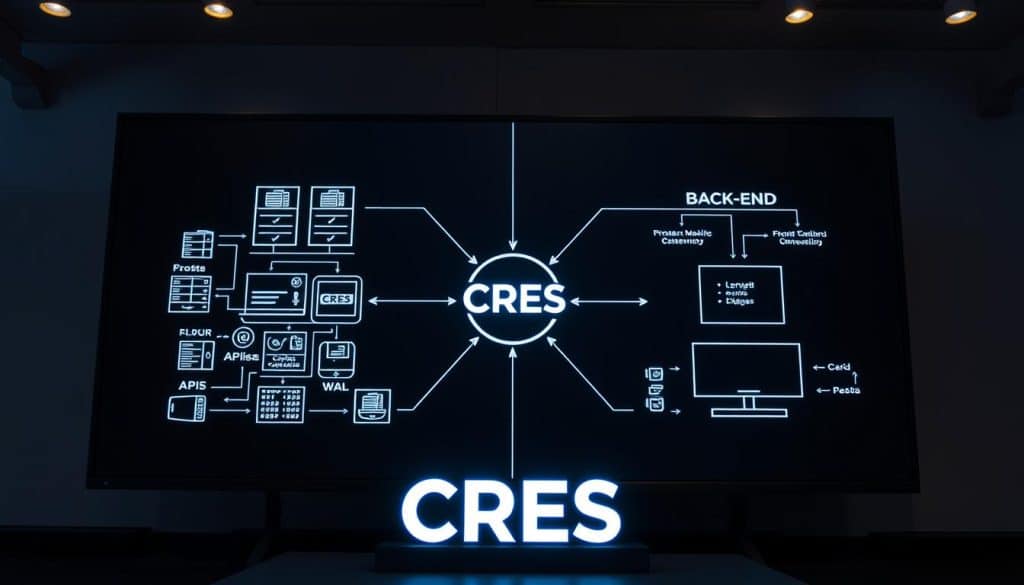
When developing a web application, understanding the distinction between back end and front end development is crucial. The distinction between back end and front end development is not just about different technologies, but also about different goals and security considerations. While both are essential for a web application, they have different focus areas and requirements.
Development Goals and Focus Areas
Front end development focuses on creating a seamless user experience, dealing with the client-side of the application. It involves crafting the visual and interactive aspects that users engage with directly. On the other hand, back end development powers the application‘s core functionality, managing data storage, processing, and retrieval. It is concerned with the server-side logic, database integration, and API connectivity.
Security Considerations
Security is a critical aspect where back end and front end development differ significantly. Front end security focuses on protecting user interactions and preventing client-side vulnerabilities like XSS attacks. We implement measures such as input validation and multifactor authentication workflows to safeguard the frontend. In contrast, back end security concentrates on data protection, authentication systems, and preventing server-side exploits. It involves securing the backend services, including connected databases, APIs, and server-side programming languages. For a comprehensive security strategy, both areas must work together. Our team develops secure web application code solutions that address these differences, ensuring robust protection for your web application. Learn more about our approach to secure web app code solutions.
Full-Stack Development: Combining Both Worlds
As businesses strive for digital excellence, the concept of full-stack development has gained prominence, offering a comprehensive solution that integrates front-end and back-end technologies. This approach ensures that web applications are not only visually appealing but also functionally robust.
Key Characteristics of a Full-Stack Developer
A full-stack developer is proficient in both front-end and back-end development, possessing a versatile skill set that enables them to handle all layers of a web application. This expertise allows for more streamlined communication and project management.
Benefits of Full-Stack Expertise
Full-stack development offers numerous advantages, including more efficient project management, better integration between front-end and back-end components, and faster development cycles. For businesses, this translates into more cost-effective solutions and the ability to rapidly deploy complete web applications, giving them a competitive edge in Qatar’s market.
- Efficient project management with fewer communication barriers.
- Informed decision-making considering both user experience and technical implementation.
- Better integration between front-end and back-end components.
- Faster development cycles and cost-effective solutions.
- Rapid deployment of complete web applications.
Career Prospects in Web Development
The demand for skilled web developers continues to rise in Qatar’s growing digital landscape. As businesses expand their online presence, the need for professionals who can create seamless user experiences and build robust applications is becoming increasingly important.
Developers with expertise in both front-end and back-end development are in high demand. According to industry trends, expert development services are crucial for businesses looking to establish a strong online presence.
Salary Expectations for Developers in Qatar
Salary expectations for web developers in Qatar vary based on factors such as experience, programming languages, and frameworks. Backend developers, for instance, are proficient in languages like Python, Ruby, Java, and PHP, and frameworks like Django, Ruby on Rails, and Laravel. These skills significantly impact their market value.
| Experience Level | Average Salary Range (QAR) |
|---|---|
| Junior Developer | 5,000 – 7,000 |
| Mid-Level Developer | 8,000 – 12,000 |
| Senior Developer | 15,000 – 20,000+ |
Skills That Increase Your Market Value
To stay competitive, developers should focus on acquiring in-demand skills. Proficiency in programming languages and frameworks is crucial. Additionally, experience with cloud platforms like AWS, Azure, and containerization technologies like Docker is highly valued. Security expertise is also increasingly important, with specialized knowledge commanding premium compensation.
- Proficiency in in-demand programming languages and frameworks
- Experience with cloud platforms and containerization technologies
- Security expertise
- Soft skills like communication, problem-solving, and project management
- Multilingual developers with cross-cultural communication skills
As the web development landscape continues to evolve, staying up-to-date with the latest technologies and trends is essential for career advancement. For more insights on front-end and back-end development, you can refer to resources like GeeksforGeeks.
Choosing Between Front End and Back End Development
When deciding between front end and back end development, it’s essential to consider your personal interests and career goals. Both areas are crucial for creating a comprehensive web application, and understanding their differences is key to making an informed decision.
Assessing Your Interests and Strengths
To choose between front end and back end development, you need to assess your skills and interests. Front end development involves creating the user interface and user experience using HTML, CSS, and JavaScript. If you enjoy designing and are proficient in these technologies, front end might be the way to go. On the other hand, back end development focuses on server-side logic, database integration, and API connectivity, often using programming languages like Python or JavaScript (Node.js).
| Aspect | Front End Development | Back End Development |
|---|---|---|
| Primary Focus | User interface and experience | Server-side logic and database integration |
| Key Technologies | HTML, CSS, JavaScript, React, Vue | Python, JavaScript (Node.js), Ruby, PHP |
| Learning Path | Starts with HTML, CSS, and JavaScript | Begins with a programming language and database management |
Learning Paths for Aspiring Developers
For those interested in pursuing a career in either front end or back end development, structured learning paths are available. Front end learning typically begins with HTML, CSS, and JavaScript before progressing to frameworks like React or Vue. Back end learning paths often start with a programming language like Python or JavaScript (Node.js) before covering databases and APIs. You can explore various learning options, including online platforms, bootcamps, and university programs, to gain the necessary skills. For instance, you can visit GeeksforGeeks to learn more about the differences between front end and back end development and how to choose between them.
How Businesses Benefit from Expert Development Services
In today’s digital landscape, businesses in Qatar are increasingly relying on expert development services to drive growth and innovation. We understand that a robust online presence is crucial for businesses to thrive in a competitive market.
Expert development services play a vital role in creating seamless user experiences that captivate and retain customers. Creating Seamless User Experiences is at the forefront of our development goals. By leveraging the latest front-end technologies, we craft intuitive and responsive interfaces that enhance user engagement.
Creating Seamless User Experiences
Our approach to front-end development focuses on delivering fast, secure, and user-friendly applications that meet the evolving needs of businesses. Some key aspects include:
- Designing intuitive and responsive interfaces
- Implementing cutting-edge technologies for enhanced performance
- Ensuring cross-browser compatibility and accessibility
Building Robust and Scalable Applications
On the back-end, our developers build and maintain server-side operations that are reliable, efficient, and scalable. Building Robust and Scalable Applications is critical for businesses looking to expand their user base and adapt to changing market conditions. Our back-end development services include:
- Creating scalable architectures that handle growing data volumes
- Implementing robust security measures to protect sensitive business and customer data
- Ensuring high-performance and minimal downtime
By investing in expert development services, businesses in Qatar can reap numerous benefits, including enhanced customer trust, improved business continuity, and the flexibility to seize new opportunities in a rapidly evolving market.
Conclusion: The Future of Back End and Front End Development
In the ever-evolving digital landscape, the synergy between backend and frontend development is more crucial than ever. Both aspects are equally important, working together to create a seamless web experience. While frontend development provides the user interface, backend development ensures the underlying data and functionality work properly.
The future of web development points toward continued specialization and increasing integration between frontend and backend technologies. Emerging trends like serverless architecture and AI are transforming both sides of development, enabling more sophisticated applications. As developers adapt to new programming languages and methodologies, businesses in Qatar’s growing digital economy will gain significant competitive advantages by leveraging these evolving approaches.
Our development services stay at the forefront of these trends, helping businesses build future-proof digital solutions with cutting-edge software.
FAQ
What is the difference between front end and back end development?
Front end development focuses on creating the user interface and user experience of a website or application, using programming languages like JavaScript, HTML, and CSS. Back end development, on the other hand, involves server-side logic, database integration, and API connectivity, using languages like Java, Python, and Ruby.
What skills are required for a full-stack developer?
A full-stack developer should possess a combination of front end and back end development skills, including proficiency in programming languages like JavaScript, HTML/CSS, and server-side languages like Node.js, Python, or Ruby. They should also be familiar with databases, APIs, and version control systems like Git.
How do I choose between front end and back end development?
To choose between front end and back end development, assess your interests and strengths. If you enjoy designing user interfaces and creating engaging user experiences, front end development might be the better fit. If you’re more interested in server-side logic, database management, and API integration, back end development could be the way to go.
What are the security considerations for web development?
Security is a critical aspect of web development, involving measures like data encryption, secure authentication, and authorization. Both front end and back end developers must consider security threats like SQL injection, cross-site scripting (XSS), and cross-site request forgery (CSRF) when building web applications.
What is the average salary for developers in Qatar?
The average salary for developers in Qatar varies based on factors like experience, technology stack, and industry. According to recent data, the average salary for a full-stack developer in Qatar is around ,000 per year, while front end and back end developers can expect salaries ranging from ,000 to ,000 per year.
How do businesses benefit from expert development services?
Businesses benefit from expert development services by gaining robust, scalable, and secure web applications that enhance user experience, improve customer engagement, and drive revenue growth. Expert developers help businesses stay competitive in the digital landscape by leveraging the latest technologies and best practices.