

In today’s digital landscape, user experience is paramount. Companies that prioritize user-centered design see significant improvements in customer satisfaction and business outcomes. Did you know that a well-designed digital product can increase user engagement by up to 200%?
At the forefront of this digital revolution are expert UX graphic designers who merge visual aesthetics with functional user experiences to create digital products that excel in both form and function. As the field continues to evolve, designers must balance business objectives with user needs to drive measurable results.
We’ll explore the essential components of UX graphic design, from fundamental concepts to advanced implementation strategies, providing actionable insights for both aspiring and experienced professionals.
Key Takeaways
- Understanding the principles of user-centered design
- The importance of balancing business objectives with user needs
- How UX graphic design combines aesthetics with functionality
- Strategies for creating digital products that drive measurable results
- Essential components of UX graphic design for digital excellence
Understanding UX Graphic Design Fundamentals
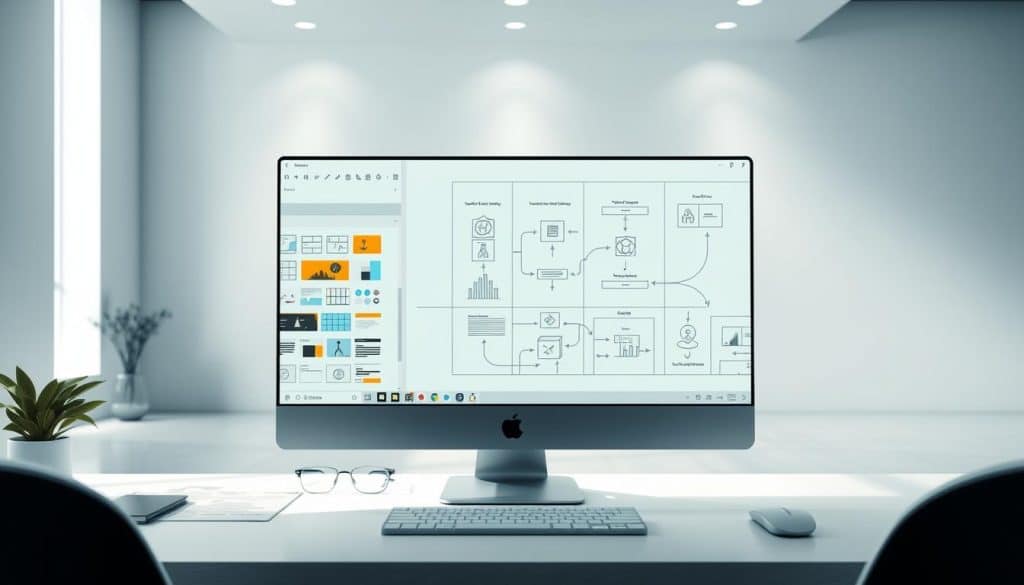
At its core, UX graphic design seeks to merge the creative aspects of graphic design with the analytical aspects of user experience. This fusion is crucial in creating digital products that are not only visually appealing but also highly functional and user-friendly.
What Is UX Graphic Design?
UX graphic design represents the intersection of visual aesthetics and user-centered functionality, creating digital experiences that are both beautiful and intuitive. It goes beyond traditional graphic design by incorporating elements such as information architecture and product prototyping to enhance the user experience.
The core principles of UX graphic design distinguish it from traditional graphic design, focusing on how user needs drive design decisions. This approach ensures that the design is not just visually appealing but also meets the user’s expectations and needs.
The Evolution of Design: From Graphics to Experience
The evolution from purely visual graphic design to experience-focused design represents a fundamental shift in how designers approach digital products. Understanding this evolution helps designers recognize the importance of considering user journeys and interaction patterns alongside visual elements.
Modern UX graphic designers must balance aesthetic considerations with functional requirements to create truly effective digital products. By leveraging UX graphic design principles, leading companies are differentiating their products in competitive markets, underscoring the importance of this field in today’s digital landscape.
The Critical Difference Between Graphic Design and UX Design

Understanding the distinction between graphic design and UX design is crucial for creating effective digital products. While both disciplines are integral to the design process, they serve different purposes and require different skill sets.
Graphic design primarily focuses on the visual elements of a product, such as typography, color theory, and computer-aided design. In contrast, UX design takes a broader perspective, focusing on the interaction between the user and the product. This involves a multidisciplinary approach, incorporating user research, information architecture, wireframing, and prototyping to create a seamless user experience.
Visual Appeal vs. User-Centered Functionality
One of the primary differences between graphic design and UX design is their approach to visual elements. Graphic design is concerned with creating visually appealing designs that communicate a brand’s message effectively. On the other hand, UX design prioritizes user-centered functionality, ensuring that the product is not only aesthetically pleasing but also intuitive and easy to use.
We analyze how user-centered functionality requires designers to think beyond aesthetics and consider how users will interact with each element. For instance, a UX designer might focus on creating an intuitive navigation menu that simplifies the user’s journey through the product.
Static Designs vs. Interactive Experiences
The shift from static to interactive design represents a fundamental change in how designers approach their work. Graphic designers typically create static designs, such as logos, brochures, or posters. In contrast, UX designers develop interactive experiences that respond to user needs, requiring new methodologies and tools.
Understanding this critical distinction helps designers transition from creating static designs to developing interactive experiences. By doing so, designers can create digital products that balance both visual appeal and user-centered functionality, resulting in experiences that are both beautiful and usable.
Essential Skills for UX Graphic Design Mastery
The realm of UX graphic design demands a unique fusion of technical expertise and interpersonal skills to create impactful user experiences. As we navigate the complexities of digital design, it’s crucial to identify and develop the skills that distinguish exceptional UX graphic designers.
Technical Skills: Tools and Software Proficiency
Technical proficiency is the backbone of UX graphic design. Designers must be adept in industry-standard tools such as Adobe XD, Figma, and Sketch to effectively execute their design vision. For those looking to expand their skill set, exploring resources like essential skills for UX designers can provide valuable insights.
Beyond software skills, understanding fundamental design principles, including color theory, typography, and layout, remains critical for creating visually compelling experiences. A strong foundation in these technical skills enables designers to bring their creative ideas to life.
Soft Skills: Research, Empathy, and Communication
While technical skills are essential, soft skills play a equally vital role in UX graphic design. Research skills enable designers to gather meaningful insights about user behaviors and preferences, informing design decisions with data-driven insights.
Empathy stands as a crucial soft skill, allowing designers to truly understand and design for user needs rather than personal preferences. Furthermore, effective communication skills are necessary for articulating design decisions to stakeholders and collaborating with development teams.
The UX Design Process for Graphic Designers
The UX design process is a multifaceted approach that graphic designers must master to deliver exceptional user experiences. This comprehensive process ensures that digital products are both aesthetically pleasing and highly functional.
User Research and Persona Development
User research forms the foundation of effective UX design, helping designers understand their target audience and the problems they need to solve. Through observations, surveys, and ethnographic studies, designers gather valuable insights that inform the product’s design. We develop detailed user personas that transform abstract data into relatable representations of our target users, ensuring that our design decisions are user-centered.
Information Architecture and Wireframing
Information architecture provides the structural framework for digital experiences, organizing content in ways that make intuitive sense to users. Wireframing allows designers to map out the skeletal framework of interfaces before committing to visual design elements. By creating a clear and logical information architecture, we can ensure that our designs are both functional and user-friendly.
Prototyping and Usability Testing
Prototyping brings designs to life, creating interactive models that simulate the final product experience. Usability testing provides critical feedback on design decisions, revealing pain points and opportunities for improvement before final implementation. By testing our designs with real users, we can refine our designs to meet user needs effectively. For more insights on how effective design and SEO integration can maximize ROI, visit our resource on maximizing ROI with effective web design and SEO.
The UX design process is iterative, meaning that designers must be comfortable with continuous refinement based on user feedback and testing results. By embracing this process, graphic designers can create digital products that are both visually appealing and highly functional.
- User research informs the design process, ensuring that solutions meet user needs.
- Information architecture and wireframing provide a structural framework for digital experiences.
- Prototyping and usability testing allow for continuous refinement and improvement.
- The iterative nature of UX design ensures that designs are constantly improved based on user feedback.
Applying Graphic Design Principles to UX Design
Graphic design principles are not limited to visual appeal; they are fundamental in crafting UX designs that are both aesthetically pleasing and functional. As we transition into the digital age, the importance of merging graphic design with UX design becomes increasingly evident. Effective UX design is not just about creating a user-friendly interface; it’s also about making it visually appealing to capture the user’s attention and retain it throughout their interaction with the product.
Color Theory and Typography in User Experience
Color theory remains a cornerstone in UX design, influencing user emotions, guiding attention, and reinforcing brand identity. Strategic color choices can significantly enhance the user experience by creating visual hierarchies and differentiating between various elements on a webpage or application. Similarly, typography plays a crucial role in UX design, affecting readability, accessibility, and the overall tone of digital experiences. For instance, applying fundamental UX design principles such as selecting appropriate typography can greatly enhance the usability of a product.
Visual Hierarchy and Layout for Intuitive Navigation
Visual hierarchy principles are essential in guiding users through interfaces intuitively, creating clear pathways to important information and actions. By leveraging size, color, and positioning, designers can direct the user’s attention effectively. Moreover, layout decisions in UX design must strike a balance between aesthetic considerations and functional requirements, ensuring that beautiful designs are also highly usable. Consistency in visual elements is key to creating cohesive experiences that feel trustworthy and professional to users. The principles of contrast, repetition, alignment, and proximity remain powerful tools for crafting interfaces that are both visually appealing and highly usable.
Tools and Software for UX Graphic Design
To deliver outstanding user experiences, UX graphic designers must leverage the most suitable tools and software. The UX design process involves a variety of tasks, from wireframing and prototyping to user research and testing. We will explore the essential tools that power modern UX graphic design workflows, helping designers select the right resources for their specific needs.

Wireframing and Prototyping Tools
Wireframing tools like Balsamiq, Sketch, and Figma enable designers to quickly create low-fidelity representations of interfaces before committing to detailed designs. Prototyping platforms such as Adobe XD, InVision, and Axure allow designers to create interactive models that simulate the final user experience. These tools support the iterative design process, enabling rapid testing and refinement of interface concepts.
User Research and Testing Platforms
User research platforms like UserTesting, Hotjar, and Optimal Workshop provide valuable insights into how real users interact with designs. Testing tools help designers validate their assumptions and identify usability issues before final implementation, saving time and resources. For a more comprehensive understanding of UX design tools, you can refer to this definitive guide on UX design tools.
By understanding the strengths and limitations of different tools, designers can create more efficient workflows and deliver better results. These tools also facilitate collaboration between designers, developers, and stakeholders throughout the product development process.
Transitioning from Graphic Design to UX Design
Graphic designers looking to expand their skill set may find UX design to be an exciting new challenge. As a graphic designer, you already possess a solid foundation in visual communication and design principles, which are crucial for a career in UX design. The key to a successful transition lies in understanding the nuances of user experience and acquiring new skills that complement your existing expertise.
Leveraging Existing Graphic Design Skills
As a graphic designer, you bring a unique set of skills to the table that are highly valuable in UX design. Your understanding of visual design principles, typography, and color theory can be directly applied to creating user interfaces that are both aesthetically pleasing and functional. Moreover, your experience in designing for various mediums has likely honed your ability to communicate complex ideas simply, a skill that is equally important in UX design.
To leverage these skills effectively, focus on developing your understanding of user research and information architecture. By combining your visual design expertise with these new skills, you can create user experiences that are both intuitive and engaging.
Building a UX Portfolio
Building a compelling UX portfolio requires a different approach than a graphic design portfolio. Instead of focusing solely on the visual outcome, your UX portfolio should demonstrate your design process, problem-solving skills, and ability to think critically about user needs. Include case studies that outline your approach to user research, wireframing, and usability testing.
When creating case studies, focus on the challenges you faced, the decisions you made, and the outcomes of your designs. This will help demonstrate your UX thinking and methodology, even if you don’t have professional UX experience.
| Skill | Graphic Design | UX Design |
|---|---|---|
| Visual Design | High emphasis on aesthetics | Balanced with user needs |
| User Research | Not typically involved | Crucial for understanding users |
| Information Architecture | Not a primary focus | Essential for organizing content |
Education and Certification Options
To transition into UX design, you’ll need to acquire new skills and knowledge. There are various education and certification options available, ranging from self-directed learning to formal certification programs and bootcamps. When choosing an education path, consider what will best support your career goals and provide the necessary skills to succeed in UX design.
According to PayScale, the average salary for a UX designer is significantly higher than that of a graphic designer, with UX designers earning an average of $74,000 compared to $41,000 for graphic designers. This salary increase potential makes the transition to UX design a financially rewarding one.
Measuring Success in UX Graphic Design
Measuring the success of UX graphic design projects requires a multifaceted approach that incorporates both quantitative and qualitative metrics. To effectively gauge the impact of UX design, it’s essential to understand the key factors that contribute to its success.
Key Performance Indicators for UX Projects
To measure the success of UX graphic design projects, we rely on key performance indicators (KPIs) that provide insights into user behavior and design effectiveness. Some of the crucial KPIs include:
- Conversion rates: Measuring the percentage of users who complete a desired action.
- Task completion rates: Evaluating the percentage of users who successfully complete a specific task.
- Time-on-task: Assessing the time taken by users to complete a task, indicating design efficiency.
- Error rates: Tracking the frequency of user errors, highlighting areas for design improvement.
- User satisfaction scores: Gathering feedback through surveys or interviews to gauge user satisfaction.
By understanding which metrics matter for different types of projects, designers can focus their efforts on improvements that deliver measurable business value. For more insights on maximizing ROI through effective digital strategies, visit our page on maximizing ROI with digital marketing strategy.
User Feedback and Continuous Improvement
Beyond quantitative metrics, user feedback plays a vital role in measuring UX design success. Implementing effective user feedback systems allows designers to capture valuable insights throughout the product lifecycle. This feedback informs continuous improvement methodologies, enabling designers to systematically enhance user experiences based on real-world usage data.
Techniques like A/B testing provide a powerful framework for validating design decisions with statistical significance, rather than relying on subjective opinions. By balancing business objectives with user needs, successful UX designers can ensure that their projects deliver both business value and user satisfaction.
Conclusion: The Future of UX Graphic Design
As we navigate the ever-evolving landscape of digital design, the role of UX graphic designers becomes increasingly pivotal. The integration of AI and machine learning into design tools is transforming how designers work, enabling more focus on strategic thinking.
Emerging trends such as voice interfaces, augmented reality, and virtual reality are creating new challenges and opportunities for UX graphic designers. The growing emphasis on accessibility and inclusive design reflects both ethical imperatives and business advantages.
Career opportunities in UX graphic design continue to expand across industries, particularly in healthcare, fintech, and enterprise software. To stay relevant, designers must develop a continuous learning mindset, balancing technical skills with human-centered design thinking.
The future belongs to designers who can create experiences that resonate on both emotional and functional levels. As digital experiences become increasingly integrated into everyday life, the role of UX graphic designers in shaping these interactions becomes more crucial than ever. We guide you in continuing your UX graphic design journey, whether you’re just starting out or looking to advance your existing career.
FAQ
What skills are required to become a proficient UX designer?
To become a proficient UX designer, one needs to possess a combination of technical skills, such as proficiency in wireframing and prototyping tools, and soft skills, including research, empathy, and effective communication. A strong understanding of user-centered principles and human-computer interaction is also essential.
How does user research contribute to the UX design process?
User research plays a vital role in the UX design process by providing valuable insights into user behavior, needs, and motivations. It helps designers create user personas, identify pain points, and develop user journeys that cater to the target audience’s requirements.
What is the difference between a UX designer and a graphic designer?
While both UX designers and graphic designers are involved in the creation of digital products, their primary focus areas differ. UX designers focus on creating user-centered experiences, whereas graphic designers concentrate on the visual appeal and aesthetic aspects of a product.
How do you measure the success of a UX project?
The success of a UX project can be measured using key performance indicators (KPIs) such as user engagement, conversion rates, and customer satisfaction. Usability testing and user feedback also provide valuable insights into the effectiveness of a UX design.
What tools are commonly used in UX graphic design?
UX graphic designers often utilize a range of tools, including wireframing and prototyping software, such as Sketch, Figma, or Adobe XD, as well as user research and testing platforms, like UserTesting or TryMyUI.
Can a graphic designer transition into a UX design role?
Yes, a graphic designer can transition into a UX design role by acquiring the necessary skills, such as user research, wireframing, and prototyping. Building a UX portfolio and pursuing education and certification in UX design can also facilitate a successful transition.