

Did you know that effective visual design can boost user engagement by up to 200%? This staggering statistic highlights the critical role that visual design plays in creating digital products that captivate and retain users. At its core, visual design is about more than just aesthetics; it’s a strategic tool that can enhance user experience, drive business results, and strengthen brand perception.
We will explore how leading designers approach visual design as both an art and science, balancing creative expression with data-driven decision-making. By doing so, we can develop a cohesive visual design strategy that not only meets the evolving expectations of digital users but also aligns with business objectives.
Key Takeaways
- Understand how visual design impacts user experience and business outcomes
- Learn how to balance creative expression with data-driven decision-making
- Discover the importance of a cohesive visual design strategy
- Explore how visual design can drive user engagement and conversion rates
- Gain insights into developing a visual design strategy that aligns with business objectives
The Intersection of UX and Visual Design
UX and visual design intersect in a crucial dance, creating digital products that are both functional and aesthetically pleasing. At this intersection, visual design serves as the tangible expression of UX principles, transforming abstract user needs into concrete visual solutions that guide users intuitively through digital interfaces.
The relationship between UX and visual design is collaborative and creative, with both disciplines concerned with aesthetics and visual branding. However, while visual design encompasses all the aesthetics associated with a product or brand, UI design specifically focuses on the user interface design.
- We’ll clarify how UX and visual design complement each other to create cohesive digital experiences.
- Our analysis reveals how visual design transforms user needs into intuitive visual solutions.
- Successful designers integrate UX thinking into their visual design process, ensuring aesthetic choices support user goals.
For a deeper understanding of this relationship, visit The Interaction Design Foundation to explore how visual design and UX converge to create exceptional digital experiences.
By understanding the design process and the role of visual design in UX, designers can create products that excel in both usability and visual appeal, ultimately enhancing the overall user experience.
Why Visual Design Matters in User Experience

Visual design is more than just aesthetics; it’s a critical component of user experience that directly impacts business outcomes. When thoughtfully applied, visual design can increase usability, provoke emotion, and strengthen brand perception.
Our research demonstrates that effective visual design creates immediate trust and credibility with users, with studies indicating that visual appeal judgments occur within milliseconds of exposure to a digital product. This instantaneous reaction underscores the importance of visual design in shaping user perceptions.
Strategic visual design directly impacts key business metrics, including engagement rates, conversion optimization, and customer retention. By creating emotional connections that transcend mere functionality, visual design serves as a powerful differentiator in crowded markets. This differentiation helps digital products stand out while making complex information more accessible and understandable to users.
Let’s examine the impact of visual design through data-driven insights:
| Aspect | Impact of Visual Design |
|---|---|
| Trust and Credibility | Immediate trust and credibility with users |
| Business Metrics | Improves engagement rates, conversion optimization, and customer retention |
| Market Differentiation | Helps digital products stand out in crowded markets |
As designer Don Norman once said, “Attractive things work better.” This principle is echoed in our findings, highlighting the critical role of visual design in enhancing user experience and meeting user needs. By prioritizing visual design, businesses can create more intuitive pathways that guide users toward desired actions while reducing cognitive load and friction points.
Fundamental Elements of UX Design Visual Design

To create a visually appealing website or app, designers must master the fundamental elements of visual design. These elements, including line, shape, negative/white space, volume, value, color, and texture, form the foundation of every successful digital product. Understanding and strategically applying these elements is crucial for creating a cohesive and effective user experience.
Theelements of visual designwork together as an integrated system, enabling designers to craft sophisticated visual solutions that enhance usability while reinforcing brand identity. For instance, the use of line and shape can create intuitive navigation patterns, while the strategic application of color and typography can establish clear information hierarchies.
Let’s break down these essential elements:
- Line: Used to create shape, define boundaries, and guide the user’s eye through the interface.
- Shape: Forms the basic building blocks of visual design, used to create icons, buttons, and other UI elements.
- Negative/White Space: Essential for creating a clear and uncluttered interface, improving readability and user experience.
- Color: Plays a critical role in evoking emotions and conveying brand identity.
- Typography: The choice of typography can significantly impact the readability and aesthetic appeal of a digital product.
- Texture: Adds depth and tactility to the interface, enhancing the overall user experience.
| Visual Design Element | Description | Example |
|---|---|---|
| Line | Creates shape, defines boundaries | Navigation menus |
| Shape | Forms basic building blocks | Icons, buttons |
| Color | Evokes emotions, conveys brand identity | Brand logos, call-to-actions |
| Typography | Impacts readability and aesthetic appeal | Headings, body text |
By understanding and effectively utilizing these fundamental elements, designers can create digital products that are not only visually appealing but also highly functional and user-friendly.
Essential Visual Design Principles for UX Excellence
The principles of visual design are essential for crafting digital experiences that captivate and retain users. In the context of UX design, these principles serve as the foundation for creating interfaces that are both aesthetically pleasing and highly functional.
Creating Visual Hierarchy
Creating a visual hierarchy is crucial for guiding users’ attention through the content and functionality of a digital product in order of importance. This is achieved through the strategic use of size, color, contrast, spacing, and positioning. For instance, by highlighting a primary button or using larger fonts for headings, designers can create a clear visual hierarchy that reduces cognitive load and enhances user experience.
Our analysis demonstrates that visual hierarchy serves as the cornerstone of effective user experiences. By establishing clear visual hierarchies, designers can create intuitive pathways through digital interfaces, significantly improving user engagement and satisfaction.
Achieving Balance and Harmony
Achieving balance and harmony in visual design is equally important, as it creates psychological comfort for users. Balanced designs tend to appear calm, stable, and natural, while imbalanced designs can make users feel uneasy. Research shows that balanced layouts significantly improve information retention and overall user satisfaction.
| Design Principle | Description | Application |
|---|---|---|
| Hierarchy | Shows the difference in importance of elements | Highlighting primary buttons, using larger fonts for headings |
| Balance | Distributes elements evenly | Creating calm and stable designs |
| Contrast | Creates visual interest and differentiates elements | Using color and size to draw attention |
By mastering these visual design principles, designers can create experiences that feel both visually compelling and effortlessly usable, striking the perfect balance between aesthetic appeal and functional clarity. For more insights on how to apply these principles effectively, visit our page on professional SEO website design for digital.
Color Psychology and Typography in UX Visual Design
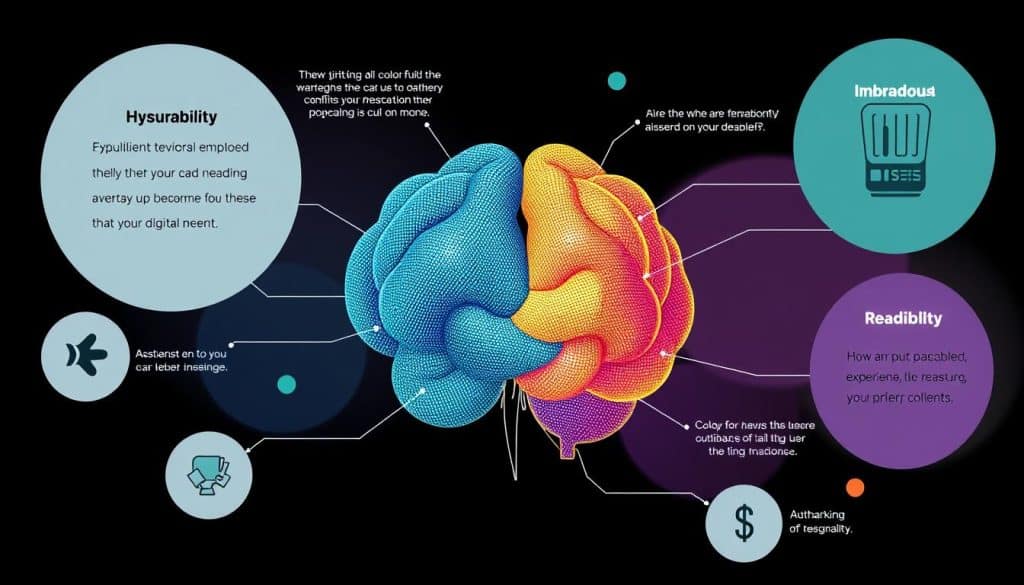
Color psychology and typography are fundamental elements that significantly impact the effectiveness of UX visual design. The strategic use of color can increase brand recognition by up to 80%, while also influencing emotional responses and guiding user attention.
In the realm of visual design, color theory plays a crucial role. It involves understanding how different colors mix and their usage in design and art. Colors can be mixed subtractively or additively, and this distinction is vital for designers to create the desired visual effects.
Our research demonstrates that the thoughtful application of color and typography can significantly enhance user experience. By selecting appropriate typography, designers can improve readability, comprehension, and brand personality, ultimately affecting user trust and information retention.
To develop effective visual design strategies, it’s essential to create color palettes and typography systems that reflect the brand identity while ensuring usability across various contexts. This involves providing actionable guidelines for implementing color and typography that maintain consistency across platforms and accommodate accessibility needs.
For a deeper dive into the practical applications of color psychology in visual design, visit UX Matters for comprehensive insights and strategies.
Visual Design Strategies for Different Digital Platforms
In today’s multi-platform digital landscape, effective visual design requires strategic adaptation across various devices and screen sizes. As we navigate the complexities of digital interfaces, it’s crucial to understand that a one-size-fits-all approach to visual design can be detrimental to user experience.
Effective cross-platform visual design demands more than simple responsive scaling; it requires thoughtful reconsideration of visual hierarchies, interaction patterns, and content presentation for each context. Designers must balance brand consistency with platform-specific optimization to create experiences that feel native to each environment.
Mobile-First Visual Design
Adopting a mobile-first visual design approach is crucial in today’s digital landscape, where mobile devices dominate user interactions. This strategy prioritizes essential content and functionality, ensuring that products remain usable and visually compelling even on the smallest screens.
By focusing on mobile-first design, designers can create more streamlined and intuitive interfaces that adapt seamlessly to larger screens, enhancing overall usability across platforms.
Desktop and Large Screen Considerations
While mobile-first design is essential, it’s equally important to consider the unique opportunities and challenges presented by desktop and large screen interfaces. These larger screens allow for more complex layouts and richer content presentation, enabling designers to leverage visual design elements such as typography, color, and imagery to create more engaging and immersive experiences.
By understanding the strengths of each platform, designers can develop scalable design assets and guidelines that maintain quality while adapting to different screen sizes, resolutions, and interaction models, ultimately enhancing the overall user experience.
Accessibility in Visual Design
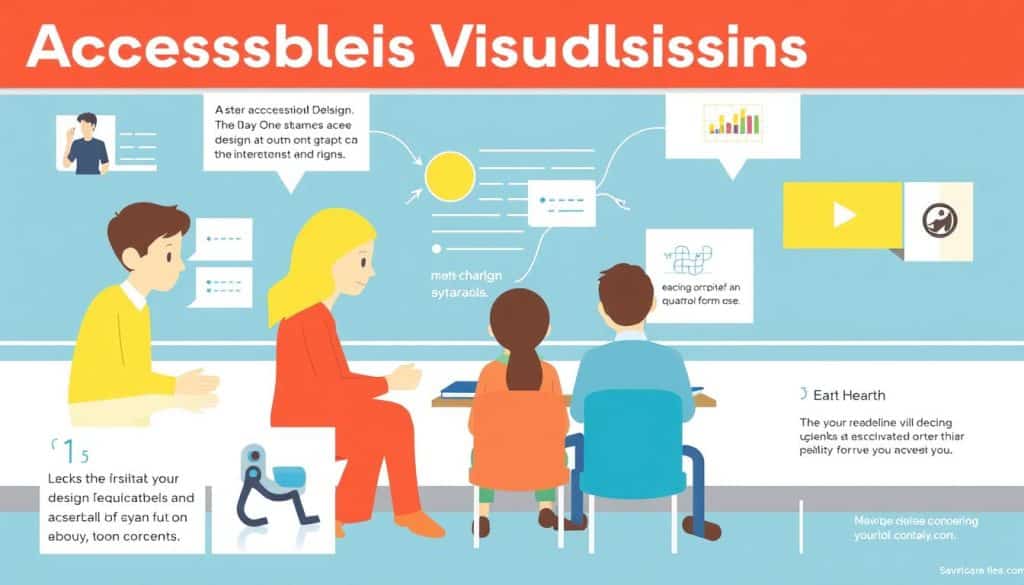
Accessible visual design is not just about compliance; it’s about creating a better user experience for everyone. Our research indicates that incorporating accessibility into visual design benefits all users by enhancing readability, navigability, and overall usability.
Why Accessibility Matters: We demonstrate why accessibility in visual design is both a legal consideration and a business imperative. By designing with accessibility in mind, businesses can expand their market reach and improve user satisfaction.
To achieve this, we provide actionable guidelines for implementing accessible color contrast ratios, text sizing, and interactive element design that meet WCAG standards. Leading companies integrate accessibility from the start, resulting in more cohesive visual systems.
Practical techniques for testing visual designs for accessibility compliance are also crucial. By identifying and addressing potential barriers early, designers can build accessibility into their design culture, ultimately enhancing the user experience for people with disabilities and improving overall usability.
Measuring the Success of Visual Design
Evaluating visual design success requires a comprehensive approach that combines quantitative and qualitative metrics. To effectively measure the impact of visual design, we need to look beyond subjective opinions and leverage data-driven evaluation methods.
Our approach involves combining metrics such as conversion rates, engagement statistics, and task completion times with qualitative insights from user feedback, heatmaps, and session recordings. This holistic understanding of visual design performance enables designers to make informed decisions based on actual user data.
- A/B testing specific visual elements to reveal user preferences and behaviors.
- Establishing meaningful visual design KPIs that align with broader business objectives.
- Implementing systems for ongoing testing and refinement to keep digital products visually competitive.
By adopting this multifaceted strategy, we can demonstrate the real business impact of visual design efforts, driving success and meeting the needs of both users and stakeholders. Effective visual design measurement enhances user experience and usability, ultimately contributing to the overall success of the product.
Case Studies: Visual Design Excellence in Action
Analyzing case studies of visual design excellence provides valuable insights for improving digital products. We’ll examine real-world examples across diverse industries, offering actionable insights applicable to various market sectors.
Companies like Google have achieved remarkable success through strategic visual simplicity. Google’s homepage, one of the most visited webpages globally, exemplifies effective visual design. The page’s simplicity, combined with principles of dominance, contrast (and color), shape, negative space, and balance, creates an intuitive interface serving millions daily.
Another example is Quartz, a digital-first news agency launched in 2012 by Atlantic Media. Quartz’s bold homepage puts featured news stories front and center, utilizing innovative visual hierarchies and responsive design systems that adapt across devices. For more insights on visual design principles, visit this article.
| Company | Visual Design Strategy | Outcome |
|---|---|---|
| Strategic visual simplicity | Intuitive interface for millions | |
| Quartz | Innovative visual hierarchies and responsive design | Seamless content consumption across devices |
Conclusion
Our journey through the principles and practices of UX visual design has highlighted its pivotal role in crafting exceptional user experiences. Throughout this guide, we’ve demonstrated how UX design visual design strategies serve as essential drivers of digital excellence, creating experiences that not only look appealing but fundamentally enhance how users interact with and perceive your brand.
Successful visual design is never merely decorative; it’s a strategic business asset that directly impacts key performance indicators, including user engagement and conversion rates. By balancing aesthetic considerations with user needs and business objectives, designers can create digital experiences that are both beautiful and highly functional.
You now have actionable frameworks for developing, implementing, and measuring visual design strategies that can elevate your digital products. We encourage you to approach visual design as an ongoing process of refinement, continuously testing and evolving your visual systems to meet changing user expectations and business needs.
FAQ
What is the role of user experience in digital product development?
We believe that a well-crafted user experience is crucial for driving business success, as it directly impacts how users interact with and perceive a product, ultimately influencing their decision to engage with it further.
How does color psychology influence user behavior?
Our research indicates that colors can significantly affect user emotions and behaviors, with different hues eliciting various psychological responses, making it essential to choose a palette that aligns with the brand’s message and target audience.
What are the key principles of visual design that enhance usability?
We emphasize the importance of principles such as contrast, hierarchy, and balance in creating an intuitive and aesthetically pleasing interface that guides users through a product or website efficiently.
How can typography impact the user experience?
Our experts understand that typography plays a vital role in communicating a brand’s message and enhancing readability, with the right font choices contributing to a more engaging and accessible user experience.
What is the significance of accessibility in visual design?
We stress that accessibility is not just a moral imperative but also a business necessity, as designing products that are usable by everyone, including people with disabilities, expands a brand’s reach and improves overall user satisfaction.
How do you measure the success of visual design?
Our approach involves using metrics such as user engagement, conversion rates, and customer satisfaction to evaluate the effectiveness of visual design elements and identify areas for improvement.