
How can businesses in Qatar establish a strong online presence in today’s digital landscape? In an era where a website is often the first point of contact between a business and its customers, understanding the fundamentals of creating and maintaining a website is crucial.
We will explore the essential roles, processes, and languages involved in web development, breaking down complex topics into digestible information for both beginners and professionals. This guide will take you through the critical components that make up modern website development, empowering you to make informed decisions about your online presence.
By the end of this article, you’ll have a solid foundation in the concepts that drive successful web development projects, enabling you to drive revenue growth through digital excellence.
Key Takeaways
- Understanding the fundamental concepts of web development.
- The essential roles and processes involved in creating a website.
- The importance of web development in establishing a strong online presence.
- Key languages and technologies used in modern web development.
- Actionable insights for applying web development concepts to real-world projects.
What is Web Development?
At its core, web development is about building and managing websites that are not only visually appealing but also user-friendly and responsive across different devices. This multifaceted process involves a collaborative effort between web designers and developers, combining programming, design, and problem-solving skills to create and maintain websites.
Definition and Scope
Web development encompasses a broad range of tasks and skills, from initial planning and design to coding and deployment, all aimed at creating a seamless user experience. It involves not just the creation of websites but also ensuring they are accessible, secure, and optimized for various devices and applications. The scope of web development extends to maintaining and updating existing websites, making sure they remain relevant and functional.
| Aspect | Description | Importance |
|---|---|---|
| Design | Creating visually appealing and user-friendly interfaces | High |
| Coding | Writing code to bring the design to life and add functionality | High |
| Content Creation | Developing relevant and engaging content for the website | Medium |
| Testing | Ensuring the website is responsive and functions correctly across devices | High |
The Importance of Web Development in Today's Digital World
In today’s digital-first world, web development has become a critical business function rather than just a technical necessity. Effective web development directly impacts business outcomes, including customer acquisition, retention, and overall revenue generation. As consumers increasingly rely on websites and web applications for information, shopping, entertainment, and services, the importance of professional web development cannot be overstated. For businesses in Qatar’s growing economy, for instance, web development provides a competitive edge by ensuring accessibility across various devices and platforms.
For more insights into the terminology used in web development, you can refer to our detailed guide on web application terminology, which covers essential terms for digital growth.
The Fundamentals of the Web
To grasp web development, one must first understand the basics of how the web works. We will explore the fundamental aspects that make websites accessible and functional.
How Websites Work
Websites are complex systems that rely on several key technologies to operate. When a user types a website’s URL into their browser, it sends a request to the website’s server, which then responds by sending back the necessary files to display the website. This process is foundational to understanding web development.
IP Addresses and Domain Names
Every device connected to the internet has an IP address, which is used to identify it. Domain names are human-friendly representations of these IP addresses, making it easier for users to access websites. For instance, a domain name like “example.com” is easier to remember than its corresponding IP address.
HTTP and HTTPS Protocols
The Hypertext Transfer Protocol (HTTP) is used for transferring data between a user’s browser and a website’s server. HTTPS is an extension of HTTP that adds an extra layer of security by encrypting the data exchanged. Understanding the difference between HTTP and HTTPS is crucial for ensuring website security.
Web Servers and Hosting
A web server is a powerful computer that stores a website’s files. Web hosting services provide the infrastructure needed to store these files and make them accessible to users worldwide. Different types of hosting solutions, such as shared, VPS, dedicated, and cloud hosting, offer varying levels of performance and control.
| Hosting Type | Description | Performance | Control |
|---|---|---|---|
| Shared Hosting | Multiple websites share the same server resources. | Variable | Limited |
| VPS Hosting | A virtual private server with dedicated resources. | High | Moderate |
| Dedicated Hosting | A dedicated server for a single website. | Very High | Full |
| Cloud Hosting | Resources are distributed across multiple servers. | Scalable | High |
For a more detailed guide on creating a website, you can refer to our step-by-step tutorial on HTML code to make a website.
The Basics About Web Development Process
Understanding the web development process is essential for businesses looking to establish a strong online presence. The process involves several stages that work together to create a functional and user-friendly website.
Planning and Strategy
The first stage in the web development process is planning and strategy. This involves defining the project’s objectives, identifying the target audience, and determining the website’s functionality and features. We work closely with clients to understand their needs and develop a tailored strategy that meets their goals.
Design and Wireframing
Once the planning stage is complete, we move on to design and wireframing. This stage involves creating a visual representation of the website, including its layout, color scheme, and overall aesthetic. Wireframing helps us to identify potential issues and make necessary adjustments before proceeding to the development phase.
Development Phase
The development phase is where the website starts to take shape. We use various programming languages and technologies to bring the design to life, ensuring that the website is both functional and responsive across different devices. For more information on how to create a basic web page, you can refer to our guide on how to create a web page in HTML for.
Testing and Launch
Before a website is launched, it undergoes rigorous testing to ensure it provides a good user experience. This includes checking for errors, testing functionality, and verifying that the site works correctly across different browsers and devices. We implement multiple testing methodologies, including functional, usability, performance, security, and cross-browser compatibility testing. The final step is launching the website and maintaining it to keep it up to date and running smoothly.
Front-End vs. Back-End Development

Understanding the dichotomy between front-end and back-end development is crucial for any web development project. In essence, web development is divided into two primary areas: front-end development, which focuses on the client-side of the website, and back-end development, which handles the server-side logic, database integration, and more.
What is Front-End Development?
Front-end development involves creating the user interface and user experience (UI/UX) of a website using programming languages like HTML, CSS, and JavaScript. It is about designing the look, feel, and behavior of a website, ensuring that it is visually appealing and functions smoothly across various devices and browsers. Effective front-end development requires a deep understanding of UI/UX principles and proficiency in front-end technologies.
What is Back-End Development?
Back-end development, on the other hand, is concerned with the server-side of the website, involving the creation of server-side logic, database integration, and API connectivity. Back-end developers use programming languages such as Python, Ruby, PHP, and Java to develop the server-side logic, ensuring that the website functions as expected. They manage data storage and retrieval, implement security measures, and optimize the website’s performance.
Full-Stack Development Explained
A full-stack developer is someone who can handle both front-end and back-end development tasks. They are proficient in a wide range of technologies and can manage all aspects of web development, from designing the user interface to managing databases and server-side logic. Full-stack developers are versatile and can work on projects independently or as part of a team, making them highly valuable in the industry.
| Development Type | Focus Area | Key Technologies |
|---|---|---|
| Front-End | User Interface and Experience | HTML, CSS, JavaScript |
| Back-End | Server-Side Logic and Database | Python, Ruby, PHP, Java |
| Full-Stack | Both Front-End and Back-End | Combination of Front-End and Back-End Technologies |
Essential Front-End Languages
In the realm of web development, three languages stand out as crucial for building engaging websites: HTML, CSS, and JavaScript. These languages form the backbone of front-end development, enabling developers to create robust, user-friendly, and visually appealing web applications.
HTML: The Structure
HTML (HyperText Markup Language) is the foundation of any website, providing the structural framework that browsers render to users. It is used to define the different elements on a web page, such as headings, paragraphs, images, links, forms, tables, and more. Effective use of HTML is crucial for creating a solid base for web pages, ensuring that content is properly organized and accessible. For more insights on using HTML effectively, you can explore resources on creating a home page using HTML.
CSS: The Style
CSS (Cascading Style Sheets) is used to control the visual styling and layout of web pages written in HTML or XML. It handles the aesthetic aspects, such as colors, fonts, spacing, and overall layout, making websites visually appealing and enhancing user experience. CSS is powerful and flexible, allowing developers to create responsive designs that adapt to different screen sizes and devices.
JavaScript: The Functionality
JavaScript is what brings a website to life. It’s used to create interactive elements on a website, including forms, drop-down menus, animations, and interactive maps. As highlighted by a study on web development trends, “JavaScript has become an indispensable tool for web developers, enabling them to craft dynamic and interactive web experiences.”
“The versatility of JavaScript, coupled with its extensive ecosystem of libraries and frameworks, makes it a cornerstone of modern web development.”
JavaScript adds interactivity and dynamic functionality to websites, transforming static pages into responsive, engaging user experiences. Modern JavaScript frameworks and libraries like React, Angular, and Vue.js have revolutionized front-end development by introducing component-based architecture and efficient DOM manipulation.
The table below summarizes the key roles of HTML, CSS, and JavaScript in web development:
| Language | Primary Role | Key Features |
|---|---|---|
| HTML | Structure | Defines elements, content organization |
| CSS | Styling | Visual styling, layout, responsiveness |
| JavaScript | Functionality | Interactivity, dynamic functionality |
Popular Back-End Technologies
As we dive into the world of web development, it becomes clear that back-end technologies are essential for building fast, secure, and reliable web applications. Back-end development focuses on the server-side logic, database integration, and API connectivity that power the front-end user experience.
Server-Side Programming Languages
Server-side programming languages are a crucial component of back-end development, enabling developers to create dynamic web applications. Some of the best server-side programming languages include Python, Java, and Node.js, each with its own strengths and use cases.
For instance, Python is renowned for its simplicity and is often used in data science and machine learning applications. Java, on the other hand, is known for its platform independence and is commonly used in enterprise-level applications. Node.js allows developers to run JavaScript on the server-side, making it a popular choice for real-time web applications.
Databases and Data Management
Effective data management is critical for web applications, requiring robust databases that can store, retrieve, and manipulate data efficiently. We utilize databases such as MySQL and MongoDB to manage data for web applications.
These databases offer different data models and querying capabilities, allowing developers to choose the best fit for their application’s needs. For example, MySQL is a relational database that excels at handling structured data, while MongoDB is a NoSQL database that is well-suited for handling large amounts of semi-structured data.
APIs and Web Services
APIs (Application Programming Interfaces) enable communication between different software systems, allowing web applications to integrate with external services and data sources. We design and implement RESTful APIs and GraphQL endpoints to facilitate efficient data exchange between front-end interfaces and back-end systems.
By leveraging APIs, web applications can extend their functionality by connecting to third-party platforms such as payment gateways, social media networks, and analytics tools. Well-designed APIs follow principles of security, scalability, and documentation, ensuring they remain reliable as business requirements evolve.
Web Development Frameworks and Libraries
In the realm of web development, frameworks and libraries play a pivotal role in streamlining the development process. These tools provide pre-built components and libraries that help developers build web applications quickly and efficiently.
Front-End Frameworks
Front-end frameworks are essential for building the client-side of web applications. Popular front-end frameworks include React, Angular, and Vue.js. These frameworks offer structured approaches to common challenges like state management, routing, and component-based architecture.
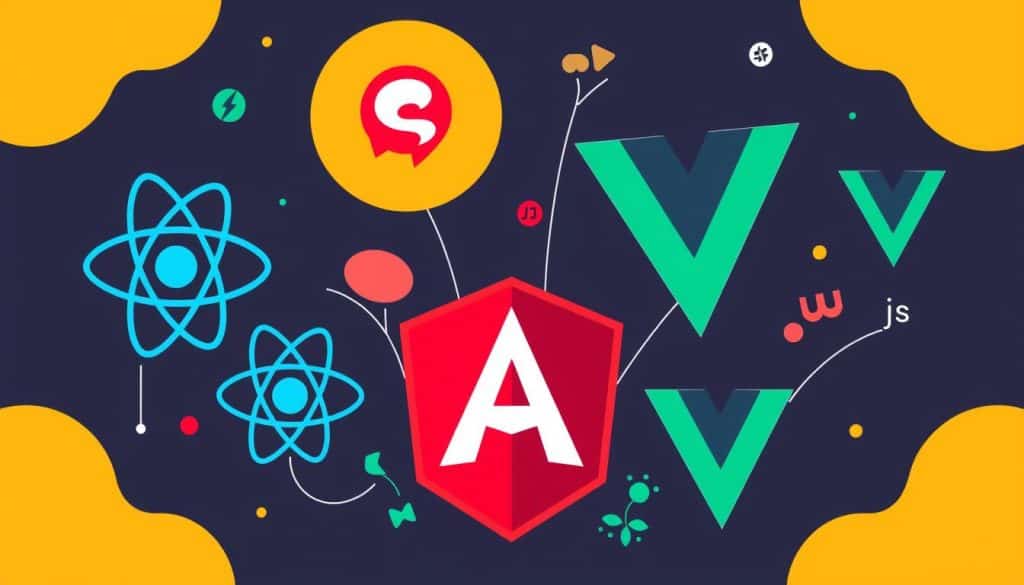
For instance, React is known for its component-based architecture, making it easier to manage complex UI components. Angular, on the other hand, provides a full-fledged framework with a strong emphasis on MVC architecture. Vue.js offers a progressive and flexible framework that is easy to integrate with other projects.
Back-End Frameworks
Back-end frameworks like Django, Ruby on Rails, Spring Boot, Flask, Express.js, and Laravel provide structured environments for server-side development. These frameworks follow the “don’t repeat yourself” (DRY) principle, offering reusable components and libraries that accelerate web development and reduce the potential for errors.
For businesses in Qatar, back-end frameworks offer built-in security features that help protect against common vulnerabilities. The MVC architecture implemented by many back-end frameworks promotes clean code organization and separation of concerns, facilitating easier maintenance.
Content Management Systems (CMS)
As we delve into the world of web development, it’s essential to understand the role of Content Management Systems in shaping online experiences. A Content Management System (CMS) is a software application that enables users to create, edit, and manage digital content on a website without requiring extensive technical knowledge.
What is a CMS?
A CMS is designed to simplify the process of managing website content, allowing users to focus on creating high-quality content rather than worrying about the technical aspects of website management. With a CMS, users can easily update text, images, and other media, as well as manage user permissions and access levels.
Popular CMS Platforms
The CMS market is dominated by several key players, each offering unique features and benefits. Some of the most popular CMS platforms include:
- WordPress: With approximately 43% of all websites using it, WordPress offers extensive customization options through thousands of themes and plugins.
- Drupal and Joomla: These are other popular CMS options that offer distinct advantages for different business requirements.
- Headless CMS options like Contentful are gaining popularity, allowing content to be deployed across multiple channels.
- E-commerce focused CMS platforms like Magento and WooCommerce offer specialized features for online stores.
When selecting a CMS, businesses should consider factors such as multilingual support, security updates, and performance optimization to ensure they choose a platform that meets their specific needs.
Responsive Web Design
As we continue to develop websites, it’s essential to prioritize responsive design to cater to the diverse range of devices and browsers used by our audience. Responsive web design ensures that a website’s layout and visual elements adapt seamlessly to different screen sizes and devices, providing an optimal user experience.
Importance of Mobile-First Approach
Adopting a mobile-first approach is crucial in today’s web development landscape. With the majority of internet users accessing websites through mobile devices, designing for smaller screens first ensures that the core content and functionality are preserved across all devices. This approach also helps in simplifying the design and improving page load times.
Techniques for Responsive Design
Several techniques are employed to achieve responsive design, including:
- Using flexible grids and layouts that adapt to different screen sizes
- Implementing media queries to apply styles based on device characteristics
- Optimizing images and media to reduce load times on slower connections
- Utilizing responsive design frameworks and libraries to streamline development
By incorporating these techniques, developers can create websites that provide a consistent and engaging user experience across various devices.
Testing Across Devices
Testing across devices is essential to ensure that a website looks and functions correctly on different screen sizes and operating systems. This includes testing on smartphones, tablets, laptops, and desktop computers, as well as different browsers. We employ both physical device testing and emulation tools to systematically evaluate website performance and appearance. Automated testing tools help identify responsive design issues, accessibility problems, and performance bottlenecks that might affect user experience on specific devices.
By prioritizing responsive web design and thorough testing, we can ensure that our websites provide a reliable and engaging experience for all users, regardless of how they access the site.
Web Development Tools and Resources
To streamline the development process, web developers utilize numerous tools and resources. These tools enhance productivity, improve code quality, and facilitate collaboration among team members.
Code Editors and IDEs
Code editors and Integrated Development Environments (IDEs) are fundamental tools for web developers. Popular choices include Visual Studio Code, Sublime Text, and Atom. These editors offer features like syntax highlighting, code completion, and debugging capabilities.
Version Control Systems
Version control systems are crucial for managing changes in codebases. Git is the most widely used version control system, allowing developers to track changes, collaborate on code, and maintain different versions of their projects. Platforms like GitHub and GitLab provide remote repositories and additional collaboration features.
Browser Developer Tools
Browser developer tools are built-in features that help developers inspect and debug web pages. They allow us to view HTML, CSS, and JavaScript, as well as monitor network requests and performance. Key features include:
- Inspecting DOM elements and modifying CSS in real-time
- Debugging JavaScript and analyzing network requests
- Evaluating performance metrics and identifying optimization opportunities
- Simulating different devices and network conditions for responsive design testing
Mastering browser developer tools is essential for efficient problem-solving and continuous improvement of website experiences.
Web Security Fundamentals
The importance of web security cannot be overstated, especially when it comes to protecting user data. As we navigate through the complexities of web development, ensuring the security of a website is paramount.
Common Security Threats
Websites face numerous security threats, including SQL injection, cross-site scripting (XSS), and cross-site request forgery (CSRF). These threats can compromise user data and undermine the integrity of a website.
Best Practices for Secure Web Development
To mitigate these threats, we adhere to best practices such as input validation, secure coding practices, and regular security audits. Implementing these practices helps safeguard against common web vulnerabilities.
| Best Practice | Description | Benefit |
|---|---|---|
| Input Validation | Checking user input for malicious data | Prevents SQL injection and XSS |
| Secure Coding | Following guidelines for secure code writing | Reduces vulnerabilities |
| Security Audits | Regularly reviewing website security | Identifies and fixes vulnerabilities |
SSL Certificates and HTTPS
One critical aspect of web security is the implementation of SSL certificates and HTTPS. HTTPS encrypts data transmitted between users’ browsers and web servers, protecting against eavesdropping and data tampering. We emphasize that HTTPS implementation is no longer optional but a standard requirement for all websites. For businesses, especially in regions like Qatar, proper HTTPS implementation demonstrates compliance with security best practices and helps build trust with increasingly security-conscious consumers.
We develop secure web applications with the latest security measures, including HTTPS implementation, to ensure our clients’ websites are protected and trustworthy.
Web Development Career Paths
The world of web development is rich with opportunities, offering a multitude of career paths tailored to different skill sets and interests. As technology continues to evolve, the demand for skilled web developers grows, making it an exciting and dynamic field to be in.
Skills Required to Become a Web Developer
To succeed as a web developer, one must possess a combination of technical skills and soft skills. Proficiency in programming languages such as HTML, CSS, JavaScript, and server-side languages like Python or PHP is essential. Additionally, knowledge of web development frameworks, databases, and version control systems is crucial. Soft skills like problem-solving, teamwork, and continuous learning are equally important in this ever-evolving field.
- Proficiency in front-end development languages (HTML, CSS, JavaScript)
- Knowledge of back-end development languages (Python, PHP, Ruby)
- Familiarity with databases and data management
- Understanding of web development frameworks and libraries
Job Roles and Specializations
The field of web development offers diverse career paths with specializations that allow professionals to focus on areas aligned with their interests and strengths. Common career trajectories include front-end developer, back-end developer, full-stack developer, UI/UX developer, and specialized roles like WordPress developer or e-commerce specialist. Emerging specializations in areas like progressive web applications, WebGL development, and JAMstack architecture represent growing niches with strong demand and competitive compensation.
- Front-end developers focus on user-facing aspects of websites
- Back-end developers work on server-side logic and application architecture
- Full-stack developers combine front-end and back-end skills
Web Development in Qatar
As Qatar continues its digital transformation, the demand for skilled web developers is on the rise. The country’s focus on creating a digital economy and smart city initiatives has opened up numerous opportunities for web development professionals.
The Growing Tech Industry
Qatar’s tech industry is experiencing rapid growth, driven by government initiatives and a strong focus on digital transformation. This growth is creating a high demand for web developers who can build innovative and user-friendly websites and applications. The country’s strategic plans include developing smart cities and enhancing digital infrastructure, which further boosts the need for skilled web development professionals.
Key sectors driving this growth include:
- Government digitization projects
- Corporate digital transformation initiatives
- A growing startup ecosystem
Opportunities for Web Developers
Web developers in Qatar have diverse opportunities across various sectors, including government, finance, healthcare, education, and retail. The demand for developers with expertise in Arabic-language optimization, bilingual website development, and culturally appropriate design is particularly strong. Additionally, the financial technology sector’s rapid expansion creates specialized opportunities for web developers with skills in secure transaction processing and compliance with local regulations.
| Sector | Opportunities |
|---|---|
| Government | Digitization projects, smart city initiatives |
| Finance | Fintech development, secure transaction processing |
| E-commerce | Developing seamless online shopping experiences |
Website Development Agencies and Services
As the digital market in Qatar continues to evolve, the role of web development agencies becomes increasingly crucial. Businesses are recognizing the importance of having a professional online presence to stay competitive.
When to Hire a Web Development Agency
Businesses should consider hiring a web development agency when they need to create or revamp their online presence. This is particularly important for companies looking to expand their reach or launch new products.
- When you need a custom web application
- When your website requires significant updates or redesign
- When you lack the in-house expertise for web development
Top Web Development Agencies
Some of the top web development agencies in Qatar include:
- Imaginnovate
- Qrypta
- Technostacks

Costs and Considerations
The cost of website development can vary widely depending on the complexity of the project, the features required, and the agency or developer hired. Key cost factors include design complexity, functionality requirements, and ongoing maintenance considerations.
- Basic informational websites may cost a few thousand dollars
- Complex e-commerce sites or web applications can cost tens of thousands or more
- Ongoing expenses include hosting, security updates, and content updates
Conclusion
The journey through the world of web development reveals a multifaceted discipline that is crucial for businesses today. As we’ve explored, web development encompasses a vast ecosystem of technologies, methodologies, and specializations that continue to evolve as digital experiences become increasingly central to business success.
Understanding the fundamental distinction between front-end and back-end development, the essential programming languages that power the web, and the frameworks that accelerate development is vital. Moreover, grasping the development process—from planning and strategy through design, development, testing, and launch—provides a roadmap for successful website development.
For businesses in Qatar, web development represents both a technical discipline and a strategic business function that drives digital transformation and competitive advantage. The growing importance of responsive web design, performance optimization, and security implementation reflects the evolving expectations of users and the increasing sophistication of web applications.
Whether pursuing a career in web development or hiring professionals to build your business website, the knowledge shared in this guide provides a foundation for informed decision-making. As Qatar continues its journey toward becoming a knowledge-based economy, web development skills and expertise will remain in high demand, creating opportunities for both individuals and organizations.
In conclusion, mastering web development is key to unlocking digital potential. By understanding the intricacies of full stack development, enhancing user experience, and creating dynamic web pages, businesses can thrive in the digital landscape.
FAQ
What is the difference between front-end and back-end development?
Front-end development focuses on creating the user interface and user experience using languages like HTML, CSS, and JavaScript, while back-end development involves server-side programming, database management, and API integration.
What programming languages are essential for web development?
HTML, CSS, and JavaScript are crucial for front-end development, while server-side languages like Python, Ruby, and PHP are used for back-end development.
How long does it take to develop a website?
The time required to develop a website depends on its complexity, ranging from a few weeks for simple sites to several months for complex applications.
What is responsive web design, and why is it important?
Responsive web design ensures that websites adapt to different screen sizes and devices, providing a seamless user experience across various platforms.
What is a Content Management System (CMS), and how does it work?
A CMS is a software application that allows users to create, edit, and manage digital content on a website without requiring extensive technical knowledge.
How do I choose the right web development framework for my project?
The choice of framework depends on the project’s requirements, the team’s expertise, and the desired outcome, with popular options including React, Angular, and Vue.js for front-end development.
What are the key considerations when hiring a web development agency?
When hiring a web development agency, consider their portfolio, expertise, pricing, and communication style to ensure they align with your project’s needs and goals.
How can I ensure the security of my website?
Implementing best practices like HTTPS, validating user input, and keeping software up-to-date can help protect your website from common security threats.
What skills are required to become a successful web developer?
A successful web developer should possess a combination of technical skills, including programming languages, frameworks, and tools, as well as soft skills like communication and problem-solving.