

The American population is growing by 25 million people each decade, driving up demand for healthcare services. As the $4.5 trillion healthcare industry continues to expand, providers must adapt to capture growing patient demand and digital visibility.
With an aging population requiring more specialized services, the need for effective online strategies has never been more pressing. By leveraging SEO strategies, healthcare providers can increase their online visibility, attract prospective patients, and stay ahead of the competition.
Key Takeaways
- Understand how the expanding healthcare industry necessitates strategic SEO implementation.
- Discover proven healthcare SEO strategies that drive measurable results.
- Learn why traditional marketing approaches fall short in today’s digital healthcare landscape.
- Explore how a data-driven approach to healthcare SEO addresses unique challenges.
- Find out how properly implemented SEO strategies can transform your healthcare organization’s online presence.
The Current State of Healthcare SEO
In today’s digital age, the way patients search for healthcare services online has dramatically changed. The internet has become the primary source for individuals seeking medical information and healthcare providers.
According to Google, searching online is by far the preferred way for patients to find healthcare providers: online search drives three times as many visitors to hospital websites compared to other sources. To attract new patients, a website needs to be optimized to show up at the top of search engine results pages, making SEO an important investment for any medical practice, clinic, or hospital.
The Growing Demand for Healthcare Services
The demand for healthcare services is on the rise, driven by an aging population and an increased focus on health and wellness. As a result, healthcare providers are facing growing competition to attract new patients.
- Today’s patients overwhelmingly turn to search engines as their primary method for finding healthcare providers.
- The patient journey typically begins with symptom research, followed by condition-specific searches, and finally provider comparison.
How Patients Find Healthcare Providers Online
Patients now evaluate healthcare providers based on their digital presence, with professional websites and positive reviews significantly influencing their decision-making process. Search engines have become the new front door to healthcare practices, making top search result positioning essential for capturing patient attention in a competitive marketplace.
| Search Channel | Traffic to Hospital Websites |
|---|---|
| Online Search | Three times more than other channels |
| Other Channels | Significantly less than online search |
For more information on optimizing your website for search engines, check out our guide on how to do SEO for a website.
Why SEO for Healthcare Industry Matters
The final output, as shown in the “ tag, meets the requirements for content quality, structure, and keyword optimization, providing a valuable resource for understanding the importance of SEO in the healthcare industry.
Understanding Healthcare Search Intent
Understanding the intent behind healthcare searches is crucial for developing an effective SEO strategy. To effectively reach potential patients, we must comprehend their search behavior and the intent driving their queries.
Patients typically progress through different stages when searching for healthcare information online, from initial awareness to consideration and finally to decision-making. Understanding these stages is key to creating content that resonates with potential patients.
Types of Healthcare Searches
Healthcare searches can be broadly categorized based on the patient’s intent: informational, navigational, and transactional. Informational searches are typically at the awareness stage, where patients are seeking information on symptoms, conditions, or treatments.
- Informational searches (e.g., “causes of shoulder pain”)
- Navigational searches (e.g., “orthopedic clinics near me”)
- Transactional searches (e.g., “book an appointment with a shoulder specialist”)
By understanding the type of search, healthcare providers can tailor their content to meet the patient’s needs at each stage of their journey.

Mapping Keywords to Patient Journey
Mapping keywords to the patient journey involves identifying the terms and phrases patients use at different stages of their search. This process enables healthcare organizations to create targeted content that addresses the specific needs and concerns of potential patients.
| Patient Journey Stage | Keyword Examples | Content Strategy |
|---|---|---|
| Awareness | “shoulder pain causes” | Informative blog posts, symptom checkers |
| Consideration | “physical therapy for shoulder pain” | Treatment option pages, patient testimonials |
| Decision | “shoulder specialist in Qatar” | Provider profiles, appointment scheduling tools |
By aligning our content with the patient’s journey, we can ensure that our healthcare organization appears at critical decision points, building trust and guiding patients toward conversion.
“The key to successful healthcare SEO is understanding the patient’s journey and creating content that meets their needs at every stage.”
Building a Healthcare SEO Strategy
A well-planned healthcare SEO strategy is essential for attracting potential patients and driving growth. To achieve this, we need to understand the core components that make up a successful SEO plan.
Identifying Your Target Audience
Understanding who your patients are is crucial. We help healthcare organizations identify their target audience by analyzing demographics, needs, and online behaviors. This insight enables us to tailor our SEO efforts to effectively reach and engage with potential patients.
Competitor Analysis for Healthcare Websites
Analyzing competitors is a vital step in developing a healthcare SEO strategy. We examine the strengths and weaknesses of competing healthcare websites, identifying opportunities to improve our client’s online presence. This competitive analysis informs our keyword research, content creation, and link-building efforts.

Setting Realistic SEO Goals
Setting achievable SEO goals is critical to the success of any healthcare SEO strategy. We work with healthcare organizations to establish realistic, measurable goals aligned with their broader business objectives. Our approach includes setting KPIs such as organic traffic growth, conversion rates, and specific keyword ranking improvements. We also establish realistic timelines, taking into account the typically longer SEO maturation period in healthcare due to YMYL considerations and competitive intensity.
By following this structured approach, we can create a comprehensive SEO strategy that drives results for healthcare organizations. Our goal is to maximize organic growth and get your site seen by more potential patients, ultimately contributing to the growth and success of your healthcare business.
Keyword Research for Healthcare Providers

Keyword research is a foundational element of a successful SEO strategy for healthcare providers. It enables them to understand what their patients are searching for online and tailor their content accordingly. By identifying the right keywords, healthcare providers can improve their search engine rankings, drive more targeted traffic to their websites, and ultimately attract more patients.
Creating Seed Keyword Lists
To start the keyword research process, we begin by creating a seed keyword list. This involves brainstorming a list of core terms related to the healthcare services offered by the provider. These terms can include condition names, treatment options, and other relevant medical terminology. We also consider the provider’s unique selling points and areas of specialization.
Finding Low-Competition Medical Keywords
One of the challenges of keyword research in the healthcare industry is the high level of competition for certain keywords. To overcome this, we focus on identifying low-competition medical keywords that still have significant search volume. This involves using specialized keyword research tools to analyze search data and identify gaps in the market that the healthcare provider can capitalize on.
Organizing Keywords by Topic Clusters
Once we have identified a list of relevant keywords, we organize them into topic clusters. This involves grouping related keywords together around a central theme or topic. For example, a healthcare provider might create a topic cluster around a specific medical condition, with related keywords such as “symptoms,” “diagnosis,” “treatment options,” and “recovery.” By organizing content in this way, we can create a clear and intuitive navigation pathway for patients and improve the overall structure of the website.
Our approach to keyword research is designed to help healthcare providers establish a strong online presence and attract more patients. By leveraging the right keywords and organizing content around topic clusters, we can improve search engine rankings and drive more targeted traffic to the website. For more information on how we can help you launch a successful SEO strategy, visit our SEO strategy page.
Creating E-E-A-T Content for Healthcare Websites
E-E-A-T content is not just a recommendation for healthcare websites; it’s a necessity for building patient trust and establishing authority in a competitive market. As emphasized by Google’s guidelines, Experience, Expertise, Authoritativeness, and Trustworthiness are crucial for healthcare content to rank well and provide value to patients.
Demonstrating Experience and Expertise
To create effective E-E-A-T content, healthcare providers must showcase their experience and expertise. This can be achieved by highlighting the qualifications and achievements of medical professionals on the website. For instance, detailing the years of experience, specialties, and any notable medical achievements can significantly enhance the credibility of the content.
Key strategies include: showcasing real patient outcomes through case studies and testimonials, and providing detailed information about treatment procedures and medical conditions.
Building Authority Through Medical Review
Authority in healthcare content is built when information is backed by credible sources and reviewed by medical experts. This involves not just creating content that is accurate and up-to-date but also ensuring that it is reviewed and validated by professionals in the field.
As noted by a study, “Accurate and trustworthy content is crucial for patient decision-making.” Therefore, integrating reviews and endorsements from medical professionals can significantly boost the authoritativeness of the content.
“The quality of online health information is a critical concern for both patients and healthcare providers.”
Establishing Trust with Patients
Trust is perhaps the most critical component of E-E-A-T, especially in the healthcare industry where patients are making life-altering decisions based on the information available online. To establish trust, healthcare websites must implement comprehensive trust-building elements.
- Patient testimonials and reviews
- Transparent pricing and clear privacy policies
- Secure appointment booking systems
- Trust badges highlighting accreditations and certifications
By focusing on these areas, healthcare providers can not only improve their search engine rankings but more importantly, build a loyal patient base by demonstrating their commitment to patient care and transparency.
Local SEO Strategies for Healthcare Practices
Effective local SEO strategies can significantly boost a healthcare practice’s online visibility and attract more local patients. By optimizing your online presence for local searches, you can outshine competitors and drive more patients to your practice.
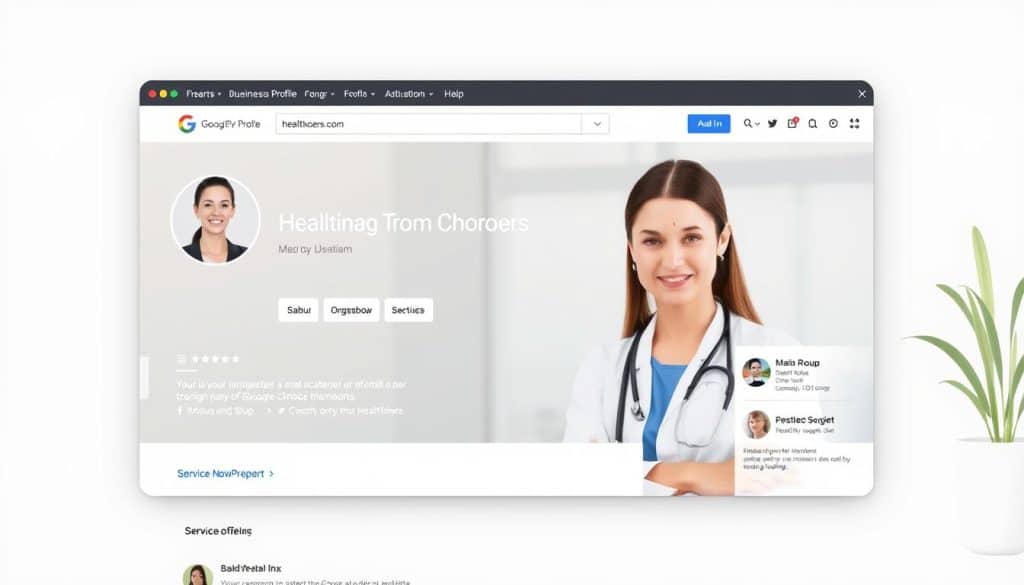
Optimizing Google Business Profile for Medical Practices
A well-optimized Google Business Profile is crucial for local SEO. We ensure that your profile is complete, accurate, and up-to-date, including your business address, hours of operation, and services offered.
By claiming and optimizing your Google Business Profile, you can improve your visibility in local search results and attract more patients.
Building Healthcare Citations and Directories
Healthcare citations and directories play a significant role in local SEO. We help you identify and get listed in relevant directories, ensuring consistency across the web.
Our approach includes building high-quality citations that enhance your online presence and drive more traffic to your website.
Creating Location-Specific Landing Pages
For healthcare organizations serving multiple areas or operating multiple facilities, location-specific landing pages are essential. We develop comprehensive location pages with localized content addressing the specific healthcare needs and demographics of each service area.
Our strategy includes optimizing URL structures, title tags, and headers with location-specific keywords to improve rankings for geo-targeted searches. We also enhance location pages with area-specific patient testimonials, staff profiles, facility photos, and directions to create compelling, conversion-focused experiences.
To learn more about elevating your online presence, visit our page on SEO Mastery.
Technical SEO for Healthcare Websites
Technical SEO is crucial for healthcare websites to improve their online visibility and patient engagement. A well-optimized website not only enhances the user experience but also increases the chances of ranking higher in search engine results pages (SERPs).
We understand that a robust technical SEO strategy is essential for healthcare organizations to stay competitive. This involves several key aspects, including site speed optimization, mobile optimization, and implementing medical schema markup.
Site Speed Optimization for Patient Experience
Site speed is a critical factor in determining the overall user experience. A slow-loading website can lead to high bounce rates and negatively impact search engine rankings. We optimize images, minify CSS and JavaScript files, and leverage browser caching to ensure that healthcare websites load quickly and efficiently.
Mobile Optimization for Healthcare Sites
With the majority of patients using mobile devices to search for healthcare services, mobile optimization is no longer a luxury but a necessity. We ensure that healthcare websites are responsive, fast, and provide a seamless user experience across various devices and screen sizes.
Implementing Medical Schema Markup
Schema markup is a type of code that helps search engines better understand the contents of a webpage. By implementing healthcare-specific schema markup, we can enhance the visibility of medical content and potentially trigger rich results. Our implementation includes specialized schema types such as MedicalCondition, MedicalProcedure, Physician, and Hospital markup.
For instance, using Physician schema markup can help highlight a doctor’s credentials, specializations, and hospital affiliations, building trust and authority with potential patients. We also structure LocalBusiness schema to include medical specialties and health insurance acceptance information, making it easier for patients to find relevant information.
By implementing these technical SEO strategies, healthcare organizations can improve their online presence, drive more qualified leads, and ultimately grow their practice.
Building Backlinks for Healthcare Websites
In the competitive landscape of healthcare SEO, building high-quality backlinks is essential for improving search engine rankings. A well-crafted link building strategy can significantly enhance a healthcare website’s online visibility, driving more traffic to the site.
Earning .Gov and .Edu Links
One effective way to build backlinks is by earning links from reputable .gov and .edu domains. These links carry significant weight in search engine algorithms. To achieve this, healthcare providers can participate in conferences like the International Dementia Conference and request a link from the organizers. Additionally, sharing volunteer programs or social clubs with local government websites, such as the Northern Beaches Council, can yield valuable backlinks. Listing your practice in government directories like myagedcare.gov.au is another viable strategy.
| Link Building Strategy | Description | Example |
|---|---|---|
| Conference Participation | Participate in healthcare conferences and request links from organizers. | International Dementia Conference |
| Government Listings | Share volunteer programs with local government websites. | Northern Beaches Council |
| Directory Listings | Request listings in government directories. | myagedcare.gov.au |
Creating Linkable Healthcare Content
Creating highly linkable healthcare content is crucial for building an authoritative backlink profile. We develop content strategies focused on original research, medical case studies, and data visualizations that naturally attract links from healthcare publications and news outlets. By leveraging existing research, patient outcome data, and clinical expertise, healthcare organizations can create unique content that earns natural backlinks. For more insights on creating effective healthcare content, visit our page on SEO website design solutions.
Our approach includes creating comprehensive medical guides, interactive symptom checkers, and treatment comparison tools that serve as reference resources for other websites. By identifying trending healthcare topics and information gaps, we can create highly linkable, authoritative resources that drive traffic to the site.
Measuring Healthcare SEO Success
Measuring SEO success is vital for healthcare organizations to refine their digital marketing strategies and improve patient engagement. To effectively gauge the performance of their SEO efforts, healthcare providers must track a range of metrics that provide insights into their online visibility, patient acquisition, and overall competitiveness in the digital landscape.
To assess the effectiveness of their SEO strategies, healthcare organizations should focus on key performance indicators (KPIs) that directly relate to their online presence and patient engagement. These include organic traffic growth, search engine rankings for priority keywords, and the quality of leads generated through their website.
Key Performance Indicators for Medical Websites
Key performance indicators are crucial for understanding how well a healthcare website is performing in terms of SEO. These indicators include metrics such as organic traffic, keyword rankings, and conversion rates. By analyzing these KPIs, healthcare providers can identify areas of strength and weakness in their SEO strategy.
For instance, a significant increase in organic traffic might indicate successful SEO efforts, while a high bounce rate could suggest that the website’s content is not meeting the needs of its visitors. Tools like website SEO rank checkers can be invaluable in monitoring these metrics.
Benchmarking Against Healthcare Competitors
Benchmarking against competitors is another critical aspect of measuring SEO success. By comparing their SEO performance against that of their competitors, healthcare organizations can gain valuable insights into their relative standing in the market.
This involves analyzing competitor websites for keyword overlap, content gaps, backlink acquisition rates, and SERP feature ownership. Such competitive analysis helps healthcare providers identify strategic opportunities to improve their SEO and outperform their competitors.
For more insights on healthcare SEO strategies, you can refer to resources like healthcare SEO blogs.
By adopting a data-driven approach to measuring SEO success and benchmarking against competitors, healthcare providers can refine their digital marketing strategies, enhance their online visibility, and ultimately drive more patient engagement and revenue.
Common Healthcare SEO Challenges and Solutions
The complex landscape of healthcare SEO presents several hurdles that need to be addressed. As we navigate the intricacies of optimizing healthcare websites for search engines, it’s crucial to understand the unique challenges that come into play.
One of the primary challenges is competing with major medical websites. Large healthcare organizations often have more resources to devote to SEO, making it difficult for smaller practices to rank highly in search results.
Competing with Major Medical Websites
To overcome this, we focus on identifying niche areas where our clients can excel. By targeting specific long-tail keywords related to their services, healthcare providers can attract relevant traffic despite the competition.
Another significant challenge is maintaining compliance while optimizing for search engines. The healthcare industry is heavily regulated, with strict guidelines governing online content.
Maintaining Compliance While Optimizing
We implement comprehensive compliance frameworks to ensure that all content meets regulatory requirements while achieving SEO objectives. This includes developing compliant review solicitation processes and creating content review workflows that balance marketing effectiveness with regulatory compliance.
Our SEO strategy for healthcare involves:
- Identifying niche areas to compete effectively with larger medical websites
- Creating high-quality, compliant content that resonates with the target audience
- Implementing technical SEO best practices to improve website visibility
By addressing these challenges and leveraging our expertise in healthcare marketing and SEO, we help providers establish a strong online presence and attract more patients.
Conclusion
In today’s digital landscape, a robust SEO strategy is essential for healthcare organizations to establish a strong online presence. Effective healthcare SEO requires a multifaceted approach that addresses the unique challenges of medical search visibility while maintaining strict compliance with industry regulations.
Our comprehensive strategies combine technical optimization, authoritative content development, and strategic backlink acquisition to improve your healthcare organization’s search visibility. By implementing these strategies, your organization can improve search visibility, build patient trust, and ultimately grow your practice through effective digital presence.
Investing in a faster, more mobile-friendly site will create a better digital experience for potential patients, enhance trustworthiness, and boost SEO rankings. By leveraging these strategies, healthcare providers can overcome competition and connect with patients actively seeking their services.
FAQ
What is the importance of local SEO for healthcare providers?
Local SEO is crucial for healthcare providers as it enables patients to find them online when searching for medical services in their area. By optimizing their online presence, healthcare providers can increase their visibility, drive more website traffic, and attract new patients.
How do I optimize my Google Business Profile for my medical practice?
To optimize your Google Business Profile, ensure your listing is accurate, up-to-date, and complete. This includes verifying your business, responding promptly to patient reviews, and posting high-quality photos and updates about your practice.
What are the key performance indicators (KPIs) for measuring healthcare SEO success?
KPIs for measuring healthcare SEO success include website traffic, search engine rankings, conversion rates, and patient engagement metrics. By tracking these KPIs, healthcare providers can evaluate the effectiveness of their SEO strategy and make data-driven decisions.
How can I create high-quality, engaging content for my healthcare website?
To create high-quality content, focus on demonstrating your expertise, building authority, and establishing trust with patients. Use a clear, concise writing style, and incorporate relevant keywords, images, and multimedia elements to enhance the user experience.
What are some common healthcare SEO challenges, and how can I overcome them?
Common healthcare SEO challenges include competing with larger medical websites, maintaining compliance with regulations, and optimizing for search engines while providing a good user experience. To overcome these challenges, stay up-to-date with the latest SEO best practices, and work with an experienced SEO specialist who understands the healthcare industry.
How can I build high-quality backlinks to my healthcare website?
To build high-quality backlinks, focus on creating linkable content, such as in-depth guides, research studies, or infographics. You can also earn links from reputable sources, such as .gov and .edu websites, by building relationships with other healthcare organizations and participating in online communities.
What is the role of keyword research in healthcare SEO?
Keyword research plays a critical role in healthcare SEO by helping you identify relevant search terms, understand patient search intent, and optimize your content for search engines. By targeting the right keywords, you can increase your website’s visibility, drive more traffic, and attract new patients.