

In today’s digital landscape, a stunning digital presence is no longer a luxury, but a necessity. With over 4.6 billion active internet users worldwide, your brand’s online identity is crucial for success.
We offer comprehensive services that transform your digital presence into an engaging, user-centered experience that drives business results. Our team combines aesthetic excellence with functional design principles to create interfaces that not only look stunning but also perform exceptionally well for your target audience.
By integrating the latest design methodologies with data-driven insights, we deliver solutions that address real user needs while achieving your business objectives.
Key Takeaways
- Comprehensive UI UX and graphic design services for a cohesive digital presence
- Aesthetic excellence combined with functional design principles
- Data-driven insights to inform design decisions
- User-centered experiences that drive business results
- Expertise in both UI UX and graphic design for consistency across digital touchpoints
Understanding UI UX and Graphic Design
As businesses in Qatar strive for digital excellence, grasping the fundamentals of UI UX and Graphic Design becomes increasingly important. We recognize that while these two design disciplines are closely related, they have distinct roles in creating effective digital products.
What is UI UX Design?
UI UX Design focuses on creating user interfaces that are both intuitive and aesthetically pleasing. It involves a deep understanding of user behavior and preferences to craft seamless user experiences. According to experts, UI UX design is about more than just visuals; it’s about creating an experience that meets the user’s needs. Effective UI UX design enhances user engagement and conversion rates.
By employing user research, wireframing, and prototyping, UI UX designers can develop interfaces that are both functional and visually appealing. This process ensures that the final product is user-friendly and aligns with business objectives.
What is Graphic Design?
Graphic design is the art of creating visuals that communicate a specific message or idea to a particular audience. Graphic designers achieve this goal using various visual elements, such as typography, colors, imagery, and whitespace. As noted by professionals, “Graphic design is a creative discipline that combines art and technology to communicate ideas through visual content.”
We view graphic design as a strategic arrangement of visual elements to solve problems and communicate ideas that inspire, inform, or captivate specific audiences. For instance, our approach to graphic design balances aesthetic considerations with functional requirements, ensuring that visuals not only look appealing but also effectively communicate the intended message.
The Fundamental Differences Between UI UX and Graphic Design

As businesses in Qatar strive for digital excellence, grasping the differences between UI/UX and graphic design becomes essential. While both disciplines are crucial for creating successful digital products, they serve distinct purposes and require different skill sets.
Focus and Objectives
UI/UX design focuses on creating user-centered designs that enhance the overall experience of a product. We prioritize usability, functionality, and user flow. In contrast, graphic design is centered around visual communication, using elements like logos, typography, and color palettes to convey brand messages and create aesthetic appeal.
Design Process and Methodology
The design process for UI/UX involves user research, wireframing, prototyping, and usability testing. We employ a user-centered approach to craft intuitive and seamless interactions. Graphic designers, on the other hand, focus on creating visual assets that meet the client’s needs and appeal to the target audience. They consider multiple mediums, ensuring consistency across various platforms.
End Deliverables
UI/UX design deliverables include user personas, journey maps, wireframes, interactive prototypes, and usability reports. We create graphic design deliverables that encompass logos, typography systems, color palettes, illustrations, and comprehensive brand guidelines. The table below summarizes the key differences in end deliverables between UI/UX and graphic design.
| Design Discipline | End Deliverables |
|---|---|
| UI/UX Design | User personas, journey maps, wireframes, interactive prototypes, usability reports |
| Graphic Design | Logos, typography systems, color palettes, illustrations, brand guidelines |
For more information on how UI/UX and graphic design can elevate your business, visit our website to explore our services and discover how we can help drive your digital growth.
Essential Skills for UI UX Designers
The role of a UI UX designer demands a comprehensive skill set that encompasses various aspects of user experience and interface design. To deliver high-quality designs, UI UX designers must be proficient in several key areas.
User Research and Analysis
User research and analysis are foundational skills for UI UX designers. By understanding user needs, behaviors, and motivations, designers can create user-centered designs that meet the needs of their target audience. Effective user research involves gathering and analyzing data to inform design decisions.
Wireframing and Prototyping
Wireframing and prototyping are crucial steps in the UI UX design process. These skills enable designers to visualize and test their designs, identifying potential issues before they become major problems. Prototyping allows designers to iterate and refine their designs based on user feedback.
Interaction Design
Interaction design is focused on creating engaging interfaces with well-thought-out user flows and behaviors. Key aspects of interaction design include:
- Creating intuitive, responsive interfaces that anticipate user needs and provide appropriate feedback throughout the user journey.
- Defining how elements respond to user actions, creating micro-interactions that delight users, and establishing consistent behavioral patterns across interfaces.
- Understanding human cognitive patterns and limitations to create interfaces that feel natural and reduce cognitive load through thoughtful interaction design.
By mastering these skills, UI UX designers can create interfaces that are both aesthetically pleasing and highly functional, enhancing the overall user experience.
Key Skills for Graphic Designers
To excel in their field, graphic designers must possess a specific set of skills that enable them to communicate messages effectively. These skills are fundamental to creating designs that are not only visually appealing but also strategically sound.
Visual Communication
Visual communication is at the heart of graphic design. It involves conveying messages through visual elements such as images, typography, and color. Effective visual communication requires a deep understanding of how to engage the audience and convey the intended message clearly. We emphasize the importance of visual communication in graphic design, as it directly impacts how a brand is perceived by its audience.
Typography and Color Theory
Typography and color theory are crucial elements in graphic design. The selection of typography can significantly influence the readability and aesthetic appeal of a design, while color theory plays a vital role in evoking emotions and creating brand recognition. Graphic designers must master these elements to create cohesive and effective designs. For instance, understanding the psychology behind different colors can help designers make informed decisions about their color palette.
Branding and Identity Design
Branding and identity design are critical skills for graphic designers, as they enable the creation of cohesive visual systems that communicate a brand’s personality, values, and positioning. We approach brand identity design as a strategic process that begins with understanding the brand’s core essence and competitive landscape. This involves developing memorable logos and comprehensive brand guidelines that ensure consistency across various applications.
| Skill | Description | Importance |
|---|---|---|
| Visual Communication | Conveying messages through visual elements | High |
| Typography and Color Theory | Mastering typography and color to evoke emotions and create brand recognition | High |
| Branding and Identity Design | Creating cohesive visual systems for brand identity | High |
Professional UI UX and Graphic Design Tools
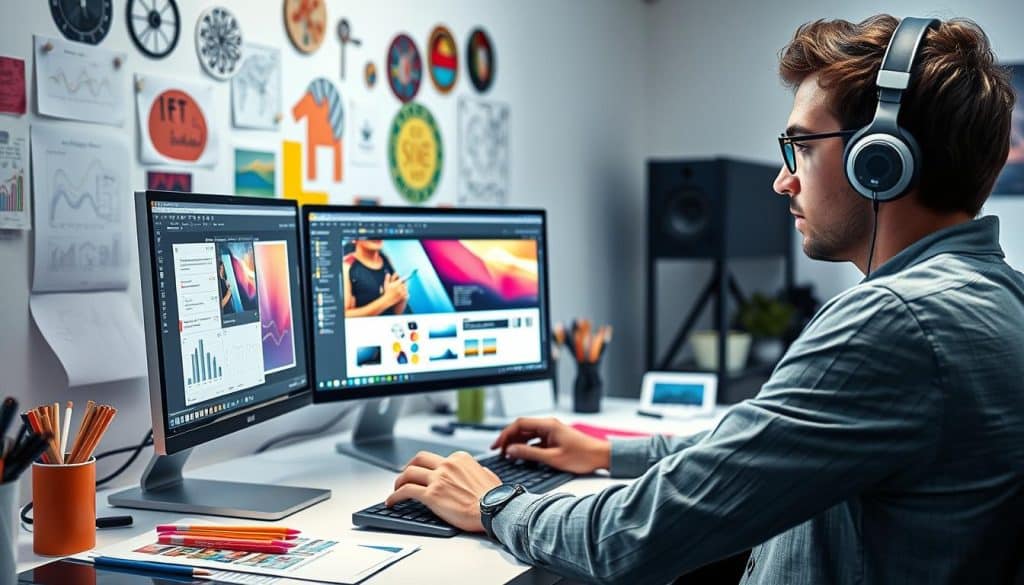
To deliver high-quality UI UX and graphic design, professionals utilize a range of specialized tools that enable the creation, manipulation, and optimization of visual assets across various mediums and formats.
UI UX Design Software
UI UX designers rely on industry-standard software to craft user-centered designs. Some of the key tools include:
Adobe XD for creating wireframes, prototypes, and high-fidelity designs. Other tools like Sketch and Figma are also popular among UI UX designers for their collaborative features and ease of use.
Graphic Design Software
Graphic designers employ a variety of software to produce visually appealing graphics. Key tools include:
Adobe Photoshop for raster graphics and photo editing, Adobe Illustrator for vector graphics, and InDesign for layout and publication design. These tools provide sophisticated capabilities for typography manipulation, color management, and effects, allowing designers to achieve precise visual outcomes that align with brand guidelines.
By leveraging these design tools and staying updated with the latest software, professionals in UI UX and graphic design can ensure high-quality outputs that meet client expectations.
Career Paths and Opportunities in UI UX and Graphic Design
As the digital landscape continues to evolve, the demand for skilled UI UX and graphic designers is on the rise. With the increasing need for user-centric design, companies are looking for professionals who can create intuitive and engaging digital experiences.
Job Roles and Responsibilities
UI UX and graphic designers play a crucial role in shaping the digital products and services of companies. Their responsibilities include conducting user research, creating wireframes and prototypes, and designing visually appealing graphics. For those interested in transitioning into UI UX design from graphic design, additional skill development is often necessary.
Salary Expectations
The career prospects for UI UX and graphic designers are promising, with competitive salary expectations. According to industry trends, professionals in this field can expect a stable and rewarding career path.
Industry Demand in Qatar
Qatar’s rapid digital transformation is driving demand for UI UX and graphic design professionals, particularly in the financial, healthcare, and government sectors. The country’s preparation for major international events and ongoing smart city initiatives has created substantial opportunities for design professionals who can create user-centered digital experiences. As a result, the industry is experiencing significant growth, driven by the need for innovative digital solutions.
How UI UX and Graphic Design Work Together
To create cohesive user experiences, it’s vital to understand how UI UX and graphic design work together. The integration of these two disciplines is essential for delivering products that are both functionally intuitive and visually engaging.
Collaborative Workflow
A collaborative workflow between UI UX and graphic designers ensures that design decisions are aligned with both user needs and business goals. We approach user experience holistically, recognizing that users form impressions based on both the ease of completing tasks and the aesthetic quality of the interface they interact with.
- Seamless integration of UI UX principles and graphic design elements
- Shared understanding of user needs, business goals, and brand values
- Visual design elements guiding attention and establishing hierarchy
Creating Cohesive User Experiences
Creating cohesive user experiences requires both UI UX and graphic designers to share a common understanding of the overall product strategy. As Steve Jobs once said,
“Design is not just what it looks like and feels like. Design is how it works.”
Ourdesignersunderstand that visual design elements significantly impact usability.
| Design Element | UI UX Role | Graphic Design Role |
|---|---|---|
| Color | Guiding attention | Establishing brand identity |
| Typography | Enhancing readability | Creating visual hierarchy |
| Imagery | Providing feedback | Communicating brand message |
Transitioning from Graphic Design to UI UX Design
The growing demand for UI UX designers presents a compelling opportunity for graphic designers to transition into this field. To make this transition successful, it’s crucial to develop the right skills and knowledge.
Required Skill Development
To transition into UI UX design, graphic designers need to acquire key skills such as user research, wireframing, and interaction design. Developing these skills requires a combination of formal education and practical application through personal projects and mentorship opportunities. We recommend focusing on design thinking methodologies and user psychology principles to create effective UI UX designs.
Learning Resources and Courses
Several learning resources and courses can aid graphic designers in transitioning to UI UX design. GUVI’s UI/UX Career Program, Google UX Design Professional Certificate, and courses on Coursera & Interaction Design Foundation are highly recommended. These resources provide comprehensive foundations in UI UX principles, methodologies, and tools. We suggest leveraging these resources to build a strong portfolio and gain industry-relevant skills.
Choosing the Right Design Service for Your Business
Selecting the right design service is crucial for businesses aiming to enhance their digital presence. The decision between hiring UI/UX designers and graphic designers depends on your business needs.
When to Hire UI UX Designers
We recommend hiring UI/UX designers when you’re developing a new digital product or enhancing an existing one. They focus on creating user-centered designs that improve the overall user experience. UI/UX designers are essential for projects that require intuitive navigation, wireframing, and prototyping.
When to Hire Graphic Designers
A graphic designer is ideal for creating visual assets such as logos, illustrations, and marketing materials. Businesses should engage graphic designers when establishing or refreshing their brand identity, or when they need strong visual impact across multiple mediums, including digital and print. For instance, a graphic designer can create a logo that looks great both on a website and in a printed brochure.
When deciding between UI/UX and graphic design services, consider the specific needs of your product or projects. If your goal is to enhance the user experience of a digital platform, UI/UX is the way to go. For visual branding and marketing materials, a graphic designer is the better choice.
Conclusion
Our journey through the world of UI/UX and graphic design reveals that while they differ in objectives and skill sets, they share a common goal: to create engaging digital experiences for users.
UI/UX and graphic design represent complementary disciplines that, when effectively integrated, create digital products that are both functionally excellent and visually compelling. Professional designers, including graphic designers and UI/UX designers, increasingly benefit from understanding both disciplines.
In Qatar’s evolving digital landscape, we see a growing demand for both UI/UX and graphic design expertise as organizations recognize the competitive advantage of well-designed digital experiences and products that meet the needs of their users. By understanding the distinct value of UI/UX and graphic design, businesses and professionals can make informed decisions that align with their specific goals.
FAQ
What is the primary role of a UI designer in product development?
We believe that a UI designer’s primary role is to create visually appealing and user-friendly interfaces that enhance the overall user experience, focusing on the visual elements and interactions that users engage with.
How does user research contribute to effective UI/UX design?
User research is crucial as it provides valuable insights into user behaviors, needs, and motivations, allowing us to craft designs that meet user expectations and drive business outcomes.
What skills are essential for a graphic designer to transition into UI/UX design?
To transition into UI/UX design, a graphic designer should develop skills in user research, wireframing, prototyping, and interaction design, as well as familiarize themselves with UI/UX design software and methodologies.
How do branding and identity design impact the overall user experience?
Branding and identity design play a significant role in shaping the user experience, as they help establish a consistent visual language and tone that resonates with the target audience and reinforces the brand’s message.
What are the key differences between UI/UX design and graphic design?
While both disciplines share some similarities, UI/UX design focuses on creating user-centered experiences, whereas graphic design emphasizes visual communication and aesthetics, often for branding and marketing purposes.
How do UI/UX designers and graphic designers collaborate to create cohesive user experiences?
We find that effective collaboration between UI/UX designers and graphic designers is critical in creating cohesive user experiences, as it ensures that the visual and interactive elements align with the overall product vision and user needs.
What are the most in-demand skills for UI/UX designers in the industry?
The most in-demand skills for UI/UX designers include user research, wireframing, prototyping, interaction design, and proficiency in UI/UX design software, as well as a deep understanding of human-centered design principles.
How does information architecture influence the design of digital products?
Information architecture plays a vital role in shaping the design of digital products, as it involves organizing and structuring content in a way that is intuitive and accessible to users, ultimately enhancing their overall experience.