

Are you measuring the success of your video marketing campaigns correctly? In a world where going viral is considered the ultimate goal, it’s easy to overlook the real metrics that matter.
Most marketers understand that a viral video is a rare occurrence, and that view counts or likes don’t directly translate to return on investment (ROI). As highlighted in a recent article on Entrepreneur, tracking the right metrics is crucial for understanding the true impact of your video content.
By focusing on the right metrics, you can optimize your video marketing strategy and improve your campaign’s performance. We will explore how aligning your video metrics with specific business goals can lead to more effective campaigns and better ROI.
Key Takeaways
- Understand the importance of measuring the right KPIs for video marketing success.
- Learn how to align your video metrics with specific business goals.
- Discover the metrics that matter most at each stage of the customer journey.
- Implement effective KPI tracking systems for meaningful data.
- Optimize your video marketing campaigns for maximum impact.
Understanding the Value of Video Marketing Metrics
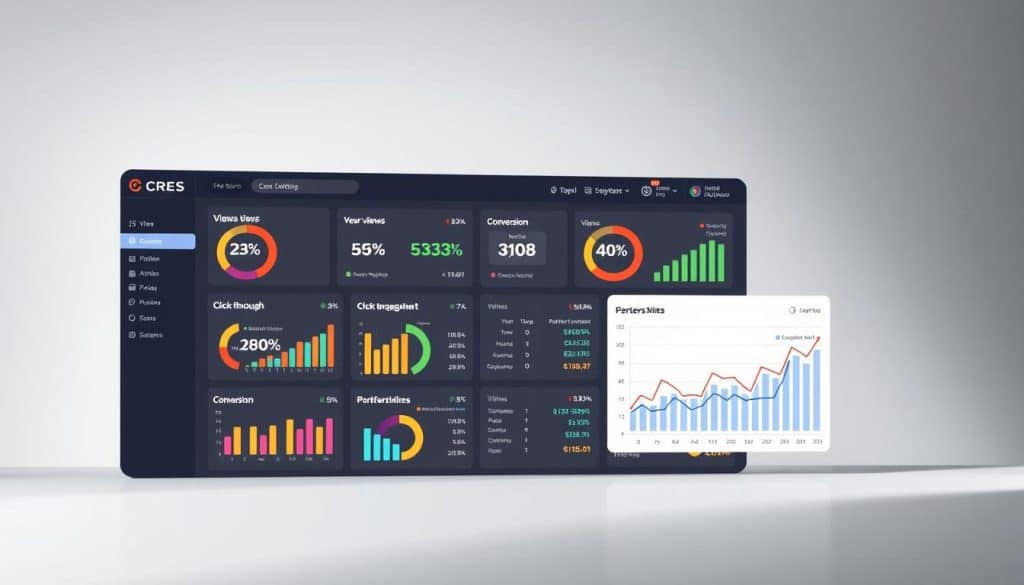
Measuring the success of video marketing efforts requires a deep dive into key performance indicators (KPIs). To have a successful video marketing strategy, you first need to determine the goal of your efforts as it relates to your larger marketing plan.
While the overarching goal of most marketing plans is to get more business, you must isolate which stage of your buyer’s journey needs improvement to turn more leads into paying customers.
Why Traditional Metrics Like Views Aren't Enough
Relying solely on traditional metrics such as views can be misleading. You need to understand how your video content is performing in relation to your specific marketing goals. Different marketing objectives require different measurement approaches.
- Different marketing goals require different measurement approaches for video content.
- Aligning KPIs with your overall marketing strategy is crucial.
- Creating a measurement plan that tracks KPIs relevant to each stage of your marketing funnel is essential.
Aligning KPIs with Your Marketing Goals
To optimize your video content strategy and resource allocation, you must align your KPIs with your marketing goals. This involves understanding your target audience and setting realistic benchmarks based on industry standards and historical performance.
By doing so, you’ll be able to measure the effectiveness of your video marketing efforts accurately and make data-driven decisions to improve your campaigns.
The Marketing Funnel Approach to Video KPIs

To maximize the effectiveness of video marketing campaigns, it’s crucial to adopt a structured approach that aligns with the customer journey. The marketing funnel is a strategic framework that helps marketers identify and measure the right KPIs for their video content.
Mapping Video Content to Customer Journey Stages
The customer journey is typically divided into several stages, from awareness to conversion. To effectively measure the success of video campaigns, marketers must map their content to these stages. This involves understanding the specific goals and metrics relevant to each stage.
- Identify the stage-specific goals for your video content.
- Determine the relevant metrics for measuring success at each stage.
- Align your video content with the needs and preferences of your target audience at each stage.
Setting Stage-Specific Goals for Video Campaigns
Once the video content is mapped to the customer journey stages, the next step is to set stage-specific goals for the campaigns. This involves creating SMART goals (Specific, Measurable, Achievable, Relevant, Time-bound) that are aligned with the overall marketing objectives.
- Establish clear, measurable objectives for each video campaign.
- Use historical data and industry benchmarks to set realistic targets.
- Ensure that all team members are aligned around the stage-specific objectives.
Top-of-Funnel KPI Video Marketing Metrics
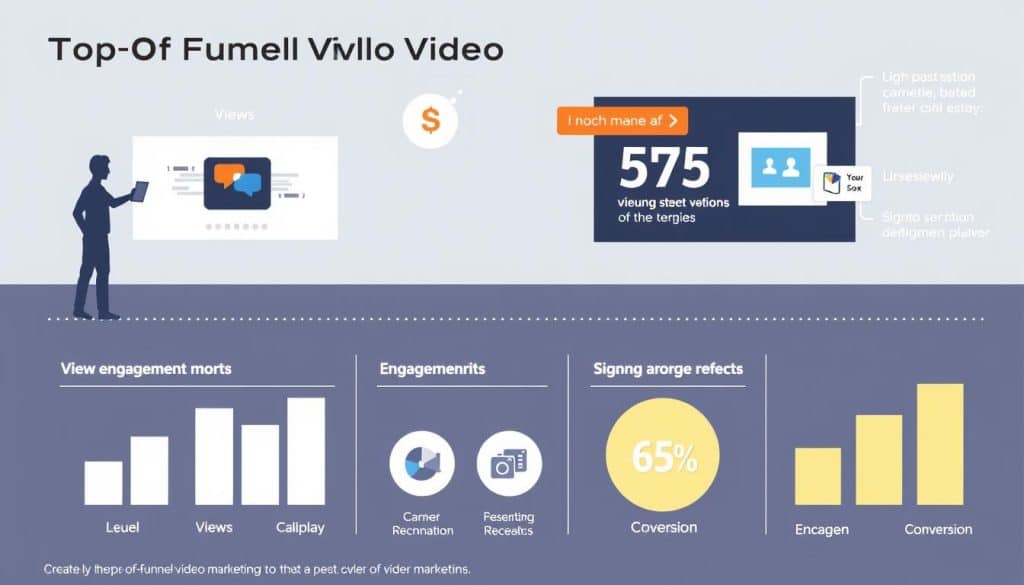
To gauge the effectiveness of video marketing campaigns at the awareness stage, marketers rely on key performance indicators (KPIs) that measure reach and impact. At this stage, the focus is on metrics that indicate how well a video campaign is performing in terms of visibility and brand recognition.
Views and Impressions: Measuring Reach
Views and impressions are fundamental metrics for understanding the reach of a video marketing campaign. Views indicate how many times a video has been watched, while impressions refer to the number of times a video thumbnail or ad is displayed. These metrics help marketers understand the campaign’s visibility and potential impact.
Unique Users and Ad Recall Lift
Measuring the number of unique users exposed to a video campaign provides insights into its reach among distinct viewers. Ad recall lift is another critical metric, indicating the increase in viewers’ ability to remember a brand or ad after being exposed to it. This metric is crucial for understanding the campaign’s effectiveness in enhancing brand memory.
Awareness Lift: Tracking Brand Recognition
Awareness lift refers to the increase in brand recognition among viewers after being exposed to a video campaign. It’s determined through consumer research, measuring the average number of viewers who remember a brand after a set period. By tracking awareness lift, marketers can assess the campaign’s impact on brand recognition and adjust their strategies accordingly.
We’ll define brand awareness lift and explain how it differs from other awareness metrics like ad recall. The section will explore methodologies for measuring increases in brand recognition resulting from video marketing efforts. You’ll learn how to conduct pre- and post-campaign research to accurately measure changes in brand awareness.
Middle-of-Funnel Engagement Metrics
Middle-of-funnel engagement metrics offer a more detailed insight into how effectively your video marketing campaigns are resonating with your target audience.
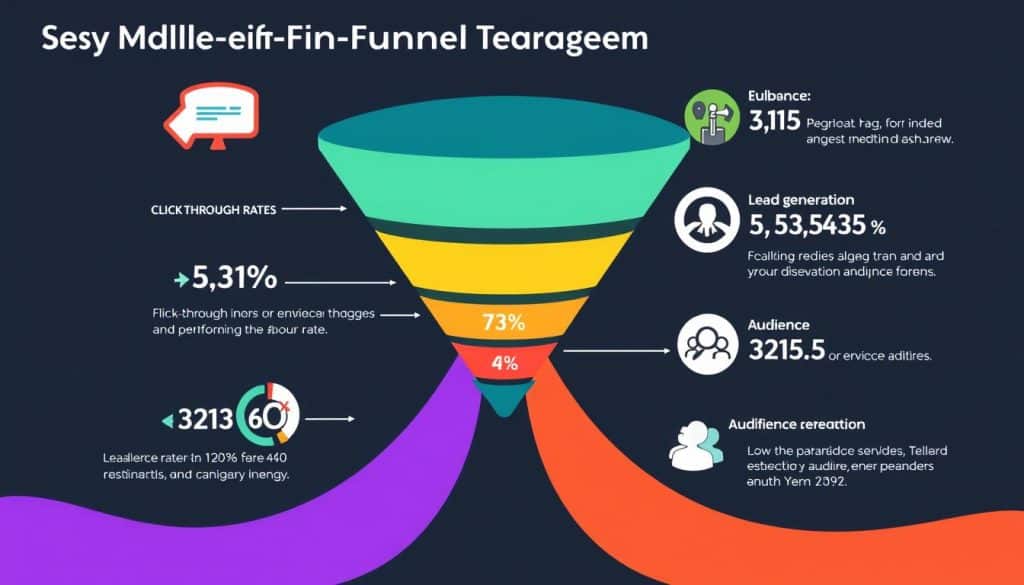
View-Through Rate and Watch Time
View-Through Rate (VTR) and watch time are critical metrics that help you understand how engaging your video content is. VTR measures the percentage of viewers who watched your video after seeing it, while watch time indicates the total time spent viewing your content.
These metrics are essential for assessing the effectiveness of your video in capturing and maintaining audience attention.
Brand Interest and Consideration Lift
Brand interest and consideration lift metrics track the increase in audience interest and consideration for your brand after viewing your video content. This is typically measured through surveys and brand lift studies.
By analyzing these metrics, you can determine how effectively your video content is influencing potential customers’ perceptions and decisions.
Favorability Metrics: Measuring Audience Perception
Favorability metrics measure how your video content impacts the audience’s perception of your brand. Favorability lift tracks whether viewers see your brand more favorably after watching a specific video.
This can be measured through perception and video ad experience surveys. By analyzing favorability metrics, you can understand how different elements of your video content, such as storytelling and production quality, influence audience perception.
We’ll explore how favorability connects to brand equity and long-term customer relationships, and discuss strategies for creating video content that improves brand perception among your target audience.
Bottom-of-Funnel Conversion Metrics
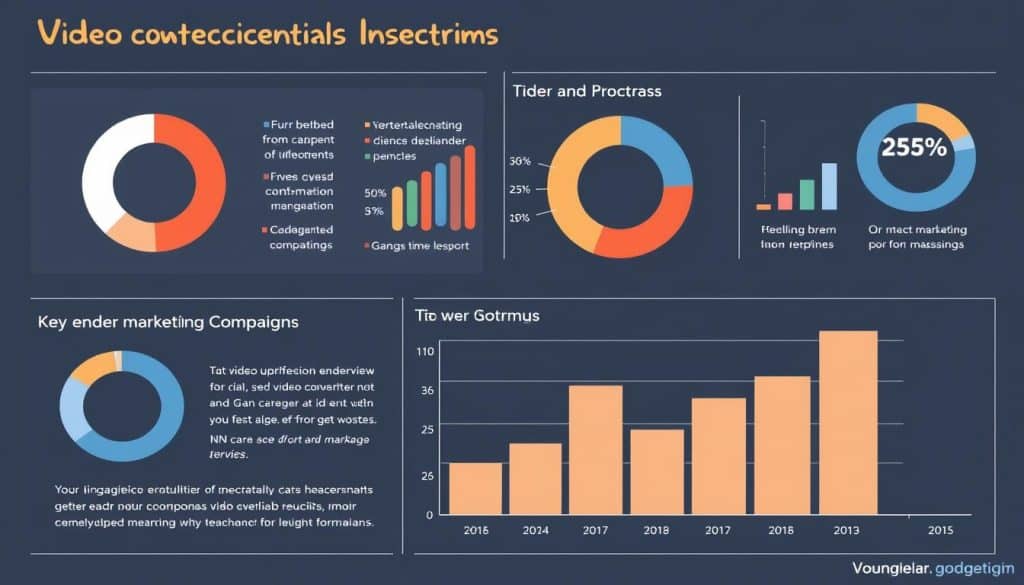
To truly gauge the effectiveness of video marketing campaigns, we must examine the metrics that matter most at the bottom of the funnel. Conversion metrics are crucial in understanding how video content drives sales and revenue.
Click-Through Rate and Calls/Sign-ups
One of the primary indicators of a successful video marketing campaign is the Click-Through Rate (CTR). CTR measures the percentage of viewers who click on a call-to-action (CTA) after watching a video. Additionally, tracking calls and sign-ups generated from video content helps in understanding its impact on lead generation. By analyzing CTR and conversion rates, we can refine our video marketing strategies to better engage our target audience.
Purchase Intent Lift
Purchase Intent Lift is a critical metric that measures the increase in purchase intent among viewers after engaging with video content. By tracking this metric, we can determine the effectiveness of our video marketing efforts in driving potential customers toward making a purchase. This data is invaluable in optimizing our marketing strategies to maximize ROI.
Sales Attribution for Video Content
Attributing sales to video content is essential in understanding its impact on revenue generation. We explore different models for attributing sales to video content in a multi-touch marketing environment. By implementing proper tracking systems, we can connect video views to actual purchase behavior. This enables us to calculate the revenue impact of our video marketing efforts and identify which videos drive the most sales. For instance, our team at Cres can help you develop a robust attribution model to measure the effectiveness of your video marketing campaigns.
By understanding the role of video in driving conversions, we can optimize our content to improve sales. This involves analyzing the challenges of video attribution and implementing strategies to overcome them. With the right analytics in place, we can report on video-influenced revenue and demonstrate clear ROI to stakeholders.
Customer Retention Video Metrics
To maximize customer retention, it’s crucial to leverage video marketing metrics that go beyond initial engagement. Customer retention is a vital component of a successful business strategy, and understanding how video content influences customer behavior is key to developing effective retention strategies.
Return Visits and Social Interactions
Measuring return visits and social interactions is essential for understanding how video content impacts customer retention. By analyzing these metrics, businesses can gauge the effectiveness of their video marketing efforts in maintaining customer interest and encouraging repeat engagement. For instance, tracking how often customers return to watch additional videos or engage with the brand on social media platforms can provide valuable insights into customer loyalty and retention.
Some key metrics to consider include:
- Return visit rates to video content
- Social media engagement metrics (likes, shares, comments)
- The impact of video content on customer loyalty programs
Post-Purchase Favorability and Advocacy
Post-purchase favorability and advocacy are critical metrics for assessing the long-term impact of video content on customer retention. By providing value to customers through additional video content, such as tutorials, tips, or FAQs, businesses can increase brand favorability and encourage advocacy. Measuring lifts in favorability both during the consideration and retention stages is essential for understanding how video marketing efforts contribute to customer loyalty and retention.
As noted by marketing experts, “Creating video content that resonates with customers post-purchase can significantly enhance their overall brand experience, leading to increased loyalty and advocacy.” By focusing on these metrics, businesses can refine their video marketing strategies to better support customer retention and long-term growth.
Implementing Effective KPI Tracking Systems
To effectively measure the success of your video marketing campaigns, implementing a robust KPI tracking system is crucial. This involves selecting the right analytics platforms and creating custom dashboards that provide actionable insights into your video performance.
Analytics Platforms for Video Performance
Choosing the right analytics platform is the first step in tracking your video KPIs. Popular options include Google Analytics, video hosting platform analytics (like YouTube Analytics), and specialized video marketing analytics tools. For instance, Clicdata’s video marketing KPI guide provides insights into various analytics platforms. When selecting a platform, consider the types of metrics it can track, its ability to integrate with your existing marketing stack, and its reporting capabilities.
A good analytics platform should offer a range of metrics, including views, engagement, click-through rates, and conversion metrics. It should also provide insights into audience demographics and behavior, helping you understand how different segments interact with your video content.
| Analytics Platform | Key Features | Integration Capabilities |
|---|---|---|
| Google Analytics | Comprehensive website and campaign tracking | Integrates with Google Ads, YouTube |
| YouTube Analytics | Detailed video performance metrics | Native integration with YouTube videos |
| Clicdata | Customizable dashboards, video KPI tracking | Integrates with various data sources |
Creating Custom Dashboards for Video KPIs
Custom dashboards allow you to track your most important video KPIs in one place, providing a clear overview of your video marketing performance. To create effective dashboards, start by identifying your key performance indicators. For video marketing, these might include metrics like view-through rate, watch time, and conversion rates.
When designing your dashboard, focus on providing actionable insights rather than just visualizing data. Combine quantitative metrics with qualitative insights to get a comprehensive understanding of your video performance. For metrics that are harder to track, such as lifts in favorability or brand recall, consider using consumer research and customer surveys to fill in the gaps.
Different stakeholders will have different needs from your dashboard. For executives, high-level metrics like overall ROI or campaign performance may be most relevant. For content creators, more granular metrics like engagement rates or audience retention might be more useful. Ensure your dashboard can be customized for different views to cater to various stakeholders.
Conclusion: Maximizing ROI Through Strategic Video Measurement
As we’ve explored, aligning video KPIs with specific business objectives is key to success. To maximize ROI, it’s essential to implement a strategic video measurement approach that covers the entire marketing funnel.
By understanding and applying the right metrics at each stage of the customer journey, businesses can make informed decisions and improve their video marketing efforts. This involves tracking KPIs for marketing channel ROI and leveraging digital marketing strategies to optimize performance.
Continuous measurement and optimization create a virtuous cycle of improvement, enabling businesses to refine their video marketing strategy and achieve greater success. By adopting this data-driven approach, companies can demonstrate the value of their video marketing efforts and drive revenue growth.
FAQ
What are the most important metrics to track for video content?
We recommend tracking a combination of metrics, including view-through rate, watch time, and engagement metrics like shares and social interactions, to get a comprehensive understanding of your video content’s performance.
How do I measure the success of my video marketing campaign?
To measure the success of your video marketing campaign, we suggest setting clear goals and tracking relevant KPIs, such as brand awareness lift, purchase intent lift, and sales attribution, to determine the campaign’s impact on your business objectives.
What is the difference between views and impressions in video marketing?
Views refer to the number of times a video is watched, while impressions refer to the number of times a video is displayed or shown to users, regardless of whether they watch it or not. Understanding the difference between these metrics is crucial for optimizing your video content.
How do I choose the right video metrics for my business goals?
We help you align your video metrics with your business objectives by identifying the most relevant KPIs for your customer journey stages, whether it’s awareness, consideration, or conversion.
Can I use video metrics to measure customer retention?
Yes, you can use video metrics like return visits, social interactions, and post-purchase favorability to measure customer retention and understand how your video content is impacting customer loyalty.
What analytics platforms are best for tracking video performance?
We utilize various analytics platforms, such as Google Analytics and video-specific analytics tools, to track video performance and provide insights into viewer behavior, engagement, and conversion.
How often should I review my video marketing metrics?
We recommend regularly reviewing your video marketing metrics to ensure you’re on track to meet your business objectives and make data-driven decisions to optimize your video content and content strategy.