

In a world where digital media dominates, a surprising 56% of consumers trust print media more than digital formats. This statistic underscores the enduring power of traditional print advertising in capturing audience attention and fostering trust. We will explore how businesses can leverage this trust to drive growth.
As we examine the landscape of marketing strategies, it becomes clear that print ads offer a unique tactile experience that digital media cannot replicate. By incorporating print media into their marketing mix, businesses can create lasting impressions and build brand credibility.
Key Takeaways
- Print media continues to be a trusted channel for consumers.
- Businesses can leverage print ads to drive tangible growth.
- Combining print and digital marketing strategies can enhance overall campaign effectiveness.
- Print advertising offers a unique tactile experience.
- Effective use of print media can significantly boost brand credibility.
- Strategic implementation of print ads can complement digital efforts.
The Enduring Power of Traditional Print Advertising in a Digital World
The persistence of traditional print advertising in a digital age is a testament to its enduring effectiveness. As we navigate the ever-changing landscape of marketing, it’s clear that print media continues to play a vital role in connecting with both new and existing customers.
Current Statistics on Print Advertising Effectiveness
Recent data from The 2024 Small Business Marketing Report by VistaPrint, in partnership with Wix, highlights the significance of print advertising. The report found that 71% of small business owners champion the importance of traditional marketing methods. Moreover, 78% of small businesses experimented with new marketing strategies in 2023, balancing digital and traditional methods.
Why Print Advertising Still Matters in 2024
So, why does print advertising remain relevant? For one, the tangible nature of print media creates a sensory experience that digital channels cannot replicate, fostering deeper engagement and trust with your audience. Additionally, print advertising offers a respite from digital fatigue, allowing your message to stand out in a less cluttered environment where consumers are more receptive.
With 60% of businesses planning to invest in traditional marketing going forward, it’s clear that print advertising will continue to be a vital component of effective marketing strategies.
Understanding Traditional Print Advertising and Its Impact

To grasp the full potential of traditional print advertising, we must first understand its fundamental characteristics and the impact it has on consumers. Print advertising has been a cornerstone of marketing strategies for decades, offering a unique blend of tangibility and memorability that digital media often struggles to match.
The effectiveness of print advertising can be attributed to several key factors, including its ability to engage consumers on multiple sensory levels and create a lasting impression.
What Defines Print Advertising
Print advertising is characterized by its physical presence, engaging multiple senses and creating a lasting impression on consumers. The tangible nature of print media allows for a more personal connection with the audience, fostering a deeper association with the brand.
Research indicates that print ads require 21% less cognitive effort to process than digital ads, making the message more easily absorbed and retained. This characteristic, combined with the higher recall rates of print media ads (78% vs 30% for digital), underscores the effectiveness of print in marketing campaigns.
Psychological Impact of Physical Media on Consumers
The physical interaction with print materials activates different neural pathways than digital media, creating stronger emotional connections and brand recall. The trust factor is significantly higher with print media, with 82% of consumers reporting they trust print advertising when making purchase decisions.
This trust, combined with the “endowment effect” where physically holding something creates a sense of ownership, underscores the profound psychological impact of print advertising on consumers. By leveraging these aspects, businesses can create more meaningful connections with their audience.
Key Types of Traditional Print Advertising for Business Growth
To drive business growth, companies can utilize multiple types of traditional print advertising. These methods have been proven effective in reaching and engaging target audiences.
Newspapers and Magazines
Newspapers and magazines remain viable channels for print advertising, offering businesses the opportunity to reach specific demographics. Advertisements in these mediums can be tailored to niche audiences, increasing their effectiveness. With targeted ad placement, companies can enhance brand visibility and drive local engagement.
Billboards and Outdoor Advertising
Billboards and outdoor advertising provide high-impact visibility for businesses. Strategically placed posters can capture the attention of a large audience, making them ideal for promoting products or services to a broad demographic. This form of advertising is particularly effective in high-traffic areas.
Direct Mail and Flyers
Direct mail involves sending physical promotional materials like postcards, catalogs, newsletters, and coupons directly to potential customers. This method is highly effective, with 29% of customers discovering small businesses through direct mail. Additionally, flyers are a cost-effective marketing tool for local promotions, helping 34% of consumers find small businesses. Our marketing efforts can be significantly enhanced by leveraging these tangible and engaging formats.
- Direct mail campaigns deliver personalized touchpoints directly to prospects, achieving significant response rates.
- Flyers are versatile and effective for local events and promotions, grabbing attention with eye-catching designs.
- The tangible nature of these print formats creates lasting impressions, providing multiple exposure opportunities.
Designing Effective Print Advertisements That Convert
To design print advertisements that truly convert, businesses must consider both the visual appeal and the context in which their ads will be viewed. Effective print ads are those that not only capture the audience’s attention but also drive them to take action.
Essential Design Elements for Print Ads
The design elements of print ads play a crucial role in determining their effectiveness. We consider several key factors when designing print ads, including the use of bold visuals, clear messaging, and a compelling call-to-action. A well-designed print ad should be visually appealing and easy to read, making it more likely to grab the attention of potential customers.
For instance, the use of high-quality images and strategic color choices can significantly enhance the appeal of a print ad. Moreover, the typography should be clear and readable, ensuring that the message is conveyed effectively to the audience.
Size and Placement Considerations
The size and placement of print ads are equally important considerations. Larger ads naturally attract more attention, but the context in which they are placed also matters greatly. For example, a newspaper ad placed in the top half of the front page is more likely to be noticed by readers. Similarly, billboard ads need to be large and feature simple, bold visuals to grab the attention of drivers at high speeds.
We also consider the psychological reading patterns of the audience when designing and placing print ads. Readers typically follow a Z pattern, scanning from the top left. By placing key elements like headlines in these zones, we can increase engagement and drive conversions. Strategic marketing decisions around ad size and placement can dramatically impact the effectiveness of print advertising campaigns.
Color Psychology and Typography in Print Advertising
The combination of color psychology and thoughtful typography is crucial for creating impactful print advertisements that resonate with the target audience. We emphasize that the strategic use of these elements can significantly enhance the effectiveness of print ads, making them more engaging and memorable.
Strategic Color Choices for Maximum Impact
Colors play a vital role in print advertising, influencing consumer emotions and perceptions. Different colors evoke different responses; for instance, red is often associated with energy and urgency, while blue conveys trust and stability. When selecting colors for print ads, we consider the brand’s identity and the emotional response desired from the audience. A well-chosen color scheme can draw attention and make the advertisement more noticeable.
Font Selection and Readability Best Practices
Typography is another critical aspect of print advertising design. Serif fonts, such as Times New Roman, are often used for formal and traditional contexts, conveying reliability and professionalism. In contrast, sans-serif fonts like Arial are perceived as modern and clean, making them suitable for tech brands and contemporary retailers. When choosing fonts, we prioritize readability, ensuring that headlines are bold and body text is clear and simple. Consistency in typography across print ads also helps build brand recognition.
| Typography Characteristics | Ideal Use Case | Example Fonts |
|---|---|---|
| Serif | Formal, traditional contexts | Times New Roman |
| Sans-serif | Modern, clean designs | Arial |
For more insights on optimizing visual elements in advertising, we recommend exploring our resources on optimizing visual design in UX for digital.
Crafting Compelling Headlines and CTAs for Print Materials
Crafting compelling headlines and CTAs is essential for capturing the audience’s attention in print media. The headline is often the first thing a reader notices, and it can make or break the effectiveness of an ad. A well-crafted headline grabs attention and entices the reader to learn more.
Writing Headlines That Grab Attention
To write headlines that grab attention, we focus on creating a clear, concise message that resonates with our target audience. This involves understanding the audience’s needs and crafting a headline that speaks directly to those needs. Effective headlines often use action-oriented language and highlight the benefits of a product or service. For instance, using verbs like “Discover,” “Learn,” or “Explore” can encourage readers to engage with the ad. Additionally, incorporating relevant keywords can improve the ad’s visibility and relevance.
Effective Call-to-Action Strategies for Print Media
The CTA is the heart of your ad’s effectiveness, directing the audience to take the next step. Whether it’s to buy, visit, or schedule a consultation, the CTA guides them. In print ads, CTA placement is crucial. For billboards, the CTA must be short and highly visible, typically placed in the bottom-right corner where the eye naturally lands. In newspapers and magazines, adding white space around the CTA helps it stand out. Using bold and simple CTAs like “Shop Now” or “Call Today” gives the audience a clear action to take. Combining action-focused language with a benefit, such as “Shop now to save 50%,” creates a powerful CTA that motivates immediate response.
Creating Emotionally Resonant Print Campaigns
The most successful print campaigns are those that connect with their audience on an emotional level. We achieve this by incorporating effective storytelling techniques and imagery that evoke emotional responses.
Storytelling Techniques in Print Advertising
Storytelling is a powerful tool in print advertising, allowing brands to create a narrative that resonates with their audience. By using compelling stories, we can convey our brand message in a way that is both memorable and impactful. Effective storytelling in print ads involves creating a clear structure, using relatable characters, and evoking emotions that drive engagement.
Using Imagery to Evoke Emotional Responses
Imagery plays a crucial role in evoking emotional responses from our audience. Clear and sharp images are essential for creating professional and effective print media ads. We use high-resolution images (minimum 300 DPI) to convey professionalism and brand quality. The strategic use of color psychology in imagery amplifies emotional impact, with warm tones creating intimacy and cool tones projecting calm professionalism. For instance, a brand like Rolex uses crisp imagery to reinforce their premium image and appeal.
| Image Type | Resolution | Use Case |
|---|---|---|
| High-resolution raster images | 300 DPI | Brochures, magazines, flyers |
| Vector files | N/A | Logos, illustrations |
| Lower resolution images | 150-200 DPI | Billboards |
Print Advertising Services and Solutions
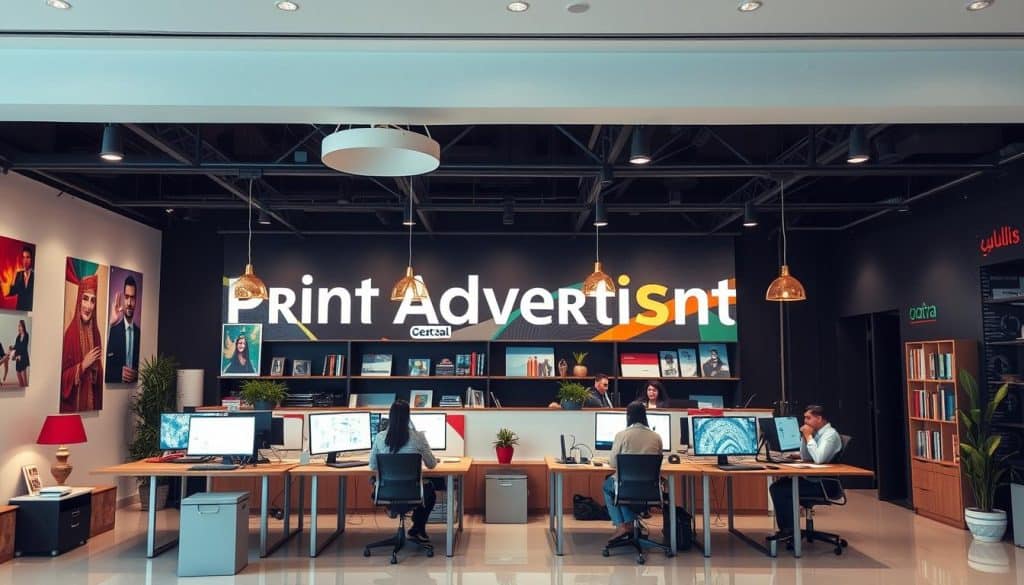
As a hub for business growth, Qatar demands innovativeprint advertising services. We provide comprehensive solutions tailored to your business needs, ensuring your print materials stand out.
Professional Design Services for Print Materials
Our team at Duck Design delivers professional designs with quick turnaround times and unlimited revisions. We help businesses navigate the complex landscape of print production options, from digital printing for short runs to offset printing for larger campaigns. With modern print production, businesses can leveragespecialized finishing optionslike die-cutting, embossing, and foil stamping to create unique tactile experiences.
Print Production and Distribution Options
We offer strategic distribution planning to ensure your print materials reach the right audience at the right time. Ourintegrated distribution servicesstreamline the process from design to delivery, ensuring your print advertising reaches its destination efficiently. With options like print-on-demand, businesses can reduce waste and storage costs while maintaining flexibility to update content regularly.
Measuring ROI and Effectiveness of Print Advertising Campaigns
Measuring the ROI of print advertising campaigns is crucial for businesses to understand their impact. To achieve this, businesses can employ various tracking methods and testing strategies to gauge the effectiveness of their print ads.
Tracking Methods for Print Campaign Performance
To track the performance of print campaigns, businesses can use several methods. These include:
- Unique promo codes or URLs in print ads to track responses
- QR codes that direct customers to specific landing pages
- Customer surveys to understand how customers heard about the business
By using these methods, businesses can gather valuable data on the effectiveness of their print advertising efforts.
| Tracking Method | Description | Benefit |
|---|---|---|
| Unique Promo Codes | Codes printed in ads that customers can use to get discounts | Tracks response rate and measures campaign success |
| QR Codes | Codes that link to specific landing pages or offers | Directs customers to online platforms and tracks engagement |
| Customer Surveys | Surveys asking customers how they heard about the business | Provides qualitative insights into campaign effectiveness |
A/B Testing Strategies for Print Materials
A/B testing is a powerful strategy for optimizing print ads. By creating different versions of an ad and testing them with various audience groups, businesses can determine which elements are most effective.
Key A/B testing strategies include:
- Testing different headlines or imagery
- Comparing different calls-to-action (CTAs)
- Evaluating the impact of different layouts or designs
By implementing A/B testing, businesses can refine their print advertising to better resonate with their target audience and improve campaign performance.
Integrating Traditional Print with Digital Marketing Strategies
As we navigate the complexities of modern marketing, combining print and digital strategies emerges as a powerful approach to captivate audiences and drive growth. We recognize the potential of merging traditional print advertising with digital marketing to create cohesive and impactful campaigns.
Creating Cohesive Cross-Channel Campaigns
To maximize reach and engagement, businesses can leverage both print and digital media. By doing so, they can ensure a consistent brand message across different platforms. Our approach involves strategically integrating print materials with digital marketing efforts, such as social media and email campaigns, to create a seamless customer experience.
Using QR Codes and NFC Technology in Print Materials
One effective way to bridge the gap between print and digital is by incorporating QR codes and NFC technology into print materials. These technologies transform static print advertising into interactive gateways, allowing customers to access more information or special offers with a simple scan or tap.
Some key benefits of using QR codes and NFC technology include:
- Extending engagement beyond the print material
- Providing valuable tracking metrics for print media campaigns
- Creating immersive brand experiences through augmented reality integration
By implementing these technologies, businesses can measure engagement rates, attribute digital actions to specific print materials, and optimize their marketing strategy for better results.
| Technology | Function | Benefit |
|---|---|---|
| QR Codes | Directs customers to digital content | Increases engagement and tracking capabilities |
| NFC Technology | Enables smartphone users to access digital content | Enhances customer experience and provides measurable data |
Conclusion: Maximizing Business Growth Through Strategic Print Advertising
Our analysis has shown that strategic print advertising is a potent driver of business expansion, offering tangible touchpoints that build trust, credibility, and lasting brand impressions in an increasingly digital world.
The 2024 Small Business Marketing Report by VistaPrint x Wix highlights that traditional marketing continues to thrive, providing substantial value for small businesses. With 71% of small business owners recognizing the importance of print advertising, it’s clear that this channel remains vital for connecting with customers.
The psychological impact of physical media creates unique advantages for businesses seeking to establish deeper connections with their audience. By leveraging print advertising, companies can create integrated experiences that engage customers across multiple touchpoints, complementing digital marketing efforts.
To maximize business growth, the strategic implementation of print advertising—from newspapers and magazines to direct mail and billboards—provides targeted exposure to specific geographic and demographic segments. By partnering with a reliable printing service like VistaPrint, businesses can ensure top-notch marketing materials that meet their expectations.
FAQ
What are the most effective types of print materials for business growth?
We find that businesses often see significant returns from investing in high-quality billboards, targeted direct mail, and engaging magazine ads. The key is to choose the materials that best align with your target audience and marketing goals.
How can I measure the ROI of my print advertising campaigns?
To effectively measure ROI, we recommend implementing tracking methods such as unique promo codes, dedicated phone numbers, or custom URLs. This allows you to monitor response rates and attribute sales directly to your print campaigns.
What role does color psychology play in print advertising?
Color psychology is crucial in print advertising, as different colors can evoke distinct emotional responses from consumers. By strategically selecting colors that align with your brand and message, you can significantly enhance the impact of your print materials.
How can I integrate print advertising with my digital marketing strategy?
We suggest creating cohesive cross-channel campaigns that seamlessly blend print and digital elements. Incorporating QR codes and NFC technology into your print materials can drive consumers to your online platforms, fostering a more integrated marketing approach.
What are the benefits of using storytelling techniques in print advertising?
By leveraging storytelling techniques, businesses can create emotionally resonant print campaigns that captivate audiences and leave a lasting impression. This approach enables brands to connect with consumers on a deeper level, ultimately driving engagement and loyalty.
How can I ensure my print advertisements are effective at grabbing attention?
To craft compelling print ads, focus on developing attention-grabbing headlines and incorporating visually appealing design elements. By balancing these components, you can create advertisements that resonate with your target audience and drive results.