

In today’s digital landscape, a robust backend system is crucial for businesses seeking competitive advantage and operational efficiency. As we explore the world of backend development, we’ll examine the fundamental components that power modern web applications.
We will provide actionable insights for both technical decision-makers and business leaders to help bridge the gap between development capabilities and business objectives. By understanding how strategic backend choices directly impact scalability, performance, and ultimately your bottom line, you’ll be better equipped to make informed decisions.
Key Takeaways
- Expert strategies for implementing robust backend systems
- Fundamental components of backend development, including servers and databases
- Practical, business-oriented solutions for measurable results
- Actionable insights for technical decision-makers and business leaders
- Understanding the impact of backend choices on scalability and performance
Understanding Backend Development

As we dive into the world of web development, understanding backend development becomes crucial for creating robust and scalable digital solutions. Backend development refers to the server-side logic, database integration, and API connectivity that power a web application.
What Happens Behind the Scenes
When users interact with a web application, they are often unaware of the complex processes happening behind the scenes. Backend developers work to ensure that the server, database, and application logic work seamlessly together to deliver a smooth user experience. This involves handling requests, processing data, and returning relevant responses.
The Three Core Components: Servers, Databases, and APIs
The backend of a web application consists of three primary components: servers, databases, and APIs. Servers act as the central processing hubs, handling requests and delivering responses. Databases store and manage data, providing efficient retrieval and manipulation capabilities. APIs enable different software components to communicate, facilitating modular development and integration with third-party services.
By understanding how these components work together, developers can create systems that are not only functional but also secure, scalable, and maintainable over time.
Why Backend Development Matters for Business Growth

Backend development is the backbone of any successful digital venture, providing the foundation for scalability, performance, and data management. As businesses strive to stay competitive in a rapidly evolving digital landscape, understanding the significance of backend development is crucial.
Scalability and Performance Benefits
Effective backend development enables businesses to achieve scalability and performance benefits, allowing them to handle increased traffic and user demands without compromising on user experience. By leveraging robust backend architectures, companies can ensure their systems are optimized for growth, leading to improved customer satisfaction and retention.
Some key benefits of scalable backend development include:
- Handling increased user traffic without downtime
- Improving application performance through optimized resource allocation
- Enhancing overall system reliability and fault tolerance
Data Management and Business Intelligence
Backend development plays a vital role in data management, enabling businesses to store, retrieve, and manage data efficiently. By implementing robust data validation and processing pipelines, companies can ensure the integrity and reliability of their data, driving informed decision-making.
| Data Management Aspect | Backend Development Role | Business Benefit |
|---|---|---|
| Data Storage | Handles large volumes of data in databases | Efficient data retrieval and management |
| Data Validation | Ensures data integrity before storage | Prevents incorrect or inconsistent data |
| Data Processing | Enables real-time data processing capabilities | Facilitates immediate response to changing market conditions |
By focusing on backend development, businesses can transform raw data into actionable business intelligence, uncovering hidden patterns and opportunities to drive growth.
Essential Backend Technologies for Modern Businesses

In today’s digital landscape, selecting the right backend technologies is crucial for business success. The backend development landscape is vast, with numerous options available for businesses to choose from.
When it comes to backend development, the choice of technology stack is critical. Popular combinations include JavaScript with NodeJS, Python with Django, and PHP with Laravel. Each of these combinations has its strengths and is suited for different business needs.
Choosing the Right Technology Stack
Choosing the right technology stack involves evaluating several factors. Businesses must consider their specific needs, including transaction volumes, data complexity, and growth projections. The maturity of the development team is also a crucial factor, as adopting unfamiliar technologies can introduce significant learning curves.
Different industries have distinct backend requirements. For instance, financial services demand high transaction integrity and security, while media companies prioritize content delivery performance.
Evaluating Technology Based on Business Needs
Effective technology evaluation begins with a clear understanding of business requirements. Key considerations include:
- Transaction volumes and data complexity
- Integration needs with existing systems and third-party services
- Growth projections and scalability requirements
- Total cost of ownership, including maintenance and licensing fees
- Regulatory compliance capabilities
By carefully evaluating these factors, businesses can make informed decisions about their backend development technologies, ensuring they choose a stack that meets their current needs while remaining adaptable to future changes.
Basic Backend Development: Core Concepts and Principles
Understanding the core concepts and principles of backend development is crucial for building robust and scalable applications. We focus on creating a solid foundation that drives business growth through digital excellence.
Server-Side Architecture Fundamentals
The server-side architecture forms the backbone of any web application, managing data processing, storage, and communication between clients and servers. A well-designed architecture ensures scalability, security, and performance. Key components include servers, databases, and APIs, which work together seamlessly to provide a robust backend infrastructure.
When designing server-side architecture, we consider factors such as load balancing, fault tolerance, and data consistency. By leveraging cloud services and containerization, businesses can achieve greater flexibility and efficiency in their backend operations.
Business Logic Implementation
Business logic implementation is a critical aspect of backend development, translating organizational policies and workflows into executable code. Effective implementation separates business rules from infrastructure concerns, enabling rules to evolve independently as business requirements change.
The domain model—a structured representation of business entities and their relationships—forms the foundation for robust business logic implementation. By leveraging domain-driven design principles, businesses can create maintainable systems that accurately reflect business realities.
- Business logic implementation powers application functionality through executable code.
- Strategic placement of business logic in the backend ensures consistent rule application.
- Comprehensive validation prevents invalid operations and maintains data integrity.
- Testability is prioritized to enable automated verification of critical rules.
| Aspect | Description | Benefits |
|---|---|---|
| Domain Model | Structured representation of business entities and relationships | Robust business logic implementation |
| Business Logic Placement | Centralized in the backend | Consistent rule application and easier updates |
| Validation | Comprehensive validation mechanisms | Data integrity and prevention of invalid operations |
Backend Programming Languages: Strategic Selection

In today’s digital landscape, choosing the appropriate backend programming language is vital for business growth. The right language can significantly impact the performance, scalability, and reliability of business applications.
JavaScript and Node.js for Business Applications
JavaScript and Node.js have become a popular combination for developing business applications. Node.js allows developers to run JavaScript on the server-side, creating a unified language for both frontend and backend development. This unification simplifies development and reduces the learning curve for developers. Node.js is particularly suited for real-time applications and microservices architecture due to its event-driven, non-blocking I/O model.
Python and Django for Rapid Development
Python, combined with the Django framework, is renowned for its ability to facilitate rapid development. Django’s batteries-included approach provides an out-of-the-box solution with many built-in features, such as authentication and ORM, which speed up the development process. Python’s simplicity and readability make it an excellent choice for businesses looking to quickly deploy applications.
Java and Spring for Enterprise Solutions
Java, along with the Spring framework, represents a gold standard for enterprise backend development. The Java Virtual Machine (JVM) provides platform independence, allowing businesses to deploy applications across diverse environments without modification. Spring’s comprehensive ecosystem addresses enterprise concerns like transaction management, security, and integration with legacy systems. Key benefits include:
- Unparalleled stability, security, and scalability for mission-critical business applications
- Platform independence through the JVM, reducing operational complexity
- Strong typing and compile-time checking, reducing production issues
- Mature tooling supporting sophisticated development practices
- Backward compatibility commitment, ensuring investment protection
- Long-term advantages through reduced maintenance costs and superior performance under high transaction loads
While requiring more initial development time, Java and Spring deliver significant long-term benefits, making them a strategic choice for enterprise solutions.
Database Management for Business Applications
In the realm of backend development, database management plays a pivotal role in the success of business applications. We design and manage databases to ensure efficient data storage, retrieval, and maintenance.
SQL vs. NoSQL: Making the Right Choice
When it comes to choosing between SQL and NoSQL databases, the decision hinges on the specific needs of the business application. SQL databases are ideal for applications that require complex transactions and strict data consistency, while NoSQL databases offer flexibility and scalability for handling large volumes of unstructured or semi-structured data.
Data Modeling Best Practices
Effective data modeling is crucial for translating business requirements into database structures that balance performance, integrity, and maintainability. Key practices include:
- Normalization to reduce data redundancy and improve integrity
- Incorporating document, graph, and time-series models for diverse data representation
- Clear naming conventions and comprehensive documentation
- Performance-oriented strategies such as indexing and caching
By adopting these best practices, we can create robust database systems that support business growth and adaptability. Our approach to management of these systems ensures that they meet the evolving needs of the business, enhancing overall efficiency and scalability.
API Development and Integration Strategies
In today’s interconnected digital landscape, robust API development is key to successful business integration. As businesses expand their digital presence, the need for efficient and flexible API strategies becomes increasingly critical.
RESTful API Design for Business Applications
RESTful APIs remain a cornerstone of backend development, offering a straightforward approach to integrating various applications and services. When designing RESTful APIs for business applications, it’s essential to focus on simplicity, scalability, and security. This involves implementing proper endpoint structures, using appropriate HTTP methods, and ensuring robust authentication mechanisms.
GraphQL for Flexible Data Retrieval
GraphQL represents a significant shift in API design, allowing clients to request specific data and eliminating the issues of over-fetching and under-fetching common in traditional REST approaches. The benefits of GraphQL include:
- Reduced development complexity by providing a single, flexible endpoint for diverse client applications.
- Improved collaboration between frontend and backend teams through strongly-typed schemas.
- Enhanced performance, particularly for mobile applications, by reducing payload sizes and network requests.
- Powerful developer tools and self-documenting APIs thanks to GraphQL’s introspection capabilities.
While GraphQL offers significant advantages, its implementation requires careful attention to performance optimization, caching strategies, and security considerations. Many businesses are adopting hybrid approaches, using GraphQL for complex data retrieval scenarios while maintaining REST APIs for simpler operations.
Security Implementation in Backend Systems
Effective backend security implementation is vital for businesses to protect their applications and data. We recognize that securing backend systems is a complex task that involves multiple layers of protection. This includes implementing robust authentication and authorization frameworks, as well as comprehensive data encryption and protection strategies.
Authentication and Authorization Frameworks
Authentication and authorization are critical components of backend security. We implement authentication frameworks that verify user identities and ensure that only authorized users have access to sensitive data and applications. This involves using protocols such as OAuth and JWT to secure user authentication. By implementing robust authorization mechanisms, we can prevent unauthorized access to sensitive resources.
Some key considerations for authentication and authorization include:
- Implementing multi-factor authentication to add an extra layer of security
- Using role-based access control to limit user privileges
- Regularly reviewing and updating access permissions to ensure they remain relevant
Data Encryption and Protection Strategies
Data encryption is a crucial aspect of backend security, protecting sensitive information both in transit and at rest. We employ data encryption methods such as SSL/TLS to secure data transmission between web servers and clients. For data at rest, we use strong encryption algorithms with proper key management, including regular key rotation and secure storage of encryption keys.
Some effective data protection strategies include:
- Implementing comprehensive data protection strategies that include encryption at rest and in transit
- Using field-level encryption to protect particularly sensitive data elements
- Employing tokenization to replace sensitive data with non-sensitive placeholders
For more information on how we develop secure web application code solutions, visit our secure web development page.
Performance Optimization Techniques
To achieve scalability and maintain high performance, backend systems require careful optimization techniques. Performance optimization is critical for backend development as it directly impacts the user experience and the ability of the application to scale.
Caching Strategies for Faster Response Times
Caching is a powerful technique for improving backend performance. By storing frequently accessed data in memory or a faster storage medium, caching reduces the need to query the database or perform complex computations on every request. This results in faster response times and reduced latency.
Effective caching strategies include implementing cache expiration policies, using cache invalidation techniques, and leveraging distributed caching solutions.
Load Balancing and Scaling Solutions
Load balancing and scaling are essential for handling increased traffic and ensuring high availability. Load balancing distributes incoming traffic across multiple servers, eliminating single points of failure and improving response times.
- Modern load balancing solutions use sophisticated algorithms that consider server health, current load, and the nature of specific requests.
- Scaling solutions include horizontal scaling (adding more servers) and vertical scaling (upgrading existing servers), with auto-scaling capabilities adjusting resource allocation based on demand.
Backend Frameworks and Libraries for Business Applications
In the realm of backend development, frameworks and libraries have become indispensable for creating high-performance business applications. We will explore some of the most popular backend frameworks that businesses can leverage to enhance their application development process.
Express.js for Lightweight Applications
Express.js is a popular Node.js framework known for its lightweight and flexible nature, making it ideal for developing scalable and efficient business applications. Its minimalist approach allows developers to build web applications quickly without unnecessary complexity.
Django for Feature-Rich Solutions
Django is a high-level Python framework that enables rapid development of secure and maintainable websites. It provides an architecture, templates, and APIs that make it easier to build feature-rich business applications. Django’s batteries-included approach means it comes with many built-in features that are useful for complex applications.
Spring Boot for Enterprise Applications
Spring Boot is a Java framework that simplifies the development of enterprise-level applications by reducing the configuration complexity associated with the Spring framework. It allows developers to focus on writing code rather than configuring the application, making it a popular choice for enterprise backend development.
Cloud Services for Backend Deployment
As businesses increasingly move towards digital transformation, the importance of robust cloud services for backend deployment cannot be overstated. Cloud services have become the backbone of modern businesses, providing the necessary infrastructure for scalability, reliability, and performance.
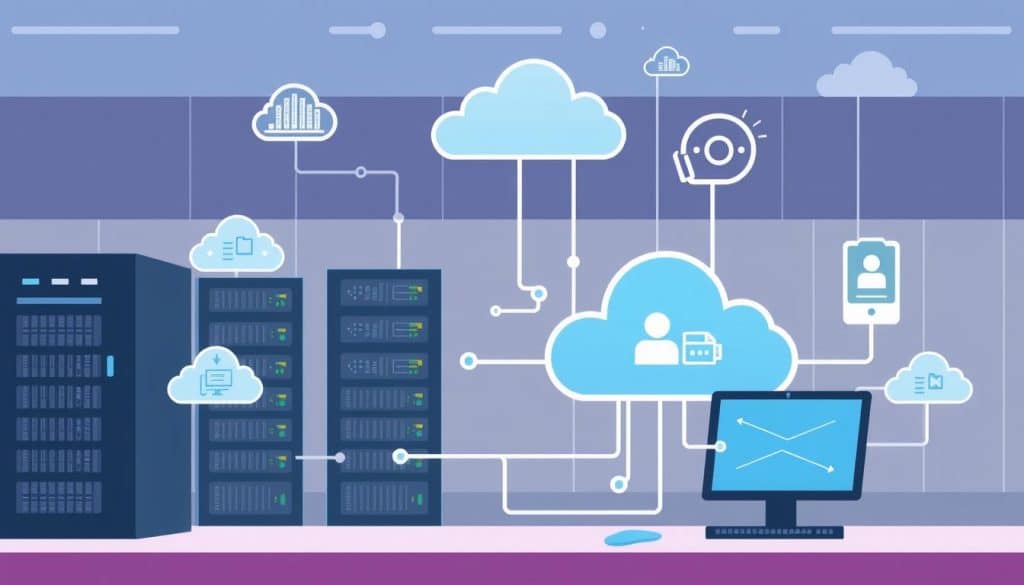
We leverage cloud services to enhance our backend deployment strategies, ensuring that our infrastructure is not only robust but also adaptable to changing business needs. The right cloud service provider can significantly impact the efficiency and effectiveness of backend systems.
AWS Solutions for Business Backend
AWS offers a comprehensive suite of services for business backend deployment, including Amazon EC2 for computing, Amazon S3 for storage, and Amazon RDS for database management. These services provide a scalable and secure environment for businesses to host their backend applications. With AWS, businesses can achieve high availability and performance while minimizing operational overhead.
Microsoft Azure for Enterprise Integration
Microsoft Azure provides a robust platform for enterprise integration, offering a wide range of services including Azure Virtual Machines, Azure Storage, and Azure SQL Database. Azure’s strength lies in its ability to integrate seamlessly with other Microsoft products, making it an ideal choice for enterprises already invested in the Microsoft ecosystem. This integration capability simplifies the deployment and management of backend services.
Google Cloud Platform for Scalability
Google Cloud Platform (GCP) is renowned for its scalability and performance, making it an attractive option for businesses with demanding backend requirements. GCP’s Kubernetes Engine provides superior container orchestration, while its serverless offerings like Cloud Functions and Cloud Run enable flexible deployment options. Additionally, GCP’s data analytics capabilities, including BigQuery and Dataflow, support the processing and analysis of large data volumes, making it well-suited for data-intensive backend applications.
By carefully selecting the appropriate cloud service provider, businesses can ensure that their backend deployment strategies are aligned with their overall goals, whether it’s scalability, integration, or performance.
DevOps and CI/CD for Backend Development
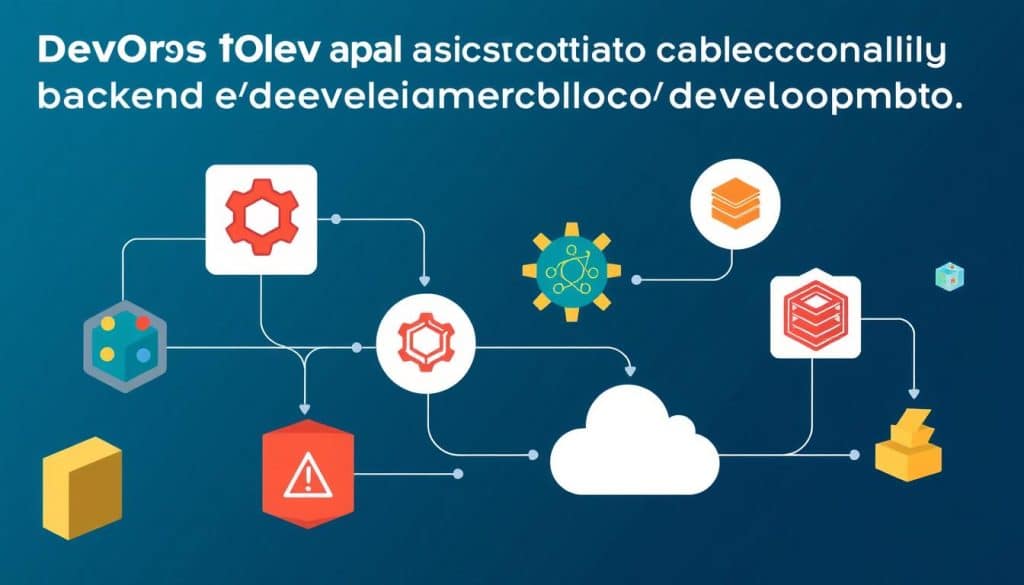
DevOps and CI/CD are transforming the way businesses approach backend development. By integrating development and operations, businesses can achieve faster time-to-market, improved quality, and reduced costs.
Continuous Integration Best Practices
Continuous Integration (CI) is a crucial aspect of DevOps that involves regularly integrating code changes into a central repository. Effective CI practices include automated testing, code reviews, and continuous monitoring. This ensures that issues are caught early, and the codebase remains stable and maintainable.
Some key CI best practices include:
- Automated testing to validate code changes
- Code reviews to ensure quality and adherence to standards
- Continuous monitoring to detect issues early
Deployment Automation Strategies
Deployment automation is critical for efficient backend development. It involves automating the deployment process to reduce manual errors and increase speed. Strategies include blue-green deployments and canary releases, which minimize user impact during updates.
Key deployment automation strategies include:
- Infrastructure as Code (IaC) to ensure consistent environments
- Automated rollback capabilities to quickly restore previous versions
- Environment promotion workflows to validate code through development, testing, staging, and production environments
Testing and Debugging Backend Systems
As businesses increasingly rely on digital solutions, the importance of robust backend testing cannot be overstated. Effective testing and debugging are crucial for ensuring the reliability, performance, and security of backend systems that power modern business applications.
Unit Testing Frameworks and Approaches
Unit testing is a fundamental practice in backend development, focusing on verifying that individual components or units of code function as expected. We utilize various unit testing frameworks depending on the programming language and technology stack. For instance, Jest is commonly used for JavaScript and Node.js applications, while JUnit is popular for Java-based projects. Effective unit testing involves isolating dependencies, using mock objects when necessary, and covering both normal and edge cases.
Our approach to unit testing emphasizes:
- Writing testable code
- Aim for high test coverage
- Continuous integration of tests into CI/CD pipelines
Integration Testing for Business Applications
While unit tests verify individual components, integration testing ensures that different parts of the application work together seamlessly. This is particularly crucial for business applications where multiple services, databases, and external systems interact. We focus on testing the boundaries between components, validating data flows, and ensuring that each component correctly handles inputs and outputs.
| Testing Aspect | Description | Tools/Frameworks |
|---|---|---|
| API Integration | Verifying API endpoints and interactions | Postman, RestAssured |
| Database Integration | Testing database interactions and data integrity | DBUnit, Testcontainers |
| Service Integration | Validating interactions between microservices | Selenium, WireMock |
Backend Development for Mobile and Web Applications
As businesses expand their digital footprint, the need for robust backend development that supports both mobile and web applications becomes increasingly critical. A well-designed backend system is essential for delivering seamless user experiences across different platforms.
With the rise of mobile devices and web applications, businesses must prioritize backend development to ensure a cohesive and efficient user experience. This involves creating systems that can handle high volumes of concurrent transactions efficiently, particularly for e-commerce and financial service applications.
Creating Universal APIs for Multiple Platforms
Developing universal APIs is crucial for supporting multiple platforms. By creating APIs that can be used across different applications, businesses can reduce development time and improve maintainability. This approach enables backend systems to serve both web and mobile platforms efficiently.
Optimizing Backend for Mobile Experiences
Optimizing backend systems for mobile experience involves several key strategies. These include minimizing payload sizes and request frequencies to accommodate the bandwidth constraints and battery limitations of mobile devices. Effective mobile backend strategies also implement server-side rendering and data transformation to reduce client-side processing requirements.
Additionally, mobile-optimized backends often implement device-specific optimizations, such as serving appropriately sized images based on screen resolution and network conditions. Push notification services and offline-first approaches with robust synchronization mechanisms are also critical for improving user experience in variable network conditions.
Building a Backend Development Team
Building a robust backend development team is crucial for the success of any modern business application. As we discussed in our previous sections, backend development is a critical component of web development that involves server-side logic, database integration, and API connectivity. A well-structured team can ensure that these components work seamlessly together to deliver a high-quality user experience.
Key Roles and Responsibilities
A backend development team comprises various roles, each with distinct responsibilities. The key roles include:
- Backend Developers: Responsible for writing server-side code, integrating with databases, and implementing APIs.
- Technical Leads: Oversee the technical aspects of the project, ensuring that the development aligns with the project’s goals and timelines.
- DevOps Engineers: Focus on the deployment, scaling, and maintenance of the backend infrastructure.
For a detailed guide on building a high-quality backend development team, you can refer to our step-by-step guide.
Collaboration Between Backend and Frontend Teams
Effective collaboration between backend and frontend teams is vital for delivering a cohesive and functional web application. By adopting API-first development approaches, teams can establish clear contracts between frontend and backend components early in the development process. This facilitates smoother integration and reduces the likelihood of misalignments.
Cross-functional teams that include both backend and frontend developers can accelerate development by enabling real-time communication and collaborative problem-solving. Regular integration points and collaborative testing approaches further ensure that the application functions correctly under various scenarios.
Conclusion: Implementing Backend Excellence in Your Business
As we conclude our exploration of backend development, it’s clear that achieving excellence requires a multifaceted approach that aligns technology decisions with business objectives. Backend development is the backbone of any successful digital venture, driving both immediate needs and long-term flexibility.
To implement backend excellence, businesses must adopt strategies that prioritize investments delivering measurable value. This includes embracing modern development practices such as automated testing, continuous integration, and infrastructure as code, which significantly improve reliability while reducing time-to-market for new features.
Key factors in achieving backend excellence include:
- Integrating security throughout the development lifecycle to address emerging threats.
- Focusing performance optimization on metrics that directly impact user experience and business outcomes.
- Building a team with complementary skills and establishing effective collaboration patterns.
By adopting these strategies and maintaining a commitment to ongoing evaluation and refinement, businesses can achieve backend excellence. This not only enhances user experience but also drives operational efficiency and the ability to rapidly adapt to market opportunities, ultimately creating a competitive advantage.
In conclusion, backend development plays a crucial role in driving business success in today’s digital landscape. By prioritizing implementation of backend excellence, businesses can achieve remarkable results and stay ahead in the market.
FAQ
What are the key considerations when choosing a technology stack for our business application?
When selecting a technology stack, we evaluate factors such as scalability, performance, and compatibility with our business needs. We consider the trade-offs between different programming languages, frameworks, and databases to ensure the chosen stack aligns with our goals and objectives.
How do we ensure the security of our backend systems and protect user data?
We implement robust security measures, including authentication and authorization frameworks, data encryption, and protection strategies. Our team follows best practices for secure coding, and we regularly update and patch our systems to prevent vulnerabilities.
What is the difference between SQL and NoSQL databases, and which one is suitable for our business?
SQL databases are ideal for structured data and complex transactions, while NoSQL databases excel with unstructured or semi-structured data. We assess our data modeling needs and choose the most suitable database type to ensure efficient data management and retrieval.
How can we optimize the performance of our web application?
We employ various performance optimization techniques, including caching strategies, load balancing, and scaling solutions. By analyzing our application’s usage patterns and bottlenecks, we identify areas for improvement and implement targeted optimizations.
What are the benefits of using a RESTful API, and how can it be designed for our business application?
RESTful APIs offer a flexible and scalable architecture for data exchange between systems. We design RESTful APIs that follow industry best practices, ensuring a robust and maintainable interface for our business applications.
How do we ensure seamless integration between our backend systems and third-party services?
We develop APIs and integration strategies that enable smooth communication between our backend systems and external services. By using standardized protocols and data formats, we ensure compatibility and minimize integration challenges.
What are the key roles and responsibilities in a backend development team?
A typical backend development team consists of roles such as backend developers, DevOps engineers, and quality assurance specialists. We define clear responsibilities and ensure collaboration between team members to deliver high-quality backend solutions.
How can we measure the success of our backend development projects?
We track key performance indicators (KPIs) such as system uptime, response times, and user satisfaction to measure the success of our backend development projects. By monitoring these metrics, we identify areas for improvement and adjust our strategies accordingly.