
Did you know that graphic design is an interdisciplinary branch of design and fine arts that involves creating visual communications to transmit specific messages to social groups? With its roots in ancient cave paintings, graphic design has evolved significantly over time, driven by technological advancements and changing societal needs.
We’re diving deep into the world of design to share comprehensive insights about this versatile discipline. Our expert team will guide you through the fundamental elements and principles that form the backbone of effective graphic design, providing you with actionable knowledge to elevate your visual communication strategy.
Key Takeaways
- Understanding the evolution of graphic design and its impact on modern communication.
- Exploring the various specializations within design and their applications.
- Learning about the latest techniques and trends shaping the industry.
- Discovering how to leverage graphic design to achieve specific business objectives.
- Empowering you to make informed decisions about your company’s visual identity.
Understanding Graphic Design: Definition and Importance
Effective graphic design is crucial in today’s digital landscape, serving as a bridge between a brand and its audience. It combines various elements like typography, imagery, and color to convey specific messages and achieve measurable objectives.
What Is Graphic Design?
Graphic design is the art of creating and arranging visual elements to communicate a message effectively. It involves the use of aesthetics, typography, and compositional arrangement to convey ideas, feelings, and attitudes beyond what language alone can express. Graphic designers play a pivotal role in this process, acting as the encoder or interpreter of the message.
We define graphic design as a strategic art that balances artistic expression with business objectives, creating visual solutions that resonate with the target audience.
The Role of Graphic Design in Communication
The role of graphic design in communication is multifaceted. It serves as the interpreter between a brand and its audience, translating complex ideas into accessible visual content. Effective graphic design drives engagement, builds brand recognition, and ultimately contributes to revenue growth. By leveraging elements like typography, color, and layout, graphic designers can create impactful visual messages that capture attention in a competitive marketplace.
We recognize that graphic designers are problem-solvers who balance art and business objectives, creating designs that communicate effectively across multiple platforms and touchpoints.
The Evolution of Graphic Design: From Cave Paintings to Digital Era
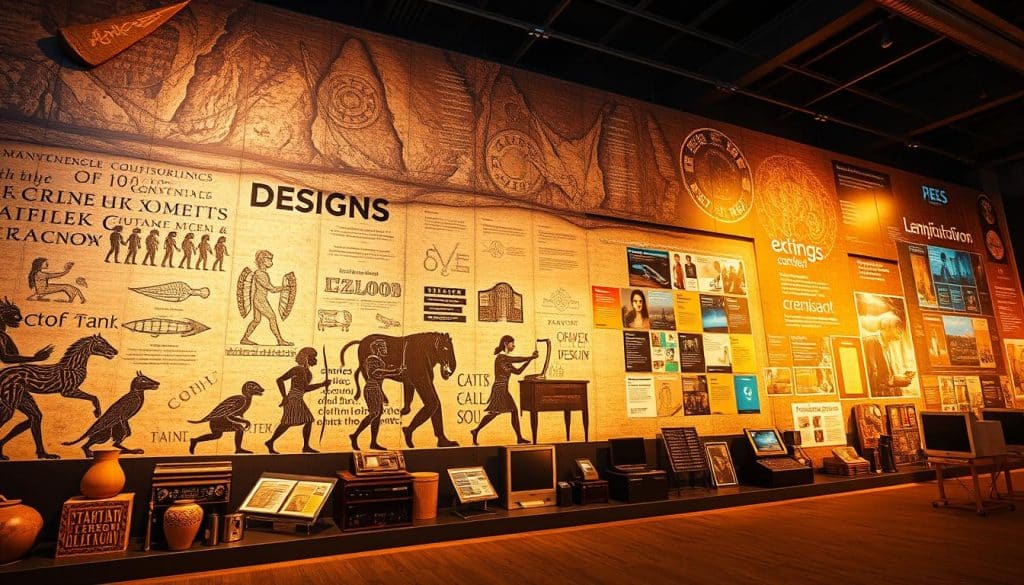
From prehistoric art to contemporary digital design, the evolution of graphic design is a rich tapestry of innovation. We trace the fascinating journey of graphic design from ancient cave paintings and hieroglyphs to today’s sophisticated digital interfaces, highlighting how this evolution reflects humanity’s constant drive to communicate visually.
Historical Origins and Development
The origins of graphic design date back to antiquity and the Middle Ages. Initially linked to the rise of printing in Europe in the 15th century and the growth of consumer culture during the Industrial Revolution, design emerged as a distinct profession in the West. The term “graphic design” was first used in a July 4, 1908 issue of Organized Labor.
| Era | Key Developments | Impact on Graphic Design |
|---|---|---|
| 15th Century | Introduction of Movable Type Printing | Revolutionized information dissemination and laid foundations for modern graphic design |
| 19th Century | Industrial Revolution and Advertising | Emergence of graphic design as a distinct profession |
| 20th Century | Digital Revolution | Exponential expansion of visual communication possibilities and creation of new specializations |
Major Milestones in Graphic Design History
Key historical figures and movements have shaped graphic design as we know it today. From William Morris and the Arts and Crafts movement to the Bauhaus school and Swiss International Style, these influences have provided context for contemporary design approaches.
As we continue to navigate the digital era, understanding the historical context and evolution of graphic design is crucial for designers and businesses alike.
Essential Elements of Graphic Design
To create compelling graphic designs, it’s crucial to grasp the fundamental elements that drive this art form. These elements are the building blocks that designers use to craft visually appealing and effective communications.
Line, Color, and Shape
The elements of line, color, and shape form the foundation of graphic design. A line connects two points in space and is used to divide space or direct the viewer’s eye to a specific part of the design. Color is an essential element as it can evoke certain moods or emotions, playing a critical role in brand identity and messaging. Shapes, being combinations of lines, create two-dimensional defined areas that contribute to the overall composition.
Typography and Space
Typography refers to the arrangement of type in space to create legible, engaging designs. It’s not just about selecting fonts; it’s about establishing hierarchy, enhancing readability, and communicating a brand’s personality. Space, on the other hand, helps with readability, prevents overcrowding, and emphasizes different parts of the design, creating a visual breathing room that guides the viewer’s eye.
Texture and Size
Texture describes the perceived surface quality of a design, suggesting how something might feel if touched. It adds depth and interest to a design. The size of design elements is often used to stress their importance, creating visual hierarchy and drawing attention to key messages or calls to action.
By leveraging these fundamental elements—line, color, shape, typography, space, texture, and size—we create visually compelling communications that drive engagement and deliver measurable results for businesses. Our strategic approach to these elements ensures that designs are not only aesthetically pleasing but also effective in conveying the intended message.
Fundamental Principles of Graphic Design
Effective graphic design relies on several fundamental principles that guide the creation of visually appealing and functional designs. These principles are essential for creating a layout that is both aesthetically pleasing and effective in communicating the intended message.
Balance and Alignment
Balance in graphic design refers to the distribution of elements, using both symmetrical and asymmetrical design tactics to create a sense of stability or dynamism. Good alignment keeps the design organized and engages the viewer’s eyes. We strategically implement balance in our designs to create the specific emotional response that aligns with your business objectives.
Contrast and Repetition
The principle of contrast emphasizes differences between elements, helping certain design aspects stand out more than others. Repetition involves repeating some aspects throughout the design to ensure consistency. We leverage repetition and consistency across all design elements to strengthen brand recognition and create cohesive experiences.
Proximity and Hierarchy
Proximity refers to the placement of elements in relation to one another, helping to provide an area of focus. A well-designed hierarchy guides viewers through the content in a way that maximizes comprehension and conversion. Our data-driven approach to visual hierarchy ensures that your most important messages receive priority attention.
Full Details About Graphic Design Techniques
In the realm of graphic design, techniques vary widely, incorporating both time-honored practices and cutting-edge technology. The field has evolved significantly, with designers now leveraging a combination of traditional and digital methods to create compelling visual content.
Traditional Techniques
Traditional techniques in graphic design involve manual methods that have been used for decades. These include hand-drawn illustrations, sketching, and the use of physical materials like paper and paint. Graphic designers often start with traditional techniques to conceptualize ideas before moving to digital tools. This hybrid approach allows for a more creative and exploratory process.
Some of the key traditional techniques include:
- Hand-drawn typography
- Sketching and illustration
- Collage and mixed media
For more information on the history and evolution of graphic design, visit Britannica’s article on graphic design.
Digital Techniques
The advent of digital technology has revolutionized graphic design, enabling designers to create complex designs with precision and speed. Digital techniques include the use of software like Adobe Creative Suite to manipulate images, create vector graphics, and design layouts. Graphic designers can now achieve intricate details and effects that were previously impossible or time-consuming to produce manually.
| Technique | Description | Application |
|---|---|---|
| Vector Graphics | Creating graphics using lines and shapes | Logos, icons |
| Image Manipulation | Editing and enhancing photographs | Marketing materials, websites |
| Digital Painting | Creating artwork using digital tools | Illustrations, concept art |
To stay updated on the latest digital marketing trends and insights, check out our article on digital marketing expert.
Types of Graphic Design Specializations
As a dynamic and diverse field, graphic design offers numerous specializations that businesses can leverage to achieve their objectives. These specializations enable companies to communicate their brand identity, market their products, and engage with their target audience effectively.
Brand and Visual Identity Design
Brand and visual identity design is crucial for creating a cohesive visual system that differentiates a company in the marketplace. Our brand and visual identity design services help businesses build recognition and communicate their core values across all touchpoints, ensuring a consistent brand image.
Marketing and Advertising Design
Marketing and advertising design plays a pivotal role in capturing attention and driving measurable action. We develop strategic designs for marketing initiatives, including promotional emails, ad campaigns, and trade show materials, with each visual element crafted to support conversion and revenue generation.
Web and User Interface Design
Web and user interface design requires a balance between aesthetic appeal and functional excellence. Our approach ensures that digital experiences are not only visually engaging but also guide users efficiently toward desired actions, enhancing user experience (UX) and user interface (UI) design.
Publication and Packaging Design
In today’s competitive landscape, publication and packaging design must be strategic and visually appealing. Our solutions focus on both shelf appeal and the strategic communication of product benefits, ensuring that packaging and publications effectively represent the brand.
Motion Graphics and Illustration
Motion graphics and illustration add dynamic dimensions to a brand’s visual communication strategy. We create engaging content that increases dwell time and improves information retention among the target audience, leveraging the power of motion graphics and illustration for various media, including websites, social media, and marketing campaigns.
By specializing in these various graphic design specializations, we deliver comprehensive visual communication solutions tailored to specific business objectives, driving revenue growth and digital excellence.
Current Trends Shaping the Graphic Design Industry
The current landscape of graphic design is characterized by a blend of creativity, technology, and user-centric approaches. As we navigate the ever-changing digital world, several key trends are emerging that are significantly impacting the industry.
Minimalism and Simplicity
One of the dominant trends is minimalism and simplicity, focusing on clean, uncluttered designs that enhance user experience. We implement minimalist design principles to create focused user experiences, eliminating distractions and guiding users toward key conversion points. This approach results in improved performance metrics and a more streamlined interaction with the product or service.
3D Design and Augmented Reality
Another significant trend is the incorporation of 3D design and augmented reality, adding depth and interactivity to visual experiences. We strategically incorporate 3D design elements and augmented reality experiences to create memorable brand interactions, increasing engagement and setting businesses apart from competitors. For more insights on the latest graphic design trends, visit Venngage’s blog on graphic design trends.
Sustainability in Design
Sustainability in design is becoming increasingly important, considering environmental impact and ethical considerations. Our commitment to sustainable design practices aligns with growing consumer expectations for environmental responsibility, helping brands connect with increasingly eco-conscious audiences. This approach not only benefits the environment but also enhances brand reputation and loyalty.
Responsive and Adaptive Design
Lastly, responsive and adaptive design ensures that visual elements work seamlessly across different devices and screen sizes. We design with a responsive-first approach, ensuring optimal user experiences across all devices—a critical factor in today’s mobile-dominated digital landscape. By doing so, we help businesses maintain a strong online presence and improve conversion rates.
Conclusion: The Future of Graphic Design
The future of graphic design is poised at the intersection of creativity and technology. As the demand for experienced graphic designers continues to grow, driven by the development of new technologies and the need for human-centered design, the profession is expanding into new areas.
We believe that the future lies in the integration of graphic design and user experience design, creating seamless visual journeys guided by both artistic sensibility and performance metrics. Emerging technologies like AI-assisted design tools and virtual reality will transform how brands connect with their audiences.
As graphic designers, we remain committed to evolving our expertise alongside technological advancements, ensuring our clients benefit from cutting-edge visual solutions that deliver measurable results in an increasingly digital world, driving business outcomes and competitive advantage.
FAQ
What skills are required to become a successful graphic designer?
To become a successful graphic designer, one needs to possess a combination of creative, technical, and communication skills, including proficiency in typography, color theory, and visual composition, as well as expertise in industry-standard software such as Adobe Creative Cloud.
How does graphic design contribute to a company’s brand identity?
Graphic design plays a crucial role in shaping a company’s brand identity by creating visual elements such as logos, icons, and branding materials that convey the brand’s message, values, and personality, ultimately influencing how the brand is perceived by its target audience.
What is the difference between UI and UX in graphic design?
UI (User Interface) and UX (User Experience) are two distinct aspects of graphic design that work together to create a seamless and engaging user experience. UI focuses on the visual elements and interface design, while UX encompasses the overall experience, including user research, wireframing, and usability testing.
How do current trends in graphic design impact the industry?
Current trends in graphic design, such as minimalism, 3D design, and sustainability, influence the industry by driving innovation, shaping consumer expectations, and pushing designers to experiment with new techniques and technologies, ultimately resulting in more effective and engaging visual communication.
What is the role of typography in graphic design?
Typography is a fundamental element of graphic design that involves the selection and arrangement of typefaces to convey meaning, create visual hierarchy, and enhance the overall aesthetic of a design, playing a crucial role in communicating the message and tone of a brand or product.
How does graphic design contribute to effective marketing and advertising?
Graphic design is essential to effective marketing and advertising as it enables businesses to create visually appealing and compelling campaigns that capture the attention of their target audience, convey their message, and drive conversions, ultimately contributing to revenue growth and business success.