

Are you getting the most out of your advertising budget, or is it slipping through the cracks without delivering the desired results?
In the competitive landscape of digital marketing, particularly in regions like Qatar, effective advertising strategies are crucial for business growth. Without proper optimization, campaigns can quickly deplete budgets while delivering subpar performance.
We have helped numerous clients achieve significant improvements in their campaign outcomes. By refining ads and focusing on key optimization techniques, we’ve seen conversion volumes increase by over 600%.
Key Takeaways
- Understand the systematic process of refining advertising campaigns for better performance metrics.
- Learn proven techniques to increase conversion volumes significantly.
- Discover how to maximize ad spend efficiency and improve quality scores.
- Explore strategies for driving more qualified leads to your business.
- Implement data-driven optimization methods for sustainable growth.
Understanding Google Ads Optimization and Its Importance
Google Ads optimization is a critical process that directly impacts the success of your advertising campaigns. To achieve optimal performance, it’s essential to understand what Google Ads optimization entails and why it’s vital for your business.
What Is Google Ads Optimization?
Google Ads optimization involves a series of strategic adjustments to your advertising campaigns to improve their overall performance. This process includes analyzing campaign data, refining keywords, adjusting bids, improving ad copy, enhancing landing pages, and fine-tuning targeting parameters to achieve better click-through rates, conversion rates, and cost per acquisition.
By optimizing your Google Ads, you can ensure that your advertising budget is used more efficiently, leading to a higher return on investment (ROI). This is particularly important in competitive markets like Qatar, where targeting the right audience effectively can make a significant difference in campaign success.

Why Regular Optimization Is Critical for ROI
Regular Google Ads optimization is essential because market conditions, competitor strategies, and user behaviors are constantly evolving. What worked yesterday may not work tomorrow, making it crucial to continually monitor and adjust your campaigns.
- Regular optimization helps in identifying and eliminating ineffective keywords and targeting parameters, which can waste a significant portion of your budget.
- By continually refining your Google Ads campaigns, you can improve your ROI, with potential reductions in cost per acquisition of 30-50% within the first three months of implementing optimization strategies.
- Without regular optimization, your Google Ads performance will likely plateau or decline as competitors refine their strategies and market conditions change.
By understanding the importance of Google Ads optimization and implementing regular adjustments, businesses can significantly enhance their campaign performance and achieve a better ROI. This proactive approach to Google Ads management is key to staying competitive in the digital advertising landscape.
Setting Up Your Google Ads Account for Success
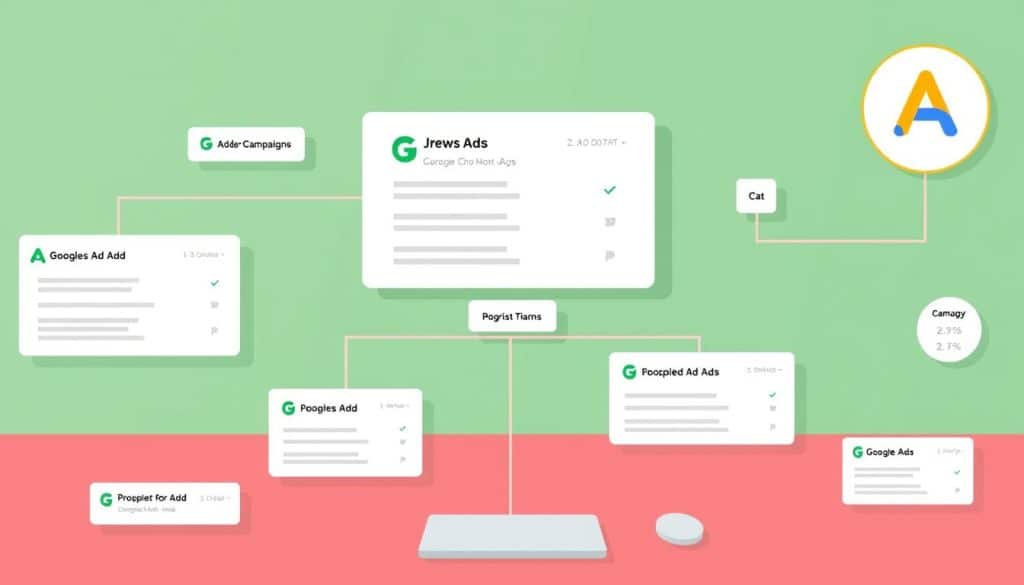
The foundation of a successful Google Ads campaign lies in the proper setup of your account structure. A well-organized Google Ads account is essential for achieving your advertising goals and maximizing your return on investment (ROI).
Creating an Effective Account Structure
A well-structured Google Ads account forms the foundation for all optimization efforts and directly impacts your quality scores and advertising costs. We recommend organizing your account hierarchically: account > campaigns > ad groups > ads > keywords, with each level becoming more specific and targeted.
To achieve this, it’s crucial to understand the importance of each level in the hierarchy. For instance, ads campaigns should be organized based on specific product lines, services, or geographic regions. This helps in maintaining control over budgets and targeting.
Organizing Campaigns and Ad Groups Semantically
For businesses operating in Qatar, creating separate campaigns for different product lines, services, or geographic regions can help maintain control over budgets and targeting. Each ad group should contain tightly themed keywords that are semantically related, improving quality score and ensuring your ads are highly relevant to search queries.
- Limit ad groups to 15-20 closely related keywords to maintain focus and relevance, leading to better performance metrics.
- Campaign organization should reflect your business goals and customer journey. Separate campaigns for awareness, consideration, and conversion stages often yield better results.
- Properly structured accounts make optimization easier, as you can quickly identify underperforming elements and make targeted adjustments without disrupting successful components.
By following these best practices, you can create a Google Ads account that is optimized for success. For more information on maximizing your ROI with PPC strategies, visit our guide on maximizing your ROI with PPC strategies.
Keyword Optimization Strategies That Drive Results
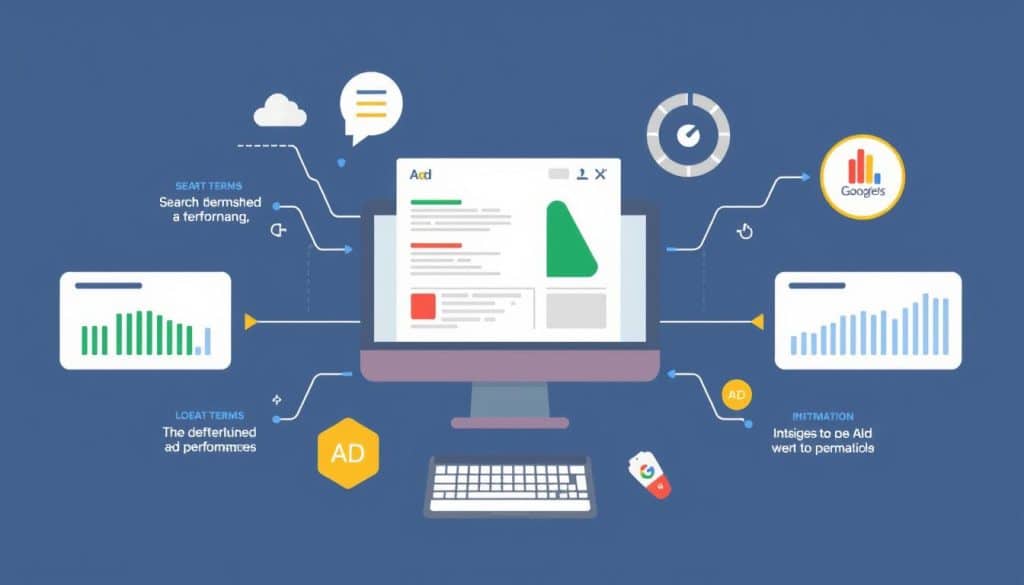
To drive real results from Google Ads, you need to master keyword optimization strategies. Keyword optimization is the cornerstone of successful Google Ads campaigns, directly influencing who sees your ads and how much you pay for each click.
Researching and Selecting High-Performance Keywords
Researching and selecting the right keywords is fundamental to a successful Google Ads campaign. This involves understanding your target audience, their search behavior, and the keywords they use. For businesses in Qatar, researching local search terms and regional variations is essential for capturing the most relevant traffic.
Implementing Single Keyword Ad Groups (SKAGs)
We’ve found that implementing Single Keyword Ad Groups (SKAGs) provides unparalleled control over your campaigns and can dramatically improve performance metrics. SKAGs involve creating dedicated ad groups for individual keywords, allowing for highly targeted ad copy that directly incorporates the keyword in headlines and descriptions. Our client, Mold Inspection Sciences, halved their cost per lead and increased their conversion volume by 300% by implementing and optimizing SKAGs.
Building Effective Negative Keyword Lists
Building comprehensive negative keyword lists is equally important – they prevent your ads from showing for irrelevant searches that may deplete your budget without generating conversions. Regular search term report analysis should inform both your keyword expansion strategy and your negative keyword list development, creating a virtuous cycle of continuous improvement.
By implementing these keyword optimization strategies, you can significantly enhance the performance of your Google Ads campaigns. Effective keyword optimization is not a one-time task but an ongoing process that requires continuous monitoring and adjustment.
Mastering Google Ads Bidding Strategies

A well-crafted bidding strategy is the backbone of successful Google Ads campaigns, directly impacting your ad spend and conversion rates. Google’s bidding options are highly granular, allowing for precise control over how and when you bid on valuable keywords.
Choosing the Right Bidding Strategy for Your Goals
Your bidding strategy should align closely with your business objectives. Whether you’re aiming to maximize conversions, achieve a target Return On Ad Spend (ROAS), or maintain a specific position on search results, your chosen strategy will significantly impact campaign performance.
- Your bidding strategy directly determines how your budget is allocated and significantly impacts campaign performance and return on investment.
- We recommend aligning your bidding strategy with specific business goals.
- For new campaigns, manual bidding provides greater control, while automated bidding leverages Google’s machine learning for real-time optimizations.
Manual vs. Automated Bidding: When to Use Each
Bidding in Google Ads can be handled manually or automated using Google Ads scripts and conditional triggers. Manual bidding is ideal for new campaigns or when you need more control over bids. Automated bidding, on the other hand, uses machine learning to optimize bids in real-time, often outperforming manual bidding for established campaigns.
- Target CPA bidding is suitable for lead generation businesses, while Target ROAS is better for e-commerce operations with clear revenue tracking.
- Enhanced CPC offers a balance between manual and automated bidding, allowing for bid adjustments to maximize conversion potential.
- Regular review of bidding performance is crucial, with quarterly assessments recommended to ensure alignment with evolving business objectives.
By mastering Google Ads bidding strategies, you can significantly enhance your campaign’s performance and ROI.
Ad Copy Optimization Techniques
Ad copy optimization is a critical component of a successful Google Ads strategy, directly impacting click-through rates and quality scores. To achieve the best results, it’s essential to understand the techniques that drive effective ad copy optimization.
Writing Compelling Headlines and Descriptions
Crafting compelling headlines and descriptions is at the heart of ad copy optimization. Your headline should include your target keyword while creating a sense of urgency or curiosity. We’ve found that using questions or numbers in headlines can increase click-through rates (CTR) by up to 30%. For instance, instead of a generic headline, using “Discover How to Boost Your Sales with Our Expert Tips” can be more effective.
Descriptions should complement your headline by providing more details about your product or service. Using active language and strong verbs like “Increase,” “Discover,” or “Transform” can boost engagement. For example, “Transform Your Business with Our Innovative Solutions” is more engaging than a passive alternative.
Feature-Driven vs. Benefit-Driven Ad Copy
There are two primary approaches to framing your ad copy: feature-driven and benefit-driven. While feature-driven messaging can be effective in certain circumstances, benefit-driven ads tend to perform more strongly because they appeal to the consumer’s main desire – to solve a specific problem.
Benefit-driven ads often use connecting language such as “us” and “we” to create and reinforce a relationship with the prospect. They also use aspirational, evocative language to help potential customers visualize the benefits of your products or services. For example, instead of stating “24/7 IT Support Available” (feature), a benefit-driven approach would be “Never Worry About Tech Problems Again – 24/7 Support.”
Key strategies for ad copy optimization include:
- Ad copy optimization is crucial for improving click-through rates and quality scores, directly affecting your cost per click and campaign performance.
- Benefit-driven ad copy typically outperforms feature-driven copy because it addresses the customer’s pain points and desired outcomes.
- Incorporating local references or addressing regional pain points in your ad copy can significantly improve engagement and conversion rates, especially for businesses in Qatar.
- A/B testing different ad variations is essential – we recommend running at least three different ad versions per ad group.
- Using active language and strong verbs in your ad copy can boost engagement.
By implementing these ad copy optimization techniques, you can significantly enhance your Google Ads performance, drive more conversions, and ultimately achieve a better return on investment.
Landing Page Optimization for Better Conversion Rates

To get the most out of your Google Ads, it’s essential to focus on landing page optimization. A well-designed landing page can significantly enhance your conversion rates, ultimately improving your return on ad spend (ROAS).
Aligning Landing Pages with Ad Content
One of the critical aspects of landing page optimization is ensuring that your landing page content aligns with the ad that brought the visitor to your page. This message match is vital for maintaining continuity and trust with your potential customers. For instance, if your Google Ad promises a specific offer or discount, your landing page should clearly communicate this offer.
We emphasize the importance of this alignment because it directly impacts your conversion rates. By ensuring that your landing page headline and content directly align with the ad, you can improve user experience and increase the likelihood of conversion.
Essential Elements of High-Converting Landing Pages
High-converting landing pages typically include several key elements. These include clear, benefit-focused headlines, compelling visuals, concise copy, prominent call-to-action (CTA) buttons, and trust indicators like testimonials or certifications.
For businesses in Qatar, ensuring that landing pages are mobile-optimized is particularly important due to the region’s high mobile usage rates. A mobile-friendly landing page is crucial for capturing the attention of potential customers and driving conversions.
Additionally, page load speed is critical. Our data shows that each second of delay reduces conversions by approximately 7%, making optimization for performance essential. To achieve this, ensure that your landing page loads immediately, visual elements are displayed correctly, and the page works well on both desktop and mobile devices.
Other best practices include minimizing distractions on the landing page by removing navigation menus and limiting exit points, keeping visitors focused on the conversion action. Google Ads support provides more insights on optimizing landing pages for better performance.
For more information on optimizing your online presence, you can visit SEO Mastery to learn about elevating your online presence through effective SEO strategies.
Advanced Google Ads Optimization for Targeting
To maximize the impact of your Google Ads, it’s crucial to employ advanced targeting strategies that reach your audience at the right time and place. Effective targeting is not just about casting a wide net; it’s about precision and efficiency in reaching potential customers.
Geolocation Targeting Strategies for Qatar and Beyond
Geolocation targeting allows businesses to focus their advertising efforts on specific geographic regions. For businesses operating in Qatar, this means targeting areas with high commercial activity.
We recommend implementing radius targeting around major commercial centers like Doha, West Bay, and Lusail City. By doing so, businesses can ensure that their ads are seen by potential customers who are more likely to convert. Bid adjustments based on performance data can further optimize campaign efficiency.
Regular review and refinement of geolocation targeting are crucial. Conversion data often reveals that specific neighborhoods or business districts outperform others, warranting higher bids for these areas. For instance, a business might find that their target audience is more concentrated in certain areas, making those locations more valuable for their advertising efforts.

Dayparting: Scheduling Ads for Maximum Impact
Dayparting, or scheduling ads for specific times, is a powerful strategy for maximizing the impact of your Google Ads. By analyzing when your target audience is most active, you can ensure that your ads are displayed during the most effective times.
For service-based businesses, dayparting can be particularly effective. Our analysis shows that B2B companies typically see better performance during business hours, while consumer services may perform better in the evenings. By adjusting your ad scheduling to match these patterns, you can significantly improve your campaign’s efficiency.
Implementing bid adjustments based on the time of day and day of the week can also reduce wasted spend. By focusing your budget on high-converting periods, you can achieve better ROI. For example, a business might find that their ads perform better on weekdays during business hours, allowing them to allocate more budget to these times.
For businesses targeting both Qatar and international markets, creating separate campaigns with location-specific messaging and bidding strategies can yield better results than a one-size-fits-all approach. This allows for more tailored targeting and can improve overall campaign performance.
To further enhance your Google Ads strategy, consider exploring our expert SEO services to improve your online visibility and drive more conversions.
Device-Based Optimization Techniques
Device-based optimization techniques allow businesses to tailor their Google Ads campaigns to specific user behaviors on mobile, desktop, and tablet devices. This approach is crucial in today’s digital landscape, where user interaction varies significantly across different devices.
Bid Adjustments for Mobile and Desktop
Adjusting bids based on device performance is a critical strategy for maximizing ROI. If desktop users are converting at a higher rate than mobile users, increasing bid adjustments on desktop while lowering them on mobile can significantly improve campaign efficiency. For instance, we’ve seen a client’s campaign achieve a +125% increase in conversion volume to desktop after adjusting device bids.
To implement effective bid adjustments, analyze your campaign data to identify device-specific performance trends. This analysis will help you make informed decisions about where to allocate your budget more effectively.
Creating Device-Specific Campaigns
For businesses with significant performance differences between devices, creating separate device-specific campaigns can provide the greatest control over messaging, bidding, and landing page experiences. This approach allows for tailored ad copy and landing pages that cater to the unique characteristics of each device type.
- Mobile campaigns should feature concise ad copy, click-to-call extensions, and simplified landing pages optimized for smaller screens and touch navigation.
- Desktop campaigns can leverage more detailed messaging, expanded site links, and more complex landing pages that take advantage of larger screen real estate.
By tailoring your campaigns to the strengths of each device, you can enhance user experience and improve conversion rates.
| Device | Recommended Ad Copy | Landing Page Optimization |
|---|---|---|
| Mobile | Concise, direct messaging | Simplified, touch-friendly design |
| Desktop | Detailed, informative messaging | Complex, feature-rich design |
Implementing device bid adjustments and creating device-specific campaigns are just a couple of strategies for optimizing your Google Ads performance. By understanding and catering to the unique behaviors of users on different devices, businesses can significantly enhance their campaign effectiveness and drive better results.
Leveraging Ad Extensions to Improve Performance
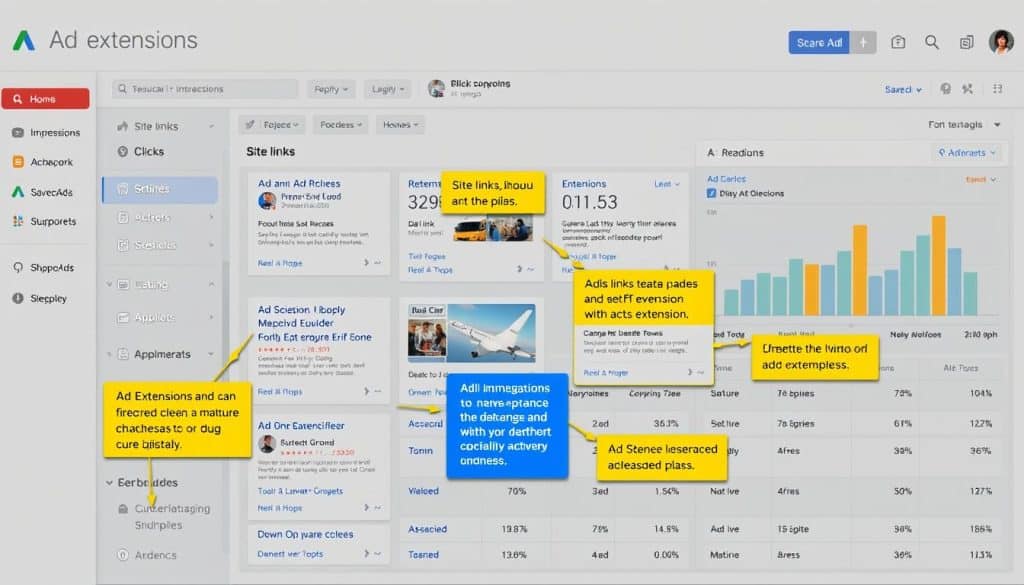
Ad extensions play a pivotal role in enhancing the performance of your Google Ads campaigns. By providing additional information and options, ad extensions can significantly improve user engagement and conversion rates.
Types of Ad Extensions and Their Benefits
Google offers a variety of ad extensions that can be leveraged to enhance your ads. These include:
- Call button: Allows mobile users to contact you directly.
- Download app button: Directs users to download your app.
- Pricing: Showcases your products or services pricing.
- Promotions: Highlights special offers or discounts.
- Images: Adds visual appeal to your ads.
- Business hours & location: Helps local customers find your physical location.
- Lead forms: Enables users to submit their information directly.
- Structured snippets: Highlights specific features or benefits.
- Sitelinks: Provides additional navigation options.
- Callouts: Reinforces your value proposition.
We’ve found that implementing all relevant extensions can increase CTR by 10-15% on average, while also improving quality scores and potentially lowering cost per click. For businesses in Qatar, location extensions are particularly valuable as they display your address and distance information.
Implementing and Testing Extensions for Better CTR
To maximize the benefits of ad extensions, it’s crucial to implement and test them effectively. Start by identifying the most relevant extensions for your business goals and target audience. For instance, service-based businesses can greatly benefit from call extensions, allowing mobile users to contact them directly.
For example, a restaurant in Doha might use price extensions to showcase menu categories, callout extensions to highlight “Free Delivery” or “Outdoor Seating,” and sitelinks to direct users to reservation pages or special offers. By testing different combinations of ad extensions, you can determine which ones work best for your specific campaigns and continually optimize for better performance.
Remarketing Strategies to Recapture Lost Opportunities

By leveraging remarketing strategies, businesses can recapture lost opportunities and enhance their overall conversion rates. Remarketing Lists for Search Ads (RLSAs) is a Google feature that lets you layer remarketing list audience targeting on top of your search campaigns.
Setting Up Remarketing Lists for Search Ads (RLSAs)
To set up RLSAs, you first need to create a remarketing list. This involves adding a tag to your website to track visitors. Once your list is populated, you can layer it on top of your search campaigns to target users who have previously visited your site.
RLSAs allow you to bid more aggressively on broader keywords when targeting previous visitors, as these users have already demonstrated interest in your products or services.
Creating Effective Remarketing Campaigns
Creating effective remarketing campaigns involves several key strategies:
- Segmenting your remarketing lists based on specific behaviors, such as product page views or cart abandonment, allows for highly targeted messaging.
- Tailoring ad copy to acknowledge the user’s previous interaction with your brand creates continuity and builds trust.
- For businesses in Qatar, creating segment-specific remarketing campaigns that address common objections or offer special incentives can effectively overcome cultural or regional barriers to conversion.
By implementing these strategies, you can significantly improve your conversion rates and maximize ROI.
With privacy changes affecting third-party cookies, we recommend focusing on first-party data collection through email subscriptions, account creations, and other direct engagement methods to maintain effective remarketing capabilities.
Time-Based Google Ads Optimization Checklist
Effective Google Ads optimization requires a consistent and multi-faceted approach, which is why we’ve developed a comprehensive, time-based checklist. This structured approach ensures that all aspects of your Google Ads campaigns receive appropriate attention without becoming overwhelming. By following this checklist, you’ll be able to expand opportunities, utilize Single Keyword Ad Groups (SKAGs) for better control, target users effectively with Remarketing Lists for Search Ads (RLSAs), leverage display ads for prospecting, and align your call-to-action (CTA) with user intent.
Daily Optimization Tasks
Daily optimization tasks are crucial for maintaining the health and performance of your Google Ads campaigns. These tasks should focus on quick checks and urgent adjustments. Our experts recommend:
- Monitoring budget pacing to ensure you’re on track to meet your daily and monthly budget targets.
- Checking for any significant performance changes, such as sudden spikes or drops in click-through rates or conversions.
- Addressing disapproved ads or policy issues promptly to minimize lost impressions and clicks.
Weekly Optimization Tasks
Weekly optimization tasks involve deeper analysis and adjustments to improve campaign performance. These tasks include:
- Reviewing search terms reports to identify new negative keywords and prevent irrelevant traffic.
- Adjusting bids for underperforming keywords to optimize your ROI.
- Testing new ad variations to improve click-through rates and conversion rates.
Monthly Optimization Tasks
Monthly optimization efforts should include broader strategic adjustments. These tasks are designed to refine your campaign targeting and ad delivery. Our recommendations include:
- Analyzing device, location, and demographic performance to identify trends and opportunities.
- Updating ad extensions to ensure they’re relevant and effective.
- Refining audience targeting to better reach your ideal customer.
| Task Frequency | Task Description | Objective |
|---|---|---|
| Daily | Monitor budget pacing and performance changes | Ensure campaign health and adjust to changes |
| Weekly | Review search terms and adjust bids | Improve campaign relevance and ROI |
| Monthly | Analyze performance and update ad extensions | Refine targeting and ad delivery |
| Quarterly | Conduct comprehensive campaign assessment | Evaluate overall performance and plan strategic shifts |
Quarterly Optimization Review Process
Quarterly reviews provide the opportunity for a comprehensive campaign assessment. During this review, we recommend:
- Evaluating overall performance against business goals and key performance indicators (KPIs).
- Conducting competitor analysis to stay ahead in the market.
- Planning major strategic shifts based on performance data and market trends.
For businesses in Qatar, we also recommend making seasonal adjustments to account for regional events like Ramadan, Eid celebrations, and the extreme summer months when consumer behavior changes significantly. By implementing this structured approach to Google Ads optimization, you’ll ensure continuous improvement while maintaining focus on both quick wins and long-term strategic objectives.

Measuring Success: Key Metrics and KPIs
The path to Google Ads optimization success lies in identifying and tracking the right metrics that drive meaningful business outcomes. As we optimize our Google Ads campaigns, it’s easy to get caught up in micro metrics, but it’s crucial to keep the bigger picture in mind.
While metrics like quality score, impression share, and click-through rate (CTR) are important, they are not the only indicators of a campaign’s success. We need to look beyond these surface-level metrics to truly understand our campaign’s performance.
Beyond Click-Through Rate: Metrics That Matter
Effective measurement is the foundation of successful Google Ads optimization. We emphasize focusing on metrics that directly impact business outcomes rather than vanity metrics. Some key metrics that matter include:
- Conversion rates
- Cost per acquisition
- Return on ad spend
These metrics provide a more accurate picture of our campaign’s success in driving real business results. For businesses in Qatar, setting up proper conversion tracking is essential, including both online actions (like form submissions and purchases) and offline conversions (such as phone calls and in-store visits).

Setting Up Proper Conversion Tracking
Implementing Google Ads’ enhanced conversion tracking allows for more accurate attribution, particularly in markets with high mobile usage like Qatar, where the customer journey often spans multiple devices. Attribution modeling should be carefully considered; while last-click attribution is the default, we often recommend position-based or data-driven attribution models for a more complete understanding of the customer journey.
Regular analysis of assisted conversions provides insight into the full value of our campaigns, particularly for businesses with longer sales cycles where multiple touchpoints contribute to the final conversion. Setting up custom conversion values based on lead quality or customer lifetime value provides a more accurate picture of campaign ROI than treating all conversions equally.
By focusing on the right metrics and setting up proper conversion tracking, we can ensure that our Google Ads campaigns are optimized for maximum performance and ROI.
Common Google Ads Optimization Mistakes to Avoid
To achieve success with Google Ads, avoiding common optimization mistakes is essential. Even with a substantial budget, poor optimization can lead to wasted spend and subpar results. By understanding and avoiding these mistakes, businesses can significantly improve their return on investment and achieve their marketing goals more efficiently.
Budget Allocation Errors
One of the most significant mistakes businesses make is allocating their budget equally across all campaigns. This approach often results in 30-40% of ad spend being wasted on underperforming initiatives. Instead, we recommend focusing investment on top-performing campaigns and adjusting budget allocations accordingly. By doing so, businesses can maximize their ROI and reduce unnecessary expenses.
For instance, if a particular campaign is driving a high volume of conversions at a lower cost per acquisition, it makes sense to allocate a larger portion of the budget to that campaign. This strategic allocation ensures that the most effective campaigns receive the necessary funding to scale and drive even better results.
Targeting Mistakes
Targeting mistakes are another common pitfall in Google Ads optimization. Overly broad geographic targeting can dilute campaign effectiveness, particularly for businesses with limited service areas. For example, a business operating in Doha, Qatar, should focus its targeting on that specific region rather than the entire country to avoid wasting budget on irrelevant clicks.
Moreover, failing to adjust targeting parameters based on device and location can lead to poor campaign performance. Businesses should regularly review their targeting settings to ensure they are aligned with their marketing objectives and adjust as necessary.
Conversion Tracking Issues
Conversion tracking issues are among the most detrimental mistakes businesses can make. Without proper tracking, optimization decisions are based on incomplete or misleading data, leading to suboptimal campaign performance. It’s crucial to set up comprehensive conversion tracking to measure the effectiveness of Google Ads campaigns accurately.
By implementing proper conversion tracking, businesses can gain valuable insights into their campaign performance and make data-driven decisions to optimize their Google Ads strategy. This includes tracking key metrics such as conversion rate, cost per conversion, and return on ad spend.
- Regularly review and adjust budget allocations to focus on top-performing campaigns.
- Ensure targeting settings are aligned with business objectives and adjust as necessary.
- Implement comprehensive conversion tracking to measure campaign effectiveness.
Conclusion: Implementing Your Google Ads Optimization Strategy
As we conclude our exploration of Google Ads optimization techniques, it’s clear that a strategic approach is vital for campaign success. The main idea behind Google Ads campaign optimization is to attract more leads for less ad spend. One major way to achieve this is by cutting down spending on underperforming campaigns and focusing efforts and budget on those that excel.
Optimizing for Success requires a comprehensive strategy that encompasses various aspects, including account structure, keyword refinement, and conversion tracking. We recommend starting with high-impact optimizations before moving to more nuanced adjustments. For businesses in Qatar, developing a localized optimization strategy that considers regional search behaviors and competitive landscapes is essential.
Key Takeaways from our discussion include the importance of:
- Implementing a data-driven approach to continuous improvement.
- Creating a structured optimization calendar to ensure all campaign aspects receive timely attention.
- Balancing automated and manual optimization to leverage Google’s machine learning capabilities while maintaining human oversight.
- Regularly reassessing market conditions, competitor strategies, and platform features.
To further enhance your Google Ads optimization efforts, we suggest exploring additional resources, such as our guide on optimizing Google Ads for maximum impact. This will provide you with deeper insights into creating effective campaigns that drive results.
The Ultimate Goal of Google Ads optimization is not just to save money but to continuously improve campaign efficiency, allowing you to scale your advertising efforts while maintaining or improving return on investment. By following these guidelines and maintaining a commitment to ongoing optimization, businesses can achieve significant improvements in their Google Ads performance.
FAQ
What is the importance of negative keyword lists in a Google Ads campaign?
Negative keyword lists help prevent irrelevant searches from triggering your ads, reducing wasted spend and improving overall campaign performance.
How do I choose the right bidding strategy for my Google Ads campaign?
To choose the right bidding strategy, consider your campaign goals, such as conversions, clicks, or impressions, and select a strategy that aligns with those objectives.
What is the benefit of using single keyword ad groups (SKAGs) in Google Ads?
SKAGs improve ad relevance, increase click-through rates, and enhance overall campaign performance by ensuring that ads are highly targeted to specific keywords.
How can I optimize my landing pages for better conversion rates?
To optimize landing pages, ensure they are aligned with ad content, have a clear call-to-action, and are designed to provide a seamless user experience.
What is dayparting, and how can it improve my Google Ads campaign?
Dayparting involves scheduling ads to run at specific times of the day or week, allowing you to target users when they are most likely to convert.
How can I leverage ad extensions to improve my Google Ads performance?
Ad extensions provide additional information and enhance ad visibility, improving click-through rates and overall campaign performance.
What are the benefits of using conversion tracking in Google Ads?
Conversion tracking allows you to measure the effectiveness of your campaigns, identify areas for improvement, and optimize for better ROI.
How often should I review and optimize my Google Ads campaigns?
Regular campaign review and optimization are crucial, with daily, weekly, and monthly tasks helping to ensure ongoing campaign success.
What are some common Google Ads optimization mistakes to avoid?
Common mistakes include budget allocation errors, targeting mistakes, and conversion tracking issues, which can be avoided by regularly reviewing and optimizing campaigns.