

In today’s digital landscape, a staggering 93% of online experiences begin with a search engine, making it crucial for businesses in Qatar to ensure their website is optimized for search. When you update your site, it’s not just about giving it a fresh look; it’s about enhancing its performance in search engine results to drive more traffic and improve user experience.
We understand the critical relationship between website updates and SEO. Our data-driven approach focuses on both technical optimization and content strategy to ensure your site performs better than before in search results. By leveraging the latest search engine algorithms and SEO best practices, we help businesses like yours achieve substantial improvements in visibility, traffic, and conversion rates.
Key Takeaways
- Understand the impact of website updates on your SEO rankings.
- Learn how to optimize your site for better search engine performance.
- Discover strategies to improve user experience and drive more traffic.
- Explore the importance of a data-driven approach to SEO.
- Find out how to leverage SEO best practices for your business in Qatar.
Understanding SEO for Updated Websites
When you update your website, it’s crucial to understand how these changes impact your search engine optimization (SEO) to maintain your online visibility. Website updates often involve significant changes to content, structure, and design, which can affect how search engines crawl, index, and rank your site.
Updating a website can reset or disrupt existing SEO elements, making it vital to comprehend the implications of these changes on your search visibility and overall digital performance. Search engines like Google continually crawl and index web content to provide users with relevant search results.
Why SEO Matters After a Website Update
After a website update, search engines need to recrawl and reindex your content, which can temporarily affect your rankings if not properly managed. Proper SEO implementation can minimize losses and accelerate recovery. Data shows that websites often experience traffic fluctuations after updates, emphasizing the need for a well-planned SEO strategy.
Common SEO Challenges with Updated Sites
Common challenges after website updates include broken links, changed URL structures, lost metadata, and content modifications that can all negatively impact your SEO performance. Technical SEO issues are particularly common after website migrations or platform changes, requiring special attention to maintain search visibility. To overcome these challenges, it’s essential to understand the relationship between website architecture changes and SEO.
By understanding how search engines interpret website changes and what signals they look for when determining how to rank your updated site in search results, you can preserve existing search equity while improving overall site performance. Users expect seamless experiences even during website transitions, making it essential to maintain both SEO performance and user experience during updates.
Preparing for Your SEO Strategy
A comprehensive SEO strategy is the foundation upon which your website’s search engine success is built. To ensure that your updated website performs well in search results, we need to prepare a tailored SEO strategy that aligns with your business objectives.
Effective SEO begins with setting clear goals that are measurable and aligned with your business needs. This step is crucial in guiding our optimization efforts.
Setting Clear SEO Goals
Setting measurable SEO goals helps track progress and demonstrate the value of our optimization efforts. Whether the focus is on improving rankings, increasing organic traffic, or enhancing user engagement, clear goals enable us to tailor our strategy effectively. For instance, if the goal is to boost organic traffic, we might focus on optimizing content around specific keywords that our target audience uses.
Conducting a Post-Update SEO Audit
We recommend conducting a thorough post-update SEO audit to identify any issues that may have arisen during the website update process. This includes technical problems, content gaps, and structural changes that could impact search visibility. By identifying these issues, we can address them promptly to restore and improve the website’s search engine performance.

Creating an SEO Implementation Timeline
Creating a realistic SEO implementation timeline is crucial for prioritizing tasks and allocating resources efficiently. This timeline should account for both immediate fixes to restore search visibility and long-term improvements to enhance the website’s overall performance in search engines. By doing so, we ensure that our SEO efforts are both effective and sustainable.
By following these steps, we can develop an SEO strategy that not only addresses the immediate needs of your updated website but also positions it for long-term success in the search engines.
Technical SEO Fundamentals for Updated Websites
After a website update, it’s essential to revisit technical SEO fundamentals to ensure continued search performance. Technical SEO forms the foundation of your website’s search performance, and addressing these elements is particularly crucial after implementing updates or redesigns. This involves several key areas that directly impact how search engines crawl, index, and rank your site.
Ensuring Proper Site Indexing
Proper site indexing is critical for your website’s visibility on search engines. To achieve this, we recommend using Google Search Console to submit your sitemap and request crawling of your updated pages. This ensures that search engines are aware of your site’s new structure and content, allowing them to index your pages correctly.
- Submit your sitemap to Google Search Console
- Request crawling for updated pages
- Monitor indexing status and address any issues promptly
Fixing Broken Links and Redirects
Broken links and improper redirects are common issues after website updates that can significantly harm your search rankings and user experience if left unaddressed. Implementing proper 301 redirects for any changed URLs is essential to preserve link equity and maintain search rankings when your site structure has changed.
Best practices include:
- Identifying and fixing broken links
- Implementing 301 redirects for changed URLs
- Regularly auditing your site for link integrity
Optimizing Site Speed After Updates
Site speed is a critical ranking factor that often suffers during website updates due to added scripts, larger images, or inefficient code implementation. Optimizing your site’s speed involves several strategies, including compressing images, minifying code, and leveraging browser caching.
By focusing on these technical SEO fundamentals, you can ensure that your updated website remains competitive in search engine rankings and provides a good user experience.
How to SEO Updated Website Structure
Your website’s structure plays a significant role in determining both user experience and search engine understanding. A logical and well-organized site architecture is crucial for helping search engines crawl and index your content effectively, while also guiding users to the information they need.
When restructuring your website, several key factors come into play to ensure that your site remains SEO-friendly and user-centric. We will explore these factors in detail to help you optimize your website’s structure.
Creating an SEO-Friendly Site Architecture
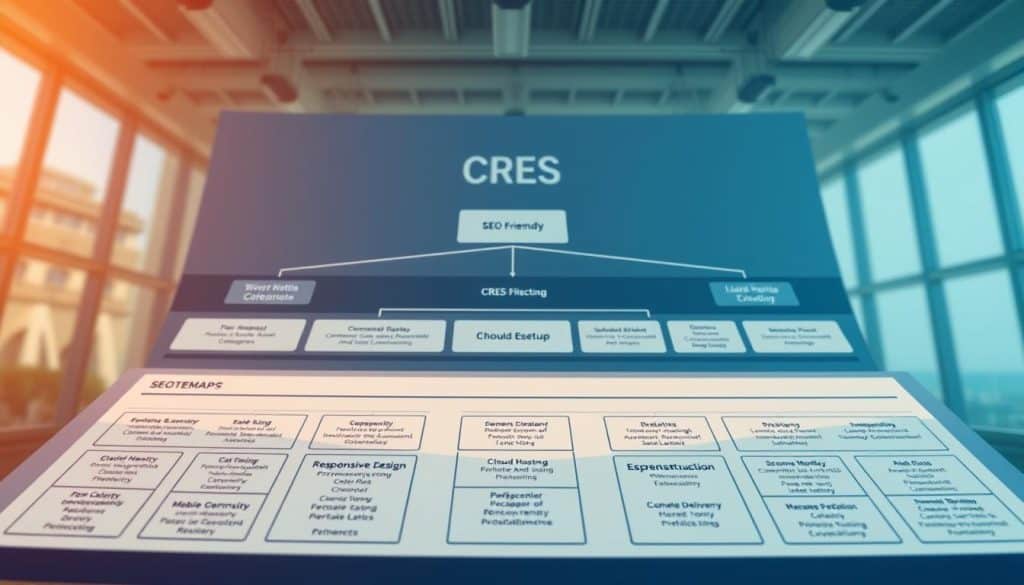
Creating an SEO-friendly site architecture involves designing a logical hierarchy that makes it easy for both users and search engines to navigate your website. This means organizing your content in a way that your most important pages are easily accessible and that related content is grouped together.
The ideal website structure follows a pyramid model, with your homepage at the top, followed by category pages, and then individual content pages. This structure creates clear pathways for both users and search crawlers, improving overall site usability and search engine crawlability.
Implementing Effective URL Structures
Implementing consistent and descriptive URL structures across your updated website is crucial for improving both user navigation and search engine interpretation of your content. URLs should be concise, include target keywords where appropriate, and clearly indicate the content hierarchy.
For example, a well-structured URL might look like example.com/category/subcategory/content, clearly showing the relationship between different pages on your site. This not only helps search engines understand your content but also makes it easier for users to remember and share your URLs.
| URL Structure Element | Description | Example |
|---|---|---|
| Domain | The root domain of your website | example.com |
| Category | Primary content category | category |
| Subcategory | Secondary content category | subcategory |
| Content | Specific content page | content |
Optimizing Internal Linking Strategies
Strategic internal linking is essential for distributing page authority throughout your site and guiding users to related content, thereby enhancing both SEO performance and user engagement. Internal links help search engines understand the relationship between different pages on your site and can significantly improve crawlability.
To optimize your internal linking strategy, focus on creating a clear and consistent linking structure that supports your site’s architecture. Use descriptive anchor text for your links, avoid over-linking, and ensure that your most important pages are easily accessible from other relevant content.
By implementing these strategies, you can create a website structure that not only satisfies search engines but also provides a seamless and intuitive experience for your users.
Mobile Optimization for Updated Sites
With the majority of web traffic coming from mobile devices, ensuring your updated website is mobile-friendly is crucial. Mobile optimization is no longer optional but essential for SEO success, as search engines prioritize mobile-friendly websites in their rankings. Google’s mobile-first indexing means that the mobile version of your website is now the primary version considered for ranking, making mobile optimization essential for search visibility.
Ensuring Responsive Design
Implementing responsive design principles is the first step towards mobile optimization. We guide you through creating a responsive design that ensures your updated website displays and functions properly across all device types and screen sizes. This involves flexible grids, images, and media queries that adapt to different screen sizes, providing a seamless user experience across devices.
Improving Mobile Page Speed
Mobile page speed is particularly critical, as mobile users typically have less patience for slow-loading content and are more likely to abandon sites that don’t load quickly. To improve mobile page speed, we focus on optimizing images, leveraging browser caching, and minifying CSS and JavaScript files. Tools like Google’s PageSpeed Insights can help identify specific improvement opportunities.
For more detailed insights on mobile SEO, you can refer to Surfer SEO’s blog on mobile SEO, which provides comprehensive strategies for optimizing your website for mobile devices.
Enhancing Mobile User Experience
Enhancing the mobile user experience involves optimizing touch elements, simplifying navigation, and ensuring content is easily consumable on smaller screens. By focusing on these aspects, we can improve key user engagement metrics like time on site and bounce rate, which in turn influence your search rankings. A well-optimized mobile experience is crucial for retaining users and driving conversions.
On-Page SEO Optimization Techniques
Effective on-page SEO techniques are essential for helping search engines understand your content and rank it for relevant queries. By optimizing various on-page elements, you can significantly improve your website’s visibility and ranking in search results.
We will guide you through the process of optimizing your website’s on-page elements to enhance its performance in search engines.
Crafting Effective Title Tags and Meta Descriptions
Crafting compelling title tags that incorporate primary keywords is crucial for enticing users to click through from search results pages. Your title tag should be descriptive, yet concise, and accurately represent the content of your page.
Meta descriptions, while not direct ranking factors, significantly impact click-through rates from search results. They should be optimized to accurately summarize page content while encouraging clicks. For instance, a well-crafted meta description can increase the likelihood of users visiting your website.
| Element | Description | Best Practices |
|---|---|---|
| Title Tags | Descriptive title of the page | Include primary keyword, be concise |
| Meta Descriptions | Summary of the page content | Accurately summarize content, encourage clicks |
Optimizing Headings and Content Structure
A proper heading structure (H1, H2, H3) creates a clear content hierarchy that improves both user experience and search engine understanding of your content’s organization and main topics. Strategic keyword placement throughout your content helps search engines understand relevance without sacrificing readability or natural language flow.
For more detailed information on optimizing your on-page SEO, you can refer to our comprehensive guide on on-page SEO.
Implementing Schema Markup
Schema markup implementation provides search engines with structured data about your content, potentially enabling rich results that stand out in search listings. By adding schema markup to your website’s HTML, you can enhance the way your page is represented in search engine results, potentially improving click-through rates.
Regularly updating your schema markup and ensuring it aligns with the latest schema standards is crucial for maintaining optimal SEO performance.
Content Strategy for SEO Success
SEO success heavily relies on a robust content strategy that aligns with your business objectives and user intent. A well-crafted content strategy not only enhances your website’s visibility on search engines but also improves user engagement.
To develop an effective content strategy, you need to start with comprehensive keyword research. This involves identifying valuable search terms that your target audience uses and aligning them with your business goals.
Conducting Keyword Research for Updated Content
Conducting thorough keyword research is essential for creating content that resonates with your audience and ranks well in search results. We guide you through identifying valuable search terms that align with your business objectives and user intent, ensuring your content meets the needs of both users and search engines.
By analyzing your industry and competitors, you can uncover gaps in your current content coverage and identify opportunities to target valuable keywords. This process helps in creating a content plan that is both strategic and effective.
Creating High-Quality, E-E-A-T Compliant Content
Creating high-quality content that demonstrates Expertise, Experience, Authoritativeness, and Trustworthiness (E-E-A-T) is increasingly important for ranking well in search results. Your content should not only be informative but also trustworthy and authoritative.
To achieve this, focus on producing content that is well-researched, accurate, and provides value to your audience. Using content clusters organized around pillar pages can help establish topical authority and create a logical structure that both users and search engines can navigate easily.
Updating and Repurposing Existing Content
Your content strategy should balance optimizing existing pages with creating new content that addresses gaps in your current coverage and targets valuable keywords. Regularly updating existing content is crucial for maintaining relevance and freshness, which are important signals for search engines.
Repurposing successful content into different formats, such as turning blog posts into videos or infographics, can extend your reach and reinforce key messages across multiple channels. This approach not only maximizes your content’s potential but also caters to different user preferences.
By implementing a comprehensive content strategy that includes keyword research, high-quality content creation, and regular updates, you can significantly enhance your website’s SEO performance and drive more targeted traffic to your site.
Image and Media Optimization
Visual content plays a significant role in user experience and SEO performance, making image and media optimization essential. As we guide you through optimizing your website’s visual elements, we’ll focus on strategies that enhance both user engagement and search engine rankings.
Optimizing Image File Names and Alt Text
To help search engines understand your visual content, it’s crucial to use descriptive, keyword-rich file names and alt text for images. This not only improves accessibility but also enhances your website’s SEO. For instance, using relevant keywords in alt text can increase the likelihood of your images appearing in search results. We recommend reviewing your image file names and alt text to ensure they are descriptive and include target keywords.
Compressing Images for Faster Loading
Image compression is a critical step in optimizing your website’s performance. By reducing file sizes without sacrificing visual quality, you can significantly improve page load times. This is particularly important for mobile users, where slow loading times can lead to higher bounce rates. We suggest using tools that compress images while maintaining their quality, ensuring a better user experience across devices.
Video SEO Best Practices
Video content is becoming increasingly important for user engagement. To optimize your videos for search engines, we recommend implementing structured data, creating descriptive titles and descriptions, and providing transcripts. This makes your content more accessible to both users and search engines, potentially improving your video’s visibility in search results.
| Optimization Technique | Description | SEO Benefit |
|---|---|---|
| Descriptive File Names | Using keyword-rich names for image files | Improves image search visibility |
| Alt Text Optimization | Including target keywords in image alt text | Enhances image SEO and accessibility |
| Image Compression | Reducing image file sizes without losing quality | Faster page loading times, better user experience |
By implementing these image and media optimization strategies, you can significantly enhance your website’s user engagement and search performance. For more information on optimizing your website, visit https://oldy2.cres.vip/.
Building Quality Backlinks for Your Updated Site

As you update your website, it’s essential to focus on building high-quality backlinks to enhance your SEO efforts. Quality backlinks remain one of the most influential ranking factors, serving as votes of confidence from other websites that signal authority to search engines.
Identifying Link Building Opportunities
We’ll guide you through identifying valuable link building opportunities that align with your industry and business objectives, focusing on quality over quantity. Strategic outreach to industry publications, influencers, and complementary businesses can help build relationships that lead to valuable backlink opportunities.
Creating Link-Worthy Content
Creating link-worthy content that naturally attracts backlinks requires understanding what resonates with your target audience and provides unique value in your industry. We’ll demonstrate how to leverage existing content assets by transforming them into formats that typically attract more links, such as original research, comprehensive guides, or interactive tools.
Monitoring and Managing Your Backlink Profile
After a website update, it’s crucial to monitor your backlink profile to ensure links are properly redirected and no valuable link equity is lost during the transition. Regular backlink audits help identify toxic links that may harm your site’s reputation with search engines, allowing you to disavow them if necessary.
By focusing on building a diverse, natural backlink profile over time, you can create sustainable search visibility that competitors will struggle to replicate. This, in turn, can drive more traffic to your website and improve your overall online presence.
Measuring SEO Performance
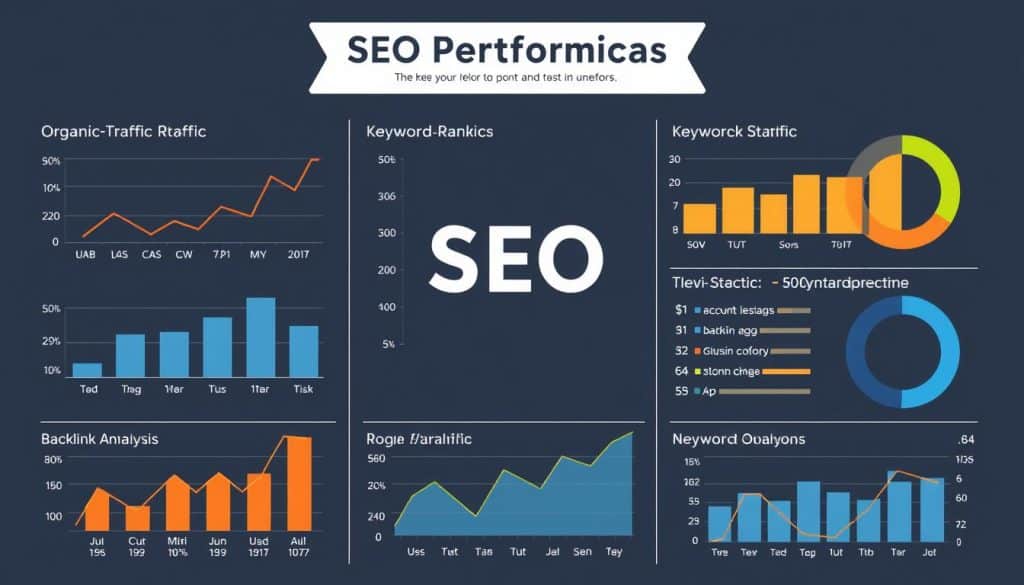
Understanding how to measure SEO performance is essential for maximizing your website’s visibility and driving more traffic. To achieve this, you need to track key metrics that reveal how your updated website is performing in search results.
Setting Up Google Search Console and Analytics
To start measuring SEO performance, you need to set up Google Search Console and Analytics. These tools provide valuable insights into your website’s search engine rankings, traffic, and content performance. By establishing baseline measurements immediately after your website update, you can evaluate the effectiveness of your SEO strategy over time.
Tracking Key SEO Metrics
Key performance indicators to monitor include organic traffic, keyword rankings, click-through rates, bounce rates, and conversion metrics that align with your business objectives. Regular performance analysis helps identify which content is resonating with users and search engines, allowing you to double down on successful approaches.
Adjusting Your Strategy Based on Data
By analyzing Search Console data, you can identify technical issues, understand which queries are driving traffic, and discover opportunities for featured snippets and other enhanced results. Creating custom dashboards and automated reports ensures stakeholders receive regular updates on SEO performance without requiring technical expertise to interpret the data. For more information on elevating your business with expert strategies, visit our guide on elevating your business with expert lead generation.
SEO Best Practices for Qatar-Based Websites
The unique digital environment in Qatar demands specialized SEO strategies that cater to local search behaviors and preferences. To effectively reach and engage with the Qatari audience, businesses must understand and adapt to the local digital landscape.
Local SEO Strategies for Qatar
Implementing local SEO strategies is crucial for Qatar-based websites to appear in relevant local searches, including Google Map Pack results. This involves optimizing your website for location-specific keywords, creating content that resonates with the local audience, and ensuring your business is listed in local directories and citations. Creating Arabic language content alongside English can significantly expand your reach in Qatar, where bilingual search is common among both locals and expatriates.
Local business listings and citations are particularly important for improving visibility in location-specific searches. We guide you through the process of optimizing your website for Qatar-specific keywords that reflect local terminology, brand preferences, and search behaviors unique to the region.
Understanding Qatar's Digital Market
Understanding Qatar’s digital market is essential for identifying valuable keywords, content opportunities, and competitive advantages that can drive your SEO success. The country’s high smartphone penetration and mobile search rates make mobile optimization especially critical. Building relationships with other Qatar-based websites and businesses can create valuable local backlink opportunities that signal regional relevance to search engines.
Compliance with Qatar’s internet regulations and cultural sensitivities is essential when creating content and implementing SEO strategies for this market.
“The key to successful SEO in Qatar lies in understanding the local culture and search behaviors.”
Social media integration with your SEO strategy is particularly effective in Qatar, where platforms like Instagram and Twitter have high engagement rates.
Conclusion
As we conclude our comprehensive guide on optimizing your updated website for search engines, it’s clear that a robust SEO strategy is crucial for digital success. We’ve guided you through essential elements, from technical foundations to content strategy and performance measurement. To stay ahead, remember that SEO success requires patience, persistence, and a commitment to providing value to both users and search engines. By following our strategies, you’ll improve your website’s visibility, traffic, and overall performance in search engines like Google.
Regular monitoring through tools like Google Search Console will help identify opportunities for ongoing optimization. For Qatar-based businesses, combining universal SEO principles with local market insights creates a powerful strategy for digital growth and competitive advantage.
FAQ
What are the most common SEO challenges after a website update?
Common SEO challenges include ensuring proper site indexing, fixing broken links and redirects, and optimizing site speed. We also need to maintain or improve user experience and search engine rankings.
How often should we conduct an SEO audit after updating our website?
We recommend conducting an SEO audit immediately after a website update to identify and address any potential issues. Regular audits, ideally quarterly, help maintain optimal SEO performance.
What is the importance of mobile optimization for our updated website?
Mobile optimization is crucial as it directly impacts user experience and search engine rankings. Ensuring a responsive design, fast page loading, and a seamless mobile experience is vital for retaining users and improving organic traffic.
How do we optimize our website’s image and media files for SEO?
Optimizing images involves using descriptive file names, alt text, and compressing images to reduce file size. For videos, using relevant titles, descriptions, and schema markup can improve visibility in search results.
What role does content play in SEO for our updated website?
High-quality, E-E-A-T compliant content is essential for SEO success. Conducting keyword research, creating engaging content, and updating existing content can significantly improve search engine rankings and drive organic traffic.
How can we measure the effectiveness of our SEO strategy?
We can measure SEO performance by tracking key metrics such as organic traffic, search engine rankings, and conversion rates using tools like Google Search Console and Analytics. Regular analysis helps adjust our strategy for better results.
What are some best practices for building quality backlinks to our updated website?
Identifying link building opportunities, creating link-worthy content, and monitoring our backlink profile are essential. We should focus on acquiring high-quality links from authoritative sources to improve our website’s credibility and search engine rankings.
How does local SEO impact our website’s visibility in Qatar?
Local SEO strategies, such as optimizing our website for location-based keywords and creating content relevant to the Qatari market, can significantly improve our visibility in local search results. Understanding Qatar’s digital market and consumer behavior is also crucial.