
As brands in Qatar increasingly turn to video content to engage their audience, a critical question arises: are their marketing strategies truly effective?
According to a Wyzowl study, a significant 91% of consumers want to see more video content from brands, and 89% say that watching a video convinced them to buy a product or service. This highlights the importance of measuring the success of video campaigns to drive business outcomes.
We will explore the crucial metrics that businesses need to track to evaluate their video marketing effectiveness and optimize their marketing performance.
Key Takeaways
- Understand the importance of measuring video campaign success
- Learn how to align video metrics with specific campaign goals
- Discover the key metrics that drive business outcomes
- Optimize marketing performance through data-driven strategies
- Improve ROI by tracking the right video metrics
Understanding Video Advertising Metrics
The effectiveness of video advertising hinges on the ability to measure and analyze the right metrics. To gauge the success of their campaigns, marketers need to understand how their video content performs across various platforms and touchpoints.
What Are Video Advertising Metrics?
Video advertising metrics are quantifiable measurements that help marketers understand how their video content performs. These metrics are crucial for evaluating the success of video advertising campaigns and making informed decisions about future strategies.
There are several key categories of video metrics, including:
- Reach metrics, which measure the number of viewers exposed to the video content.
- Engagement metrics, which track how viewers interact with the video, such as likes, shares, and comments.
- Conversion metrics, which measure the actions taken by viewers after watching the video, such as making a purchase or signing up for a service.
Different platforms, such as YouTube, social media, and websites, track and report video performance differently, affecting how metrics should be interpreted. By understanding these differences, marketers can gain insights into viewer behavior, preferences, and the effectiveness of creative elements.
Establishing baseline measurements before launching campaigns is essential to properly evaluate performance improvements. By tracking the right metrics, marketers can make informed decisions about their video advertising strategy and optimize their campaigns for better results.
Essential Video Metrics for Every Campaign

Understanding the right video metrics is crucial for measuring the success of your video advertising campaigns. To effectively gauge the performance of your video content, you need to focus on key metrics that provide insights into viewer engagement and campaign reach.
View Count and Impressions
View count and impressions are two fundamental metrics that help you understand how your video content is performing. Impressions reveal your campaign’s reach and how often viewers are exposed to your video thumbnail or the initial portion of your video ad. On the other hand, view count is the total number of people who have actually viewed your video.
It’s essential to differentiate between impressions and views. While impressions indicate how many times your video was displayed, views show how many times viewers actually watched your video. Different platforms define a “view” differently; for instance, YouTube counts a view after 30 seconds, whereas Facebook and Instagram count a view after just 3 seconds. This discrepancy is crucial for cross-platform campaigns, as it affects how you interpret view count and views across different platforms.
| Platform | View Count Criteria |
|---|---|
| YouTube | 30 seconds |
| 3 seconds | |
| 3 seconds | |
| 2 seconds |
To get a comprehensive understanding of your video’s performance, you need to analyze view count in relation to your target audience size and campaign objectives. For a deeper dive into video metrics, you can explore additional resources that provide insights into optimizing your video marketing strategy. Moreover, calculating the view rate by dividing views by impressions can give you insights into your video’s initial appeal. Benchmarking your view counts against industry standards and historical performance can also help in assessing your campaign’s effectiveness.
Improving view counts can be achieved through thumbnail optimization, adjusting video length, and refining your distribution strategy. However, it’s also important to recognize the limitations of view count as a metric. It should be paired with engagement and conversion metrics to get a complete picture of your campaign’s success. For more information on elevating your business with video marketing, you can visit this resource.
Top-of-Funnel Video Advertising Metrics
The effectiveness of video advertising at the awareness stage is measured through key top-of-funnel metrics. At this stage, the primary goal is to capture the audience’s attention and make a lasting impression.
To achieve this, we focus on metrics that help us understand how well our video marketing efforts are performing in terms of reaching and engaging our target audience. One crucial aspect is measuring brand awareness.
Brand Awareness Metrics
Brand awareness metrics are vital for understanding how well our video campaigns are performing at the top of the funnel. Brand lift studies measure changes in brand awareness, recall, and perception before and after a video campaign. This is often done through surveys that ask viewers about their awareness, perception, or intent to purchase from our brand.
Key metrics for measuring brand awareness include unique viewers, new audience acquisition, and demographic reach. Additionally, social sharing metrics can indicate the resonance of our brand message and its potential for organic amplification. By analyzing these metrics, we can refine our video marketing strategies to better reach and engage our target audience.
We also examine audience retention data to understand how well our awareness-stage videos capture attention quickly. Comparative metrics help us measure the effectiveness of different creative approaches for awareness campaigns. By connecting top-of-funnel metrics to mid-funnel activities, we can track the progression of newly aware audiences.
Mid-Funnel Video Metrics for Consideration
The middle of the customer funnel is where your video content needs to shine, providing value and sparking engagement. At this stage, potential customers are looking for more in-depth information about your product or service, and it’s crucial to deliver content that resonates with them.
Video Engagement Rate
Video engagement rate is a composite metric that measures how actively viewers interact with your content beyond passive watching. This includes likes, comments, shares, and saves, which collectively indicate the level of audience engagement.
Components of Video Engagement:
- Likes: A straightforward indicator of how much viewers appreciate your content.
- Comments: Provide valuable feedback and insights into viewer sentiment.
- Shares: Reflect the content’s virality and the audience’s willingness to distribute it.
- Saves: Indicate that viewers find your content valuable enough to revisit later.
To calculate a comprehensive engagement rate, we consider these components together, providing a holistic view of how your audience is interacting with your video content.
Watch time and average view duration are also critical metrics, as they indicate the quality of engagement and viewer interest. By analyzing engagement patterns at different points in your video, you can identify strengths and weaknesses in your content.
Furthermore, measuring audience retention and identifying drop-off points can help you refine your video’s pacing and content. For embedded videos, tracking play rate is essential, and retargeting effectiveness metrics can help you understand how well your consideration-stage videos are moving viewers toward conversion.
Bottom-Funnel Video Metrics for Conversion
Video marketing becomes an art of persuasion at the BOFU, driving conversions and sales. At this stage, our mission is to convert engaged prospects into paying customers by demonstrating value and inspiring action through compelling video content.
One of the key metrics to measure the effectiveness of video advertising at this stage is the Conversion Rate (CVR). CVR measures the percentage of viewers who take a desired action after watching your video, such as filling out a form, making a purchase, or signing up for a free trial. It directly indicates the effectiveness of your video in driving conversions.
Conversion Rate
The conversion rate is a crucial metric that helps us understand how well our video content is persuading viewers to take action. To calculate the conversion rate, we divide the number of conversions by the number of video views. For instance, if 100 viewers watched our video and 5 of them made a purchase, our conversion rate would be 5%. We can then use this data to optimize our video content and improve our paid media strategy for better results.
To accurately measure the impact of video on conversion actions, it’s essential to set up proper attribution models. This involves tracking post-view conversions that happen after someone watches our video but doesn’t immediately click through. We also need to consider the click-through rate (CTR) as an important indicator of viewer intent and the effectiveness of our call-to-action (CTA).
Some key aspects to focus on when optimizing conversion-focused videos include:
- Defining conversion metrics for video advertising and understanding how they differ from traditional web conversion tracking.
- Setting up proper attribution models to accurately measure video’s impact on conversion actions.
- Calculating and interpreting conversion rate for different campaign objectives.
- Tracking post-view conversions and understanding their significance.
- Measuring cost per acquisition (CPA) for video campaigns and comparing it to other marketing channels.
As
“The goal of marketing is to own a word in the prospect’s mind.” – Al Ries
, our goal is to own a conversion-driven narrative in the viewer’s mind through effective video advertising.
By connecting conversion metrics to revenue data, we can measure the return on investment (ROI) for our video advertising efforts. This helps us understand the true impact of our video marketing campaigns and make data-driven decisions to optimize our strategies.
Platform-Specific Video Advertising Metrics
To maximize ROI in video advertising, it’s essential to grasp the nuances of metrics across various platforms. Different platforms offer unique insights into how your video content is performing.
YouTube Video Metrics
YouTube, being the largest video platform, provides a comprehensive set of video metrics. These include impressions, paid views, organic views, interactions, engagement, view rate, and “Video played to” metrics.
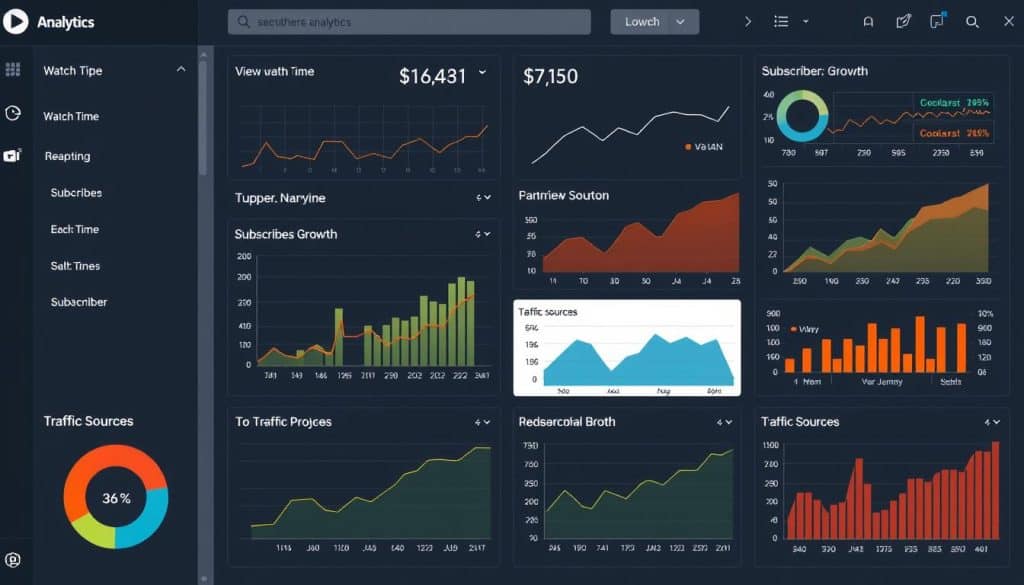
Some key YouTube video metrics to focus on are earned actions, subscriber growth, and playlist additions. These metrics help in understanding the overall impact and engagement of your video content.
Metrics like card click-through rate, end screen engagement, and annotation performance are crucial for optimizing the viewer journey. YouTube’s audience retention reports provide detailed insights into viewer behavior throughout your video, helping you identify areas for improvement.
While YouTube offers a robust set of metrics, other social media platforms like Facebook, Instagram, LinkedIn, and Twitter have their own measurement approaches. For instance, Facebook differentiates between 3-second views and 10-second views, providing a nuanced view of engagement.
When measuring the performance of embedded videos on your website, it’s essential to use both platform analytics and web analytics tools. This dual approach ensures a comprehensive understanding of your video’s performance across different platforms.
As you compare video performance across platforms, it’s crucial to account for platform differences when evaluating results. Emerging metrics on newer platforms like TikTok also offer new insights, differing from established video platforms.
How to Improve Your Video Metrics Performance
To achieve better results from your video advertising efforts, understanding how to improve video metrics performance is essential. We will explore actionable strategies to enhance your video content and drive better engagement metrics across all funnel stages.
Optimizing Video Content for Better Engagement
Optimizing your video content is crucial for capturing the attention of your audience. This involves designing eye-catching video thumbnails that pop off the screen and compel viewers to click. For instance, using bright colors and clear text overlays can significantly improve click-through rates.
Adding captions to your videos is also a must, as it caters to viewers who may be scrolling through their social media feeds without audio. Moreover, structuring your video content to improve retention and reduce drop-off points is vital. Analyze audience retention data to identify areas where viewers tend to lose interest and adjust your content accordingly.
Enhancing engagement can also be achieved through effective calls-to-action, interactive elements, and compelling storytelling. A/B testing different video content elements such as length, style, messaging, and CTAs can help identify what resonates best with your audience. By leveraging these insights, you can refine your marketing strategy to boost performance.
Furthermore, optimizing video technical elements like resolution, loading speed, and mobile compatibility is essential for improving performance. By ensuring that your video content is technically sound, you can provide a seamless viewing experience that keeps viewers engaged. For more insights on how to boost revenue with effective content strategies, visit our content brand strategy expertise page.
Conclusion: Creating a Video Metrics Dashboard for Success
Video marketing success is not just about creating engaging content, but also about measuring its impact. To drive continuous improvement and business results, it’s essential to track the right video metrics throughout the customer journey.
By summarizing the key video advertising metrics covered in this article, we can create a comprehensive view of performance. This includes understanding view count, engagement rate, and conversion rate, among other essential metrics.
To maximize the effectiveness of your video campaign, we recommend creating a customized video metrics dashboard that aligns with your specific business objectives. Regular reporting and review processes will help you optimize your video advertising efforts and connect video metrics to broader marketing and business KPIs. For more insights on measuring video success, visit Databox’s guide on how to measure video.
By implementing these strategies and staying up-to-date with the latest trends and technologies, you can drive success in your video marketing efforts and achieve your business goals.
FAQ
What are the key performance indicators for a successful video campaign?
The key performance indicators for a successful campaign include engagement rate, click-through rate, conversion rate, and view count. We analyze these metrics to determine the effectiveness of our brand awareness strategies.
How do I measure the success of my brand awareness efforts?
To measure the success of your brand awareness efforts, we track impressions, view count, and engagement rate. These metrics provide insight into how well your content resonates with your target audience.
What is the ideal length for a video to maximize engagement?
The ideal length for a video varies depending on the platform and content. However, we find that videos between 60-90 seconds tend to perform well in terms of engagement and attention.
How can I optimize my video content for better performance?
To optimize your video content, we focus on creating engaging and relevant content that resonates with your target audience. We also ensure that your CTA is clear and prominent to encourage conversions.
What is the role of click-through rate in measuring campaign success?
Click-through rate is a crucial metric that measures the effectiveness of your campaign in driving traffic to your desired page or landing page. A higher CTR indicates that your content is relevant and engaging.
How do I track conversions from my video campaigns?
To track conversions, we use conversion tracking tools to monitor the number of users who complete a desired action after watching your video. This helps us measure the ROI of your campaign.
What are some best practices for creating effective video marketing strategies?
Some best practices for creating effective video marketing strategies include understanding your target audience, creating engaging and relevant content, and optimizing your video for performance. We also ensure that your CTA is clear and prominent to encourage conversions.