

Did you know that 93% of online experiences start with a search? This staggering statistic highlights the critical importance of having a robust online presence. As businesses navigate the digital landscape, search engine optimization (SEO) emerges as a vital strategy for driving growth and visibility.
We will explore comprehensive SEO website optimization strategies that can elevate your online presence. By understanding how search engines like Google evaluate and rank your, you can unlock the full potential of your digital marketing efforts.
Key Takeaways
- Understand the fundamentals of search engine optimization and its impact on business growth.
- Discover actionable strategies for optimizing your website’s content and technical elements.
- Learn how to improve your online visibility and drive qualified traffic.
- Explore sustainable, white-hat SEO techniques for long-term success.
- Transform your website into a powerful business growth engine.
Understanding SEO Website Optimization
To thrive online, businesses need to understand the fundamentals of SEO website optimization. This involves a comprehensive approach to improving a website’s visibility on search engines, thereby driving more traffic and potential customers to the site.
What is SEO and Why It Matters
SEO stands for Search Engine Optimization, a set of practices designed to align a website with the algorithms used by search engines to rank sites. By optimizing a website for these algorithms, businesses can improve their site’s visibility, making it more likely to be found by potential customers. This is crucial for business growth as it impacts brand awareness, lead generation, and ultimately, revenue.
The significance of SEO lies in its ability to connect businesses with their target audience at the exact moment they are searching for related products or services. By appearing in the top results of search engines, businesses can establish credibility and trust with potential customers.
The Three Core Types of SEO
Effective SEO involves three core types: on-page, off-page, and technical SEO. On-page SEO focuses on optimizing the content and structure of a webpage to make it more search engine friendly. This includes using relevant keywords, optimizing HTML tags, and ensuring high-quality content.
Off-page SEO involves building the authority of a website through backlinks from other reputable sites and establishing a strong online reputation. Meanwhile, technical SEO is about improving the technical aspects of a website, such as site speed, mobile responsiveness, and security, to help search engines crawl and index the site more effectively.
| SEO Type | Description | Key Elements |
|---|---|---|
| On-page SEO | Optimizing webpage content and structure | Keywords, HTML tags, content quality |
| Off-page SEO | Building website authority | Backlinks, brand mentions, online reputation |
| Technical SEO | Improving website technical performance | Site speed, mobile responsiveness, security |
The Business Benefits of SEO Optimization
SEO optimization is a key strategy for businesses looking to expand their online reach and improve their bottom line. By optimizing their website for search engines, businesses can increase their online visibility, drive more qualified leads, and ultimately boost their revenue.
Increased Website Traffic and Visibility
When a website is optimized for search engines, it becomes more visible to potential customers. This increased visibility translates into more website traffic, which is crucial for businesses aiming to expand their customer base. More website traffic means more opportunities for businesses to showcase their products or services, potentially leading to increased sales and revenue.

Higher Conversion Rates and ROI
SEO optimization helps attract more qualified leads who are actively searching for the products or services a business offers. This targeted approach results in higher conversion rates and a better return on investment (ROI). By investing in SEO, businesses can maximize their marketing efforts and achieve a higher ROI compared to other marketing strategies.
Building Brand Credibility and Trust
Ranking higher in search engine results pages (SERPs) builds instant credibility for a business. As Google is often seen as a trusted source, businesses that rank highly on Google are perceived as more trustworthy by users. This credibility is crucial for building trust with potential customers and differentiating a business from its competitors.
Long-Term Sustainable Growth
Unlike paid advertising, which stops delivering results once the payment ceases, SEO optimization provides sustainable, long-term growth. By continually optimizing and improving their website, businesses can maintain their online presence and continue to attract new customers over time.
| Benefits of SEO Optimization | Description | Impact on Business |
|---|---|---|
| Increased Website Traffic | More visibility in search engine results | Expands customer base and increases sales opportunities |
| Higher Conversion Rates | Attracts qualified leads actively searching for products/services | Maximizes marketing efforts and improves ROI |
| Brand Credibility and Trust | Higher rankings build credibility and trust | Differentiates business from competitors and builds customer loyalty |
| Long-Term Growth | Sustainable growth through continuous optimization | Maintains online presence and attracts new customers over time |
“The best ROI comes from a combination of SEO and content marketing. It’s not just about ranking higher; it’s about being seen as an authority in your industry.”
By understanding and leveraging the benefits of SEO optimization, businesses in Qatar can improve their online presence, attract more customers, and drive sustainable growth.
How Search Engines Work
Search engines are the backbone of the internet, and knowing how they work can significantly improve your online presence. At its core, a search engine is a complex system that involves multiple stages to deliver relevant results to users.
Crawling, Indexing, and Ranking Process
The process begins with crawling, where search engine bots, also known as crawlers or spiders, continuously scan the web for new and updated content by following links from one page to another. This information is then stored in massive databases called indexes.
Once the content is crawled and indexed, it moves to the ranking stage. Here, the search engine’s algorithm analyzes the relevance, quality, and other factors of the indexed content to determine its position in the search results for specific queries.
- Crawling: Discovering new and updated web pages.
- Indexing: Storing information about web pages in massive databases.
- Ranking: Determining the order of search results based on relevance and quality.
Google's E-E-A-T Principles
Google’s algorithm is guided by the E-E-A-T principles, which stand for Experience, Expertise, Authoritativeness, and Trustworthiness. These principles are crucial for evaluating the quality of content and ensuring that users receive accurate and reliable information.
To improve your website’s visibility, it’s essential to adhere to these principles by creating high-quality, authoritative content that demonstrates expertise and is trustworthy. You can learn more about optimizing your website by visiting our SEO resources.
By understanding how search engines work and aligning your content with their guidelines, you can significantly enhance your online presence and drive more traffic to your site.
Key Google Ranking Factors in 2023
In the current digital landscape, understanding Google’s ranking factors is vital for developing an effective SEO strategy that yields tangible results. As we delve into the world of search engine optimization, it’s crucial to identify the most critical elements that influence a website’s visibility on Google.

Content Quality and Relevance
Content quality and relevance remain the foundation of SEO success, accounting for approximately 26% of the ranking weight. High-quality, relevant content not only attracts users but also enhances the overall user experience. To achieve this, focus on creating well-researched, engaging, and informative content that addresses the needs of your target audience.
Backlink Profile
A well-crafted backlink profile is essential for establishing your site’s authority and trustworthiness in Google’s eyes. Backlinks account for around 15% of the ranking weight. Quality matters more than quantity when it comes to backlinks. Aim for links from reputable, relevant sources that add value to your content.
User Experience Signals
User experience signals, including engagement metrics, bounce rate, and time on site, play a significant role in determining your website’s ranking. These signals account for around 11% of the ranking weight. Improving user experience can be achieved by ensuring your website is intuitive, responsive, and provides value to your users.
Technical SEO Elements
Technical SEO elements, such as page speed, mobile-friendliness, and secure connections, create a solid foundation for your site. While they may not be the most significant ranking factors, they are crucial for ensuring a smooth user experience and can impact your site’s crawlability and indexability. Regular technical audits can help identify areas for improvement.
By understanding and optimizing for these key Google ranking factors, businesses can improve their search engine visibility, drive more traffic to their site, and ultimately achieve their digital marketing goals.
Setting Up Your SEO Strategy

Crafting a tailored SEO strategy can significantly boost your website’s visibility and drive more traffic. To achieve this, we need to follow a structured approach that includes understanding your current website performance, analyzing your competition, and setting clear, measurable goals.
Conducting a Comprehensive Site Audit
A comprehensive site audit is the foundation of any successful SEO strategy. It involves evaluating your website’s strengths, weaknesses, and technical SEO issues, such as broken links, slow page speeds, and mobile usability. We use tools like Google Analytics, Search Console, and SEO software (e.g., Ahrefs, SEMrush) to benchmark existing metrics and establish baseline traffic, keyword rankings, and conversion rates. Additionally, a content inventory helps identify pages that perform well and those needing updates or consolidation.
Analyzing Your Competition
Understanding your competition is crucial in developing an effective SEO strategy. We identify competitors by assessing which websites rank for your target keywords. Then, we analyze their content, including structure, depth, and keyword usage on high-ranking pages. By discovering where competitors obtain quality backlinks, we uncover link-building opportunities. Pinpointing topics or keywords your competitors cover that you haven’t addressed allows us to create unique content to fill those gaps.
Setting Measurable SEO Goals
Setting SMART (Specific, Measurable, Achievable, Relevant, Time-bound) SEO goals is essential to tie your optimization efforts directly to your business outcomes. We help you establish baseline metrics and KPIs to track your SEO progress over time, ensuring you can demonstrate ROI. By prioritizing SEO tasks based on potential impact and resource requirements, we create a sustainable SEO roadmap that guides your optimization efforts and adapts to changing search engine algorithms and business needs.
Keyword Research Fundamentals

Keyword research is a foundational element of SEO that helps businesses identify relevant terms and phrases their audience searches for. To develop a successful SEO strategy, it’s crucial to understand the keywords and phrases your target audience uses.
Finding Your Seed Keywords
The first step in keyword research is creating a list of seed keywords. This involves brainstorming words and phrases that are relevant to your business, products, or services. Think about your ideal customers’ interests, desires, pain points, and goals, and consider the language they use when searching online.
Tip: Use tools like Google Keyword Planner, Ahrefs, or SEMrush to help generate a comprehensive list of seed keywords.
Analyzing Search Volume and Competition
Once you have your seed keywords, the next step is to analyze their search volume and competition. Search volume indicates how many times a keyword is searched per month, while competition refers to how difficult it is to rank for that keyword. Ideally, you want to target keywords with a balance between search volume and competition.
Understanding Search Intent
Understanding the intent behind a search query is crucial for creating relevant content. Search intent can be categorized into informational, navigational, commercial, and transactional intents. By matching your content to the user’s search intent, you can improve your chances of ranking higher in search engine results.
Creating Keyword Clusters
After analyzing and prioritizing your keywords, group them into clusters based on their relevance and themes. This helps in creating a comprehensive content strategy that targets related keywords and establishes your website’s topical authority. Keyword clustering is an effective way to improve your site’s overall relevance for specific subjects.
By following these keyword research fundamentals, businesses can develop a robust SEO strategy that drives organic traffic and improves their online visibility. Effective keyword research is an ongoing process that requires continuous monitoring and adjustment to stay competitive in the ever-evolving digital landscape.
On-Page SEO Website Optimization Techniques
To maximize your website’s potential on search engines, it’s essential to master on-page SEO techniques that directly influence your site’s ranking and user experience. On-page SEO involves optimizing individual web pages to rank higher and earn more relevant traffic. This section will delve into the critical on-page SEO strategies that can elevate your website’s performance.
Optimizing Title Tags and Meta Descriptions
Title tags and meta descriptions are crucial elements that influence how search engines understand and display your content in search results. A well-crafted title tag should be unique, clear, and concise, accurately describing the page’s content. Similarly, a compelling meta description should provide a succinct summary of the page, enticing users to click through. We recommend keeping title tags under 60 characters and meta descriptions between 150-160 characters to ensure they display properly in search results.
For example, a good title tag might be “On-Page SEO Techniques for Better Rankings,” while a corresponding meta description could be “Discover the most effective on-page SEO techniques to improve your website’s search engine rankings and drive more traffic.”
Creating SEO-Friendly URL Structures
An SEO-friendly URL structure is vital for both user experience and search engine crawling. URLs should be concise, descriptive, and include target keywords where appropriate. Avoid using unnecessary characters, numbers, or parameters that can make URLs look spammy or confusing. A well-structured URL not only helps search engines understand the content of the page but also improves the user’s ability to navigate your site.
For instance, https://example.com/on-page-seo-techniques is a clean and descriptive URL that clearly indicates the page’s content.
Proper Heading Tag Usage (H1-H6)
Heading tags (H1-H6) play a crucial role in structuring your content and signaling its importance to search engines. The H1 tag should be used for the main title of the page, while subsequent headings (H2, H3, etc.) should be used to create a logical hierarchy of content. Proper use of heading tags enhances readability and helps search engines understand the content’s structure and key points.
Internal Linking Best Practices
Internal linking is a powerful SEO strategy that helps distribute page authority throughout your site, creating a clear path for both users and search engine crawlers. By linking to relevant pages within your site, you can improve user experience, increase engagement, and help search engines discover new content. It’s essential to use descriptive anchor text for your internal links and to link to relevant, high-quality content.
To illustrate the impact of these on-page SEO techniques, consider the following comparison:
| SEO Technique | Before Optimization | After Optimization |
|---|---|---|
| Title Tag | Generic title | Descriptive, keyword-rich title |
| Meta Description | Missing or poorly written | Compelling, informative summary |
| URL Structure | Long, confusing URL | Short, descriptive URL |
| Heading Tags | Poorly structured headings | Logical hierarchy with H1-H6 |
| Internal Linking | Few or no internal links | Strategic, relevant internal links |
By implementing these on-page SEO website optimization techniques, you can significantly improve your website’s visibility, credibility, and overall performance on search engines.
Content Creation Strategies for SEO
Developing a robust content strategy is essential for improving search engine visibility and driving sustainable SEO results. Quality, authoritative, and authentic content is the number one driver of your search engine rankings. At the heart of effective SEO is the creation of content that not only appeals to search engines but also provides value to your intended audience.
Developing High-Quality, Authoritative Content
To establish your brand as an authority in your niche, you need to develop high-quality, authoritative content. This involves fine-tuning your web writing skills to present yourself as an expert on the topic you’re writing about. Your content should be created with your target audience in mind, increasing site traffic and improving your site’s authority and relevance.
Incorporating Keywords Naturally
Incorporating keywords naturally into your content is crucial for SEO success. Using your SEO strategy, develop or redevelop content to improve your rankings. Don’t forget to use bold, italics, heading tags (especially an H1), and other emphasis tags to highlight these keyword phrases—but don’t overdo it. The key is to maintain a natural writing style that reads well for the user.
Content Formatting for Readability
Content formatting plays a significant role in improving readability and user engagement. Proper use of headings, bullet points, and white space can make your content more accessible and enjoyable to read. By formatting your content effectively, you can enhance the user experience and encourage visitors to stay on your page longer.
Content Update and Maintenance Schedule
Regularly updating your content is vital for signaling to search engines that your site is actively maintained and relevant. We recommend implementing a content update and maintenance schedule to keep your information fresh. Audit your content on a set schedule, introduce new sources where appropriate, and make updates as needed to keep your audience engaged.
| Content Strategy | Description | Benefits |
|---|---|---|
| High-Quality Content | Develop authoritative and engaging content | Establishes brand expertise, improves rankings |
| Natural Keyword Incorporation | Use keywords naturally within content | Enhances SEO, improves readability |
| Content Formatting | Use headings, bullet points, and white space effectively | Improves user engagement, readability |
| Regular Updates | Maintain a content update schedule | Keeps content fresh, signals site activity to search engines |
Image and Video Optimization
High-quality visual content can significantly enhance user engagement, but it requires proper optimization to maximize its potential. As we continue to explore SEO strategies, it’s essential to understand how images and videos can be optimized to improve both user experience and search engine visibility.
Image Compression and Sizing
Optimizing images involves compressing and sizing them appropriately to ensure fast page loading times without compromising visual quality. Image compression reduces the file size, making it easier to load on various devices. We recommend using tools that can compress images without significant loss of quality.
Alt Text and File Name Optimization
Alt text is crucial for search engines to understand the content of an image. It should be descriptive and concise, including relevant keywords where appropriate. Similarly, file names should be descriptive and include target keywords to help search engines understand the image’s context.
Video SEO Best Practices
Video content is increasingly important for user engagement. To optimize videos for search engines, we should focus on creating high-quality content, using descriptive titles and descriptions, and providing transcripts where possible. Video SEO also involves choosing the right hosting platform and optimizing metadata.
Using Schema Markup for Rich Results
Schema markup can enhance the visibility of visual content in search results by providing search engines with additional context. By using schema markup, we can help our content stand out with rich snippets, such as video thumbnails or image carousels, potentially increasing click-through rates.
Technical SEO Implementation
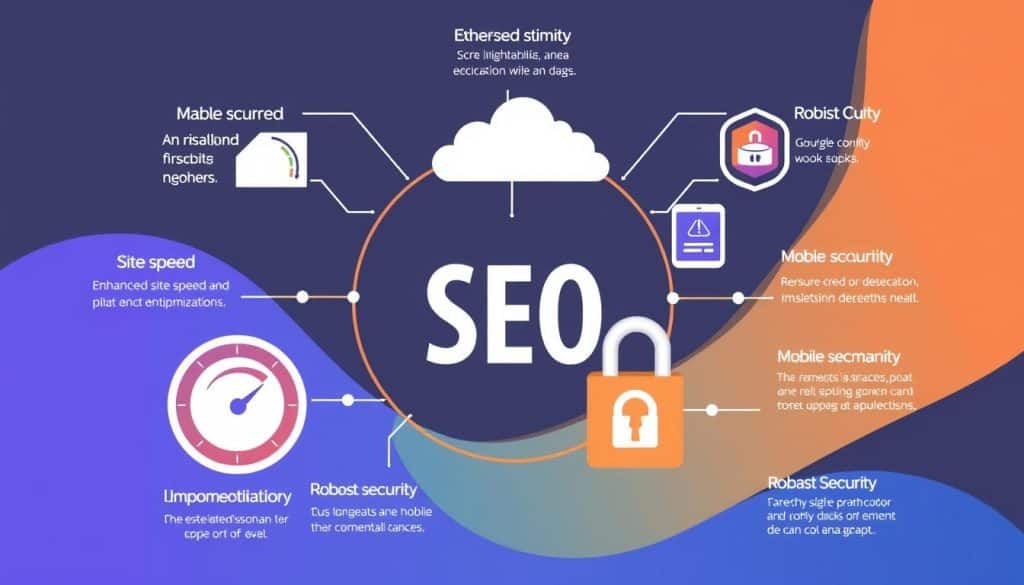
To improve your website’s foundation and search engine accessibility, technical SEO implementation is key. Technical SEO optimizations are done on the back end of your website to ensure it meets Google’s site security and user experience requirements.
Improving Site Speed and Performance
Page speed is a critical factor in user experience and search engine rankings. Optimizing images, leveraging lazy loading, and minifying code are essential steps. We recommend using tools like Google PageSpeed Insights to identify areas for improvement.
Mobile Optimization and Responsive Design
With Google’s mobile-first indexing, having a mobile-friendly and responsive website is no longer optional. Ensure your site adapts seamlessly to different screen sizes and devices.
Fixing Crawlability Issues
Crawlability is crucial for search engines to discover and index your content. We suggest regularly checking your site’s sitemap and robots.txt file to ensure they’re correctly configured. For a deeper dive, check out our guide on technical SEO.
Implementing SSL and Security Measures
Security is a top priority for both users and search engines. Implementing HTTPS and ensuring your site is secure is vital. This not only protects user data but also serves as a positive ranking signal.
By addressing these technical SEO aspects, you can significantly enhance your website’s performance and search engine ranking. Regular audits and optimizations are key to maintaining a competitive edge.
Off-Page SEO Strategies
Off-page SEO is the backbone of a successful digital marketing strategy, driving your site’s authority and rankings. As we explore off-page SEO strategies, we’ll delve into techniques that build your site’s credibility beyond your website.
Building Quality Backlinks
Backlinks, or links to your site from other websites, are the third most important Google ranking factor. High-quality backlinks from credible sites are more valuable than those from lower credibility sites. To acquire these, we recommend producing original, authentic content worthy of backlinks, proactively reaching out to relevant sites, and leveraging guest posting and PR coverage. The more high-quality backlinks you have, the higher you’ll rank in search engine results.
Effective backlink building involves a strategic approach, including creating linkable assets and engaging in digital PR. By doing so, you’re not only enhancing your site’s authority but also improving its visibility in search engine results.
Social Media Signals and Brand Mentions
While social media itself isn’t a direct Google ranking factor, your activity on these platforms and users’ engagement with your content send social signals to Google, influencing your ranking. Regularly sharing your blog posts on your social media feed earns you referral traffic and increases the chances of generating backlinks. Moreover, Google considers your brand as a whole, looking at information across the web, including reviews, ratings, listings, awards, and even unlinked brand mentions.
Building your brand reputation by optimizing your listings, gaining positive press, and asking for reviews is essential for SEO. This holistic approach to your online presence contributes to your site’s credibility and search engine rankings.
Local SEO Considerations for Qatar Businesses
For businesses operating in Qatar, local SEO considerations are crucial. This includes listing your business in regional directories, targeting local keywords, and being mindful of cultural considerations. Optimizing your Google Business Profile for local search visibility is also vital. Consistency in your business listings across the web is key to avoiding confusion among search engines and users.
By focusing on these off-page SEO strategies, you’ll be able to enhance your site’s authority, improve your search engine rankings, and drive more targeted traffic to your website. This comprehensive approach complements your on-page and technical SEO efforts, ensuring maximum impact for your digital marketing strategy.
Measuring SEO Success
Understanding how to measure SEO success is vital for making data-driven decisions that drive business results. To effectively gauge the impact of your SEO efforts, you need to track a combination of metrics that provide insights into your website’s performance in search engines.
Essential SEO Metrics to Track
To measure SEO success, focus on key performance indicators such as organic traffic, keyword rankings, conversion rates, and engagement metrics. These metrics offer a comprehensive view of how your SEO strategy is performing and where improvements can be made.
Using Google Analytics and Search Console
Google Analytics is a powerful tool for measuring website traffic, engagement, and conversion rates. It provides detailed insights into how users interact with your site. Google Search Console, on the other hand, is essential for understanding your site’s search engine performance, including impressions, clicks, and keyword rankings. By leveraging both tools, you can gather actionable insights to optimize your SEO strategy.
Setting Up Custom Reports and Dashboards
Creating custom reports and dashboards in Google Analytics and Search Console allows you to track your most important SEO metrics at a glance. This enables you to quickly identify areas of improvement and make data-driven decisions to enhance your SEO performance. By regularly monitoring these metrics, you can refine your SEO strategy to better align with your business objectives.
Common SEO Mistakes to Avoid
To achieve success in SEO, understanding and avoiding common mistakes is just as important as implementing best practices. As we guide you through the intricacies of search engine optimization, we’ll highlight critical errors that can undermine your efforts and provide actionable advice on how to steer clear of them.
Keyword Stuffing and Over-Optimization
One of the most significant SEO mistakes is keyword stuffing and over-optimization. This outdated practice involves excessively using keywords in your content to manipulate search engine rankings. Instead, write like a human being speaking to your audience, focusing on delivering value rather than trying to optimize for a search engine. This approach not only improves readability but also aligns with the latest SEO best practices.
Ignoring Mobile Users
In today’s mobile-first indexing environment, ignoring mobile users can be detrimental to your website’s success. Being mobile-friendly is no longer enough; your site needs to be fully responsive to cater to the majority of users who access websites through mobile devices. Ensuring a seamless user experience across all devices is crucial for maintaining a competitive edge in SEO.
Poor Quality Backlinks
The quality of backlinks is a critical factor in determining your website’s credibility and ranking. Backlinks from higher credibility sites are more valuable than those from lower credibility sites. Focusing on acquiring high-quality backlinks can significantly enhance your website’s authority and improve its visibility in search engines.
Neglecting Technical SEO
Neglecting technical SEO can prevent even the best content from ranking well. Technical SEO optimizations are done on the back end of your website to ensure it meets Google’s site security and user experience requirements. By addressing technical issues, you can improve your website’s overall performance and enhance its visibility in search engine results.
By being aware of these common SEO mistakes and taking steps to avoid them, you can protect your website’s reputation and improve its chances of success in the competitive world of search engine optimization.
Advanced SEO Techniques for Competitive Edge
To stay ahead in the competitive digital landscape, businesses in Qatar must adopt advanced SEO techniques that drive growth and visibility. As search engines continue to evolve, it’s crucial to leverage the latest strategies to outperform competitors and achieve top rankings.
Featured Snippets Optimization
Featured snippets are a powerful tool for increasing visibility and driving traffic to your website. By optimizing your content for featured snippets, you can position your brand at the top of search engine results pages (SERPs). This involves using schema markup to help search engines understand your content and structure it in a way that’s easily digestible. For instance, using sitelink schema can give you more real estate on the SERP, while review schema can enhance your listing’s appeal. Check out advanced SEO techniques to learn more about optimizing for featured snippets.
Voice Search Optimization
With the rise of smart speakers and voice assistants, voice search is becoming increasingly important. To optimize for voice search, focus on using natural language and long-tail keywords that mimic how users speak. This means creating content that’s conversational and answers specific questions. By doing so, you can improve your chances of appearing in voice search results and attract more users who are using voice-based queries.
AI and Machine Learning in SEO
Google’s algorithms are becoming more sophisticated with the integration of AI and machine learning. These technologies enable search engines to better understand content context and user intent. To leverage this trend, focus on creating high-quality, authoritative content that addresses the needs of your target audience. By doing so, you can improve your website’s visibility and drive more relevant traffic to your site.
Conclusion: Implementing Your SEO Roadmap for Business Growth
By integrating the SEO strategies outlined in this guide, you’ll be well on your way to improving your website’s search engine rankings and driving business growth. To achieve this, focus on implementing a comprehensive SEO roadmap that prioritizes and sequences your efforts for maximum impact.
Remember that SEO is a long-term strategy that requires patience and persistence. As you progress, be prepared to adapt your approach as your business grows and search engines continue to evolve their algorithms.
By doing so, you’ll be able to drive sustainable business growth through improved search visibility. Every change you make will take some time to be reflected on Google’s end, so wait a few weeks to assess the beneficial effects in Google Search results.
FAQ
What is the primary goal of SEO?
The primary goal of SEO is to increase the quality and quantity of search engine traffic to a website by ranking higher in search results for specific keywords or phrases.
How do search engines determine the relevance of a webpage?
Search engines determine the relevance of a webpage by analyzing its content, meta tags, and other on-page elements, as well as its backlink profile and user experience signals.
What is the importance of keyword research in SEO?
Keyword research is crucial in SEO as it helps identify the most relevant and high-volume search terms, enabling businesses to create targeted content that resonates with their audience.
How does mobile optimization impact SEO?
Mobile optimization is critical in SEO as it ensures that a website provides a good user experience on mobile devices, which is now the primary source of search traffic, and is also a key ranking factor.
What is the role of Google Search Console in SEO?
Google Search Console is a tool that helps businesses monitor their website’s search engine rankings, traffic, and technical performance, providing insights to improve their SEO strategy.
How can businesses measure the success of their SEO efforts?
Businesses can measure the success of their SEO efforts by tracking key metrics such as organic traffic, keyword rankings, and conversion rates, using tools like Google Analytics and Search Console.
What are some common SEO mistakes to avoid?
Common SEO mistakes to avoid include keyword stuffing, over-optimization, ignoring mobile users, and neglecting technical SEO, which can lead to penalties and decreased rankings.
How often should businesses update their SEO strategy?
Businesses should regularly update their SEO strategy to keep pace with changing search engine algorithms, user behavior, and market trends, ensuring they remain competitive and achieve their digital growth goals.