
Are you leveraging the full potential of your website’s visual content to boost search engine rankings? In today’s digital landscape, optimizing images is no longer a nicety, but a necessity for businesses seeking to enhance their online visibility.
We explore the critical role of image optimization in improving your website’s search engine rankings and overall online presence. By fine-tuning your images, you can significantly enhance your website’s discoverability on search engines.
Properly optimized images can drive measurable results for your website, from improved user experience to enhanced engagement metrics that search engines value highly.
Key Takeaways
- Discover how image optimization can boost your website’s search engine rankings.
- Learn essential image optimization techniques for improved online visibility.
- Understand the impact of optimized images on user experience and engagement metrics.
- Gain actionable insights to improve your image optimization strategy.
- Enhance your website’s overall online presence with optimized images.
The Importance of Image SEO in Digital Marketing
As digital marketing continues to evolve, the importance of image SEO in boosting online presence cannot be overstated. In today’s digital landscape, images play a crucial role in capturing user attention and enhancing the overall user experience. According to Optinmonster, online content that contains images receives up to 94% more views than content without them.
What is Image SEO?
Image SEO refers to the practice of optimizing images to improve their visibility in search engine results, thereby driving more traffic to your website. This involves several key strategies, including optimizing image file names, alt text, and surrounding content to make images more search engine friendly. By doing so, businesses can increase their online presence and reach a wider audience.
How Images Impact Search Engine Rankings
Images significantly impact search engine rankings by providing additional indexing opportunities and enhancing user experience signals that search engines measure. Pages with optimized images tend to rank higher because they offer better user engagement, which is a critical factor in modern SEO algorithms. For instance, a study on the importance of image optimization highlights its role in improving search engine rankings.
| Image SEO Factor | Impact on Rankings | User Engagement |
|---|---|---|
| Optimized Image File Names | Improves relevance | Enhances user experience |
| Alt Text | Boosts accessibility and search visibility | Provides context for users |
| Surrounding Content | Contextual relevance | Improves content comprehension |
Understanding the Benefits of Image Optimization
By optimizing images, you can significantly enhance your website’s loading speed, user experience, and search engine rankings. Image optimization is crucial for businesses aiming to improve their online presence, particularly in visually driven industries.
Improved Page Loading Speed
Optimizing images helps reduce their file size, which in turn improves your website’s loading speed. A faster-loading website enhances user engagement and reduces bounce rates. According to recent data, images are returned for 36.7% of search queries on Google, making image optimization a critical factor in driving traffic to your site.
For instance, a study found that a one-second delay in page load time can result in a 7% reduction in conversions. By optimizing images, you can mitigate this risk and ensure a smoother user experience.

Enhanced User Experience
Optimized images not only improve loading speeds but also contribute to a better overall user experience. High-quality, relevant images can engage users and encourage them to explore your website further. We have documented cases where properly optimized images drive significant traffic from image search, particularly for visual-oriented industries.
Moreover, optimized images can be used to create a more interactive and immersive experience for users, which can lead to higher engagement rates and conversion rates.
Better Search Engine Visibility
Image optimization can significantly improve your website’s visibility in search engine results. By optimizing your images, you can increase the chances of your website appearing in Google’s image search results, which can drive additional traffic to your site.
| Benefits of Image Optimization | Description |
|---|---|
| Improved Page Loading Speed | Reduces file size, enhancing user engagement and reducing bounce rates. |
| Enhanced User Experience | Engages users with high-quality, relevant images, encouraging exploration. |
| Better Search Engine Visibility | Increases visibility in search engine results, driving additional traffic. |
For a comprehensive understanding of how to optimize your website, including image optimization, check out our guide on how to do SEO for your website.
Choosing the Right Image File Format
Selecting the appropriate image file format is crucial for balancing quality and file size on your website. The right format can significantly enhance your site’s performance, user experience, and search engine rankings.
JPEG vs PNG vs WebP vs SVG
There are several image file formats, each with its strengths and weaknesses. Understanding these differences is key to making informed decisions about which format to use.
JPEG (Joint Photographic Experts Group) is a widely used format for photographic images. It uses lossy compression, which reduces the file size but also affects image quality. JPEG is ideal for images where a slight loss in quality is acceptable in exchange for a smaller file size.
PNG (Portable Network Graphics), on the other hand, is a lossless format that supports transparency and is ideal for graphics, logos, and images with text. PNG files are generally larger than JPEGs but offer superior quality.
WebP is a modern format that offers both lossy and lossless compression. It provides a good balance between quality and file size, making it an excellent choice for web images when browser compatibility is not a concern.
SVG (Scalable Vector Graphics) is a vector format ideal for logos, icons, and simple illustrations. SVG files are resolution-independent, meaning they remain crisp at any display size.
| Format | Compression | Transparency | Best Use |
|---|---|---|---|
| JPEG | Lossy | No | Photographic images |
| PNG | Lossless | Yes | Graphics, logos, images with text |
| WebP | Both | Yes | Web images, when compatible |
| SVG | Vector | Yes | Logos, icons, simple illustrations |
When to Use Each Format
Choosing the right format depends on the specific use case. For photographic content, JPEG is often the best choice due to its ability to compress files into smaller sizes. For images requiring transparency or sharp edges, PNG is recommended. If you’re looking for a versatile format that balances quality and file size, WebP is a great option, provided your audience’s browsers support it. For scalable graphics like logos and icons, SVG is the way to go.
By understanding the strengths of each image file format, you can make informed decisions that enhance your website’s performance and user experience.
Image Compression Techniques
To achieve better search engine rankings, mastering image compression is essential. Image compression reduces the file size of images, making them load faster on web pages, which is a critical factor for both user experience and SEO. We will explore the different techniques and tools available for compressing images effectively.
Lossless vs Lossy Compression
When it comes to image compression, there are two primary methods: lossless and lossy compression. Lossless compression reduces the file size without compromising the image quality, whereas lossy compression achieves higher compression rates by discarding some of the data, potentially affecting image quality. The choice between these methods depends on the specific requirements of your images and website.
Recommended Compression Tools
Several tools are available for compressing images, each with its unique features. Some of the most effective tools include:
- TinyPNG and TinyJPG, which offer exceptional compression results with a simple drag-and-drop interface.
- Squoosh, which provides granular control over compression settings and real-time quality comparison features.
- ImageOptim (for Mac) and FileOptimizer (for Windows), which enable batch processing for large image libraries.
- ShortPixel and Imagify, which integrate directly with content management systems like WordPress for automated optimization.
- For more advanced needs, Cloudinary and imgix offer comprehensive image transformation and delivery services.
For more tips on optimizing your website, check out our guide on how to optimize your website title for better SEO.
Proper Image Sizing and Dimensions
With the rise of mobile-first indexing, ensuring your images are correctly sized for different devices has become more important than ever. Google’s shift towards mobile-first indexing means that the mobile version of your website is now the primary version considered for ranking purposes. As a result, optimizing image dimensions for various screen sizes is crucial for both user experience and search engine optimization (SEO).
Understanding Image Dimensions for Web
When it comes to image dimensions for the web, it’s essential to strike a balance between image quality and file size. Larger images with high dimensions can significantly slow down your website’s loading speed, negatively impacting user experience and SEO. On the other hand, images that are too small may not display clearly on larger screens. We recommend understanding the typical screen sizes and resolutions used by your target audience to determine the optimal image dimensions for your website.
| Device Type | Typical Screen Size | Recommended Image Dimensions |
|---|---|---|
| Smartphones | 360-400px | 720-800px (2x resolution for Retina displays) |
| Tablets | 768-1024px | 1536-2048px |
| Desktop Monitors | 1280-1920px | 2560-3840px |
Responsive Images Across Devices
Implementing responsive images ensures that your website delivers an optimal viewing experience across various devices and screen sizes. We achieve this by using the srcset attribute, which allows us to specify different image sizes based on device characteristics, significantly reducing data usage on mobile devices. Additionally, the picture element provides greater control over art direction, enabling different image crops or compositions based on screen size. By implementing responsive images, we can improve load times and visual presentation on smaller screens, potentially reducing mobile bounce rates by up to 20%.
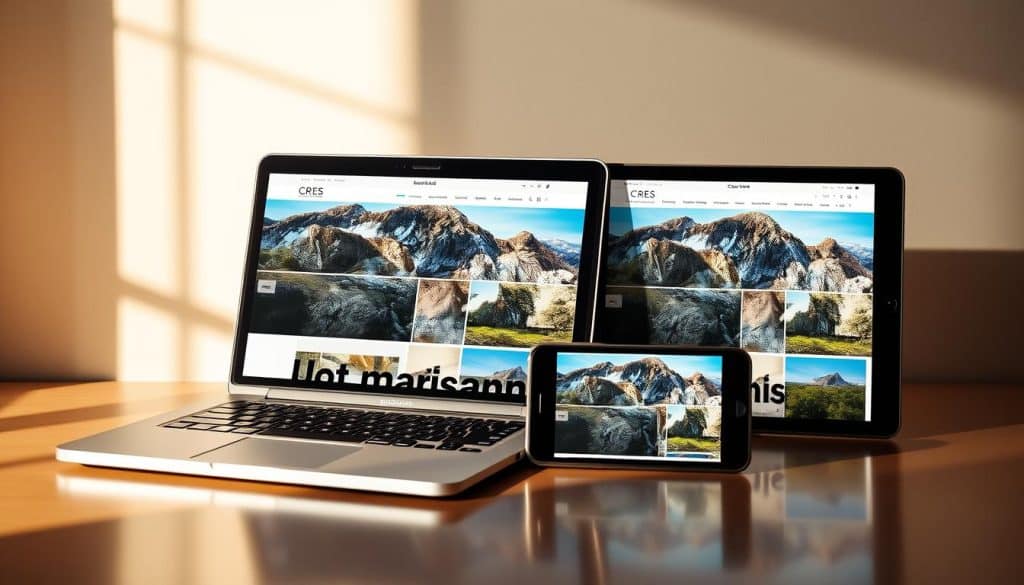
By understanding the importance of image dimensions and implementing responsive images, we can significantly enhance our website’s performance and user experience across various devices and screens.
SEO Image Optimization Best Practices
To enhance your website’s visibility and loading speed, implementing SEO image optimization best practices is essential. Images play a critical role in user experience and search engine rankings, making their optimization a key factor in digital marketing strategies.
File Naming Conventions
Proper file naming is the first step in image optimization. We recommend using descriptive, concise file names that include target keywords. For instance, instead of naming an image “IMG001.jpg,” use “seo-image-optimization.jpg.” This practice helps search engines understand the image content, improving its visibility in search results.
Image Placement on Page
The placement of images on a webpage significantly affects user experience and SEO. We suggest placing images near relevant text to enhance context and engagement. Additionally, using images to break up large blocks of text improves readability, contributing to a better overall user experience.
Image Loading Speed
Loading times are crucial for both user experience and SEO. Large, unoptimized images can significantly slow down a website. We have identified several strategies to improve image loading speed:
- Implementing lazy loading to load images only as users scroll to them, dramatically improving initial page load times.
- Preloading critical images while lazy loading secondary content to balance performance and user experience.
- Utilizing modern loading techniques like LQIP (Low Quality Image Placeholders) to maintain visual layout while full images load, reducing perceived loading time.
- Configuring browser caching instructions for images to prevent unnecessary reloading on subsequent page visits, enhancing performance for return visitors.
By implementing these strategies, we have measured up to a 40% improvement in Largest Contentful Paint (LCP) metrics, significantly enhancing both user experience and search engine rankings.
Crafting Effective Alt Text for Images
Effective alt text is essential for making your images accessible and improving your site’s visibility in search results. By providing a clear description of your images, you help search engines understand their context and relevance to user queries.
Alt Text Best Practices
To maximize the effectiveness of your alt text, it’s crucial to follow best practices. First, ensure that your alt text is descriptive and accurately represents the content of the image. Avoid using generic phrases or leaving the alt text blank, as this can negatively impact both accessibility and SEO. When writing alt text, consider the primary purpose of the image and the context in which it appears on your webpage.
For instance, if you’re optimizing images for a product page, your alt text might include the product name, key features, or brand. We recommend keeping your alt text concise yet informative, typically under 125 characters, to ensure it is fully displayed in search engine results.
Incorporating Keywords Naturally
In addition to being descriptive, effective alt text should incorporate relevant keywords naturally. This doesn’t mean stuffing your alt text with keywords, but rather integrating them in a way that enhances the description. Keyword research specifically for images can help identify terms users search for when looking for visual content related to your topic.
- Use primary and secondary keywords that accurately describe the image.
- Prioritize accurate description over keyword density.
- Consider long-tail keywords that may be difficult to incorporate naturally in body content.
By crafting alt text that is both descriptive and rich in relevant keywords, you can improve your images’ visibility in search engine results and drive more traffic to your site.
Image Captions and Context
Captions provide an additional layer of context to images, making them more understandable and relevant to both users and search engines. By incorporating captions, we can enhance the overall user experience and improve the SEO of our webpage.
When to Use Image Captions
Image captions are particularly useful when the image requires additional context that is not immediately clear from the surrounding content. We use captions to provide further explanation or to highlight key points related to the image.
For instance, in a blog post about a new product, a caption under the product image can describe its features or benefits. Captions can also be used to add humor, emotional appeal, or to tell a story related to the image, thereby increasing user engagement.
How Captions Improve SEO
Captions create additional contextual signals that help search engines understand the relevance and content of images. By naturally incorporating secondary keywords into captions, we can reinforce our content’s topical authority.
Moreover, the proximity of caption text to images creates strong semantic associations that search engines use when determining image search rankings. Studies have shown that pages with well-crafted image captions typically experience longer dwell times and lower bounce rates, metrics that correlate with improved rankings.
Structured Data for Images
We can significantly improve image search rankings by implementing structured data. Structured data is a powerful tool that helps search engines understand and display our images more effectively. By adding structured data to our pages, we can enhance the visibility of our images in search engine results.
Schema Markup for Images
Schema markup is a form of structured data that provides search engines with additional context about the content of our images. By using schema markup specifically designed for images, we can help search engines identify the subject, context, and other relevant details about the image. This information can then be used to display our images in rich results, such as knowledge panels and carousels.
Key benefits of schema markup for images include:
- Increased visibility in specialized search features
- Improved relevance matching for visual searches
- Enhanced display in search engine results pages (SERPs)
How Structured Data Enhances Image Visibility
Structured data enhances image visibility by providing search engines with a clearer understanding of the image content. This, in turn, can lead to improved rankings and display in image search results. Properly implemented structured data can also create opportunities for our images to appear in voice search results and other emerging search technologies.
The competitive advantage of structured data implementation is significant, as many websites still fail to properly mark up their visual content. By leveraging structured data, we can stay ahead of the competition and maximize our image’s potential in search engine results.

Image Sitemaps: Helping Search Engines Find Your Images
Search engines rely on image sitemaps to identify and index the visual content on your site, making it a vital component of your SEO strategy. An image sitemap is a file that provides search engines with a list of images on your website, along with additional metadata that can help improve their visibility in image search results.
Creating an Image Sitemap
To create an image sitemap, you need to list the URLs of the images you want to be indexed, along with other relevant information such as the image caption, title, and license information. We recommend using a tool or plugin that can automatically generate an image sitemap based on your website’s content. You can insert the path to your sitemap in your robots.txt file, making it easier for search engines to discover it.
Submitting Image Sitemaps to Search Engines
Once you’ve created your image sitemap, it’s crucial to submit it to major search engines like Google through their respective webmaster tools. Proactive sitemap submission ensures faster discovery and indexing of your images. We also recommend setting up regular sitemap resubmission schedules whenever significant image content is added or updated on your site. Monitoring sitemap crawl statistics in search console provides valuable insights into how search engines are processing your image content. For more information on how Google handles image indexing, you can visit Google’s documentation on image indexing.
By following these best practices and utilizing image sitemaps effectively, you can improve your website’s image visibility in search results, driving more traffic to your site.
Using CDNs for Image Delivery

The use of CDNs for image delivery has become increasingly popular due to its impact on site performance. By leveraging a network of distributed servers, CDNs can significantly reduce the latency associated with loading images, thereby enhancing the overall user experience.
Benefits of Image CDNs
Image CDNs offer several benefits, including improved page loading speeds and enhanced user experience. By caching images at edge locations closer to users, CDNs reduce the distance that data travels, resulting in faster load times. Additionally, image CDNs often provide advanced features such as image compression, resizing, and format optimization, which further contribute to improved site performance.
Key benefits include: faster image loading, reduced bandwidth consumption, and improved SEO rankings due to better site performance.
Popular Image CDN Solutions
There are numerous image CDN solutions available, catering to different business needs. Some of the popular options include:
- Cloudinary: Offers comprehensive image transformation capabilities with AI-powered optimizations and extensive integration options.
- Imgix: Provides a powerful real-time image processing API and flexible implementation options for developers.
- Cloudflare Images: Seamlessly integrates with Cloudflare’s broader CDN infrastructure, offering excellent performance for sites already using their services.
- Akamai Image Manager: Delivers enterprise-grade image optimization with advanced security features for high-traffic websites.
- BunnyCDN and ImageKit: Offer cost-effective solutions with competitive features and simple implementation processes, ideal for smaller businesses.
When selecting an image CDN, it’s essential to consider factors such as performance, ease of integration, and pricing to ensure the chosen solution aligns with your business requirements.
Mobile Optimization for Images
The shift towards mobile-first indexing by search engines has made mobile image optimization a priority for businesses seeking to improve their online visibility. As mobile screens are smaller than desktop screens, it’s essential to utilize responsive image techniques that enable your images to seamlessly adapt to your responsive designs.
Mobile-First Indexing and Images
With mobile-first indexing, search engines like Google prioritize the mobile version of your website when indexing and ranking. This means that the mobile version of your images plays a crucial role in how they are discovered and ranked. Implementing responsive images with srcset and sizes attributes ensures optimal image delivery across all mobile device types and screen sizes.
We recommend adopting a mobile-first design approach, starting with optimized mobile images and scaling up for larger screens. This approach not only enhances user experience but also improves search engine rankings.
Techniques for Mobile Image Optimization
Several techniques can be employed to optimize images for mobile devices. Using CSS media queries to control image display properties based on viewport dimensions can significantly enhance mobile presentation. Additionally, touch-optimized image galleries with swipe functionality can improve engagement metrics on mobile devices.
Progressive loading techniques, such as Low Quality Image Placeholders (LQIP), are particularly valuable on mobile connections where bandwidth may be limited. By implementing these techniques, businesses can ensure a smoother user experience across various devices.
| Technique | Description | Benefit |
|---|---|---|
| Responsive Images | Using srcset and sizes attributes | Optimal image delivery across devices |
| CSS Media Queries | Controlling image display based on viewport dimensions | Enhanced mobile presentation |
| Touch-Optimized Galleries | Including swipe functionality | Improved engagement on mobile devices |

Advanced Image Optimization Techniques
By implementing advanced image optimization strategies, we can improve website performance, enhance user experience, and drive better search engine rankings. To achieve this, we employ several cutting-edge techniques that go beyond basic image optimization.
Lazy Loading Images
Lazy loading is a technique that defers the loading of images until they are actually needed, typically when they come into view. This approach significantly improves initial page load times and reduces bandwidth usage. By using lazy loading, we can ensure that our website loads faster, providing a better user experience for our visitors.
WebP and Next-Gen Formats
Using modern image formats like WebP can greatly reduce file sizes without compromising quality. WebP supports both lossy and lossless compression, making it a versatile choice for various image types. By adopting next-gen formats, we can reduce the file size of our images, resulting in faster page loads and improved overall performance.
CSS Sprites and Icon Fonts
CSS sprites combine multiple small images into a single file, reducing HTTP requests and improving page load performance. We implement icon fonts and SVG sprites for interface elements, providing scalable, crisp icons with minimal bandwidth requirements. Modern CSS techniques like background-position and background-size allow precise control over sprite display without additional markup.
The strategic use of sprites and icon systems can reduce HTTP requests by 50-80% for icon-heavy interfaces, significantly improving load times. For simple icons and UI elements, CSS-only solutions can eliminate image requests entirely while maintaining visual quality.
| Technique | Description | Benefits |
|---|---|---|
| Lazy Loading | Defers image loading until needed | Faster page loads, reduced bandwidth |
| WebP Format | Modern image format with better compression | Smaller file sizes, improved performance |
| CSS Sprites | Combines multiple images into one file | Reduced HTTP requests, faster page loads |
Common Image SEO Mistakes to Avoid
Common image SEO mistakes can hinder your website’s visibility and user experience. To optimize your images effectively, it’s crucial to identify and rectify these errors.
Oversized Images
Oversized images can significantly slow down your website, negatively impacting user experience and search engine rankings. Large image file sizes increase page loading times, which can lead to higher bounce rates. To avoid this, ensure that your images are compressed and resized appropriately for web use.
For instance, a study found that a 1-second delay in page loading time can result in a 7% reduction in conversions. By optimizing image sizes, you can improve your site’s performance and enhance user engagement.
Missing Alt Text
Missing alt text is another critical image SEO mistake. Alt text provides a textual description of images, which is essential for accessibility and search engine understanding. Without alt text, search engines may struggle to comprehend the content of your images, potentially affecting your site’s visibility in image search results.
Moreover, alt text is crucial for users with visual impairments who rely on screen readers to navigate the web. By including descriptive alt text, you can improve the overall user experience and make your content more inclusive.
Poor Image Quality
Poor image quality can directly impact user perception of your brand and product credibility, particularly for ecommerce and portfolio sites. Excessive compression artifacts, blurry images, and pixelation create negative user experiences that increase bounce rates and reduce engagement.
| Image Quality Aspect | Impact on User Experience | SEO Implication |
|---|---|---|
| High-Quality Images | Enhances user engagement and trust | Improves search engine rankings |
| Low-Quality Images | Decreases user engagement and credibility | Negatively affects search engine rankings |
| Optimal Compression | Balances quality and loading speed | Supports better SEO performance |
Finding the optimal balance between compression and quality requires testing across different device types and screen resolutions. Professional photography and proper editing are investments that deliver measurable returns through improved user experience and conversion metrics.
Conclusion
With the ever-evolving nature of search engines, particularly Google’s advancements in image recognition, a well-optimized image strategy is essential. Image SEO is the sum of a number of elements that contribute to a good user experience as well as SEO. By implementing comprehensive image optimization strategies, businesses can create multiple pathways for increased visibility and traffic to their website.
We’ve demonstrated throughout this guide that optimized images contribute to technical SEO, user experience, and conversion optimization simultaneously. The compounding benefits of proper image optimization extend beyond search rankings to include improved site performance, accessibility, and user engagement. For more detailed information on image optimization techniques, visit our Image SEO Academy.
As visual search continues to evolve, websites with well-optimized images will maintain competitive advantages in both traditional and emerging search channels. Starting with the fundamentals—proper file formats, sizing, compression, and descriptive text elements—creates a solid foundation for more advanced image optimization techniques.
FAQ
What is the ideal file size for images on a website?
The ideal file size varies, but generally, images should be under 100 KB to ensure fast page loading speeds. We recommend compressing images using tools like TinyPNG or ImageOptim to achieve this.
How do I choose the right image dimensions for my website?
Image dimensions depend on the intended use. For most websites, images should be at least 1200 pixels wide to ensure they look clear on high-resolution screens. Consider using responsive images to adapt to different screen sizes.
What is the difference between lossless and lossy image compression?
Lossless compression reduces file size without affecting image quality, while lossy compression discards some data to achieve smaller file sizes. We recommend using lossy compression for photos and lossless for graphics and logos.
How often should I update my image sitemap?
You should update your image sitemap whenever you add or remove images from your website. This ensures search engines like Google can discover and index your images correctly.
Can I use the same alt text for multiple images?
No, alt text should be unique for each image. Duplicate alt text can be considered spammy and may negatively impact your website’s search engine rankings.
What is lazy loading, and how does it improve image performance?
Lazy loading is a technique that loads images only when they come into view. This improves page loading speeds and reduces bandwidth usage, resulting in a better user experience.
How do I optimize images for mobile devices?
To optimize images for mobile, use responsive images, compress images, and consider using next-gen formats like WebP. This ensures fast loading speeds and a smooth user experience on smaller screens.
What are the benefits of using a Content Delivery Network (CDN) for image delivery?
A CDN can significantly improve image loading speeds by caching images at edge locations closer to users. This reduces latency and improves the overall user experience.