
Are you leveraging video content to drive business growth, but struggling to measure its true impact?
With video metrics becoming increasingly crucial in digital marketing strategies, understanding what to measure is key to maximizing return on investment.
As 91% of businesses now use video as a key part of their marketing strategy, it’s clear that this medium has become essential for attracting and retaining new customers.
To ensure your video content drives growth, you need to focus on the right metrics that matter most.
Key Takeaways
- Understand the critical video marketing metrics that drive business growth.
- Learn how to measure the true impact of your video content.
- Discover how to optimize your video strategy for maximum ROI.
- Explore the key video metrics every marketer should monitor.
- Find out how to refine your video strategy for measurable results.
Understanding the Importance of Video Marketing Metrics

Video marketing metrics are the backbone of any successful video marketing strategy, providing insights that drive decision-making. In today’s digital landscape, businesses in Qatar and beyond are leveraging video content to engage their audiences and drive growth.
Measuring video performance is no longer optional; it’s essential for understanding what resonates with your audience and drives business results. Video metrics provide crucial insights that help marketers optimize content, allocate resources effectively, and justify marketing investments.
Why Measuring Video Performance Matters
Without proper measurement, marketers are essentially operating in the dark, unable to determine which videos are performing well and which need improvement. Key performance indicators for video allow businesses to establish benchmarks, set realistic goals, and track progress over time.
| Metric | Description | Importance |
|---|---|---|
| View Count | Total number of views | Initial indicator of video reach |
| Engagement Rate | Likes, comments, shares | Measures audience interaction |
| Watch Time | Total time spent watching | Indicates content relevance |
By tracking video performance metrics, marketers can identify patterns and trends that inform future content creation and distribution strategies. Understanding which metrics matter most for your specific business objectives ensures you’re focusing on data that drives meaningful outcomes rather than vanity metrics.
Audience Reach and Awareness Metrics
To gauge the effectiveness of your video marketing efforts, it’s essential to track audience reach and awareness metrics. These metrics provide a foundational understanding of how your content is being consumed and help in optimizing your marketing strategy.
View Count: More Than Just a Number
View count is a basic yet crucial metric that indicates the number of times your video has been watched. Different platforms have varying criteria for what constitutes a view. For instance, YouTube counts a view after 30 seconds of intentional watching, while Facebook and Instagram count views after just 3 seconds. Understanding these differences is key to accurately comparing performance across platforms.
For example, a video on YouTube might have 1,000 views, but on Facebook, it might have 1,500 views. This discrepancy doesn’t necessarily mean the video is more popular on Facebook; it could be due to the differing view count criteria.
Impressions and Reach
Impressions measure how many times your video thumbnail or preview appears in feeds, giving insight into your potential audience size versus actual viewers. A high number of impressions with low views might indicate that your thumbnail or title isn’t compelling enough to encourage clicks.
Analyzing impressions alongside views helps in understanding the effectiveness of your video’s presentation and can guide adjustments to improve click-through rates.
Traffic Sources: Where Your Viewers Come From
Understanding traffic sources is vital for optimizing your video distribution and promotional strategies. By analyzing where your viewers come from—whether through organic search, social media, direct links, or paid advertising—you can allocate your marketing resources more effectively.
For instance, if a significant portion of your traffic comes from social media, it might be beneficial to focus more on social media marketing. For more insights on measuring video marketing success, you can refer to our detailed guide on key metrics to track.
| Metric | Description | Importance |
|---|---|---|
| View Count | Number of times a video is watched | Indicates initial appeal and reach |
| Impressions | Number of times a video thumbnail appears | Helps evaluate thumbnail and title effectiveness |
| Traffic Sources | Channels driving viewers to your content | Guides distribution and promotional strategies |
Engagement Metrics That Reveal Viewer Interest
Engagement metrics offer a deeper understanding of how your audience interacts with your video content. While reach metrics tell you how many people saw your video, engagement metrics reveal how they interacted with it, providing valuable insights into their interests and preferences.
Play Rate: Getting Viewers to Press Play
The play rate measures the percentage of people who click play after seeing your video thumbnail. According to Wistia’s research, play rates vary significantly by video length: videos under 1 minute have a 23% play rate, 1-3 minutes have 12%, 3-5 minutes have 17%, 5-30 minutes have 35%, 30-60 minutes have 50%, and videos over 60 minutes have a 58% play rate. This metric is crucial for evaluating the effectiveness of your video’s presentation and thumbnail. A high play rate indicates that your thumbnail and title are compelling, encouraging viewers to play your video.
Social Engagement: Likes, Comments, and Shares
Social engagement metrics, including likes, comments, and shares, indicate how compelling your audience finds your content. These interactions not only reflect viewer interest but also contribute to your video’s visibility on social media platforms. Comments, in particular, provide qualitative feedback, offering insights into viewer opinions and questions. High engagement rates often correlate with algorithm favorability on platforms like YouTube and TikTok, potentially increasing organic reach.
Audience Retention: Keeping Viewers Watching
Audience retention shows how long viewers stay engaged with your content, helping identify exactly where interest peaks or drops off. By analyzing audience retention, you can understand which parts of your videos generate the most engagement and optimize future content for maximum impact. For more insights on optimizing your video marketing strategy, you can explore additional resources such as key video marketing metrics.
Essential Video Marketing Metrics to Track for Campaign Success
As we dive into the world of video marketing, it becomes evident that certain metrics are pivotal for campaign success. To gauge the effectiveness of video marketing efforts, we need to focus on key performance indicators that reveal viewer engagement, content relevance, and overall campaign impact.
Watch Time and Average View Duration
Watch time has become a critical metric for video success, directly influencing algorithm visibility on major platforms. We recognize that maintaining viewer interest throughout the video is crucial. Average view duration helps marketers understand if their content loses viewers at specific points or maintains interest throughout. According to Wistia’s State of Video report, engagement rates vary significantly by video length: videos under 1 minute have a 50% engagement rate, while those over 60 minutes have a 17% engagement rate.
- Watch time is a key indicator of content relevance and engagement.
- Average view duration helps identify drop-off points in videos.
Completion Rate: Viewers Who Finish Your Videos
The completion rate measures the percentage of viewers who watch your entire video, serving as a strong indicator of content quality and relevance. High completion rates often correlate with higher conversion rates, making this metric particularly valuable for marketing videos. Data from Wistia shows that completion rates were highest for videos of 1 minute or less (66%) and averaged over 50% for videos of 1-2 minutes.
- Completion rate is a direct indicator of content quality.
- High completion rates are associated with higher conversion rates.
Bounce Rate and Its Impact on Video Performance
Bounce rate in video marketing refers to viewers who leave shortly after starting your video, indicating potential issues with content relevance or quality. A high bounce rate can negatively impact video performance, suggesting that the content does not meet viewer expectations. Analyzing bounce rate alongside other metrics like watch time and completion rate provides a comprehensive picture of video engagement.
- Bounce rate indicates initial viewer engagement.
- A high bounce rate may signal content relevance issues.
By tracking these essential video marketing metrics, we can gain a deeper understanding of our audience’s preferences and optimize our content strategy for better campaign performance.
Conversion-Focused Video Metrics
In the realm of video marketing, conversion-focused metrics are the linchpin that connects video performance to business outcomes. We understand that ultimately, video marketing must drive business results—conversion metrics connect video performance directly to business outcomes.
Click-Through Rate (CTR): Driving Action
Click-through rate (CTR) measures how effectively your video prompts viewers to take the next step in your marketing funnel. According to Wistia’s findings, videos that run over five minutes often see higher conversions and click-through rates (CTRs). Strategic placement of calls-to-action within videos significantly impacts CTR—data shows the first and final quarters of videos generate the highest response rates.
Conversion Rate: Turning Viewers into Customers
Conversion rate tracks the percentage of viewers who complete desired actions after watching your video, such as making a purchase, signing up, or requesting information. Different types of conversion opportunities (email capture forms, CTAs, annotation links) perform differently—testing various approaches helps optimize results. For instance, email capture forms have the highest conversion rate at 23%, followed by CTAs at 13% and annotation links at 1%.
| Conversion Opportunity | Conversion Rate |
|---|---|
| Email Capture Forms | 23% |
| CTAs | 13% |
| Annotation Links | 1% |
ROI: Measuring the Business Impact of Video
Return on Investment (ROI) calculations for video marketing should account for both production costs and distribution expenses against revenue generated. Attribution modeling helps determine which videos in your marketing funnel contribute most significantly to final conversions. By measuring ROI, we can directly demonstrate the business value of video marketing efforts, making them essential for securing continued investment in video content.
By focusing on these conversion-focused video metrics, we can optimize our video marketing strategies to drive business growth and achieve measurable results.
Platform-Specific Video Metrics
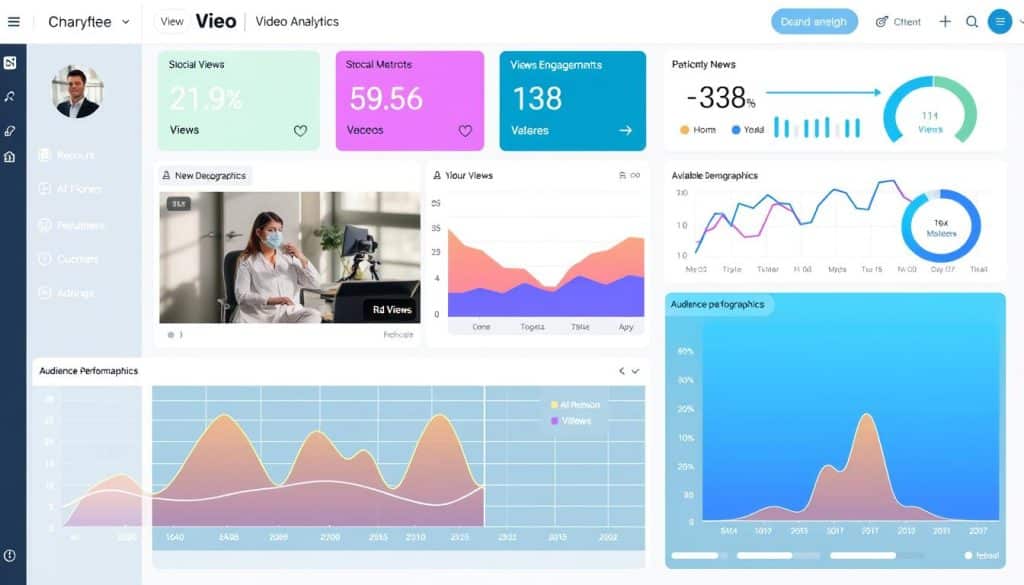
The effectiveness of video marketing campaigns depends heavily on understanding platform-specific video metrics. Different platforms employ varying methodologies for measuring video performance, impacting how success is defined and how you optimize your strategy.
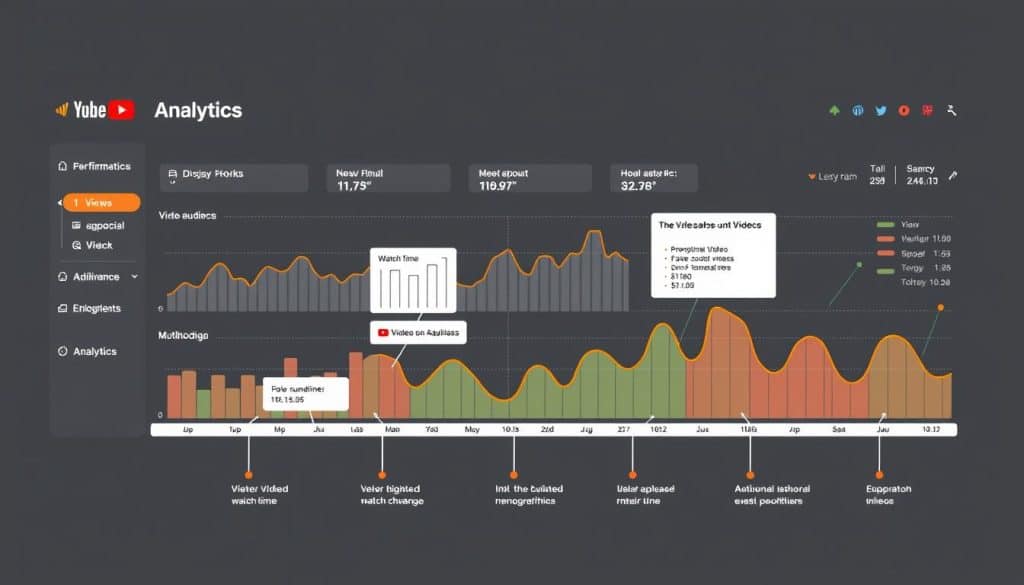
YouTube Analytics Essentials
Social Media Video Performance Metrics
Website Video Engagement Tracking
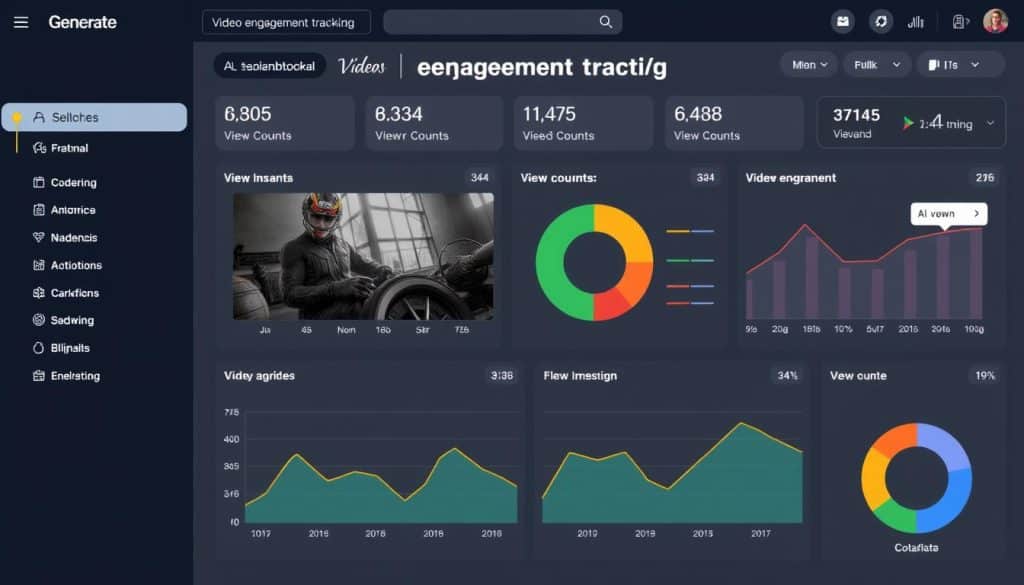
By understanding and leveraging platform-specific video metrics, we can refine our video marketing strategy, improve engagement, and drive conversions. Whether it’s YouTube, social media, or our website, each platform offers unique opportunities to connect with our audience and achieve our marketing goals.
Technical Video Performance Metrics
The technical aspects of video performance significantly impact viewer engagement and overall campaign success. Technical performance forms the foundation for all other video metrics—if viewers can’t watch your video smoothly, content quality becomes irrelevant.
Device Type Analytics: Where People Watch
Device type analytics reveal whether your audience primarily watches on mobile, desktop, or other devices, informing production and formatting decisions. Mobile viewership continues to dominate across most platforms, making mobile-optimized video essential for success. By understanding device preferences, we can tailor our content to better suit our audience’s viewing habits.
Video Quality and Loading Speed Metrics
Video quality metrics track resolution selection and buffering issues that may interrupt the viewing experience. Loading speed directly impacts play rates and abandonment—viewers typically abandon videos that take more than 2 seconds to load. Ensuring fast loading speeds and high video quality is crucial for maintaining viewer engagement.
Playback Locations: Optimizing Video Distribution
Playback location data shows whether viewers are watching embedded videos on your website, directly on platforms like YouTube, or through shares on social media. Understanding these metrics helps us optimize our video distribution strategy. For instance, if a significant portion of our audience watches on YouTube, we may focus on optimizing our YouTube presence.
To further enhance our video marketing strategy, we can explore effective paid media to amplify our online presence.
By analyzing technical video performance metrics, we can identify areas for improvement and optimize our video content for better engagement and conversion.
Turning Video Metrics into Actionable Insights
Turning video metrics into actionable insights is the key to unlocking the full potential of your video marketing strategy. By analyzing the data collected from your video campaigns, you can make informed decisions that drive growth and improvement.
Identifying Patterns and Trends
Identifying patterns and trends across multiple videos and campaigns is crucial. It reveals what consistently works for your specific audience, allowing you to refine your strategy. Regular analysis helps in understanding viewer behavior and preferences.
A/B Testing Video Content
A/B testing different elements of your video content, such as thumbnails, intros, or CTAs, provides concrete data to guide optimization efforts. According to research, 31% of businesses use A/B testing to compare video elements like music or length.
| Testing Element | Percentage of Businesses |
|---|---|
| Video Elements (Music, Length) | 31% |
| CTA Placement/Wording | 26% |
Setting Benchmarks and Goals
Setting realistic benchmarks based on industry standards and your historical performance is essential. It establishes a meaningful context for evaluation and helps in setting achievable goals that align with your broader marketing objectives.
By systematically turning data into actionable insights, you ensure that your video marketing efforts drive continuous improvement and support your overall business strategy.
Conclusion: Building a Data-Driven Video Marketing Strategy
In the ever-evolving world of video marketing, staying ahead requires a deep dive into performance metrics and data analysis. We’ve established that successful video marketing requires a strategic, data-driven approach guided by the right metrics at each stage of the customer journey.
To maximize impact, different video formats, such as product demos and educational content, require tailored measurement approaches. By integrating video metrics into your broader marketing analytics framework, you ensure that your video marketing strategy aligns with and supports overall business goals.
As video marketing continues to dominate social media and content marketing, sophisticated measurement becomes increasingly important for competitive advantage. By focusing on the right metrics and using them to inform your strategy, you’ll create more effective content that drives measurable business results.
FAQ
What are the most important video performance metrics for measuring campaign success?
We consider watch time, average view duration, completion rate, and click-through rate as crucial metrics for evaluating the effectiveness of our video campaigns.
How do I measure the ROI of my video content?
To measure ROI, we analyze the conversion rate generated by our video content, comparing the revenue generated against the cost of producing and distributing the content.
What is the significance of audience retention in video marketing?
Audience retention helps us understand how well our content resonates with the target audience, identifying points where viewers drop off, and enabling us to optimize our content for better engagement.
How can I improve the click-through rate of my video content?
We optimize our video thumbnails, titles, and descriptions to make them more compelling, and ensure that our calls-to-action are clear and prominent, driving viewers to take the desired action.
What are the key YouTube analytics metrics that I should focus on?
We closely monitor view count, watch time, audience retention, and earnings to gauge the performance of our YouTube videos and adjust our strategy accordingly.
How do I track the performance of my video content on social media platforms?
We use platform-specific analytics tools to monitor engagement metrics such as likes, comments, shares, and reactions, helping us refine our content and distribution strategy.
What is the ideal watch time for a video, and how can I achieve it?
While the ideal watch time varies depending on the content and audience, we aim to create engaging, concise content that resonates with our viewers, and optimize our video length and format accordingly.
How can I use A/B testing to improve my video content’s performance?
We create multiple versions of our video content, varying elements such as thumbnails, titles, or calls-to-action, and compare their performance to identify the most effective approach.