

Did you know that a significant 43% of businesses don’t track their website’s SEO performance? This oversight can lead to missed opportunities in search engine rankings and visibility. At our company, we understand the importance of optimizing your online presence.
Search Engine Optimization (SEO) is crucial for helping search engines understand your content and aiding users in finding your site. With the ever-evolving digital landscape, testing your site’s SEO is vital for staying competitive.
We’ll guide you through a systematic approach to testing your website’s SEO, enabling you to make data-driven decisions and track the impact of your optimization efforts. By the end of this guide, you’ll be equipped to implement effective SEO tests that deliver meaningful insights.
Key Takeaways
- Understand the comprehensive process of testing your website’s SEO performance.
- Make data-driven decisions rather than relying on assumptions or outdated SEO practices.
- Measure the actual impact of your optimization strategies.
- Apply a systematic approach to SEO testing suitable for websites of any size.
- Analyze results to implement effective SEO tests.
Understanding SEO Testing and Its Importance
To maximize your website’s visibility, it’s essential to understand the role of SEO testing. SEO testing is a critical component of any digital marketing strategy, allowing you to measure the impact of changes on your website’s search engine rankings.

What Is SEO Testing?
SEO testing involves making controlled changes to your website and measuring their impact on search engine rankings and traffic. It’s a data-driven approach to understanding what works and what doesn’t for your website’s SEO. By testing different elements, you can gain valuable insights into how search engines perceive your site.
Why SEO Testing Matters for Your Website
SEO testing matters because it helps you make informed decisions about your website’s optimization strategy. By understanding how different changes affect your site’s performance in search results, you can refine your approach to improve visibility and drive more traffic. This is particularly important in competitive markets where small advantages can significantly impact your online presence.
When to Implement SEO Testing
SEO testing is particularly valuable when you’re considering significant changes to your website structure, content strategy, or technical SEO elements. It’s also crucial when you’re trying to recover from a traffic drop or attempting to break through a ranking plateau for important keywords. Regular testing schedules, such as quarterly or bi-annually, help ensure your SEO strategy stays effective as search algorithms and user behaviors evolve.
Types of SEO Tests You Can Run
To enhance your website’s SEO, it’s essential to understand the different types of SEO tests you can run. These tests help you identify areas for improvement and measure the effectiveness of your optimization strategies. In this section, we’ll explore three primary types of SEO tests: Serial Testing, Time-Based Testing, and A/B Testing.
Serial Testing: Sitewide Changes
Serial testing involves making sitewide changes and measuring their impact over time. This approach can be time-consuming and risky, as it affects all pages on your website. If the changes have a negative impact on SEO, it could be detrimental to your site’s overall performance. Serial testing is typically used when you need to implement significant changes across your entire website.
Time-Based Testing: Single Page Analysis
Time-Based Testing focuses on analyzing a single page or a small set of pages over a specific period. This method can be useful for understanding how changes to a particular page affect its performance. However, it may not account for external factors like seasonality or algorithm updates that can influence your results. To get meaningful insights from Time-Based Testing, it’s crucial to control for these variables.
A/B Testing: The Recommended Approach
A/B testing, also known as split testing, is a more reliable and efficient method for SEO testing. It involves creating a control group and a variant group of similar pages. By comparing the performance of these two groups, you can isolate the impact of specific changes and determine their effectiveness. We recommend A/B testing because it minimizes risk by limiting experimental changes to a subset of pages, while maintaining a control group as a baseline for comparison.
A/B testing offers several benefits, including:
- Allowing you to test multiple variables over time, building a comprehensive understanding of what works for your specific website and audience.
- Helping to control for external variables like seasonality, algorithm updates, and market changes.
- Enabling you to establish statistical significance and make data-driven decisions about which SEO changes to implement more broadly.

Is SEO Testing Right for Your Website?
Determining whether SEO testing is suitable for your website involves evaluating several key factors. SEO testing can significantly impact your business if your website receives substantial traffic.
If your website gets plenty of traffic, improving rankings or increasing traffic by a small percentage can have a considerable impact on your business. This is where SEO testing makes sense.
Traffic Requirements for Meaningful Results
To achieve meaningful results from SEO testing, your website needs sufficient traffic. Without adequate traffic, it can be challenging to gather reliable data. We recommend assessing your website’s traffic levels before initiating any testing.
| Traffic Level | Testing Suitability |
|---|---|
| High Traffic | Highly Suitable |
| Moderate Traffic | Suitable with Caution |
| Low Traffic | Less Suitable |
Resource Considerations for Testing
Effective SEO testing requires dedicated resources, including technical expertise, analytics capabilities, and time for implementation and analysis. Organizations should weigh the resource investment against the potential return, especially for high-traffic websites where even small improvements can be significant.
We’ll help you assess whether your organization has the necessary resources to conduct meaningful SEO tests and how to allocate them effectively. For resource-constrained organizations, we’ll suggest streamlined approaches to still obtain valuable insights.
How to Test Your Website SEO: The 7-Step Process
A well-structured SEO testing process can significantly boost your website’s performance in search engine results. To achieve this, we follow a systematic approach that ensures reliable and actionable insights.
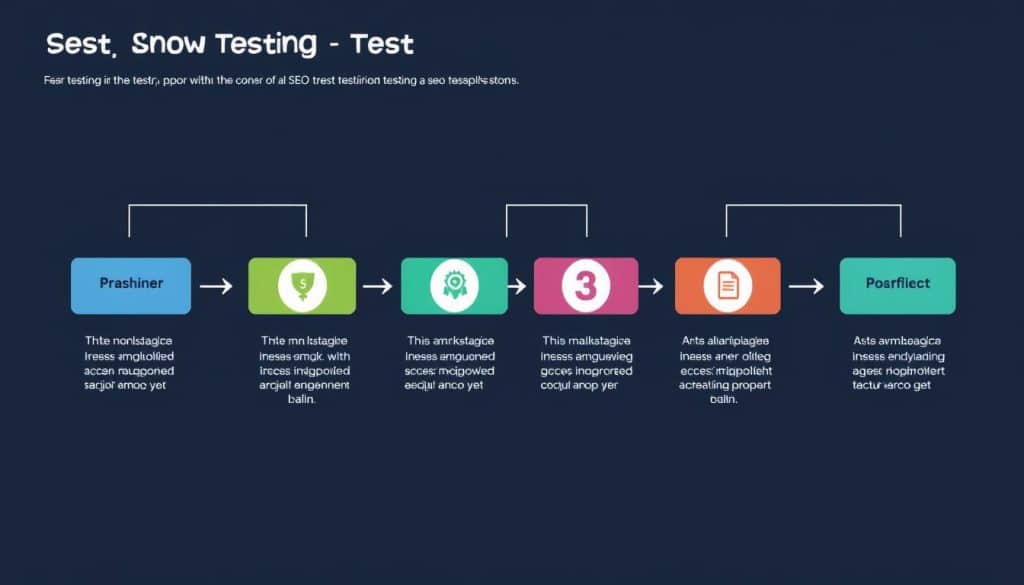
Step 1: Forming a Clear Hypothesis
The first step in our SEO testing process is to formulate a clear hypothesis. This involves identifying a specific SEO element you want to test, such as title tags or meta descriptions, and predicting how changing it will impact your website’s performance.
Step 2: Selecting Pages with Sufficient Traffic
To ensure that your test results are statistically significant, you need to select pages with sufficient traffic. We recommend choosing pages that receive a substantial number of visitors to guarantee reliable data.
Step 3: Creating Control and Variant Groups
Once you’ve selected the pages to test, you’ll need to create control and variant groups. The control group remains unchanged, while the variant group includes the modifications you’re testing. This allows you to compare the performance of both groups and determine the impact of your changes.
Step 4: Determining Test Duration
The duration of your SEO test depends on several factors, including the volume of traffic and the type of changes you’re testing. We suggest running tests for a duration that captures a representative sample of user behavior.
Step 5: Setting Up Result Tracking
To accurately measure the outcome of your SEO test, you need to set up result tracking using tools like Google Analytics or Google Search Console. This enables you to monitor key metrics, such as traffic and rankings, and compare the performance of your control and variant groups.
Step 6: Implementing Your Test
With your test setup complete, it’s time to implement your test. Ensure that you’ve correctly configured your test environment and that your tracking is working as expected.
Step 7: Analyzing the Results
The final step is to analyze the results of your SEO test. Compare the performance metrics between your control and variant groups to determine whether your hypothesis was supported by the data. Use tools like Google Search Console or a rank tracking tool to evaluate the outcome of your test.
When analyzing your test results, consider factors such as statistical significance and primary and secondary metrics. This will help you understand the impact of your changes and make informed decisions about future SEO strategies.
Essential SEO Elements to Test
To improve your website’s search engine ranking, you need to test and optimize various SEO elements. A well-structured testing plan can significantly enhance your website’s visibility and performance in search results. We will explore the key SEO elements that you should consider testing to maximize your website’s potential.
Title Tags and Meta Descriptions
Title tags and meta descriptions are crucial elements that impact how your website appears in search engine results. Testing different title tag formats and meta description lengths can help you determine the most effective approach for your content. For instance, you can experiment with including target keywords in your title tags and meta descriptions to see if it improves your click-through rates. As discussed in this article, testing meta tags can provide valuable insights into their impact on your website’s search engine ranking.
Content Structure and Organization
The structure and organization of your content play a significant role in enhancing user experience and search engine crawlability. Testing different content formats, such as using headings, subheadings, and bullet points, can help you identify the most effective way to present your content. You can also experiment with varying content lengths to determine the optimal balance between comprehensiveness and readability.
Internal and External Links
Internal and external linking strategies can significantly impact your website’s SEO performance. Testing different internal linking structures can help you understand how to improve user navigation and search engine crawling. Additionally, experimenting with external linking to high-quality sources can enhance your content’s credibility and authority.
Images and Multimedia Optimization
Many people search visually, and images can be how people find your website for the first time. Testing image optimization strategies can reveal significant impacts on both image search traffic and overall page performance in standard search results. You can experiment with different alt text approaches, image placement, and file formats to determine the best practices for your website. For instance, testing different alt text descriptions can help you identify whether descriptive, keyword-rich alt text outperforms basic descriptions for search visibility.
By testing these essential SEO elements, you can gain valuable insights into how to improve your website’s search engine ranking and overall performance. Regular testing and optimization can help you stay ahead of the competition and drive more traffic to your website.
Practical SEO Test Examples
Let’s dive into some real-world SEO test examples that can help you boost your website’s performance. These examples will illustrate how to apply the principles of SEO testing to improve your website’s visibility and drive more traffic.
Testing Title Tag Formulas for Better CTR
Title tags are a crucial element in SEO, and testing different formulas can significantly impact your click-through rate (CTR). For instance, you can test the effectiveness of including numbers, questions, or emotional triggers in your title tags. By analyzing the results, you can identify which title tag formulas resonate best with your audience and adjust your strategy accordingly.
For example, a test might compare the CTR of title tags with and without numbers. The results could show that title tags with numbers have a higher CTR, indicating that including numbers in title tags is an effective strategy.
Content Optimization Testing
Content optimization is another critical area where testing can yield significant benefits. By experimenting with different content structures, formats, and lengths, you can determine what works best for your audience. For example, you might test the impact of using short paragraphs versus long blocks of text or compare the effectiveness of listicles versus in-depth guides.
A well-structured test could involve creating two versions of a piece of content: one with a traditional format and another with a more innovative structure. By comparing their performance, you can gain insights into what engages your audience more effectively.
Featured Snippet Optimization Tests
Ranking in featured snippets can drive more traffic to your website. To test your ability to win featured snippets, identify blog posts that are already ranking in the top 10 for keywords that trigger featured snippets. Then, optimize these posts with snippet-friendly content formats. Using tools like Ahrefs’ Site Explorer, you can find opportunities by filtering for top-ranking posts that lack featured snippets.
| Step | Action | Tool |
|---|---|---|
| 1 | Enter your blog/website into Site Explorer | Ahrefs’ Site Explorer |
| 2 | Go to the Organic Keywords 2.0 report | Ahrefs’ Site Explorer |
| 3 | Filter for top 10 rankings | Ahrefs’ Site Explorer |
| 4 | Filter for keywords that send at least [x] monthly estimated organic traffic | Ahrefs’ Site Explorer |
| 5 | Filter for unowned featured snippets | Ahrefs’ Site Explorer |
| 6 | Export the results | Ahrefs’ Site Explorer |
By implementing structured content designed to address queries more directly, you can increase your chances of capturing featured snippets. This approach not only enhances your visibility but also drives more targeted traffic to your site.
Tools for Effective SEO Testing
Leveraging the best SEO testing tools is crucial for optimizing your website’s performance. The easiest way to do this is to use an SEO testing tool that connects to your Google Search Console account and tracks results for you.
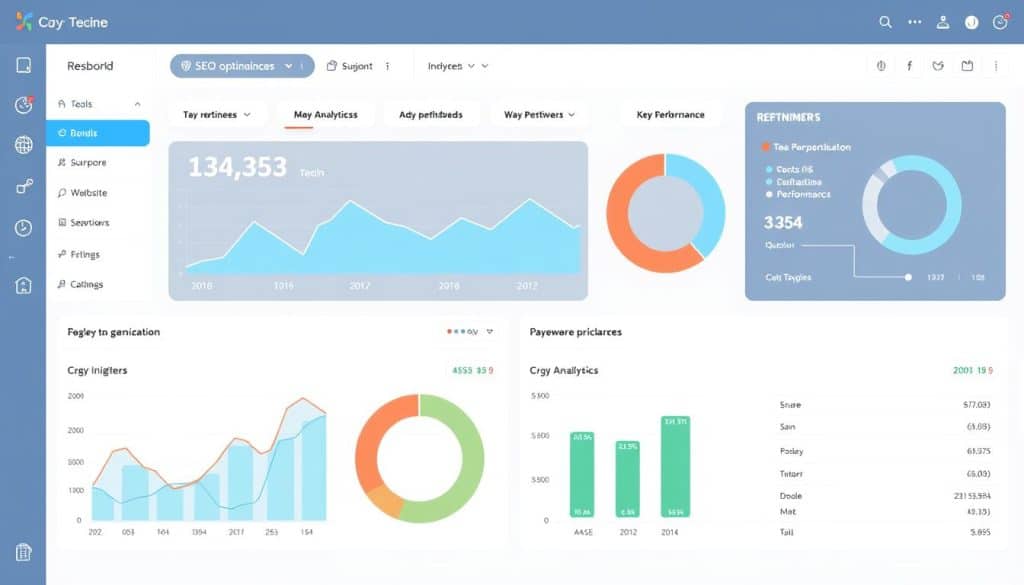
Google Search Console for Testing
Google Search Console is a fundamental tool for SEO testing, providing insights into your website’s search engine performance. It helps you understand how Google crawls and indexes your site, identify issues, and optimize your content.
Rank Tracking Tools
Rank tracking tools are essential for monitoring your website’s position in search engine results pages (SERPs). These tools help you track keyword rankings, analyze competitors, and adjust your SEO strategy accordingly.
Dedicated SEO Testing Platforms
Dedicated SEO testing platforms automate much of the testing process, from page selection to statistical analysis. They provide advanced features like automatic statistical significance calculation and power analysis, ensuring reliable test results. We’ll review specialized tools like SearchPilot, Rankscience, and ClickFlow.
These platforms typically integrate with your existing analytics and search console accounts, providing unified dashboards that combine data from multiple sources.
Common SEO Testing Mistakes to Avoid
SEO testing can be a powerful tool, but only if you avoid common mistakes that can skew your results. When implementing SEO tests, it’s essential to be aware of the pitfalls that can lead to misleading conclusions.
Testing Too Many Variables at Once
Testing multiple variables simultaneously can make it challenging to determine which change is responsible for the observed results. To avoid this, focus on testing one element at a time, ensuring that you can accurately attribute any changes in your website’s traffic to the specific variable being tested.
Insufficient Sample Size
Running SEO tests on a website with low traffic can lead to unreliable results due to an insufficient sample size. Ensure that your website receives sufficient traffic to produce statistically significant results, allowing you to make informed decisions about your SEO strategy.
Ignoring Statistical Significance
Ignoring statistical significance can lead to implementing changes based on random fluctuations rather than genuine improvements. Be cautious of ending tests prematurely and consider the confidence intervals to ensure that your test results are reliable and applicable to your business and website.
Conclusion: Making SEO Testing Part of Your Strategy
By embracing SEO testing as a core component of your digital strategy, you move from following general best practices to developing site-specific optimization approaches that your competitors can’t easily replicate.
Implementing SEO testing as an ongoing strategy rather than a one-time activity creates a culture of continuous improvement and data-driven decision making. This approach allows you to refine your website’s performance on search engines, leading to better search results.
The long-term benefits include reduced wasted effort on ineffective tactics, faster identification of effective strategies, and a competitive advantage through unique insights. To achieve these benefits, it’s essential to balance testing with other SEO activities like content creation, technical optimization, and link building.
By doing so, you’ll be able to drive business growth through improved online visibility and stay ahead in the competitive digital landscape.
FAQ
What is the primary goal of SEO testing for a business website?
The primary goal of SEO testing is to determine the most effective SEO strategies that improve a website’s search engine rankings and drive more traffic to the site, ultimately leading to increased revenue.
How often should we conduct SEO testing on our website?
The frequency of SEO testing depends on various factors, including the size of the website, the level of competition, and the resources available. We recommend conducting SEO tests regularly, ideally every 3-6 months, to stay ahead of the competition and adapt to changing search engine algorithms.
What are the key elements to test for optimal SEO performance?
To achieve optimal SEO performance, we recommend testing various elements, including title tags, meta descriptions, content structure, internal and external links, and image optimization. By testing these elements, businesses can identify areas for improvement and make data-driven decisions to enhance their website’s search engine rankings.
Can SEO testing be done without significant technical expertise?
While having technical expertise can be beneficial, it’s not necessarily a requirement for conducting SEO testing. By leveraging SEO testing tools and platforms, businesses can simplify the testing process and gain valuable insights into their website’s performance, even without extensive technical knowledge.
How do we measure the success of an SEO test?
The success of an SEO test is typically measured by analyzing the data collected during the testing period, including metrics such as click-through rates, conversion rates, and search engine rankings. By comparing the results of the test to the control group, businesses can determine the effectiveness of the tested SEO strategy.
What is the role of Google Search Console in SEO testing?
Google Search Console is a valuable tool for SEO testing, providing insights into a website’s search engine rankings, impressions, and click-through rates. By leveraging Google Search Console, businesses can identify areas for improvement and track the performance of their SEO tests.
Can A/B testing be used for SEO purposes?
Yes, A/B testing can be used for SEO purposes, allowing businesses to compare the performance of different SEO strategies and identify the most effective approaches. By using A/B testing, businesses can make data-driven decisions to improve their website’s search engine rankings and drive more traffic to the site.