
Are you struggling to increase your website’s visibility on search engines and drive more organic traffic to your site?
As we navigate the ever-evolving landscape of search engine algorithms, it’s crucial to implement effective SEO strategies that deliver sustainable growth and improve your website’s rankings.
We will explore proven SEO techniques that drive measurable results for your website’s ranking performance in 2024, helping you stay ahead of the competition and achieve better visibility in search engine results.
Key Takeaways
- Proven SEO techniques to drive measurable results
- Understanding the evolving landscape of search engine algorithms
- Strategies to increase organic traffic without paid advertising
- Expert insights based on data-driven approaches
- Foundational SEO principles and advanced techniques
Understanding the SEO Landscape in 2024
As we navigate the ever-changing digital landscape, understanding the current SEO landscape is crucial for businesses to stay ahead in 2024. The digital world continues to evolve, with SEO techniques playing a vital role in determining online success.

Why SEO Remains Critical for Online Success
SEO remains a cornerstone of digital marketing because it drives sustainable organic traffic, which typically converts at higher rates than many paid channels. According to 2019 research by BrightEdge, organic traffic makes up 53.3% of all web traffic, highlighting the importance of SEO for navigating this mass of people to your website. Moreover, SEO can be more cost-effective than advertising because once you rank, your content does the work for you, helping potential customers find your business and generating return on investment (ROI) without ad spend.
How Search Engines Have Evolved
Search engines have become increasingly sophisticated at evaluating content quality, with Google’s algorithms now capable of understanding context and relevance beyond simple keyword matching. The rise of AI in search has transformed how engines interpret and rank content, making outdated SEO tactics ineffective or potentially harmful. For instance, mobile-first indexing has become the standard, making responsive design and mobile optimization non-negotiable elements of successful SEO strategies. To stay ahead, businesses must adapt to these changes and focus on creating high-quality, user-centric content. For more insights on elevating your online presence, visit SEO Mastery.
Developing a Comprehensive SEO Strategy
Developing an effective SEO strategy requires a multifaceted approach that addresses various aspects of search engine optimization. To achieve online success, businesses must first understand their current standing in the digital landscape. This involves assessing their website’s performance and identifying areas for improvement.
Auditing Your Current Site Performance
A thorough audit of your current site performance is essential to establish a baseline and identify critical areas for improvement. This includes conducting a comprehensive technical audit to uncover issues like broken links, slow page speeds, and mobile usability problems. By benchmarking existing metrics using tools like Google Analytics and SEO software, you can gain valuable insights into your website’s strengths and weaknesses.

Analyzing Your Competition
Competitive analysis is crucial for understanding what’s working in your industry. By identifying competitors’ top-performing content and backlink sources, you can inform your SEO strategy and identify opportunities to outrank them. This involves analyzing their strengths and weaknesses to develop a more effective approach.
Setting Measurable SEO Goals
Setting specific, measurable SEO goals aligned with business objectives provides clear direction and allows for accurate performance tracking. Your SEO strategy should include both short-term tactics for quick wins and long-term approaches for sustainable growth. For a more detailed guide on implementing SEO strategies, you can refer to our comprehensive guide on how to do SEO for a website.
Keyword Research: The Foundation of Effective SEO Techniques for Ranking
The success of an SEO strategy hinges on thorough keyword research, which provides valuable insights into the search terms your target audience uses.
Effective keyword research forms the foundation of any successful SEO strategy, helping you understand what your target audience is searching for. We recommend focusing on a balanced mix of informational keywords (for awareness) and commercial keywords (for conversion) to support the entire customer journey.
Finding Low-Competition Keywords
Low-competition keywords often represent the quickest path to ranking success, especially for newer websites or those in competitive industries. Tools like Ahrefs, SEMrush, and Google’s Keyword Planner can help identify valuable keyword opportunities with manageable competition levels.
Balancing Informational and Commercial Keywords
Targeting a mix of “I want to learn” and “I want to buy” keywords is crucial. Informational keywords help build a solid online presence and show off your expertise, while commercial keywords signal that someone is ready to buy. For instance, a company offering SEO services can benefit from this balanced approach.
Understanding Search Intent
Understanding search intent is crucial—the same keyword can have different meanings depending on the searcher’s goals, and Google prioritizes content that best matches that intent. Analyzing the current top-ranking content for your target keywords provides insights into what search engines consider relevant for those queries.
Creating Authority Content That Ranks
In today’s digital landscape, producing high-quality, authoritative content is key to achieving better search engine rankings. To create content that grabs attention and builds authority, you need to focus on what experts call E-E-A-T (Experience, Expertise, Authoritativeness, and Trustworthiness) content.
Implementing E-E-A-T Principles
To implement E-E-A-T principles, include an author bio that highlights your experience and expertise. Link to reputable sources to back up your points and add weight to your arguments. Show your authority by linking to your social media, awards, or certifications. This demonstrates to both readers and search engines that you’re a trustworthy source.
Optimizing Content Structure
Strategic content structure improves both user experience and search engine understanding. Use clear headings, concise paragraphs, and a logical progression of ideas. This not only enhances readability but also helps search engines comprehend your content’s relevance and authority.
Strategic Keyword Placement
Proper keyword placement remains important, but focus on natural integration rather than hitting specific density targets. Ensure that your keyword is used contextually and doesn’t feel forced. This approach helps maintain the quality and readability of your content.
By focusing on E-E-A-T principles, optimizing your content structure, and using strategic keyword placement, you can create content that not only ranks well but also establishes your brand as a trusted source in your industry.
On-Page SEO Optimization Techniques
To rank higher in search engine results, mastering on-page SEO optimization is essential. On-page SEO remains one of the most controllable and impactful aspects of your overall SEO strategy. It involves optimizing individual web pages to rank higher and earn more relevant traffic.
Title Tags and Meta Descriptions
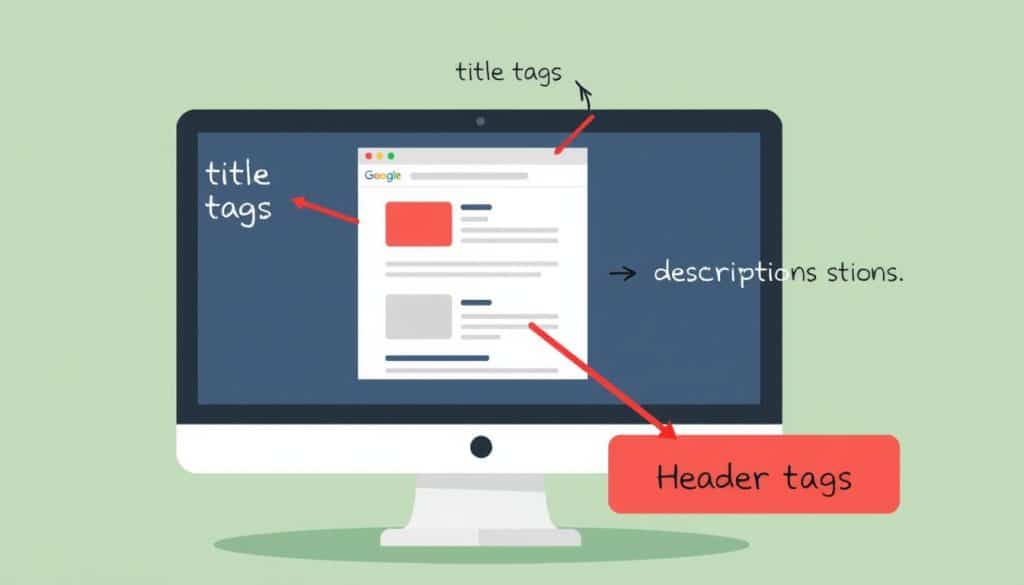
Title tags should be compelling, include your primary keyword, and stay under 60 characters to avoid truncation in search results. Meta descriptions don’t directly impact rankings but significantly influence click-through rates—craft them to clearly communicate value and include a call to action.
Header Tags and Content Formatting
Header tags (H1, H2, H3) provide structure for both users and search engines, helping to organize content logically and emphasize important concepts. Proper content formatting enhances readability and user experience, making your content more accessible and engaging.
URL Structure and Internal Linking
URL structure should be clean, descriptive, and include relevant keywords while avoiding unnecessary parameters or excessive length. Internal linking distributes page authority throughout your website and helps search engines understand content relationships and hierarchy.
Link Building Strategies That Drive Rankings
Link building is not just a tactic, but a cornerstone of a successful SEO strategy that drives real results. In today’s digital landscape, where quality content is abundant, the key to standing out lies in acquiring high-quality backlinks from authoritative websites.
Guest Posting and Niche Edits
Two proven strategies for acquiring backlinks are guest posting and niche edits. Guest posting involves creating content for other websites within your industry, earning you a valuable link back to your site. Niche edits, on the other hand, involve adding your link to existing, relevant content on other sites, enhancing the usefulness of the content while boosting your SEO.
Creating Link-Worthy Content
Creating content that naturally attracts links is a powerful SEO strategy. By producing original research, comprehensive guides, or unique tools, you can earn backlinks without aggressive outreach. This approach not only enhances your site’s authority but also improves your rankings on search engines.
Monitoring and Fixing Broken Backlinks
Regularly monitoring your backlink profile is crucial for maintaining a healthy SEO strategy. By identifying and fixing broken links, you can prevent potential harm to your rankings. This proactive approach ensures that your site continues to benefit from its existing link equity, supporting long-term SEO success.
Technical SEO: Optimizing for Search Engines
Technical SEO forms the foundation upon which your content and link building efforts are built, allowing them to reach their full potential. By optimizing your website’s technical aspects, you can improve its visibility, drive more organic traffic, and enhance overall user experience.
Improving Core Web Vitals
Core Web Vitals have become increasingly important as user experience signals, measuring loading performance (LCP), interactivity (FID), and visual stability (CLS). Google highly recommends optimizing these metrics to improve user experience. To monitor your Core Web Vitals, you can use tools like Ahrefs Webmaster Tools.
- Measure loading performance using Largest Contentful Paint (LCP).
- Improve interactivity with First Input Delay (FID).
- Enhance visual stability using Cumulative Layout Shift (CLS).
Mobile Optimization
With Google’s mobile-first indexing, your site’s mobile version determines your rankings. Ensuring that your website is mobile-friendly is no longer optional but a necessity. Mobile optimization involves creating a responsive design that adapts to various screen sizes and devices, improving overall user experience.
Key aspects of mobile optimization include:
- Responsive web design.
- Fast page loading speeds.
- Easy navigation on smaller screens.
Content Maintenance and Updates
Content maintenance and updates play a vital role in SEO success. Regular updates ensure that your content remains relevant and continues to attract search traffic. As search algorithms evolve, maintaining high-quality, up-to-date content is crucial for sustaining and improving your website’s rankings.
Refreshing Outdated Content
Outdated content can lead to a decline in search engine rankings. We have seen significant traffic increases when refreshing old content with current information, statistics, and examples. It’s essential to preserve the original URL to maintain existing backlinks and ranking signals. For instance, updating a listicle with the latest data can help recapture lost rankings. According to Backlinko, SEO maintenance is crucial for sustained rankings. Regular content audits help identify underperforming pages that need updating or removal.
Identifying Content Gaps
Content gaps represent opportunities to expand your topical coverage and capture additional search traffic. By analyzing historical performance data, we can prioritize which content to update first, focusing on pages that previously ranked well but have since declined. Adding new sections to address emerging subtopics can also help in recapturing lost rankings. A well-structured content strategy involves regularly assessing and addressing these gaps to maintain a competitive edge.
| Content Maintenance Activity | Benefit |
|---|---|
| Refreshing outdated content | Improves search engine rankings and traffic |
| Identifying content gaps | Captures additional search traffic and expands topical coverage |
| Preserving original URLs | Maintains existing backlinks and ranking signals |
Advanced SEO Techniques for Competitive Edge
Advanced SEO techniques are crucial for gaining a competitive edge in crowded markets where standard approaches have diminishing returns. To stay ahead, businesses must leverage sophisticated strategies that enhance their online visibility and search engine rankings.
Some of the key advanced SEO techniques include optimizing for featured snippets, implementing schema markup, and focusing on entity optimization to help search engines better understand the context and meaning of content.
Featured Snippets Optimization
Featured snippets are short answers that appear in some search results, providing users with quick information. To optimize for featured snippets, it’s essential to structure content in a clear and concise format that directly answers common questions.
Here’s how to identify opportunities for featured snippets:
- Enter your domain into Site Explorer and go to the Organic keywords report.
- Filter for top 10 rankings and SERPs with featured snippets where you don’t rank.
- Analyze the results to identify keywords where you can potentially win featured snippets.
Schema Markup Implementation
Schema markup implementation is another critical advanced SEO technique. It enhances search visibility through rich results and helps search engines understand the context and meaning of your content.
By implementing schema markup, businesses can improve their chances of appearing in rich results, which can significantly boost click-through rates and drive more qualified traffic to their websites.
Key benefits of schema markup include:
- Enhanced search visibility through rich results
- Better understanding of content context by search engines
- Potential increase in click-through rates
Conclusion: Implementing Your SEO Strategy
As we conclude our exploration of effective SEO techniques, it’s clear that a well-rounded SEO strategy is crucial for achieving and maintaining top search engine rankings. To drive organic traffic and enhance your website’s visibility, we recommend prioritizing initiatives based on potential impact and alignment with your business objectives.
Start with the fundamentals—technical SEO, on-page optimization, and high-quality content—before advancing to more sophisticated techniques. Measuring the right metrics is crucial; look beyond rankings to traffic quality, conversion rates, and revenue impact. Adapt your strategy based on performance data and algorithm updates to maintain and improve results over time.
By balancing short-term wins with long-term authority building, you can create a sustainable competitive advantage in organic search, driving growth and enhancing your brand’s online presence.
FAQ
How often should we update our keyword research to maintain optimal search engine rankings?
We recommend reviewing and updating your keyword research every 3-6 months to stay aligned with changing search trends and user behavior, ensuring our content remains relevant and competitive.
What are the most effective on-page SEO elements to focus on?
Key on-page SEO elements include title tags, meta descriptions, header tags, and URL structure. Optimizing these elements helps search engines understand our content and improves our website’s visibility in search results.
How does E-E-A-T impact our content’s search engine ranking?
E-E-A-T (Experience, Expertise, Authoritativeness, Trustworthiness) is a crucial factor in Google’s content evaluation. By demonstrating these qualities in our content, we can increase our authority and trust with both users and search engines, leading to better rankings.
What role does user experience play in SEO?
User experience is a critical factor in SEO, as it directly affects engagement metrics and conversion rates. A well-designed website with a positive user experience can lead to higher search engine rankings and increased organic traffic.
How can we measure the success of our SEO strategy?
To measure the success of our SEO strategy, we track key performance indicators (KPIs) such as organic traffic growth, keyword rankings, and conversion rates. Regular analysis of these metrics helps us refine our strategy and achieve our digital growth goals.
What is the importance of content maintenance and updates in SEO?
Regular content maintenance and updates are essential to keep our content fresh, relevant, and competitive. This involves refreshing outdated content, identifying content gaps, and ensuring that our content continues to meet the evolving needs of our target audience.
How does link building contribute to our website’s authority and search engine rankings?
Link building is a crucial aspect of SEO, as high-quality backlinks from authoritative sources can significantly enhance our website’s authority and credibility. This, in turn, can lead to improved search engine rankings and increased organic traffic.