

Are you wondering if your brand can thrive in a world where adults are projected to spend over three and a half hours daily consuming video content by 2028?
As video consumption continues to outpace traditional TV viewing, a well-crafted video marketing approach is no longer a nicety, but a necessity for businesses seeking to capture audience attention and drive measurable results.
We will guide you through the critical components of developing a winning marketing strategy that aligns with your business objectives and resonates with your target audience, ensuring you stay ahead in the rapidly evolving marketing landscape.
Key Takeaways
- Craft a video marketing strategy that drives real business outcomes.
- Set clear goals and identify your target audience for maximum engagement.
- Choose the right video types to resonate with your audience.
- Optimize your content for different platforms.
- Measure success with precision to stay ahead of competitors.
The Power of Video Marketing in 2025

As we step into 2025, the dominance of video marketing in the digital landscape is more pronounced than ever. The data supporting its effectiveness is compelling, and businesses are increasingly leveraging video content to drive engagement and conversions.
Current State of Digital Video Marketing
The current state of digital video marketing is characterized by its widespread adoption and the significant impact it has on consumer behavior. With online video now accounting for over 85% of all internet traffic, it’s clear that video has become a primary medium for content consumption.
Businesses are recognizing the value of video in their marketing strategies, with a significant majority reporting that it has helped them achieve their goals. The influence of video extends beyond marketing to customer service, where instructional videos have been shown to reduce support calls.
Key Video Marketing Statistics for 2025
The statistics supporting the effectiveness of video in marketing are impressive. Some key highlights include:
- 90% of marketers report that video has helped them generate qualified leads (Wyzowl, 2025).
- Viewers retain 95% of a message when delivered through video, compared to just 10% when reading text (Social Media Week).
- 84% of consumers have been convinced to buy a product or service by watching a brand’s video (Wyzowl).
| Statistic | Value | Source |
|---|---|---|
| Marketers using video to generate leads | 90% | Wyzowl, 2025 |
| Internet traffic from online video | 85% | DemandSage |
| Message retention via video | 95% | Social Media Week |
| Consumers convinced to buy after watching a brand’s video | 84% | Wyzowl |
To elevate your business with effective video marketing strategies, it’s crucial to understand these statistics and leverage them to drive your business forward.
Understanding Your Video Marketing Goals
Developing a successful video marketing strategy begins with understanding your goals. Before diving into the specifics of creating engaging video content, it’s essential to define what you want to achieve through your video marketing efforts.
We outline the steps to build a comprehensive video marketing strategy, starting with setting clear video goals. This foundational step ensures that your video marketing initiatives are aligned with your broader business objectives, ultimately driving meaningful ROI.
Defining Clear Objectives for Your Strategy
To develop an effective video marketing strategy, you need to identify your primary objectives. Are you looking to enhance brand recognition, generate leads, or improve customer retention? Your video strategy should directly address these specific business needs.
- Identify your company’s primary business challenges and opportunities.
- Map each video initiative to specific business KPIs, such as conversion rates or customer satisfaction scores.
- Establish clear attribution models to track the impact of video content on the customer journey.
By doing so, you can create a focused video marketing strategy that drives tangible results. For instance, product demonstration videos can be correlated with increased conversion rates, while educational content can impact customer satisfaction scores.
Aligning Video Goals with Business Objectives
Effective video marketing must support and advance your organization’s broader business objectives to deliver meaningful ROI. It’s crucial to communicate your video marketing goals in business terms when presenting to executives or stakeholders, focusing on revenue impact, cost savings, or competitive advantage.
| Video Initiative | Business KPI | Expected Outcome |
|---|---|---|
| Product Demonstration Videos | Conversion Rates | Increased Sales |
| Educational Content | Customer Satisfaction Scores | Improved Customer Retention |
| Brand Awareness Videos | Brand Recognition | Enhanced Brand Reputation |
By aligning your video goals with business objectives and regularly reviewing your strategy, you can ensure that your video marketing efforts remain effective and contribute to your organization’s overall success. For more insights on maximizing ROI with video marketing, visit our guide on maximizing ROI with effective video SEO marketing.
Identifying Your Target Audience

Identifying your target audience is the foundation upon which successful video marketing strategies are built. To effectively reach and engage your viewers, you must first understand who they are, what they prefer, and how they behave on various platforms.
Creating Buyer Personas for Video Content
Creating detailed buyer personas is crucial for tailoring your video content to meet the specific needs and preferences of your target audience. According to The 2024 Sprout Social Media Content Strategy Report, social media users, especially Millennials and Gen Z, rely heavily on video-centric channels like Instagram, YouTube, and TikTok for product discovery. By understanding the demographics, interests, and behaviors of your audience, you can create content that resonates with them.
To create effective buyer personas, consider factors such as age, gender, location, interests, and pain points. This information will help you craft video content that addresses their needs and captures their attention.
Understanding Audience Preferences and Behaviors
Understanding the preferences and behaviors of your target audience is vital for maximizing engagement. Different demographic groups exhibit distinct video consumption patterns; for instance, Gen Z and Millennials prefer platforms like TikTok and Instagram, while Gen X and Baby Boomers favor YouTube and Facebook. The context in which your audience consumes video content also significantly impacts its effectiveness.
- Mobile viewers prefer shorter content with captions.
- Desktop users may engage with longer-form content.
- TikTok users expect authenticity and creativity.
- LinkedIn audiences value professional insights.
Understanding these nuances allows you to tailor your video content strategy to better meet the needs of your target audience on various platforms, including social media.
| Platform | Preferred Content Type | Key Characteristics |
|---|---|---|
| TikTok | Short-form, creative content | Authenticity, creativity |
| YouTube | Long-form, informative content | Comprehensive information, entertainment |
| Professional, insightful content | Professional insights, industry news |
Mapping Videos to the Customer Journey

To maximize the impact of video marketing, it’s essential to map videos to the customer journey. The customer journey encompasses various stages, from awareness to decision-making, and understanding these stages is crucial for creating effective video content.
Awareness Stage Videos
At the awareness stage, potential customers are identifying their problems or needs. Videos at this stage should focus on educating the audience about their challenges and potential solutions. Explainer videos and infographics are particularly effective here, as they provide valuable information in an engaging format.
Consideration Stage Videos
During the consideration stage, prospects are evaluating different solutions to their problems. Here, videos should highlight the benefits and unique selling points of your product or service. Product comparison videos and customer testimonials can be very persuasive, helping potential customers understand why your solution stands out.
Decision Stage Videos
At the decision stage, prospects are on the verge of making a purchase. Videos here should provide the final push by showcasing customer satisfaction and the value of choosing your product or service. Detailed product demonstrations and personalized videos addressing specific customer concerns can be highly effective. It’s also crucial to include clear calls-to-action to facilitate the next steps.
| Customer Journey Stage | Video Type | Primary Goal |
|---|---|---|
| Awareness | Explainer Videos, Infographics | Educate about challenges and solutions |
| Consideration | Product Comparison Videos, Testimonials | Highlight benefits and unique selling points |
| Decision | Product Demonstrations, Personalized Videos | Provide final push, showcase customer satisfaction |
By aligning your video content with the customer journey, you can create a more cohesive and effective video marketing strategy that drives conversion and supports your business objectives.
Choosing the Right Types of Marketing Videos
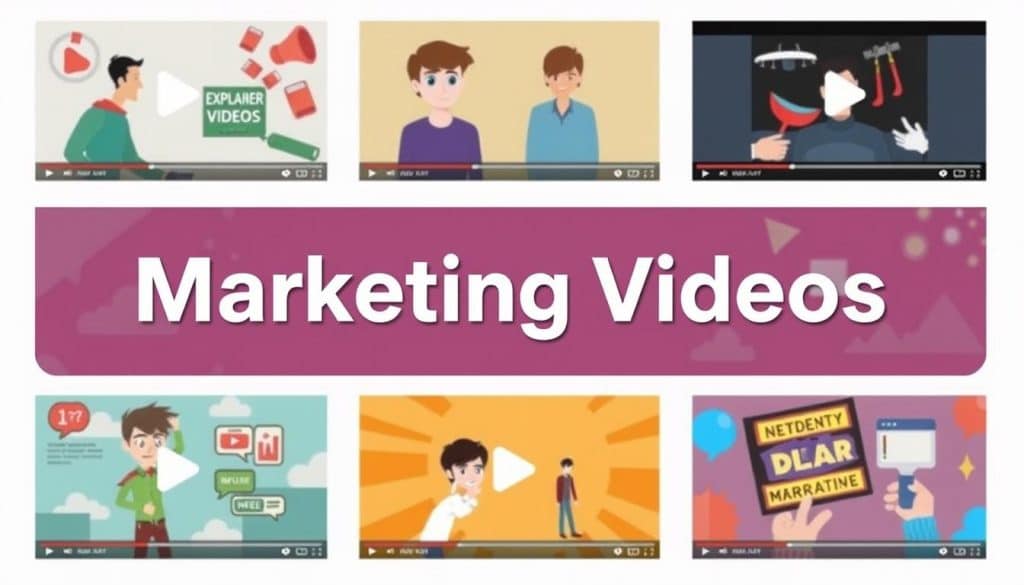
Understanding the different types of marketing videos available is essential for creating a targeted and effective video marketing strategy. With various options at your disposal, selecting the right type can significantly enhance your campaign’s impact. We will explore the most effective types of marketing videos to help you make an informed decision.
Commercial and Brand Videos
Commercial and brand videos are designed to promote your brand, product, or service, often used in advertising campaigns. These videos aim to capture the audience’s attention and leave a lasting impression. Effective commercial videos are concise, engaging, and memorable.
Educational and How-To Videos
Educational and how-to videos provide valuable information to your audience, establishing your brand as a thought leader in the industry. These videos can range from tutorials and guides to webinars and lectures. By offering useful content, you build trust with your audience and encourage engagement.
Testimonial and Case Study Videos
Testimonial and case study videos showcase real-life success stories and customer experiences. They serve as social proof, demonstrating the value of your product or service. By highlighting customer satisfaction, you can build credibility and trust with potential customers.
Product and Explainer Videos
A product video tells your audience about your best-selling products or services and their top features. It shows your product in action, helping to increase consumer confidence. An explainer video teaches your audience more about your company, brand, product, or service, focusing on how it solves a particular problem. By clearly communicating the benefits of your product or service, you can bridge the gap between awareness and consideration.
- Product and explainer videos clearly communicate how your solution works and the specific problems it solves.
- Effective product videos focus on benefits rather than features, showing how the product improves the customer’s life.
- Explainer videos follow a problem-solution-benefit structure, starting with a relatable pain point.
- Animation is particularly effective for explainer videos, simplifying complex concepts through visual metaphors.
Developing Your Digital Video Marketing Strategy

A well-crafted digital video marketing strategy is crucial for businesses to stand out in today’s competitive landscape. To achieve this, we need to focus on two critical components: setting a realistic timeline and establishing a comprehensive budget.
Setting a Realistic Timeline
Setting a realistic timeline is essential for the successful execution of your video marketing strategy. This involves understanding the scope of your project, the resources available, and the deadlines that need to be met. By creating a detailed timeline, we can ensure that all aspects of the video production process are completed on time, from pre-production to post-production and distribution.
To set a realistic timeline, consider the following factors:
- Define the scope of your video project, including the type of video, its length, and the message it needs to convey.
- Identify the resources required, such as personnel, equipment, and locations.
- Establish clear milestones and deadlines for each stage of the production process.
- Allow for contingencies and flexibility in case unexpected issues arise.
Establishing Your Video Marketing Budget
Establishing a comprehensive budget is vital for the success of your marketing efforts. This involves not only determining how much to spend but also allocating resources effectively across production and distribution. A well-planned video marketing budget balances quality requirements with financial constraints.
Key considerations for establishing your video marketing budget include:
- Aligning your budget with strategic priorities, investing more in videos that support critical business objectives.
- Considering the full cost spectrum of production, including pre-production planning, shooting, editing, and specialized equipment.
- Factoring in costs associated with distribution, such as paid promotion, which can represent 50% or more of the total budget.
- Evaluating whether to build internal capabilities or outsource to a video production company based on your specific needs.
- Implementing a tiered approach to video production to accommodate different content types and budgets.
- Measuring ROI rigorously to justify budget allocations and secure future funding.
Creating Compelling Video Content
Creating compelling video content is crucial for a successful digital marketing strategy in today’s competitive landscape. To achieve this, we need to focus on two key aspects: crafting engaging video stories and following video production best practices.
Crafting Engaging Video Stories
Crafting engaging video stories involves understanding your audience and creating narratives that resonate with them. Professional-quality video production doesn’t necessarily require massive budgets, but it does demand attention to fundamental technical elements that impact viewer perception. We should evaluate our options for content production and post-production carefully. Hiring an agency or production company can alleviate a lot of the stress, as they’ll handle all the planning and approvals, and we just need to provide the guidance.
To create engaging stories, we must consider several factors, including lighting, audio quality, and stabilization. Proper lighting can make even smartphone footage look professional, while poor illumination can detract from the viewing experience. Similarly, investing in quality microphones and controlled recording environments is crucial for good audio quality.
Video Production Best Practices
Following video production best practices is essential for creating high-quality content. Some key practices include planning shots deliberately with composition principles in mind, such as the rule of thirds and leading lines, to create visually appealing content. We should also maintain consistent branding elements across all videos, including intro/outro sequences, color grading, music style, and graphic treatments, to create a cohesive visual identity.
Additionally, post-production can elevate average footage to exceptional content through thoughtful editing, color correction, sound design, and motion graphics. By incorporating these elements, we can add a professional polish that builds brand credibility. For more insights on maximizing your digital marketing efforts, you can visit this resource.
Optimizing Video Content for Different Platforms
The key to a successful video marketing campaign lies in understanding how to optimize video content for various digital platforms. Different platforms have unique requirements and audience behaviors, making it crucial to tailor your content accordingly.
YouTube Strategy
On YouTube, a well-optimized video is crucial for visibility. This includes using relevant keywords in titles, descriptions, and tags, as well as creating eye-catching thumbnails that improve click-through rates. YouTube’s algorithm favors videos that keep viewers engaged, so it’s essential to create content that resonates with your audience.
Social Media Video Strategies
Social media platforms like Facebook, Instagram, and LinkedIn require different approaches to video content. For instance, Instagram and Facebook favor square or vertical videos, while LinkedIn is more suited for professional, informative content. Understanding these nuances helps in creating platform-specific content that performs well.
TikTok and Short-Form Video Content
TikTok has revolutionized short-form video content, with its user base heavily skewed towards Gen Z and Millennials. The platform’s collaborative features, such as Duets, and its culture driven by trends and sounds, offer brands new avenues for creative video marketing. Leveraging these features can significantly enhance brand engagement.
Website and Landing Page Videos
Website and landing page videos serve as conversion tools, designed to reduce friction and guide visitors toward specific actions. Homepage videos should quickly communicate your value proposition, typically within 30-60 seconds, focusing on emotional connection. Product page videos should demonstrate functionality and benefits, addressing potential objections. Landing page videos should be tightly aligned with the campaign that drove traffic to the page, improving conversion rates. Auto-play considerations and strategic placement are also crucial for maximizing viewer engagement.
Leveraging AI in Video Marketing
The rise of AI in video marketing is redefining the boundaries of creativity and technology, allowing brands to connect with their audiences in new and innovative ways. As we explore the potential of AI in this domain, it’s essential to understand both its capabilities and limitations.
AI is transforming the video marketing landscape by offering tools that can significantly enhance content creation and distribution. However, the true power of video marketing lies in its ability to connect with emotions, tell compelling stories, and evoke authentic human experiences.
AI-Powered Video Creation Tools
AI-powered video creation tools are revolutionizing the way marketers produce content. These tools leverage AI and machine learning algorithms to automate tasks such as video editing, transcription, and translation, making it possible to produce high-quality videos at scale.
By utilizing AI-powered video creation tools, marketers can save time and resources, allowing them to focus on strategic and creative aspects of their marketing campaigns.
Balancing AI and Human Creativity
While AI tools offer tremendous efficiency and scale, the most effective video marketing strategies find the optimal balance between technological capabilities and human creative direction. AI excels at data-driven optimization, pattern recognition, and technical execution, while humans bring emotional intelligence, cultural awareness, and strategic brand understanding.
The ideal workflow leverages AI for time-consuming technical tasks while preserving human oversight for creative direction, storytelling, and brand alignment. As AI capabilities advance, the human role shifts toward prompt engineering and creative direction, making it essential to understand how to effectively “instruct” AI systems.
Video SEO: Maximizing Visibility and Reach
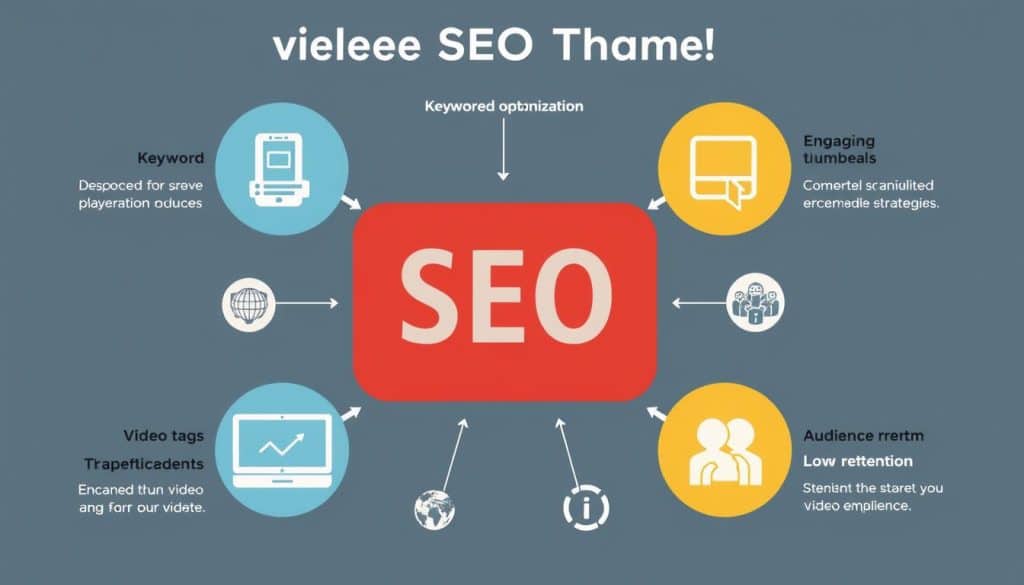
Effective Video SEO strategies can significantly boost your video’s search rankings. To maximize visibility and reach, we need to focus on several key areas.
Keyword Optimization for Videos
Optimizing your videos with the right keywords is crucial for search visibility. We identify relevant terms and phrases that your target audience uses, incorporating them into your video titles, descriptions, and tags to enhance discoverability.
Thumbnail and Title Optimization
Your video’s thumbnail and title are the first things viewers see. Crafting eye-catching thumbnails and compelling titles that include your target keywords can significantly improve click-through rates.
Video Description and Tag Strategies
Video descriptions serve dual purposes: they provide SEO benefits and enhance the viewer experience. We front-load descriptions with key information and keywords, include timestamps for longer videos, and use a mix of specific and broad tags to accurately represent your content.
- Front-load descriptions with the most important information and keywords.
- Include a table of contents with timestamps for longer videos.
- Use a strategic hierarchy in descriptions: key points first, followed by additional context, and ending with channel information and calls-to-action.
- Focus on a mix of specific (long-tail) and broader category tags.
- Cross-link to related videos and playlists within descriptions.
- Consider multilingual descriptions to expand your reach.
Measuring Video Marketing Success
The key to unlocking the full potential of video marketing lies in accurately measuring its impact. To do this effectively, businesses must employ a comprehensive approach that incorporates various metrics and analytics tools.
Key Performance Indicators for Video
To measure video marketing success, it’s essential to track relevant Key Performance Indicators (KPIs). These may include view count, engagement metrics such as likes and comments, and conversion rates. Choosing the right KPIs depends on your specific video marketing goals, whether they’re related to brand awareness, lead generation, or sales.
- View count and watch time
- Engagement metrics (likes, comments, shares)
- Conversion rates and sales
- Click-through rates (CTR) on video CTAs
Analytics Tools and Dashboards
A comprehensive video analytics strategy combines platform-native tools with third-party solutions. Platform-specific analytics, such as YouTube Studio and Facebook Insights, provide detailed performance data. Meanwhile, unified dashboards like Sprout Social and Hootsuite offer cross-platform insights, enabling businesses to compare performance across different channels.
| Analytics Tool | Platform | Key Features |
|---|---|---|
| YouTube Studio | YouTube | Detailed video performance, audience retention |
| Facebook Insights | Video views, engagement metrics, audience demographics | |
| Sprout Social | Multi-platform | Cross-platform video analytics, comparative insights |
As
“The goal is to measure what matters, and to make data-driven decisions that drive business outcomes.”
By leveraging these analytics tools and focusing on the right metrics, businesses can optimize their video marketing strategies for better performance.
Overcoming Common Video Marketing Challenges
Effective video marketing requires overcoming several common obstacles. As we navigate the complex digital landscape, understanding and addressing these challenges is crucial for success.
Budget Constraints and Solutions
One of the primary challenges in video marketing is budget constraints. To overcome this, we can:
- Leverage cost-effective production techniques, such as using in-house talent or simplifying production requirements.
- Repurpose existing content into video formats to maximize ROI.
- Utilize user-generated content to supplement branded video content.
For more insights on managing video marketing challenges, visit this resource.
Content Creation Bottlenecks
Content creation bottlenecks can significantly hinder video marketing efforts. To address this, we should:
- Develop a robust content calendar to plan and organize video content in advance.
- Invest in efficient video creation tools that streamline the production process.
- Consider outsourcing certain aspects of video production to specialized vendors.
Platform-Specific Challenges
Platform-specific challenges arise from the constantly evolving technical requirements, algorithmic changes, and audience expectations across different video distribution channels. Key considerations include:
| Challenge | Description | Solution |
|---|---|---|
| Format Proliferation | Growing number of aspect ratios and format requirements | Efficient adaptation workflows |
| Algorithm Volatility | Frequent changes in platform algorithms | Regular performance analysis and adaptability |
| Technical Specifications | Varying resolution, file size, and length requirements | Staying updated with platform specifications |
Video Marketing Trends to Watch
The future of video marketing is here, and it’s characterized by innovative technologies and creative strategies that are redefining how brands connect with their audiences.
As we explore the latest trends in video marketing, several key areas stand out for their potential to transform the industry.
Interactive and Shoppable Videos
Interactive and shoppable videos are revolutionizing the way consumers engage with products online. By integrating augmented reality (AR) and e-commerce functionalities, businesses can create immersive experiences that drive sales and enhance customer engagement. For instance, AR integration allows viewers to visualize products in their own environment, which is particularly valuable for industries like furniture and eyewear.
Personalized Video Experiences
Personalized video experiences are becoming increasingly important as consumers expect more tailored content. Leveraging data and AI, marketers can create videos that address individual preferences and behaviors, significantly improving engagement rates. This emerging technology enables brands to deliver highly relevant content that resonates with their target audience.
Emerging Video Technologies
The future of video marketing is also being shaped by emerging video technologies such as virtual production, voice-interactive video, and synthetic media. These innovations are making high-end visual effects more accessible, enabling voice commands for video navigation, and offering scalable solutions for personalized content through AI-generated presenters and digital humans.
By embracing these trends and technologies, businesses can stay ahead of the curve and maximize their video marketing efforts.
Conclusion: Building a Sustainable Video Marketing Strategy
The key to a successful video marketing strategy lies in its ability to adapt, evolve, and consistently deliver value. As we navigate the complex landscape of digital marketing, it’s clear that sustainability is crucial for businesses aiming to make a lasting impact.
Building a sustainable video marketing strategy requires balancing immediate performance goals with long-term brand building and resource management. This balance is essential for creating a lasting business impact. We must focus on creating systems and approaches that can be maintained and scaled over time, avoiding the pitfall of initial enthusiasm followed by content droughts.
The foundation of sustainability in video marketing is alignment with business fundamentals. Our video initiatives must directly support core business objectives and demonstrate measurable value to maintain organizational support. By designing video content ecosystems rather than one-off productions, we maximize efficiency and create modular components that can be repurposed across platforms and customer journey stages.
Capability building should be prioritized alongside content creation. Developing internal skills, establishing repeatable processes, and creating resource-appropriate production models ensures long-term viability. Continuous learning and optimization are also crucial, as they separate sustainable strategies from temporary campaigns. Regular performance analysis, audience feedback integration, and testing of new approaches prevent stagnation.
To future-proof our video marketing efforts, we must balance technological adaptability with brand consistency. Maintaining core brand elements while embracing new formats, platforms, and technologies as they emerge is key. The most successful video marketing strategies find the sweet spot between innovation and consistency, establishing recognizable brand elements and content patterns while continuously evolving to meet changing audience expectations and platform requirements.
Ultimately, sustainable video marketing isn’t about chasing trends or viral moments; it’s about consistently delivering value to our audience and business through thoughtful, strategic content that builds meaningful connections over time.
FAQ
What are the most effective types of videos for brand awareness?
We find that brand videos, explainer videos, and social media videos are highly effective for increasing brand awareness. These types of content help capture audience attention and communicate your brand’s value proposition.
How do I measure the success of my video marketing efforts?
To measure success, we track key performance indicators such as view count, engagement metrics (likes, comments, shares), click-through rates, and conversion rates. We also use analytics tools to monitor audience retention and drop-off points.
What is the ideal length for a marketing video?
The ideal length varies depending on the platform and purpose. For social media, we recommend keeping videos concise, typically under 60 seconds. For explainer videos or product demos, 2-3 minutes is often suitable. For more in-depth content like webinars, longer formats can be effective.
How can I optimize my videos for search on YouTube and other platforms?
We optimize videos by using relevant keywords in titles, descriptions, and tags. We also focus on creating high-quality thumbnails that capture viewer attention and encourage clicks. Additionally, we promote videos across multiple channels to increase visibility.
What role does storytelling play in video marketing?
Storytelling is crucial in video marketing as it helps create an emotional connection with the audience. By crafting compelling narratives, we can convey complex information in an engaging way, making the content more memorable and impactful.
How often should I post new video content?
The frequency of posting new content depends on your audience, resources, and goals. We recommend starting with a consistent schedule, such as weekly or bi-weekly, and adjusting based on audience engagement and feedback.
Can AI-powered tools replace human creativity in video production?
While AI-powered tools can streamline certain aspects of video production, such as editing and optimization, human creativity remains essential for developing innovative and engaging content. We believe in balancing AI-driven efficiency with human insight and creativity.
How do I choose the right platforms for distributing my video content?
We consider factors such as your target audience, content type, and business goals when selecting distribution platforms. For example, YouTube is ideal for long-form content and SEO, while social media platforms like TikTok and Instagram are better suited for short-form, engaging videos.