

As we navigate the ever-evolving digital landscape, a crucial question arises: How can brands harness the power of video content to captivate their audience and drive business growth?
With the digital video marketing industry projected to continue its upward trajectory, it’s clear that video content has become the dominant form of communication between brands and their audiences. Adults in the U.S. are expected to spend over three hours a day watching digital video by 2028.
We’ll explore how to develop a comprehensive video digital marketing strategy that positions your brand for future success. By understanding current trends and implementing advanced techniques, you’ll be able to drive engagement, build brand awareness, and convert viewers into loyal customers.
Key Takeaways
- Understand the current state of video consumption and its future projections.
- Develop a comprehensive video marketing strategy tailored to your brand’s goals.
- Implement advanced techniques like AI-powered personalization.
- Measure the effectiveness of your video marketing efforts.
- Connect video marketing metrics to tangible business outcomes.
The Power of Video in Digital Marketing
The power of video in digital marketing cannot be overstated, as it continues to revolutionize how brands connect with their audience. As we explore the impact of video marketing, it’s clear that it’s no longer just a trend, but a fundamental shift in how businesses communicate and engage with their customers.
Current Video Consumption Trends
The way people consume video content is changing rapidly. With the rise of platforms like YouTube, TikTok, and Instagram, videos have become an integral part of our daily online experience. Data shows that 87% of people say that when shopping or browsing on YouTube, they feel like they can make a decision to purchase or not purchase faster. This statistic highlights the significant influence video has on consumer behavior.
Moreover, the algorithmic preference for video content on major platforms means that brands utilizing video marketing effectively gain significant advantages in organic reach and engagement. This trend is expected to continue, making it essential for businesses to adapt their marketing strategies to include high-quality video content.
| Platform | Video Consumption Rate | Impact on Purchase Decision |
|---|---|---|
| YouTube | High | 87% faster purchase decision |
| TikTok | Very High | Increased brand awareness |
| High | Improved engagement |
Why Video Marketing Is Essential for Future Growth
Video marketing has evolved from a nice-to-have to an essential component of any forward-thinking digital strategy. Brands are seeing measurable ROI across all business objectives, from lead generation and conversion rates to customer satisfaction and brand loyalty. For instance, 43% of video marketers say that video has reduced the number of support calls they’ve received, while 93% of brands got a new customer because of a video on social media.
By integrating video across the customer journey—from awareness to consideration to decision—brands create multiple touchpoints for meaningful interactions. This not only enhances the customer experience but also drives business growth. As we move forward, it’s clear that video marketing will continue to play a crucial role in shaping the future of digital marketing.
Setting Clear Goals for Your Video Digital Marketing Strategy
Defining clear video marketing goals is essential for achieving desired business outcomes. A well-structured video marketing strategy enables businesses to effectively engage their target audience, drive conversions, and ultimately boost revenue. To create a successful video marketing strategy, it’s crucial to understand the different stages of the customer journey and tailor your goals accordingly.
Awareness Stage Goals: Reaching New Audiences
At the awareness stage, the primary goal is to reach new audiences and introduce them to your brand or product. Video content can be particularly effective here, as it can be easily shared across various platforms, increasing your reach. We recommend creating engaging, informative videos that highlight your brand’s unique value proposition. By leveraging video marketing, you can capture the attention of potential customers and encourage them to learn more about your offerings.
Consideration Stage Goals: Generating Demand
Once you’ve captured the attention of your target audience, the next goal is to generate demand for your product or service. At this stage, educational videos or product demonstrations can be highly effective. These types of videos provide potential customers with the information they need to consider your offering as a viable solution to their needs. By creating content that addresses the pain points of your audience, you can nurture leads and move them further down the sales funnel.
Decision Stage Goals: Driving Conversions
At the decision stage, the focus shifts to driving conversions. This is where testimonial videos or case studies can play a crucial role. By showcasing the success stories of your existing customers, you can build trust and credibility with potential customers, making them more likely to convert. Additionally, limited-time offers or promotions presented through video can create a sense of urgency, encouraging viewers to take action.
Post-Purchase Goals: Customer Education and Advocacy
After a customer has made a purchase, the goal is to educate them on how to get the most out of your product or service. How-to videos and tutorials are ideal for this stage, as they provide customers with the knowledge they need to effectively use your offering. By maximizing customer satisfaction through proper product usage and troubleshooting, you can reduce customer service inquiries and improve overall customer experience. Furthermore, community-building content that highlights customer success stories can encourage advocacy and create opportunities for user-generated content.
Understanding Your Target Audience

A deep understanding of your target audience is the foundation of any successful video marketing strategy. To effectively engage and convert your audience, you need to know who they are, what they need, and how they interact with video content.
Developing Buyer Personas for Video Content
Developing detailed buyer personas is crucial for creating video content that resonates with your target audience. We achieve this by gathering data on demographics, pain points, and viewing habits. By understanding our audience’s preferences and behaviors, we can tailor our video content to meet their specific needs, increasing engagement and conversion rates.
To develop effective buyer personas, we consider factors such as age, job role, challenges, and information consumption patterns. This helps us craft video marketing strategies that speak directly to our audience, addressing their concerns and providing value.
Mapping Video Content to the Customer Journey
Mapping video content to the customer journey ensures that we’re delivering the right message at the right time. There are five stages of a typical marketing funnel, and videos can play a crucial role in each stage.
| Stage | Video Content Type | Purpose |
|---|---|---|
| Awareness | Problem identification and brand introduction videos | Capture attention and introduce the brand |
| Consideration | In-depth solution videos | Provide detailed information about solutions |
| Decision | Differentiation and proof point videos | Emphasize unique selling points and facilitate conversion |
| Post-Purchase | Customer success and advocacy videos | Support customer success and encourage advocacy |
By aligning our video content with each stage of the customer journey, we can create a cohesive marketing strategy that guides our audience through the buying process, ultimately driving conversions and fostering long-term relationships.
Selecting the Right Video Platforms for Your Strategy
The success of your video marketing efforts heavily relies on identifying and leveraging the most suitable video platforms. With the vast array of platforms available, each with its unique features and audience demographics, a well-informed decision is crucial.
Platform-Specific Video Requirements
Different platforms have distinct requirements for video content, including aspect ratios, duration limits, and content style. For instance, YouTube favors long-form, high-quality content, while TikTok and Instagram are geared towards short-form, engaging videos.
Understanding these requirements is essential to tailor your content effectively and maximize its impact on each platform.
YouTube Strategy for Long-Form Content
YouTube remains a dominant platform for long-form video content, offering vast opportunities for marketers to reach their target audiences. To leverage YouTube effectively, focus on creating comprehensive, high-quality videos that provide value to viewers.
TikTok and Instagram for Short-Form Engagement
TikTok and Instagram are ideal for short-form video content, with their emphasis on creativity, authenticity, and engagement. Marketers should focus on producing concise, captivating videos that resonate with these platforms’ younger demographics.
Cross-Platform Video Distribution Strategies
Developing a cross-platform distribution strategy is vital to maximize the return on your video production investment. This involves repurposing your video content for different channels, optimizing it for each channel, and coordinating your distribution timing to reach your audience effectively across their preferred channels.
- Develop a cross-platform distribution strategy to reach audiences across their preferred channels.
- Repurpose core video assets for different platforms without starting from scratch.
- Optimize your content for each distribution channel to ensure it performs well.
- Coordinate scheduling and timing strategies to maximize visibility and engagement.
Essential Types of Video Content for a Complete Strategy
A comprehensive video digital marketing strategy encompasses a diverse range of content types to engage audiences effectively. To create a robust strategy, it’s crucial to understand the various types of video content that can be leveraged to connect with and captivate your target audience.
Brand and Awareness Videos
Brand and awareness videos are designed to introduce your brand to potential customers, creating a lasting impression and establishing your brand identity. These videos often feature storytelling elements that highlight your brand’s mission, values, and unique selling proposition. By showcasing your brand’s personality, you can foster an emotional connection with your audience.
Educational and How-To Videos
Educational and how-to videos provide value to your audience by teaching them something new or solving a problem. These videos position your brand as a thought leader in your industry, building trust and credibility. By creating informative content that addresses the needs and pain points of your audience, you can attract and retain viewers.
Product Demonstration Videos
Product demonstration videos showcase the features, benefits, and applications of your products or services. These videos help potential customers understand how your offerings can solve their problems or improve their lives. By demonstrating your product in action, you can increase conversions and drive sales.
Customer Testimonial and Case Study Videos
Customer testimonial and case study videos feature satisfied customers sharing their positive experiences with your brand. These videos serve as social proof, building credibility and trust with potential customers. By highlighting the success stories of your existing customers, you can attract new customers and reinforce your brand’s reputation.
Behind-the-Scenes and Company Culture Videos
Behind-the-scenes and company culture videos offer a glimpse into your company’s operations, values, and people. These videos humanize your brand, creating an authentic connection with your audience. By showcasing your company culture, you can attract like-minded customers and talent, while also differentiating your brand from competitors.
By incorporating these essential types of video content into your strategy, you can create a comprehensive and engaging video marketing plan that resonates with your target audience and drives business results.
Crafting Compelling Video Narratives

The art of storytelling in video marketing lies in creating an emotional connection with your viewers. This connection is what drives viewer engagement, message retention, and ultimately, brand affinity. To achieve this, we need to understand the frameworks that underpin effective storytelling in marketing videos.
Storytelling Frameworks for Marketing Videos
Effective storytelling in marketing videos relies on several key frameworks. These include understanding your audience, defining your brand’s voice, and selecting the right narrative structure. A well-crafted story can evoke emotions, convey complex information simply, and leave a lasting impression on your audience.
- Develop a clear narrative arc that resonates with your audience’s needs and desires.
- Use character development to create relatable figures that embody your brand values.
- Incorporate visual and auditory elements that enhance the emotional impact of your story.
Creating Emotional Connections Through Video
Creating an emotional connection with your audience is pivotal. Different emotional triggers such as humor, inspiration, empathy, and surprise can be leveraged to serve various marketing objectives and cater to diverse audience preferences. Authenticity is crucial; audiences can quickly detect and reject insincere emotional appeals.
| Emotional Trigger | Marketing Objective | Audience Preference |
|---|---|---|
| Humor | Brand Awareness | Entertainment Seekers |
| Inspiration | Motivation | Aspirational Buyers |
| Empathy | Trust Building | Emotionally Driven Consumers |
By strategically incorporating these emotional elements into your video content, you can foster a deeper connection with your audience while maintaining alignment with your brand values and voice.
As we continue to evolve in the digital landscape, the importance of video marketing strategies that emphasize storytelling and emotional connection cannot be overstated. By doing so, we not only captivate our audience but also drive meaningful engagement and conversions.
Video Production Planning and Execution
To execute a winning video marketing strategy, meticulous production planning is essential. This involves several critical phases, from pre-production to post-production, each requiring careful consideration to ensure a smooth and effective video production process.
Pre-Production: Scripting and Storyboarding
Pre-production is the foundation of a successful video marketing campaign. It involves scripting and storyboarding to visualize the narrative and ensure all stakeholders are aligned. Effective scripting requires a clear understanding of the target audience and the message to be conveyed. Storyboarding helps in planning the sequence of events and visualizing the final product, making it easier to identify potential issues early on.
Production: Equipment and Filming Considerations
During the production phase, the focus shifts to filming. The choice of equipment, lighting, and sound quality significantly impacts the final product. Investing in high-quality cameras and audio equipment can enhance the production value. Additionally, considerations such as location, talent, and direction play a crucial role in capturing the desired footage. Ensuring that all elements are well-planned and executed is vital for a polished final product.
Post-Production: Editing and Enhancement
In post-production, the raw footage is edited and enhanced to create the final video. This phase involves video editing software, color correction, sound design, and visual effects. The goal is to create a cohesive narrative that engages the audience. Effective post-production requires a clear understanding of the brand’s tone and message, ensuring the final product aligns with the marketing objectives.
Managing Production Timelines and Budgets
Managing production timelines and budgets is crucial for the success of a video marketing campaign. Creating multiple timelines (overall, production, distribution) helps in tracking progress and staying on schedule. Budget planning involves balancing production quality with content volume, often through strategic resource allocation. By adopting scalable production approaches, such as templating and batching, businesses can optimize their resources and achieve their marketing goals efficiently.
Effective timeline and budget management ensures that resources are allocated appropriately across the content calendar, enabling sustainable video marketing. By developing realistic production timelines and budgets that align with marketing objectives, businesses can maximize their ROI and achieve their digital marketing goals.
Optimizing Videos for Search and Discoverability
To maximize the impact of your video content, it’s essential to focus on search optimization and discoverability. In today’s digital landscape, video marketing is a crucial component of any successful marketing strategy. Ensuring that your videos are easily discoverable is key to reaching your target audience.
Video SEO Best Practices
Effective video SEO involves several best practices. First, ensure that your video format is supported by your chosen platform, such as MP4, MOV, or MPEG4. Adding features like closed captioning, a headline, text description, and an end screen can enhance viewer engagement and search visibility. Strategic metadata creation is crucial, with titles, descriptions, and tags serving as primary ranking signals.
- Use relevant and descriptive titles that balance search optimization with click appeal.
- Craft comprehensive descriptions that provide context for both viewers and algorithms.
- Employ effective tag strategies that vary by platform, from YouTube’s specific tagging system to hashtag approaches on social platforms.
Creating Effective Video Titles, Descriptions, and Tags
Creating effective metadata is vital for video discoverability. Your title should incorporate key terms while creating interest and setting expectations. The description should provide strategic keyword placement and relevant information, enhancing both viewer understanding and algorithmic ranking. For tags, use relevant keywords that align with your content and platform requirements.
By focusing on these elements, you can improve the visibility of your video content and enhance your overall marketing strategy. We’ll provide templates and best practices for creating metadata that improves discoverability while accurately representing your content.
Leveraging AI in Your Video Digital Marketing Strategy

As we dive into the future of video digital marketing, it’s clear that artificial intelligence (AI) is revolutionizing the landscape. The integration of AI in video marketing is enhancing the way businesses create, distribute, and analyze their video content.
AI-powered tools are becoming indispensable for marketers aiming to stay competitive. By leveraging AI, businesses can streamline their marketing strategy, making it more efficient and personalized.
AI-Powered Video Creation and Editing
AI is transforming the video creation process by automating editing tasks, generating content, and even helping in scriptwriting. This not only saves time but also allows marketers to focus on the creative aspects of their video content.
With AI, the production quality of videos can be significantly improved, making them more engaging for the audience. Moreover, AI tools can analyze viewer preferences and suggest improvements to the content.
Personalization and Targeting with AI
One of the most significant advantages of AI in video marketing is its ability to personalize content for individual viewers. By analyzing viewer data, AI can help create targeted video content that resonates with the audience, increasing engagement and conversion rates.
AI-driven targeting ensures that the right content reaches the right audience at the right time, maximizing the impact of the marketing strategy.
Balancing AI Efficiency with Human Creativity
While AI offers numerous benefits, it’s essential to strike a balance between AI efficiency and human creativity. Human ideation brings a unique perspective to video content, making it more relatable and impactful.
By combining the strengths of AI with human creativity, businesses can create a video marketing strategy that is both efficient and engaging. This balance is crucial for maintaining an authentic brand voice and emotional connection with the audience.
Video Content Distribution Strategies

In the ever-evolving digital world, a comprehensive video content distribution strategy is key to achieving marketing goals and driving business growth. As we discussed in previous sections, understanding your target audience and creating compelling video narratives are crucial steps in your video digital marketing strategy. Now, let’s explore how to effectively distribute your video content to maximize its impact.
Organic Distribution Methods
Organic distribution methods are essential for building a loyal audience and fostering engagement with your video content. Effective content distribution involves optimizing your videos for search on platforms like YouTube, as well as embedding videos on your website and sharing them across social media channels. By leveraging these organic channels, you can increase your video’s visibility and reach a broader audience without incurring additional costs.
“The rise of smartphone technology has made it more convenient for people to watch videos on mobile devices,” which has significantly impacted how we consume video content. According to recent data, media consumption increased by 215 percent in the United States alone during the pandemic, highlighting the importance of having a robust video distribution strategy in place.
Paid Promotion Strategies for Video Content
While organic distribution is crucial, paid promotion strategies can significantly accelerate your video’s performance and help you reach larger, more targeted audiences. Paid promotion involves using platform-specific advertising options to target high-value audience segments and drive specific marketing objectives, such as awareness, engagement, or conversion.
- Paid promotion accelerates video performance, helping new content reach larger audiences more quickly and targeting specific high-value segments.
- Platform-specific advertising options offer different targeting capabilities, format requirements, and performance metrics.
- Strategic paid promotion focuses on specific marketing objectives, from awareness and reach to engagement and conversion.
By combining organic and paid distribution methods, you can create a comprehensive video content distribution strategy that maximizes your reach and engagement. As we continue to explore the future of video digital marketing, it’s clear that a well-planned distribution strategy will remain a critical component of any successful marketing campaign.
Measuring Video Marketing Success
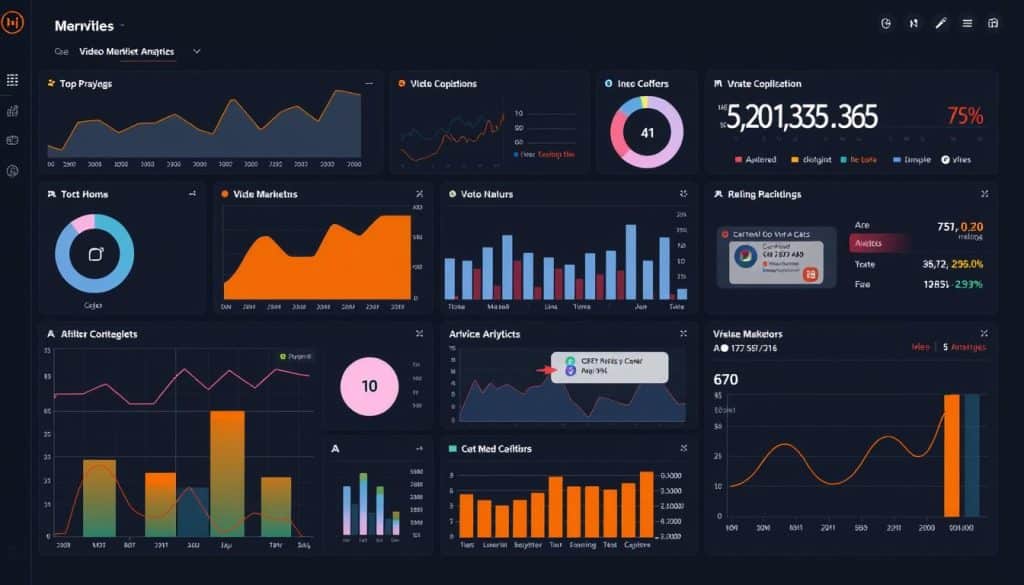
The key to optimizing your video marketing strategy lies in accurately measuring its performance and ROI. To achieve this, you need to track the right metrics and understand how they impact your business outcomes.
Key Performance Indicators for Video Content
To measure the success of your video content, you need to focus on relevant KPIs. These may include view count, engagement metrics (such as likes, comments, and shares), watch time, and click-through rates. By monitoring these KPIs, you can gain insights into how your audience is interacting with your video content.
Platform-Specific Analytics
Different video platforms provide unique analytics. For instance, YouTube offers insights into view count, audience retention, and traffic sources, while TikTok provides metrics on views, likes, and shares. Understanding these platform-specific analytics is crucial for optimizing your video content for each platform.
Connecting Video Metrics to Business Outcomes
To demonstrate the ROI of your video marketing efforts, you need to connect video metrics to business outcomes. This involves using attribution models to link video engagement to downstream conversions and customer actions. By doing so, you can provide insights into how video content contributes to broader customer journeys and purchase decisions.
Some key strategies for connecting video metrics to business outcomes include:
- Using attribution models to link video engagement to conversions
- Conducting multi-touch analysis to understand the role of video in customer journeys
- Calculating the economic value of video performance metrics
By implementing these strategies, you can translate video performance metrics into financial impact estimates, thereby demonstrating the ROI of your video marketing efforts to executive stakeholders.
Creating Interactive and Immersive Video Experiences
Interactive and immersive video experiences are revolutionizing the way businesses connect with their audiences. As technology advances, we are seeing a significant shift towards more engaging and participatory content that not only captures viewers’ attention but also encourages active participation.
One of the key benefits of interactive video content is its ability to transform passive viewing into an engaging experience. By incorporating elements that require viewer interaction, businesses can create more memorable and effective marketing campaigns.
360-Degree and Virtual Reality Videos
360-degree and Virtual Reality (VR) videos offer viewers a fully immersive experience, allowing them to explore a product, environment, or scenario in depth. This level of engagement can be particularly effective for product demonstrations, virtual tours, and experiential marketing campaigns. By providing a more interactive and immersive experience, businesses can increase viewer engagement and enhance the overall impact of their video content.
To maximize the effectiveness of 360-degree and VR videos, it’s essential to consider the technical requirements and platform capabilities. Ensuring that the content is optimized for various devices and platforms will help reach a broader audience.
Interactive Elements and Shoppable Videos
Interactive elements, such as clickable hotspots, branching narratives, and shoppable videos, enable viewers to engage more directly with the content. Shoppable videos, in particular, connect content directly to commerce, reducing the friction between inspiration and purchase. By incorporating these interactive elements, businesses can guide viewers toward specific actions while providing value through enhanced content experiences.
- Clickable hotspots allow viewers to access additional information or navigate to different parts of the video.
- Branching narratives enable viewers to influence the storyline or outcome based on their choices.
- Product tags and direct purchase functionality facilitate a seamless shopping experience.
By leveraging these interactive features, businesses can create a more dynamic and engaging video experience that drives conversion and enhances customer satisfaction.
Building a Sustainable Video Content Calendar
To achieve long-term success in video digital marketing, developing a sustainable video content calendar is essential. A well-structured calendar helps in planning, organizing, and scheduling video content across various platforms, ensuring consistency and efficiency in your marketing efforts.
Planning Content Themes and Series
Planning content themes and series is a critical aspect of creating a sustainable video content calendar. By identifying core themes that resonate with your target audience, you can develop a series of videos that not only engage your viewers but also establish your brand as a thought leader in the industry.
- Identify core themes relevant to your audience and brand.
- Develop a content series around these themes to maintain consistency.
- Use storytelling techniques to make your content more engaging.
Repurposing Video Content Across Channels
Repurposing video content across different channels maximizes the return on your production investments. With platforms like YouTube increasing the maximum length for YouTube Shorts to 3 minutes, it’s easier to adapt content for various formats.
- Adapt your core video assets for different platforms and formats.
- Use automation and templating to streamline the repurposing process.
- Ensure message consistency while optimizing for platform-specific requirements.
By implementing these strategies, you can create a robust video marketing strategy that saves time and resources while enhancing your overall marketing performance.
Overcoming Common Video Marketing Challenges
The path to a successful video digital marketing strategy is often fraught with challenges that require careful navigation. As marketers, we must be aware of these obstacles and develop strategies to overcome them effectively.
Budget Constraints and Resource Limitations
One of the primary challenges in video marketing is dealing with budget constraints and resource limitations. Creating high-quality video content can be expensive, and not all businesses have the necessary resources. To address this, we can focus on cost-effective production methods, such as using in-house talent or leveraging user-generated content. Additionally, repurposing existing content into video format can be a cost-efficient way to expand our video library.
Maintaining Consistent Quality and Branding
Maintaining consistent quality and branding across all video content is crucial for building a strong brand identity. To achieve this, we need to establish clear brand guidelines and ensure that all video content adheres to these standards. This includes using consistent visual elements, tone, and messaging across all videos. Regular audits of our video content can help identify areas for improvement and ensure that our branding remains consistent.
Adapting to Platform Algorithm Changes
Adapting to platform algorithm changes is another significant challenge in video marketing. Algorithm preferences vary significantly across platforms, with some favoring longer watch times while others prioritize engagement or completion rates. To stay ahead, we need to stay informed about these changes and adjust our video marketing strategy accordingly. Diversifying our video content across multiple platforms can reduce our vulnerability to algorithm changes on any single channel. By focusing on audience value and engagement fundamentals, we can build resilience against most algorithm shifts.
- Platform algorithms constantly evolve, requiring marketers to stay informed and adapt their video strategies accordingly.
- Diversification across platforms reduces vulnerability to algorithm changes on any single channel.
- Focus on audience value and engagement fundamentals provides resilience against most algorithm shifts.
By understanding these challenges and implementing strategies to overcome them, we can create a robust video digital marketing strategy that drives results.
Future Trends in Video Digital Marketing
As we look to the future, video digital marketing is poised to undergo significant transformations driven by technological advancements and shifting consumer behaviors. The way we create, distribute, and consume video content is evolving rapidly, and marketers must adapt to stay ahead.
Emerging Technologies and Formats
New technologies are revolutionizing the video marketing landscape. Innovations such as AI-powered video creation tools, 360-degree videos, and virtual reality experiences are opening up fresh avenues for engaging audiences. For instance, leveraging AI in video creation can help personalize content at scale, enhancing viewer experience and boosting campaign effectiveness.
Emerging formats, such as interactive and shoppable videos, are also gaining traction. These formats allow for a more immersive and engaging viewer experience, potentially leading to higher conversion rates. As technology continues to advance, we can expect to see even more innovative video formats emerge.
| Technology | Description | Marketing Impact |
|---|---|---|
| AI-Powered Video Creation | Automates video production using artificial intelligence | Personalization, Efficiency |
| 360-Degree Videos | Provides an immersive viewing experience | Engagement, Storytelling |
| Virtual Reality (VR) Experiences | Creates fully immersive environments | Immersive Engagement, Brand Recall |
Changing Consumer Video Consumption Habits
video consumption habits continue to evolve, influenced by technological, social, and cultural factors. It’s projected that adults will spend three hours and 30 minutes per day watching digital video by 2028, about half an hour more than the 2024 average. In 2024, digital video consumption surpassed TV viewing time in the U.S. for the third year in a row.
Platform preferences are shifting over time, with audience migration creating new opportunities and challenges for marketers. Content format preferences are also evolving, from changes in optimal video length to expectations around production style and authenticity. Generational differences in video consumption create the need for varied approaches to reach different audience segments effectively.
To stay ahead, marketers must be agile and responsive to these changes, adapting their strategies to align with evolving consumer habits and preferences. By doing so, they can ensure their video marketing efforts remain effective and engaging for their target audience.
Conclusion: Implementing Your Future-Proof Video Marketing Strategy
Implementing a robust video marketing strategy is no longer a choice but a necessity for brands aiming to stay ahead in the digital landscape. As we’ve explored throughout this article, the future of digital marketing is increasingly video-centric, with brands that develop strong video capabilities gaining significant competitive advantages.
The effectiveness of video in digital marketing is underscored by the success stories of major retailers like Amazon and eBay, who report greater sales conversions when using video ads. According to YouTube, people watch over a billion hours of video and generate billions of views on their site daily. This data highlights the immense potential of video content in capturing audience attention and driving engagement.
To implement a comprehensive video marketing strategy, several key factors must be considered. Firstly, thoughtful planning and resource allocation are crucial, alongside ongoing optimization to ensure the strategy remains effective over time. A phased implementation approach allows for capability building and learning while delivering immediate value through high-priority content.
Moreover, continuous improvement processes are essential to ensure your strategy evolves based on performance data and changing market conditions. Cross-functional collaboration is also vital, as it strengthens implementation by aligning marketing, creative, production, and analytics perspectives. By adopting this holistic approach, brands can create a video marketing strategy that not only meets immediate tactical needs but also builds long-term capabilities for future growth.
For businesses looking to boost their revenue through effective content and brand strategy, we recommend exploring our expertise in this area. You can learn more about how we can help you boost revenue with our content brand strategy. By leveraging the right video marketing strategies and staying adaptable to the evolving digital landscape, brands can achieve significant results and maintain a competitive edge.
In conclusion, the future of digital marketing is here, and it’s vibrant with video at its core. We encourage you to begin implementing these strategies today to position your brand for success in the increasingly video-dominated digital landscape.
FAQ
What are the key elements of a successful video content plan?
A successful video content plan involves understanding your target audience, setting clear goals, and creating compelling narratives that drive engagement and conversions.
How do I measure the effectiveness of my video marketing efforts?
To measure the effectiveness of your video marketing efforts, track key performance indicators such as view count, engagement rates, and conversion rates, and use platform-specific analytics to gain insights into your audience’s behavior.
What types of video content work best for different stages of the customer journey?
Different types of video content work best for different stages of the customer journey, such as brand and awareness videos for the awareness stage, educational and how-to videos for the consideration stage, and product demonstration videos for the decision stage.
How can I optimize my video content for search and discoverability?
To optimize your video content for search and discoverability, use video SEO best practices such as creating effective titles, descriptions, and tags, and ensure your videos are mobile-friendly and have fast loading times.
What are the benefits of using AI-powered video creation and editing tools?
AI-powered video creation and editing tools can help streamline your video production process, reduce costs, and improve efficiency, allowing you to create high-quality videos at scale.
How can I repurpose my video content across different channels and platforms?
To repurpose your video content, consider re-editing and re-formatting your videos for different platforms, such as turning long-form content into shorter, bite-sized clips for social media.
What are some common challenges in video marketing, and how can I overcome them?
Common challenges in video marketing include budget constraints, maintaining consistent quality, and adapting to platform algorithm changes. To overcome these challenges, focus on planning and budgeting, investing in quality equipment, and staying up-to-date with the latest platform trends and best practices.