

In today’s digital landscape, having a high-ranking website is crucial for online success. With over 93% of online experiences starting with a search, the importance of SEO cannot be overstated. Yet, getting your site to rank on Google is harder than ever, with multiple factors at play, including on-page content, performance, and backlink profile.
We understand the challenges and are here to help. Our comprehensive guide will walk you through the process of improving your website’s SEO using proven techniques and free tools. By the end of this guide, you’ll have a clear roadmap to enhance your site’s visibility in search results.
Key Takeaways
- Understand what search engines look for when ranking websites.
- Learn how to conduct a thorough SEO audit using free tools.
- Discover practical steps to implement key SEO improvements.
- Enhance your site’s visibility and drive organic traffic.
- Measure your progress and continue to improve your ranking over time.
Understanding the Importance of Website SEO
As we navigate the complexities of online visibility, the role of SEO in website ranking becomes increasingly evident. Search engines play a pivotal role in determining the success of a website, and understanding how they work is crucial.
Why SEO Matters for Your Online Presence
SEO is vital because it helps search engines understand the structure and content of your website, making it easier for users to find you. By optimizing your website for search engines, you can improve your online presence and reach your target audience more effectively.
How Search Engines Rank Websites
Search engines use complex algorithms to rank websites based on various factors, including technical infrastructure, content quality, and authority signals. Understanding these factors is key to improving your website’s ranking.
To illustrate how search engines rank websites, consider the following factors:
- Technical infrastructure: How well is your website structured?
- Content quality: Is your content relevant and engaging?
- Authority signals: Are other reputable sites linking to yours?
| Factor | Importance | Impact on Ranking |
|---|---|---|
| Technical Infrastructure | High | Improves crawlability and user experience |
| Content Quality | High | Enhances relevance and engagement |
| Authority Signals | Medium | Boosts credibility and trust |
For more insights on the importance of SEO, visit our detailed guide on the importance of search engine optimization and explore additional resources at test.cres.vip.
Essential Free Website SEO Tools to Get Started
Getting started with SEO can be daunting, but with the right free tools, you can set your website up for success. To elevate your website’s performance, it’s crucial to leverage tools that can analyze, identify, and rectify SEO issues. We recommend starting with tools that offer comprehensive audits and insights into your website’s SEO health.
SEOptimer: Comprehensive Free SEO Analysis
SEOptimer is a powerful tool that provides a comprehensive SEO analysis. It scrutinizes your website’s SEO performance, offering insights into areas that need improvement. With SEOptimer, you can analyze your website’s URL structure, meta tags, and overall site health.
Seobility: Technical SEO Checker
Seobility is a technical SEO checker that helps identify and fix SEO errors. It crawls your website to detect issues such as broken links, redirects, and server errors, providing a detailed report to enhance your website’s SEO score.
Sitechecker: On-Page SEO Auditing
Sitechecker specializes in on-page SEO auditing, allowing you to analyze individual URLs or entire websites. It identifies optimization opportunities and provides step-by-step guides to address each issue, making it an invaluable tool for enhancing your website’s SEO.
- Analyzes individual URLs or entire websites for optimization opportunities.
- Crawls pages to identify issues like broken links and server errors.
- Groups issues by category and SEO importance for prioritized fixes.
- Provides step-by-step guides for addressing identified issues.
- Offers weekly audit scheduling for continuous monitoring.
- Generates comprehensive reports that can be shared with team members or clients.
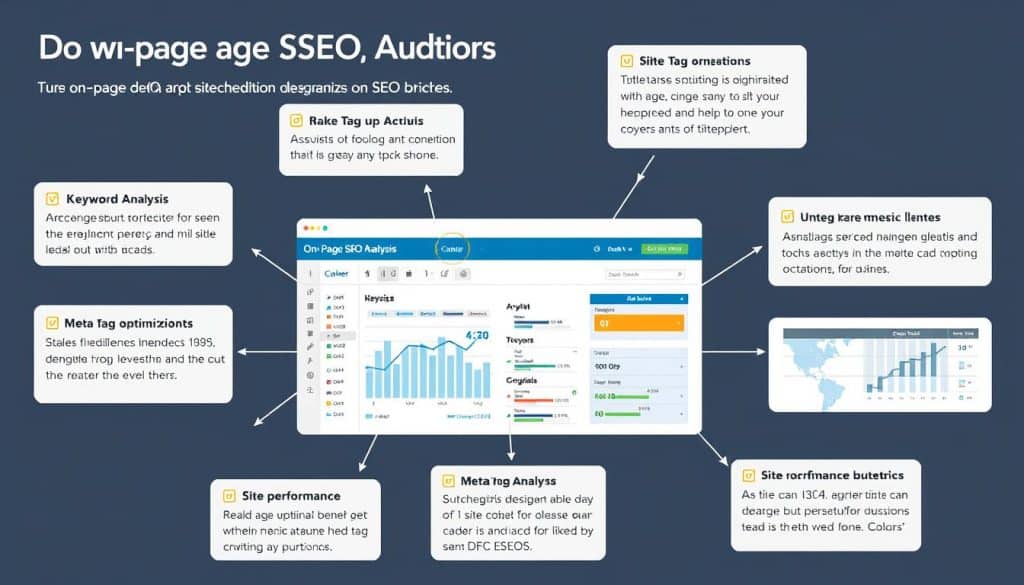
By utilizing these free SEO tools, you can significantly improve your website’s SEO performance and enhance its visibility on search engines. Start leveraging these tools today to audit and optimize your website for maximum impact.
Step-by-Step Guide to Conducting a Free SEO Audit
Boosting your site’s search engine ranking starts with a detailed SEO audit that provides actionable insights. We will guide you through the process, ensuring you understand each step and its significance in improving your website’s SEO.
Analyzing Your Website's Current SEO Score
Your website’s SEO score is an average score across all its pages, starting with 100 points for each page. We deduct points for each error found, giving you a comprehensive view of your site’s SEO health. This score is crucial as it highlights areas needing improvement.

Identifying Critical Technical SEO Issues
Not all SEO issues have the same impact on your search performance. We’ll help you identify critical technical SEO issues that significantly affect your site’s ranking. This involves examining your site’s structure, loading speed, and mobile responsiveness.
Prioritizing SEO Improvements for Maximum Impact
To maximize your SEO efforts, it’s essential to prioritize improvements based on their potential impact on your search rankings and user experience. We categorize issues into critical, important, or minor, helping you allocate resources efficiently.
| Issue Type | Impact on SEO | Effort Required |
|---|---|---|
| Critical | High | Significant |
| Important | Moderate | Moderate |
| Minor | Low | Minimal |
By understanding the relationship between different SEO elements and prioritizing improvements accordingly, you can create a structured SEO improvement roadmap. This roadmap will address technical issues, content optimization, and authority building, ensuring a compounding positive impact on your site’s search engine ranking.
Implementing Key SEO Improvements Without a Budget
To enhance your website‘s visibility, implementing key SEO improvements is crucial, even on a limited budget. We understand that not every business has the resources to invest in extensive SEO campaigns, but there are still numerous effective strategies that can be implemented without breaking the bank.
Optimizing Meta Tags and On-Page Content
One of the simplest and most effective SEO improvements is optimizing your page meta tags and on-page content. Ensure that each page has a unique and descriptive title tag, meta description, and header tags. For more detailed guidance, you can refer to our comprehensive guide on free SEO strategies. Use keyword-rich content that is relevant to your target audience, but avoid keyword stuffing.
Fixing Broken Links and Improving Site Structure
A well-structured site with no broken links improves user experience and search engine crawlability. Regularly audit your website to identify and fix broken links. You can also improve your site structure by organizing your content into clear categories and subcategories, making it easier for users and search engines to navigate.
Enhancing Website Performance and Loading Speed
Website performance is critical for both user experience and search engine rankings. Use tools like Google PageSpeed Insights to identify areas for improvement. Techniques such as image optimization, browser caching, and code minification can significantly enhance your web page’s loading speed without requiring extensive technical expertise.
By implementing these strategies, you can significantly improve your website’s SEO without incurring substantial costs. Focus on providing high-quality, relevant content and ensure your website is technically sound to improve your search engine rankings.
Conclusion: Measuring Your SEO Success and Next Steps
The journey to SEO success doesn’t end here; it’s crucial to monitor and adapt your strategies for optimal results. Measuring your SEO success is vital for understanding the impact of your optimization efforts and identifying areas for continued improvement.
We recommend establishing a regular monitoring schedule using free SEO tools to track key metrics, including organic traffic, keyword rankings, and conversion rates. Creating a custom SEO dashboard can help visualize progress over time and communicate results to stakeholders, clients, or company leadership.
For businesses ready to elevate their SEO, exploring premium tools through their free trial periods can offer significant value. Additionally, leveraging free resources such as webinars, courses, and SEO communities can further enhance your expertise. Remember, SEO is an ongoing process that requires consistent attention and adaptation to algorithm changes and market conditions.
FAQ
What is the primary goal of conducting a site audit?
The primary goal of a site audit is to identify technical and on-page issues that impact your site’s ranking, allowing you to prioritize improvements for maximum impact.
How do search engines rank web pages?
Search engines rank web pages based on relevance, authority, and user experience, using complex algorithms that consider factors like keyword usage, link equity, and page loading speed.
What are some essential tools for analyzing website performance?
Tools like SEOptimer, Seobility, and Sitechecker provide comprehensive analysis and insights into your site’s SEO score, technical issues, and areas for improvement.
How can I improve my site’s loading speed?
Optimizing images, minifying code, leveraging browser caching, and improving server response times are effective strategies for enhancing your site’s loading speed and overall performance.
What role do meta tags play in SEO?
Meta tags, such as title tags and meta descriptions, provide search engines with crucial information about your page’s content, helping to improve visibility and click-through rates.
How often should I conduct an SEO audit?
Regular SEO audits, ideally every 6-12 months, help you stay on top of technical issues, track progress, and identify new opportunities for improvement.
Can I improve my site’s SEO without a large budget?
Yes, by focusing on optimizing on-page content, fixing technical issues, and enhancing user experience, you can drive meaningful SEO improvements without significant financial investment.