

Are you struggling to improve your website’s visibility on search engines despite having a robust online presence?
The secret to success lies in a well-planned link building strategy. In today’s digital landscape, quality backlinks play a crucial role in determining your website’s authority and ranking.
We will explore how strategic link acquisition can dramatically improve your website’s visibility and organic traffic potential. By focusing on high-quality backlinks, you can significantly enhance your online presence.
Key Takeaways
- Understand the importance of link building in improving search engine rankings
- Learn how to acquire high-quality backlinks that drive results
- Discover actionable strategies to boost your website’s authority and visibility
- Explore link building opportunities specific to the Qatar market
- Measure link building success and demonstrate ROI to stakeholders
The Critical Role of Links in Search Engine Rankings
Links play a pivotal role in search engine rankings, acting as votes of confidence that highlight a page’s relevance and authority. When other reputable websites link to your page, it signals to Google that your content is valuable and worthy of citation. This fundamental concept is rooted in Google’s PageRank algorithm, which assesses the importance of a page based on the number and quality of links pointing to it.

Understanding how links influence search engine rankings is crucial for developing an effective SEO strategy. The more high-quality backlinks a page has, the higher it tends to rank in search engine results pages (SERPs). However, it’s not just about accumulating links; the quality and relevance of those links are equally important.
How Google Uses Links to Determine Authority
Google uses links as a key factor in determining a page’s authority. The search engine evaluates not just the quantity of links but also their quality, considering factors such as the linking domain’s authority, the page’s topical relevance, and the context in which the link is placed. This sophisticated analysis helps Google distinguish between genuine endorsements and manipulative link schemes.
The Evolution of Link Building Since PageRank
Since the inception of Google’s PageRank algorithm, link building has evolved significantly. Initially, the focus was on acquiring as many links as possible. However, as search engines became more sophisticated, the emphasis shifted towards quality over quantity. Modern link building prioritizes relevance, user experience, and natural link acquisition, reflecting a more nuanced understanding of what constitutes a valuable link.
As we continue to explore the intricacies of link building, it’s clear that a well-crafted strategy must balance the need for high-quality links with an understanding of how search engines evaluate those links. By doing so, businesses can improve their search engine rankings and drive more qualified traffic to their websites.
Understanding the Anatomy of a High-Quality Backlink
Understanding what makes a high-quality backlink is essential for effectivelink building. To define the quality of a backlink, different elements have to be considered.
The origin of the backlink is crucial, as it determines the link’s strength based on factors like semantic and topic consistency, reputation, authority, and ranking. As stated by SEO experts, “A backlink from a reputable source can significantly boost your website’s credibility.”
A high-quality backlink has several key characteristics. We’ll explore these in detail below.
Authority Metrics That Matter
Domain authority metrics such as Moz’s Domain Authority, Ahrefs’ Domain Rating, and Majestic’s Trust Flow provide valuable insights into a linking website’s potential value. These metrics help us understand the authority and credibility of the linking site.
Key authority metrics include:
- Domain Authority
- Domain Rating
- Trust Flow
Relevance and Contextual Factors
The relevance between the linking site and your website is crucial. Links from websites in your industry or related fields carry significantly more weight than random, unrelated sources. The context surrounding a link, including the paragraph topic and nearby keywords, provides additional signals to search engines about your page’s relevance.
The position of a link on a page also impacts its value. In-content editorial links typically provide more SEO benefit than sidebar, footer, or comment links.

Beyond SEO: Additional Benefits of Strategic Link Building
While link building is often associated with SEO, its benefits extend far beyond search engine rankings. By engaging in strategic link building, businesses can unlock multiple streams of value that significantly impact their online presence and overall marketing effectiveness.
One of the key advantages of link building is the opportunity to build industry relationships. Through outreach efforts, businesses can establish long-term connections with key influencers and website owners in their niche. These relationships can lead to valuable partnerships, speaking opportunities, and business collaborations that might not have been possible otherwise.
Building Industry Relationships
Effective link building involves more than just acquiring links; it’s about creating a network of industry contacts. By promoting high-quality content and engaging with other websites, businesses can foster meaningful relationships that contribute to their industry standing.
Driving Qualified Referral Traffic
Quality backlinks from relevant websites drive targeted referral traffic that often converts at higher rates than other traffic sources. This is because users clicking on these links are already interested in the content or services offered by the linked website.
| Benefits of Link Building | Description | Impact |
|---|---|---|
| Industry Relationships | Establishes connections with influencers and website owners | Partnerships, speaking opportunities, collaborations |
| Referral Traffic | Drives targeted traffic from relevant websites | Higher conversion rates |
| Brand Visibility | Enhances brand presence across the industry | Increased authority and trust |
By leveraging strategic link building, businesses in Qatar can not only improve their search engine rankings but also establish themselves as authorities in their industry, driving both traffic and revenue.
Natural vs. Artificial Link Building Approaches
As search engines continue to evolve, understanding the nuances between natural and artificial link building is essential. The way links are acquired can significantly impact a website’s credibility and ranking. We will explore the differences between these two approaches and their implications for SEO.
Google's Guidelines on Link Schemes
Google draws a clear distinction between natural, editorially-given links and artificial links created primarily for manipulating search rankings. According to Google’s Webmaster Guidelines, link schemes that deceive or manipulate the system can trigger manual or algorithmic penalties. Understanding these guidelines is crucial for developing a sustainable link building strategy. Practices such as buying links, participating in link schemes, or using automated programs to create links are considered manipulative and can result in penalties.
The Penguin Algorithm and Its Impact on Link Building
The Penguin algorithm, first introduced in 2012, fundamentally changed link building by penalizing websites with unnatural link profiles and manipulative practices. The evolution of Penguin from periodic updates to real-time integration into Google’s core algorithm has increased both the risks and speed of penalties. As a result, it’s essential to focus on natural link earning by creating truly valuable content or resources that people genuinely want to reference.
By understanding the difference between white-hat, gray-hat, and black-hat link building approaches, we can develop a strategy that not only complies with Google’s guidelines but also contributes to a sustainable online presence. A natural link building strategy requires a long-term commitment to quality content and genuine relationship building.
Proven SEO Link Building Strategies for 2023
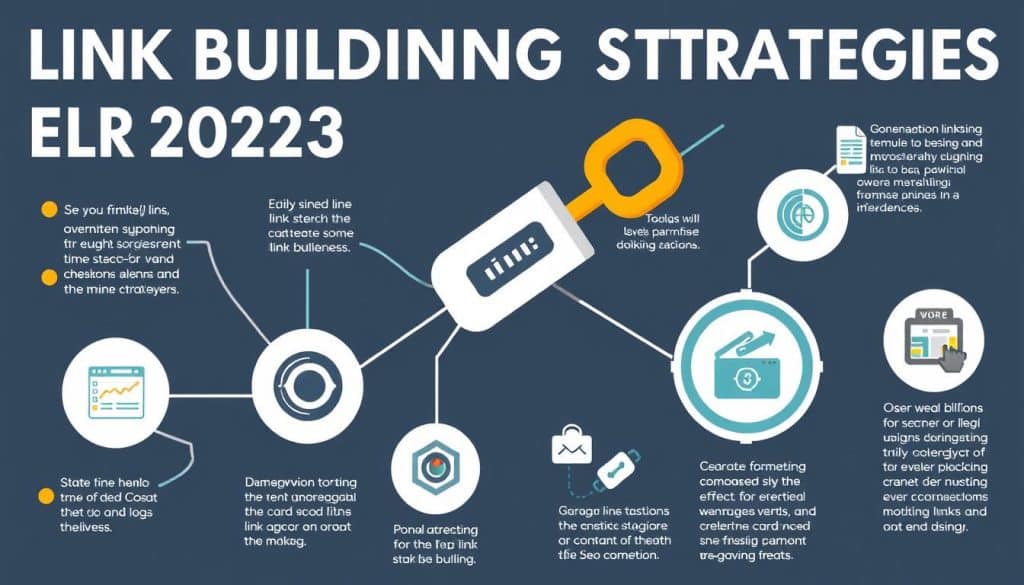
In the ever-evolving landscape of SEO, effective link building remains a crucial factor in determining search engine rankings. As we explore the most effective strategies for 2023, it’s essential to understand that link building is not just about accumulating links; it’s about creating a robust online presence that resonates with both users and search engines.
Link building is the process of getting other websites to link to pages on your website, thereby boosting the “authority” of your pages in the eyes of Google. This authority is crucial for achieving higher rankings and driving more search traffic. The most popular link building strategies can be categorized into four main buckets: adding links, asking for links, buying links, and earning links.
Content-Driven Link Acquisition
Content-driven link acquisition focuses on creating exceptional resources that naturally attract links through their inherent value to your target audience. In 2023, effective link building requires a strategic blend of content excellence, relationship development, and technical understanding of what makes links valuable.
Data-driven content, original research, and industry surveys consistently outperform other content types for attracting high-quality backlinks. By creating comprehensive guides, infographics, or interactive tools, you can provide value to your audience and encourage other websites to link back to your content.
Relationship-Based Link Building
Relationship-based link building leverages personal connections with journalists, bloggers, and industry experts to secure editorial mentions and links. The most successful link builders are investing in long-term relationship development rather than transactional, one-off outreach campaigns.
To identify and prioritize link opportunities, consider their potential SEO impact, difficulty of acquisition, and alignment with your business goals. Strategic content promotion is equally important as content creation; effective distribution channels ensure your linkable assets reach the right audiences.
The Skyscraper Technique: Creating Superior Content

The Skyscraper Technique, popularized by Brian Dean of Backlinko, remains one of the most effective content-driven link building strategies in 2023. This approach involves identifying already-popular content in your industry, creating something substantially better, and then reaching out to websites linking to the original content.
To execute this technique successfully, you need to understand the key elements that make it work. First, you need to find outdated or inferior content that lots of websites are linking to. Then, you need to create a much better version of that content on your own website. Finally, you need to show your superior content to the “linkers” and persuade them to link to your content instead.
Finding Outdated or Inferior Content
To find link-worthy topics, you can use tools like Ahrefs, SEMrush, and BuzzSumo to identify content with strong backlink profiles. These tools can help you analyze the links pointing to a particular piece of content and identify areas where you can create something better.
When analyzing the original content, look for weaknesses and information gaps that you can fill with your superior content. This could include updating statistics, improving visual elements, or providing more comprehensive information.
Outreach Strategies for Skyscraper Content
Once you have created your superior content, you need to reach out to the websites linking to the original content. The key to successful outreach lies in clearly communicating the specific value your improved content offers over the piece they’re currently linking to.
For example, our research on “How long does it take to rank in Google?” has attracted almost 3,000 backlinks from about 1,700 different websites. This is a great example of how the Skyscraper Technique can be used to attract high-quality links. You can read more about our successful SEO strategies on our blog: https://oldy2.cres.vip/our-best-seo-strategy-for-increasing-the-traffic-of-the-website-works/
Guest Blogging as a Strategic Link Building Approach
When executed properly, guest blogging can be a game-changer for link building, helping businesses establish themselves as industry thought leaders. Guest blogging involves creating high-quality content for other reputable websites, which in turn, can link back to your website, enhancing your online presence.
Guest blogging remains a powerful link building strategy when approached with a focus on quality, relevance, and value rather than quantity. To maximize its potential, it’s crucial to identify high-quality guest posting opportunities that will actually impact your rankings.
Finding Quality Guest Posting Opportunities
To find the right guest blogging targets, you need to evaluate metrics like domain authority, organic traffic, audience engagement, and editorial standards. This ensures that you’re not only getting high-quality backlinks but also exposing your content to a relevant and engaged audience.
Some key factors to consider when evaluating potential guest blogging opportunities include:
- Relevance: Is the website’s content relevant to your industry or niche?
- Authority: Does the website have a high domain authority and trust flow?
- Audience engagement: Are the website’s readers actively engaging with the content?
Crafting Guest Posts That Generate Strong Links
The most effective guest posts provide genuine value to the host site’s audience while strategically incorporating links back to your relevant resources. To achieve this, you need to understand the host site’s audience, content style, and the types of resources they find valuable.
For more insights on effective SEO strategies, explore our comprehensive guide on elevating your online presence through SEO mastery.
By focusing on quality and relevance, you can create guest posts that not only generate strong links but also help you build meaningful relationships with influencers in your industry.
Leveraging Competitor Analysis for Link Building
Analyzing your competitors’ backlink profiles can reveal a wealth of link opportunities that are already relevant to your industry. If someone is linking to your competitor, there’s a good chance that they might be open to linking to you too. This strategy involves studying who links to the actual homepages of your competitor’s websites, as these links are indicative of a general interest in the business rather than a specific webpage.
To kick off this strategy, we start by examining the homepage links of our competitors. These links are valuable because they represent a broad interest in the business. Next, we analyze which pages on our competitor’s website have the most links. Tools like Ahrefs provide a “Best by links” report that helps identify the types of pages that attract the most links.
Tools for Analyzing Competitor Backlinks
Several tools are available for conducting a comprehensive competitor backlink analysis. Ahrefs, SEMrush, and Moz are among the top choices, offering insights into the backlink profiles of competitor websites. These tools help identify the most valuable link targets and understand the types of content that attract the most links in your industry.
By using these tools, we can gain a deeper understanding of our competitors’ link building strategies and identify opportunities to acquire similar links. For instance, analyzing the anchor text distribution in competitors’ backlink profiles can provide insights into effective keyword targeting strategies.
Strategies for Acquiring Similar Links
Once we have identified potential link targets, we need to develop strategies to acquire these links. One approach is to reach out to websites that link to multiple competitors but not to us. These websites represent the lowest-hanging fruit in our link building efforts. We can also identify content gaps where we can create superior resources that attract links away from competitor pages.
Setting up backlink monitoring alerts for competitors allows us to quickly identify new link opportunities as they emerge. The most effective competitor-based link building combines data analysis with creative approaches to provide unique value that competitors aren’t offering.
Broken Link Building: Finding and Capitalizing on Opportunities

Broken link building is a strategic approach to acquiring high-quality backlinks by identifying and replacing dead links on other websites. This technique not only helps in improving your website’s SEO but also assists webmasters in fixing broken links, creating a win-win scenario.
To capitalize on broken link building, we need to identify dead pages that have lots of links pointing to them. We then create an alternative on our own website and notify the linkers about the new content. This process involves using the potential of 404 pages effectively.
Identifying Broken Links in Your Niche
To start, we use systematic approaches to find broken links at scale. Tools like Check My Links, Broken Link Checker, and Ahrefs’ broken link checker are invaluable in this process. Industry resource pages, outdated roundups, and websites of defunct companies or products are particularly fertile ground for broken link opportunities.
By identifying these broken links, we can create a list of potential targets for our outreach efforts. It’s essential to understand that the goal is not just to replace a dead link but to provide value to the website owner by fixing a broken link and enhancing their content.
Creating Replacement Content and Outreach
Creating effective replacement content requires understanding why the original page earned links and ensuring our alternative provides equal or greater value. This involves analyzing the context in which the original link was shared and creating content that is relevant and useful.
Our outreach strategies emphasize the value we’re providing to the website owner rather than what we’re asking for in return. The psychology behind broken link building makes it more effective than cold outreach—we’re solving a problem rather than simply requesting a favor.
By leveraging broken link building, we can not only acquire high-quality backlinks but also build relationships with other website owners in our niche. This approach, when done correctly, can significantly enhance our online presence and drive more traffic to our website.
Unlinked Brand Mentions: Converting Citations to Links
One of the most effective yet underutilized link building tactics involves converting unlinked brand mentions into links. Unlinked brand mentions represent one of the lowest-hanging fruits in link building—these are websites already talking about you but not linking to you.
To capitalize on these opportunities, it’s crucial to systematically track when your brand is mentioned online. Various tools can help in discovering unlinked mentions, making it easier to convert them into valuable backlinks.
Tools for Discovering Unlinked Mentions
Tools like Google Alerts, Mention, Ahrefs Content Explorer, and BrandMentions are instrumental in monitoring brand mentions across the web. Setting up automated monitoring systems ensures you never miss a valuable linking opportunity when someone discusses your brand, products, or services.
Effective Outreach for Mention Conversion
Converting mentions to links typically has a high success rate because the website owner has already demonstrated interest in your brand. Effective outreach involves making it easy for publishers to add your link without seeming demanding or entitled. The key to successful mention conversion lies in timing—reaching out while the content is still fresh increases your chances of securing the link.
Beyond your brand name, monitoring mentions of your executives, unique product names, and proprietary methodologies can uncover additional link opportunities. By leveraging these unlinked brand mentions, you can significantly enhance your link building strategy and improve your website’s visibility.
Image Link Building and Visual Content Strategies

In the realm of SEO, image link building stands out as a highly effective strategy for generating high-quality backlinks. Visual content consistently outperforms text-only content in attracting backlinks, with infographics, data visualizations, and original photography being particularly effective.
Creating Linkable Visual Assets
To leverage image link building, you need to create highly shareable visual assets. This involves best practices in design, data presentation, and distribution. Original research presented visually generates significantly more backlinks than generic stock images or basic graphics. We’ll explore how to create such assets, including the use of original data and unique visual perspectives.
Creating visual assets with embedded branding ensures that even when images are shared without links, they still provide brand exposure. This can be achieved by incorporating your brand’s logo or other identifying features into the visual content.
Reclaiming Links for Used Images
Image link reclamation is another crucial aspect of image link building. It involves finding websites that have used your images without proper attribution and requesting a link. Tools like Google Images, TinEye, and Pixsy can be used to identify such instances. By reaching out to these websites, you can request proper credit in the form of a backlink.
Advanced techniques include creating image embed codes that automatically include attribution links when others use your visual content on their websites. This not only simplifies the process for others using your content but also ensures you receive the credit you deserve.
By implementing these strategies, businesses can significantly enhance their link building efforts, driving more traffic and improving their online presence.
Link Building Opportunities Specific to Qatar
Qatar’s digital landscape presents unique opportunities for link building that can give businesses a competitive edge in the region. As we explore the strategies for enhancing your online presence, it’s crucial to understand the local factors that influence link acquisition.
When targeting the Qatari market, businesses can leverage several local resources to improve their link profile. One effective strategy is to identify and list your business in high-authority Qatar-specific directories and business listings.
Local Business Directories and Resources
Listing your business in local directories is a straightforward way to acquire high-quality links. Some of the most authoritative directories include government resources and industry-specific listings. For instance, registering your business with the Qatar Chamber of Commerce can provide a valuable backlink from a trusted domain.
- Qatar Business Directory
- Ministry of Commerce and Industry listings
- Local industry associations and their member directories
Building Authority in the Middle Eastern Market
To build authority in the Middle Eastern market, it’s essential to understand regional content preferences and create resources that address specific local needs and interests. This involves not only producing high-quality content but also engaging with local influencers, bloggers, and news outlets.
Creating content in both English and Arabic can significantly enhance your link building efforts, as it caters to a broader audience within the region. Moreover, participating in local events, sponsorships, and community initiatives can generate valuable backlinks from trusted Qatar domains.
By focusing on these strategies, businesses can strengthen their online presence and improve their website’s authority in the Qatari market.
Optimizing Anchor Text Distribution for Natural Link Profiles
Optimizing anchor text distribution is crucial for a natural link profile and improved SEO rankings. A well-balanced anchor text strategy helps avoid penalties from search engines while enhancing your website’s visibility on search engine results pages (SERPs).
Anchor text distribution refers to the variety of text used in hyperlinks pointing to your website. Search engines like Google analyze this distribution to determine the relevance and authority of your site. A natural anchor text profile is diverse, including a mix of branded anchors, naked URLs, generic text, and keyword-rich anchors.
Understanding Ideal Anchor Text Ratios
Understanding the ideal anchor text ratios is essential for maintaining a natural link profile. Research suggests that a healthy anchor text distribution should have:
- No more than 3% of links with exact-match keyword anchors.
- A maximum of 5% long-tail keyword anchors.
- The remaining 92% comprising branded anchors, naked URLs, and generic text like “Click here” or “Visit our website.”
To achieve these ratios, it’s crucial to analyze the link profiles of top-ranking websites in your industry. This benchmarking helps in understanding what constitutes a natural anchor text distribution in your niche.
Avoiding Over-Optimization Penalties
Over-optimization of anchor text can lead to severe penalties from search engines, significantly impacting your rankings. To avoid this, it’s essential to maintain a diverse anchor text profile. Over-optimization occurs when a website has an unnaturally high percentage of exact-match keyword anchors, indicating manipulative link building practices.
We recommend regularly monitoring your link profile and adjusting your anchor text distribution as needed. This includes tracking new links and ensuring that they contribute to a natural and diverse anchor text profile.
By following these guidelines and maintaining a balanced anchor text strategy, you can improve your website’s SEO rankings while minimizing the risk of penalties.
Measuring the Success of Your Link Building Campaigns
To understand the impact of your link building efforts, you need to measure their success accurately. Effective measurement is crucial for optimizing your link building strategy and demonstrating ROI to stakeholders or clients. Growing your link building has several benefits that impact each other, including greater authority for Google, improved website ranking on the SERP, greater and qualified organic traffic, increased brand awareness, and increased turnover.
Key Performance Indicators to Track
To measure the success of your link building campaigns, you need to track the right Key Performance Indicators (KPIs). These include link quantity, quality metrics, referral traffic, and downstream conversion impacts. Domain authority growth provides a holistic measure of your link building success, reflecting the cumulative impact of your efforts over time. Tracking ranking improvements for specific pages receiving backlinks can demonstrate the direct SEO impact of your link building efforts.
- Link quantity and quality metrics
- Referral traffic from backlinks
- Downstream conversion impacts
- Domain authority growth
- Ranking improvements for specific pages
Tools for Link Analysis and Reporting
Several tools can help you analyze and report on your link building efforts. Tools like Ahrefs, SEMrush, Majestic, and Google Analytics provide complementary data for comprehensive link analysis and reporting. When choosing tools, consider what metrics are most important to your stakeholders and select tools that provide those insights.
Creating effective link building reports requires focusing on metrics that matter to different stakeholders. We recommend providing templates for executive, marketing, and SEO-focused reporting to cater to various needs. By attributing conversions and revenue to your link building efforts, you can demonstrate the tangible value of your campaigns.
Conclusion: Building a Sustainable and Effective Link Strategy
As the digital marketing landscape continues to shift, the importance of a sustainable and effective link building strategy cannot be overstated. Throughout this comprehensive guide, we’ve explored various techniques and approaches to enhance your website’s online presence through strategic link acquisition.
A successful link building campaign requires a delicate balance between short-term tactics and long-term strategies. It’s essential to focus on creating genuinely link-worthy content and resources that add value to your audience. By doing so, you’ll not only improve your website’s authority but also drive qualified referral traffic.
Our analysis has shown that the most effective link building approaches combine multiple techniques tailored to your specific industry, resources, and goals. Consistency is key to link building success, and developing ongoing processes will help you steadily build your authority over time.
To get started, we recommend conducting a competitor analysis to identify quick wins, followed by developing a content strategy that addresses gaps and creates superior resources. Building relationships with key industry publishers, bloggers, and influencers should be a cornerstone of your long-term link building strategy.
For businesses operating in Qatar or targeting the Middle Eastern market, it’s crucial to consider local business directories and resources as part of your link building efforts. By focusing on high-quality links from authoritative industry websites, you’ll be able to outperform competitors and achieve your SEO goals.
Ultimately, a well-crafted link building strategy is essential for driving revenue growth through digital excellence. By aligning your link building efforts with broader marketing goals and creating valuable content that serves your audience, you’ll be able to achieve sustainable online success.
FAQ
What is the primary goal of a link building campaign?
The primary goal of a link building campaign is to increase the number of high-quality backlinks pointing to your website, thereby improving your search engine rankings and driving more qualified traffic to your site.
How do I identify high-quality websites for link building?
To identify high-quality websites for link building, we look for sites with strong authority metrics, relevance to your industry, and a genuine audience. Tools like Ahrefs and Moz can help assess a site’s credibility.
What is the Skyscraper Technique, and how does it work?
The Skyscraper Technique involves creating superior content that is more comprehensive and valuable than existing content on a particular topic. We then outreach to relevant sites that have linked to similar, inferior content, and ask them to link to our superior content instead.
How can I leverage competitor analysis for link building?
By analyzing your competitors’ backlink profiles, we can identify potential link opportunities that are relevant to your business. We use tools like Ahrefs to analyze competitor backlinks and create a strategy to acquire similar links.
What is broken link building, and how can it benefit my website?
Broken link building involves identifying broken links on other websites and offering to replace them with a working link to a similar article or resource on your site. This technique can help you acquire high-quality backlinks while also providing value to the website owner.
How do I measure the success of my link building campaigns?
To measure the success of your link building campaigns, we track key performance indicators such as the number of new backlinks acquired, the quality of those links, and the resulting impact on your search engine rankings and referral traffic.
What is the ideal anchor text distribution for a natural link profile?
A natural link profile typically has a diverse anchor text distribution, with a mix of branded, descriptive, and generic anchor texts. We aim to maintain a balanced anchor text ratio to avoid over-optimization penalties.
How can I optimize my website’s visual content for link building?
To optimize your website’s visual content for link building, we create high-quality, linkable visual assets such as infographics, charts, and images. We also ensure that our images are properly tagged and attributed to make it easy for others to cite and link to them.