

Are you leveraging your social media presence to its full potential in Qatar’s competitive digital landscape?
As a business decision-maker, you understand the importance of a robust digital strategy. A comprehensive audit of your media presence across various platforms is crucial to identify areas of improvement and opportunities for growth.
We guide you through a thorough analysis of your current social media strategy, pinpointing gaps and untapped opportunities. Our expert approach ensures you maximize your brand’s potential, driving measurable business results through data-driven insights.
Key Takeaways
- Understand your current digital presence and performance across various platforms.
- Identify critical gaps in your current media strategy.
- Gain actionable insights to align your social media efforts with broader business objectives.
- Discover untapped opportunities for growth and engagement.
- Maximize your brand’s potential through a data-driven approach.
Understanding the Power of Social Media Audits
In today’s digital landscape, understanding the true potential of your social media presence is crucial for business success. A social media audit provides teams with a clear understanding of their current performance by highlighting strengths, weaknesses, and opportunities within their current strategy. It also helps ensure social efforts are aligned with business objectives.
What is a Social Media Audit?
A social media audit is a comprehensive evaluation that examines every aspect of your brand’s social presence across platforms. Our approach to audits goes beyond surface metrics, diving deep into content performance, audience engagement, and strategic alignment. By doing so, we define social media audits as thorough assessments that leave no stone unturned in understanding your brand’s online presence.
Why Regular Audits Matter for Digital Growth
Regular social media audits serve as the foundation for data-driven decision-making in your social media marketing strategy. They reveal critical insights about audience behavior and preferences that casual observation might miss. By identifying underperforming channels and content types, audits allow for strategic resource reallocation, establishing clear benchmarks for measuring future growth and performance improvements. Moreover, regular audits prevent digital stagnation by keeping your strategy aligned with evolving platform algorithms and audience expectations, ultimately driving digital growth.
Key Benefits of Conducting a Social Media Audit

A comprehensive social media audit provides invaluable insights into your digital strategy’s strengths and weaknesses. By examining your current social media presence, you can identify areas that require improvement and opportunities for growth.
Identifying Strengths and Weaknesses in Your Strategy
Our approach to social media audit helps you evaluate your current strategy, highlighting what’s working and what needs adjustment. This process involves analyzing key metrics such as engagement rate, post frequency, and audience size to provide a clear picture of your online performance.
Aligning Social Efforts with Business Goals
A thorough media audit ensures that your social media efforts directly support your broader business objectives and KPIs. By aligning your social media strategy with your overall business goals, you can maximize your online impact and drive meaningful results.
Uncovering New Growth Opportunities
The audit process reveals untapped opportunities for audience growth, engagement improvement, and competitive differentiation. By leveraging these insights, you can develop targeted strategies to enhance your online presence and achieve your goals.
To illustrate the benefits of a social media audit, consider the following comparison of key metrics before and after conducting an audit:
| Metric | Before Audit | After Audit |
|---|---|---|
| Engagement Rate | 1.2% | 2.5% |
| Audience Size | 10,000 | 15,000 |
| Post Frequency | 3/week | 5/week |
As shown in the table, a social media audit can lead to significant improvements in key metrics, ultimately driving growth and enhancing your online presence.
Preparing for Your Social Media Audit
Understanding your objectives and gathering the right tools are essential steps in conducting a comprehensive social media audit. Before diving into the audit, it’s essential to revisit the social media goals you hoped to achieve with your marketing initiatives.
Your audit findings will determine if you’re on track or off, ensuring that your audit has a solid purpose and direction. We’ll guide you through establishing clear, measurable objectives for your social media audit that align with your business goals.
Setting Clear Objectives and KPIs
To conduct a successful social media audit, you need to identify the most relevant KPIs to track, including engagement rates, reach, click-through rates, and conversion metrics. This will help you measure the effectiveness of your social media strategy and make data-driven decisions.
| KPI | Description | Importance |
|---|---|---|
| Engagement Rate | Measures the level of engagement with your content | High |
| Reach | Indicates the number of people who viewed your content | Medium |
| Click-Through Rate | Measures the number of clicks on your content | High |
| Conversion Metrics | Tracks the number of conversions generated from social media | High |
Gathering Essential Tools and Resources
We’ll provide a comprehensive list of essential tools and resources that streamline the audit process and deliver more accurate insights. Some of the key tools include social media analytics software, content management tools, and social listening platforms.
By gathering the right tools and resources, you’ll be able to conduct a thorough social media audit and gain valuable insights into your social media performance.
Step 1: Taking Inventory of Your Social Media Accounts

Taking inventory of your social media accounts is a foundational step in understanding your online presence and preparing for an audit. To start, jot down all your social media accounts — everything from the platforms you use daily to the ones you may have neglected. Active or inactive, it’s crucial to catalog your online presence as part of your social media audit.
Creating a Comprehensive List of Active and Inactive Profiles
We’ll guide you through creating a comprehensive inventory of all your brand’s social media accounts, including those that may be dormant or forgotten. This process involves identifying both active and inactive profiles across various platforms. By doing so, you’ll be able to identify unauthorized accounts or impersonators that could be damaging your brand reputation.
Checking for Brand Consistency Across Platforms
Our approach helps you evaluate brand consistency across all platforms, ensuring your visual identity, messaging, and voice remain cohesive. You’ll learn how to audit profile completeness, checking that all relevant fields are optimized for discoverability and brand messaging. For more insights on elevating your business, visit our guide on expert lead generation tips.
Reviewing Account Security and Access Permissions
We’ll demonstrate how to conduct a thorough security review of all accounts, identifying potential vulnerabilities in your social media presence. Our methodology includes reviewing access permissions to ensure only appropriate team members have administrative rights to your accounts. This step is crucial for maintaining the security and integrity of your online presence.
Step 2: Analyzing Your Content Performance
To refine your social media strategy, it’s essential to dive into the performance of your content across various platforms. This step is crucial in understanding what resonates with your audience and what doesn’t, allowing you to make informed decisions about future content.
Identifying Top-Performing Posts and Content Types
Begin by listing your five top-performing posts for each social profile. Include links to these posts for easy review later. To identify top performers, rank your posts by engagement rate to see what your audience likes best. Look for patterns in your top posts, such as common themes, formats, or topics. This analysis will help you understand what drives engagement and how to replicate success in future content.
Evaluating Engagement Metrics Across Platforms
Engagement metrics vary across different social channels, so it’s crucial to evaluate them individually. For instance, likes and comments on Facebook may translate differently than retweets and replies on Twitter. By examining these metrics, you can tailor your content to better suit each platform’s unique audience and features, ultimately enhancing your overall social media presence.
Learning from Underperforming Content
Analyzing underperforming content is just as important as identifying top performers. By understanding what didn’t resonate with your audience, you can avoid similar content in the future and refine your content strategy. This process involves examining the type, format, and timing of underperforming posts to identify patterns or common issues. For more insights on optimizing your content strategy, you can refer to our guide on mastering community management strategies.
Step 3: Understanding Your Audience Demographics
Knowing your audience demographics inside out is the backbone of an effective social media audit. To truly understand your online presence, you need to dive deep into the characteristics and behaviors of your followers across different platforms.
Analyzing Follower Demographics and Behavior
Analyzing follower demographics involves more than just counting numbers; it’s about understanding who your audience is, what they are interested in, and how they interact with your content. For instance, Facebook might be the most popular platform for men aged 25-34, while YouTube dominates for the 18-49 age group. By leveraging platform-specific analytics tools, you can extract detailed demographic data about your audience, including age, gender, location, and interests.
Some key aspects to focus on include:
- Age and gender distribution of your followers
- Geographic locations of your audience
- Interests and behaviors that define your audience
- How your audience engages with different types of content
Ensuring Alignment Between Target Audience and Actual Followers
It’s crucial to ensure that your actual followers align with your target audience. Discrepancies can indicate issues with your content strategy or targeting. By comparing your ideal customer profiles with your actual follower demographics, you can identify gaps and adjust your strategy accordingly.
For example, if your target audience is young adults but your followers are predominantly older, you may need to adjust your content to better appeal to your desired demographic. This alignment is key to maximizing the effectiveness of your social media efforts and driving meaningful engagement.
Step 4: Conducting Competitive Analysis
Understanding your competitors’ social media strategies can significantly boost your online presence. Conducting a competitive analysis allows you to gauge your performance relative to industry peers and identify areas for improvement.
Key Competitors in Your Industry
Identifying your true competitors in the social media landscape is the first step. This involves analyzing businesses that may not be your direct competitors in the traditional sense but are vying for the same audience’s attention online. Mastering SEO competitor analysis can provide valuable insights into this process.
Benchmarking Performance
Benchmarking your social media performance against competitors helps in understanding your strengths and weaknesses. Tools like Hootsuite Analytics simplify this process by allowing you to track up to 20 competitors per network on platforms like Instagram, Facebook, and Twitter. This comparison can be summarized in a table like the one below:
| Metric | Your Performance | Competitor Average |
|---|---|---|
| Engagement Rate | 2.5% | 3.2% |
| Follower Growth | 10% | 12% |
| Posting Frequency | 3 posts/day | 4 posts/day |
Discovering Untapped Opportunities
By analyzing your competitors’ content strategies, engagement tactics, and audience interactions, you can uncover untapped opportunities in your niche. This involves examining their posting frequency, content types, and growth trends to inform your own strategy and identify gaps that you can capitalize on.
Key Takeaways: Conducting a competitive analysis is crucial for understanding your social media standing and devising strategies to improve it. By identifying competitors, benchmarking performance, and discovering new opportunities, you can significantly enhance your digital presence.
Step 5: Performing a SWOT Analysis for Your Social Media
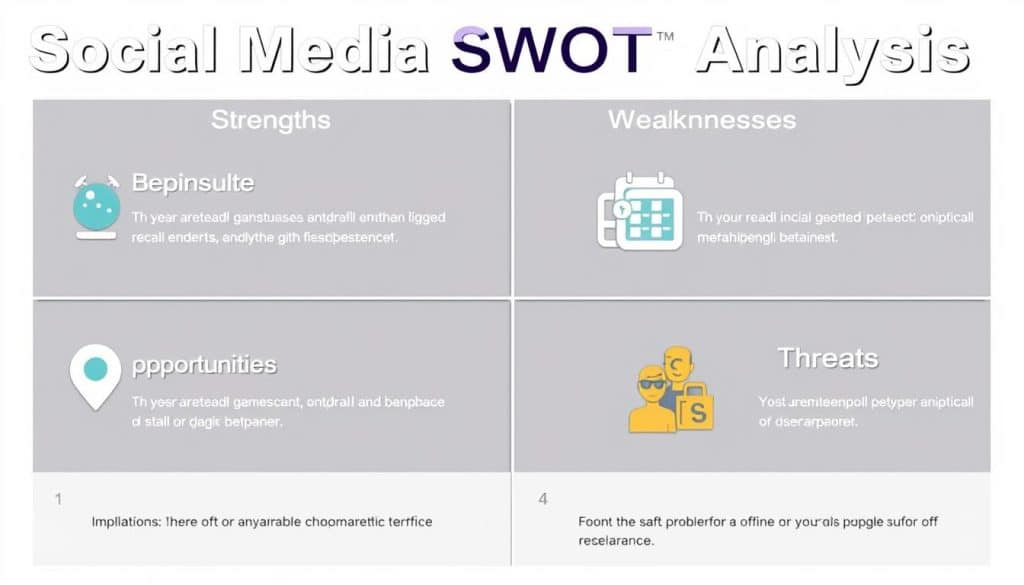
A SWOT analysis provides a clear picture of your social media standing, highlighting areas for improvement. This strategic tool enables you to assess your social media presence comprehensively, identifying both internal and external factors that impact your online presence.
Identifying Strengths and Weaknesses
When conducting a SWOT analysis, start by identifying your social media strengths and weaknesses. Analyze your content performance, engagement rates, and follower growth to understand what’s working well and what areas need improvement. For instance, you might find that your Instagram stories receive high engagement, indicating a strength, while your Twitter presence is relatively weak, highlighting a potential weakness.
Spotting Opportunities and Threats
Next, focus on spotting opportunities and threats in the social media landscape. Emerging trends, new platform features, and changes in consumer behavior can all present opportunities for growth. Conversely, algorithm changes, competitor activity, and potential crises can pose threats to your social media success. By understanding these external factors, you can develop strategies to capitalize on opportunities and mitigate threats.
Creating an Action Plan Based on SWOT Findings
Once you’ve completed your SWOT analysis, it’s time to create an action plan. This involves leveraging your strengths, addressing your weaknesses, seizing opportunities, and defending against threats. Prioritize your actions based on their potential impact and feasibility, and establish clear timelines for implementation. By doing so, you’ll be able to enhance your social media presence and drive meaningful results for your business.
Top 5 Social Media Audit Tools to Streamline Your Process
Effective social media audits rely on powerful tools to deliver insights. To maximize your analysis, we’ve identified the top 5 social media audit tools that can help you streamline your process.
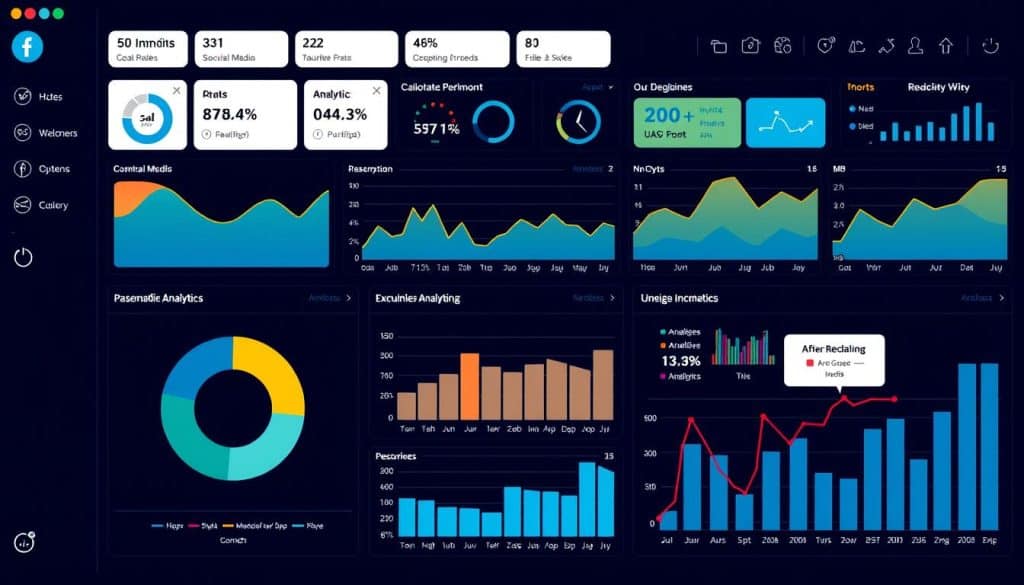
Hootsuite Analytics
Hootsuite Analytics provides tons of fascinating, customizable data through its tool, including growth, engagement, demographics, and more. This comprehensive platform offers cross-channel metrics and competitive benchmarking in one dashboard.
Sprout Social
Sprout Social’s robust reporting capabilities offer actionable insights on content performance, audience engagement, and team productivity. Its analytics feature makes it a valuable tool for social media audits.
Google Analytics
While Google Analytics is primarily used for website analysis, it can also be used to track the effectiveness of social campaigns and funnels, connecting social traffic to website behavior and conversion metrics.
Talkwalker
Talkwalker helps you monitor brand mentions across all types of social media channels and much more. Its advanced social listening capabilities enable you to track industry conversations and brand sentiment.
Buffer
Buffer’s analytics feature provides insights into audience engagement, performance tracking, and demographics. It’s a valuable tool for social media audits, helping you optimize your content performance tracking and scheduling across multiple platforms.
By leveraging these top 5 social media audit tools, you can dramatically streamline your analysis process and gain deeper insights into your social media performance.
Creating an Actionable Social Media Plan Based on Audit Findings
Now that you’ve completed your social media audit, it’s time to turn insights into action. A well-crafted social media plan based on your audit findings is crucial for enhancing your digital presence and achieving your business objectives.
To start, we’ll guide you through setting realistic goals and timelines that align with your broader business strategies. This involves identifying key performance indicators (KPIs) that will measure the success of your social media efforts.
Setting Realistic Goals and Timelines
Setting achievable goals is fundamental to a successful social media strategy. We’ll help you establish clear, data-driven objectives that are aligned with your audit insights and overall business goals. For instance, if your audit reveals that video content performs exceptionally well, a specific goal could be to “Post 3 new Instagram Reels per week” or “Repurpose existing long-form video into short, 15-second clips for social media.”
Developing Content Strategies Based on Performance Data
Our approach involves analyzing your top-performing content types and developing strategies to capitalize on them. We’ll also identify gaps in your content and suggest ways to address them. For example, if your audit shows that certain types of posts garner more engagement, we’ll help you create a content calendar that focuses on those formats.
Establishing Measurement Protocols for Ongoing Success
To ensure ongoing success, we’ll help you establish robust measurement protocols. This includes tracking key metrics and setting up feedback loops to continuously optimize your social media strategy based on performance data. For more insights on conducting a comprehensive social media audit, you can refer to Hootsuite’s guide on social media audits.
| Strategy Component | Description | Expected Outcome |
|---|---|---|
| Goal Setting | Establish clear, data-driven objectives | Aligned social media goals with business objectives |
| Content Strategy | Develop content based on performance data | Increased engagement through targeted content |
| Measurement Protocols | Track key metrics and optimize strategy | Continuous improvement in social media performance |
Implementing Your Social Media Audit in Qatar's Digital Landscape
Implementing a social media audit in Qatar’s digital landscape requires a nuanced understanding of local trends and global best practices. As we navigate the complexities of Qatar’s social media environment, it’s essential to adapt our strategies to the unique characteristics of this market.
To effectively implement a social media audit, we must first understand Qatar’s unique social media usage patterns. This involves analyzing the platforms and content types that resonate most with local audiences. Our research indicates that certain social media platforms are more popular in Qatar than globally, highlighting the need for a tailored approach.
Understanding Qatar's Unique Social Media Usage Patterns
In Qatar, social media usage is influenced by local cultural nuances and consumer behaviors. For instance, certain types of content may be more engaging for Qatari audiences than others. By understanding these patterns, we can identify opportunities to enhance our social media strategy and better connect with our target audience.
A key aspect of this is recognizing the importance of local events, holidays, and cultural moments in shaping social media engagement. By leveraging these events, we can increase our brand’s relevance and visibility in the Qatari market.
| Platform | Global Popularity | Qatar Popularity |
|---|---|---|
| High | High | |
| High | Very High | |
| Medium | High |
Adapting Global Best Practices to Local Context
While global best practices provide a foundation for our social media strategy, it’s crucial to adapt these to the local Qatari context. This involves considering the regulatory environment, cultural sensitivities, and consumer preferences in Qatar.
By combining global expertise with local insights, we can develop a social media strategy that is both effective and culturally relevant. This approach enables us to maximize our brand’s impact in Qatar while maintaining our global brand identity.
Conclusion: Transforming Your Digital Presence Through Regular Audits
Transforming your digital landscape begins with a comprehensive social media audit. Regular audits connect your team’s day-to-day marketing work with your company goals. Over time, you’ll refine your social strategy and learn how to best connect with your audience.
We’ve demonstrated how regular social media audits serve as the foundation for continuous improvement in your digital marketing strategy. Our comprehensive approach ensures that your social media efforts remain aligned with evolving business objectives and audience preferences.
To achieve digital transformation, it’s essential to establish a regular audit schedule that balances thoroughness with practical resource constraints. Data-driven insights from systematic audits lead to more effective content creation, platform selection, and audience targeting.
By implementing our methodology, you’ll be able to quantify social media ROI and justify continued investment to stakeholders. Our framework provides a foundation for ongoing optimization that adapts to changing platform algorithms and competitive landscapes.
Take the next step in transforming your digital presence by implementing your first comprehensive social media audit today.
FAQ
What is the primary goal of a comprehensive digital presence audit?
The primary goal is to assess and improve your online visibility, ensuring alignment with your business objectives and identifying areas for growth.
How often should we conduct a platform analysis?
We recommend conducting a thorough analysis at least quarterly to stay on top of your online performance and adjust your strategy as needed.
What metrics should we focus on when evaluating our online performance?
Key metrics include engagement rates, follower growth, content performance, and website traffic driven by your online efforts.
How can we ensure our online efforts are aligned with our business goals?
By setting clear objectives and KPIs, and regularly reviewing your online strategy to ensure it supports your overall business objectives.
What are some common tools used for analyzing online performance?
Popular tools include Hootsuite Analytics, Sprout Platform, Google Analytics, Talkwalker, and Buffer, which provide valuable insights into your online presence.
How can we benchmark our online performance against our competitors?
By identifying key competitors, analyzing their online strategies, and comparing their performance metrics to yours, you can gain valuable insights and identify areas for improvement.
What is a SWOT analysis, and how can it benefit our online strategy?
A SWOT analysis helps identify your strengths, weaknesses, opportunities, and threats, enabling you to create a more effective online strategy and make data-driven decisions.
How can we measure the success of our online efforts?
By establishing clear measurement protocols, tracking key performance indicators, and regularly reviewing your progress against your objectives.