

Are you leveraging the full potential of social media to drive business growth in Qatar’s competitive market?
We help businesses like yours thrive by developing a tailored media approach that resonates with the Qatari audience. Our proven methodology combines data-driven insights with creative execution to deliver measurable results.
By understanding your target audience and crafting compelling content, we guide you through a comprehensive framework that transforms random posting into strategic engagement, ultimately driving real business growth.
Key Takeaways
- Develop a tailored social media marketing approach for the Qatari market
- Understand your target audience and craft compelling content
- Transform random posting into strategic engagement
- Drive real business growth through data-driven insights
- Measure success with a comprehensive framework
What Social Media Marketing Means for Businesses Today

With the proliferation of social media platforms, businesses in Qatar are presented with a unique chance to boost their online presence and reach new heights. Social media marketing is the use of social platforms to grow your brand, connect with your audience, and achieve business goals.
Unlike traditional advertising, it’s built on two-way conversations — brands don’t just talk at people, they engage with them. This shift has transformed the way businesses interact with their audience, making social media an essential tool for growth.
The Definition and Scope of Social Media Marketing
Social media marketing encompasses a broad range of activities, from creating and sharing content on social media networks to running targeted advertisements. It involves developing a comprehensive strategy that aligns with your business objectives.
The scope of social media marketing includes:
- Content creation and curation
- Engagement and community management
- Paid social advertising
- Influencer partnerships
- Analytics and performance tracking
How Social Media Marketing Has Evolved in Qatar
Qatar’s social media landscape has transformed dramatically in recent years. Here’s a snapshot of the current state:
| Platform | User Engagement | Business Adoption |
|---|---|---|
| High | Very High | |
| Very High | High | |
| High | Very High |
As shown in the table, platforms like Instagram, Facebook, and LinkedIn have seen exponential growth in user engagement and business adoption. For more insights on creating a successful social media marketing plan, explore our comprehensive guide.
The Business Impact of a Strong Social Media Strategy

A well-crafted social media strategy is crucial for businesses aiming to thrive in today’s digital landscape. Social media moves fast, and a good strategy with clear optimization helps you stay ahead of trends, connect with the right people, and drive real results.
Increasing Brand Awareness and Engagement
A strong social media strategy significantly boosts brand awareness and engagement. By creating strategic content that resonates with your audience, you can increase your brand’s visibility and foster meaningful interactions. Effective social media marketing involves understanding your audience and crafting content that addresses their needs and interests.
Key benefits include:- Beyond awareness, a well-executed social media strategy creates clear pathways to conversion, transforming followers into customers and engagement into revenue.- For Qatari businesses, social platforms offer powerful tools to showcase products, highlight services, and drive traffic to both physical locations and e-commerce platforms.
Driving Revenue and Conversions Through Social Channels
Strategic social media campaigns can drive significant revenue and conversions. By leveraging targeted social media campaigns with specific calls-to-action, businesses can generate qualified leads at a lower cost compared to traditional advertising methods. The measurable nature of social media allows you to track the entire customer journey, from initial awareness to final conversion, providing clear ROI data that justifies your investment.
Additional benefits include:- Strategic content that addresses customer pain points and showcases solutions naturally guides prospects through the buyer’s journey toward purchase decisions.- Targeted social media campaigns can generate qualified leads at a significantly lower cost than traditional advertising methods.
7 Steps to Create a Winning Social Media Strategy

Developing a social media strategy that drives results involves understanding your audience, setting clear goals, and selecting the right platforms. A social media marketing strategy is a summary of everything you plan to do and hope to achieve on social media. It guides your actions and lets you know whether you’re succeeding or failing.
Overview of the Strategic Planning Process
Creating a winning social media strategy involves several key steps. First, you need to define your goals and objectives, ensuring they align with your overall business strategy. Next, you must understand your target audience, including their preferences, behaviors, and the social media platforms they use most. This understanding is crucial for developing content that resonates with your audience and drives engagement.
The strategic planning process also involves analyzing your competitors, identifying gaps in the market, and determining the most effective content and engagement strategies. By following these steps, you can develop a comprehensive social media strategy that supports your business objectives.
| Step | Description | Key Considerations |
|---|---|---|
| 1. Define Goals | Establish clear, measurable objectives | Align with overall business strategy |
| 2. Understand Audience | Research audience preferences and behaviors | Identify preferred social media platforms |
| 3. Analyze Competitors | Assess competitors’ social media presence | Identify market gaps and opportunities |
Adapting Global Best Practices for the Qatari Market
While global social media best practices provide valuable frameworks, success in Qatar requires thoughtful adaptation to local cultural nuances, preferences, and business environments. Understanding the unique aspects of Qatari social media usage—including preferred platforms, peak engagement times, and content preferences—is essential for strategy development.
Cultural sensitivity is paramount when adapting content strategies, particularly regarding religious observances, local traditions, and appropriate imagery. The multilingual nature of Qatar’s population necessitates careful consideration of language choices, with strategies often requiring content in both Arabic and English to maximize reach.
“The key to successful social media marketing in Qatar lies in understanding and respecting local cultural norms and preferences.”
Local regulations and guidelines around social media content must be thoroughly understood and incorporated into your strategy to ensure compliance and avoid potential issues. By adapting global best practices to the Qatari market, businesses can develop effective social media strategies that resonate with their target audience.
Setting SMART Social Media Goals
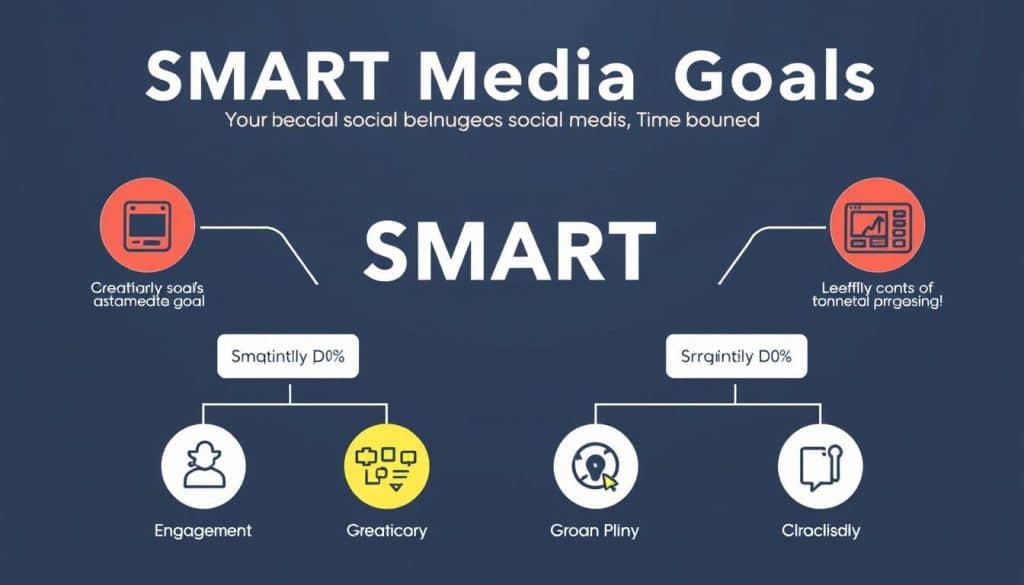
In the realm of social media marketing, setting SMART goals is not just beneficial, it’s essential for measurable success. As businesses continue to navigate the ever-evolving digital landscape in Qatar, establishing clear objectives becomes crucial for maximizing their online presence and achieving tangible results.
Defining Specific, Measurable, Achievable, Relevant, and Time-Bound Objectives
To create effective social media strategies, businesses must first define their goals using the SMART criteria. This involves setting Specific objectives that are clearly defined and easy to understand. For instance, instead of aiming to “increase brand awareness,” a company might aim to “boost brand mentions on social media by 20% within the next quarter.” Making goals Measurable allows businesses to track progress and adjust their strategies accordingly.
Ensuring that goals are Achievable and Relevant to the company’s overall mission is also vital. This means aligning social media objectives with broader business aims, such as increasing revenue or improving customer engagement. Finally, setting Time-Bound objectives creates a sense of urgency and focus, helping teams stay on track and motivated.
Examples of Effective Social Media Goals for Different Business Types
Different business types require tailored social media goals that reflect their unique market position, customer base, and business model. For retail businesses in Qatar, effective goals might include increasing foot traffic to physical locations by 15% through localized social campaigns or boosting e-commerce conversions by 20% through shoppable posts.
Service-based businesses can focus on lead generation goals, such as increasing consultation requests by 30% through targeted LinkedIn content or growing email newsletter sign-ups by 25% through Instagram Story promotions. For more information on creating engaging content, visit our guide on mastering community management strategies.
B2B companies operating in Qatar’s growing business sector might set goals around thought leadership, aiming to increase industry event registrations by 40% or grow decision-maker connections by 35% through strategic content. Hospitality businesses, on the other hand, can establish engagement-focused goals, such as increasing user-generated content by 50% through branded hashtag campaigns or improving review response rates to 100% within 24 hours.
Understanding Your Target Audience in Depth
Understanding your target audience in depth is essential for tailoring a social media strategy that resonates. To effectively engage with your audience, you need to go beyond basic demographics and understand their behaviors, preferences, and pain points.
Creating Detailed Buyer Personas for the Qatari Market
Creating detailed buyer personas is a critical step in understanding your target audience. For the Qatari market, this involves considering local cultural nuances, preferences, and behaviors. We analyze data to identify patterns and characteristics that define your ideal customer. By doing so, we can tailor our content and messaging to resonate with this audience, increasing the likelihood of engagement and conversion.
For instance, a well-crafted buyer persona for a Qatari audience might include details such as:
| Persona Characteristics | Description | Importance |
|---|---|---|
| Age and Gender | Typically between 25-45 years old, both male and female | High |
| Interests | Business, technology, and local culture | Medium |
| Preferred Social Media Platforms | Instagram, Twitter, and Facebook | High |
Using Analytics and Social Listening to Uncover Audience Insights
Beyond creating theoretical personas, sophisticated social media strategies leverage analytics and social listening to gather real-time insights about audience behavior and preferences. Platform analytics provide valuable data on which content formats, topics, and posting times generate the highest engagement with your Qatari audience.
- Platform analytics help identify the most engaging content types.
- Social listening tools monitor conversations about your brand, industry, and competitors.
- Analyzing sentiment around specific topics reveals unfiltered customer feedback and emerging trends.
By combining these insights, we can refine our understanding of our audience and adjust our social media strategy accordingly, ensuring it remains effective and relevant.
Conducting a Thorough Competitive Analysis

Conducting a comprehensive competitive analysis allows businesses to identify opportunities and challenges in the Qatari social media market. This step is crucial in developing an effective social media strategy that sets your brand apart from the competition.
Identifying and Analyzing Your Social Media Competitors
The first step in competitive analysis is to identify your social media competitors. These are businesses that not only operate in your industry but also have a significant presence on various media platforms. To analyze them, we assess their content, engagement rates, and audience demographics. Tools like Hootsuite or Sprout Social can be instrumental in tracking competitors’ social media performance.
Finding Gaps and Opportunities in the Competitive Landscape
Once your competitors are identified and analyzed, the next step is to find gaps and opportunities in the competitive landscape. This involves:
- Identifying content gaps that your brand can fill.
- Using social listening to understand audience sentiment towards your competitors.
- Recognizing platform opportunities where your competitors are underperforming.
- Analyzing the timing of competitors’ posts to identify potential gaps in their scheduling.
By doing so, businesses can develop a strategy that not only competes with but also surpasses their competitors, ultimately capturing a larger market share in Qatar’s social media landscape.
Selecting the Right Social Media Platforms for Your Business

With numerous social media platforms available, businesses must strategically choose the ones that best align with their goals. The Qatari market presents a unique landscape where certain platforms may be more effective than others. To maximize visibility and engagement, it’s crucial to understand the demographics and popularity of various social media platforms in Qatar.
Platform Demographics and Popularity in Qatar
The demographics of social media users in Qatar vary across platforms. For instance, Instagram and TikTok are particularly popular among younger audiences, while Facebook remains a broad-spectrum platform with a wide age range. Understanding these demographics is key to aligning your business’s target audience with the most appropriate platforms.
According to recent statistics, Instagram has a high engagement rate among Qatari users, making it an ideal platform for businesses targeting a younger demographic. On the other hand, Facebook’s diverse user base makes it suitable for businesses with a broader target audience.
Matching Platforms to Your Business Goals and Resources
Strategic platform selection requires aligning each channel’s strengths with your specific business objectives and available resources. Rather than attempting to maintain a presence on every platform, focus your efforts on 2-3 channels where your target audience is most active and your content format aligns with platform strengths.
- Align Platforms with Business Objectives: Choose platforms that best support your business goals, whether it’s brand awareness, lead generation, or customer engagement.
- Consider Resource Constraints: Realistically assess your resources, as each platform requires dedicated time for content creation, community management, and performance analysis.
- Focus on Quality Over Quantity: For businesses with limited resources, mastering one platform completely often yields better results than spreading efforts thinly across multiple channels.
By carefully selecting the right social media platforms and optimizing your profiles for visibility and engagement, you can significantly enhance your business’s online presence in Qatar.
Developing Content Pillars That Resonate with Your Audience
Content pillars serve as the foundation for a successful social media strategy, enabling brands to connect with their audience more effectively. By establishing core themes and messages, businesses can create a consistent and engaging narrative across their social media platforms.
Establishing Core Themes and Messages
To develop effective content pillars, we must first identify the core themes and messages that align with our brand’s overall mission and resonate with our target audience in Qatar. This involves understanding the needs, preferences, and pain points of our audience. Research shows that audiences are more likely to engage with content that provides value, whether through education, entertainment, or inspiration.
- Identify key topics relevant to your industry and audience interests.
- Develop a content calendar that ensures consistency across your social media platforms.
- Use social media analytics to track engagement and adjust your content strategy accordingly.
Balancing Educational, Entertaining, and Promotional Content
A balanced content mix is crucial for maintaining audience interest and avoiding the perception that your brand is solely focused on self-promotion. The ideal balance follows the 80/20 rule: 80% of content should provide value through education, entertainment, or inspiration, while only 20% should directly promote your products or services.
For instance, educational content can establish your brand as an authority in your field by addressing audience questions and challenges with valuable insights. On the other hand, entertaining content creates emotional connections with your audience, increasing the likelihood of shares and engagement that expand your reach organically.
By adopting this balanced approach and focusing on creating high-quality, engaging content, businesses can enhance their social media engagement and build a stronger connection with their audience.
Creating Engaging Social Media Content
Crafting engaging social media content is crucial for capturing the attention of your target audience in Qatar’s competitive digital landscape. To achieve this, we must consider the unique cultural nuances and preferences of the Qatari market.
At the heart of any successful social media strategy is content that resonates with its viewers. This involves understanding the local culture, values, and customs that define Qatar. By doing so, we can create content that not only appeals to our target audience but also respects the local cultural context.
Best Practices for Different Content Formats
Different content formats require distinct approaches. For instance, visual content such as images and videos must adhere to local standards of modesty and appropriateness. When creating posts, we should consider the optimal length, tone, and style for each social media platform.
For example, short-form videos on platforms like TikTok can be highly engaging, while longer-form content on Facebook or LinkedIn might be more suitable for in-depth discussions about our brand or industry.
Incorporating Cultural Sensitivity in Content for Qatar
Cultural sensitivity is non-negotiable when creating social media content for the Qatari market. This involves thoughtful consideration of local customs, values, and sensibilities. For instance, during religious observances like Ramadan, our content calendar should reflect the significance of these periods with adjusted posting schedules and themes.
Moreover, language considerations are essential in Qatar’s multicultural environment. Strategic decisions about when to post in Arabic, English, or both are crucial to effectively reach our target audience. By balancing global marketing standards with local cultural nuances, we can create content that feels relevant to the local audience while maintaining international quality.
Building and Optimizing Your Social Media Content Calendar
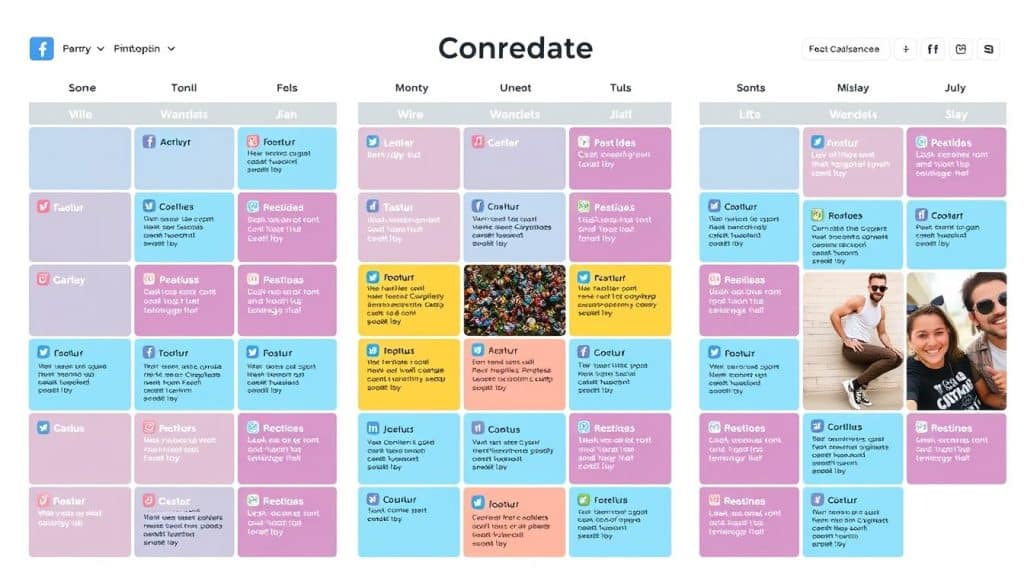
A well-structured social media content calendar is crucial for maximizing your online presence in Qatar’s competitive digital landscape. By planning and organizing your content in advance, you can ensure consistency, reduce duplication of efforts, and improve overall engagement with your audience.
Planning Content in Advance for Maximum Impact
To create an effective content calendar, we need to consider several key factors, including your business goals, target audience, and the types of content that resonate with them. By planning content in advance, you can:
- Ensure consistency across all social media platforms
- Reduce the risk of last-minute, low-quality content
- Improve your ability to track and measure the performance of your content
For a comprehensive approach to social media marketing, consider exploring our comprehensive social media marketing services packages.
Determining Optimal Posting Frequencies and Times for Qatari Audiences
Understanding the optimal posting frequencies and times is critical for maximizing engagement. Data analysis reveals that Qatari audiences tend to engage more during evening hours (7-10 PM), while platform-specific timing considerations are also essential, with LinkedIn performing best during business hours and Instagram/TikTok seeing higher engagement during leisure time.
- Posting frequency and timing significantly impact content performance
- Qatar’s unique daily rhythm influences engagement patterns
- Platform-specific timing considerations are crucial
By optimizing your social media content calendar for the Qatari audience, you can improve engagement, drive conversions, and ultimately achieve your business goals.
Implementing Effective Social Listening Techniques

The power of social listening lies in its ability to provide actionable insights that can transform your social media strategy. By effectively monitoring and analyzing online conversations, businesses can gain a deeper understanding of their audience, identify trends, and make informed decisions.
Monitoring Brand Mentions and Industry Conversations
To implement effective social listening, start by monitoring brand mentions across various social media platforms. This involves tracking not just your brand name but also related keywords, competitors, and industry-specific terms. Utilize social listening tools to streamline this process, allowing you to stay on top of both direct and indirect mentions of your brand.
The true value of social listening comes not from data collection but from the strategic application of insights to improve your content, products, and customer experience. Customer feedback captured through social listening can inform product development, revealing features or improvements that address actual user needs.
Using Insights to Refine Your Social Media Strategy
The insights gathered from social listening can significantly refine your social media strategy. By understanding what your audience cares about, you can tailor your content to resonate with them more effectively. For instance, content strategy refinement based on listening insights ensures your posts address topics your audience genuinely cares about, using language that resonates with them.
Moreover, social listening enables crisis prevention by detecting early signs of potential issues, allowing you to address concerns before they escalate. Competitive intelligence gathered through listening provides strategic advantages, revealing competitor weaknesses, successful tactics, and unmet market needs you can address.
Measuring and Analyzing Social Media Performance
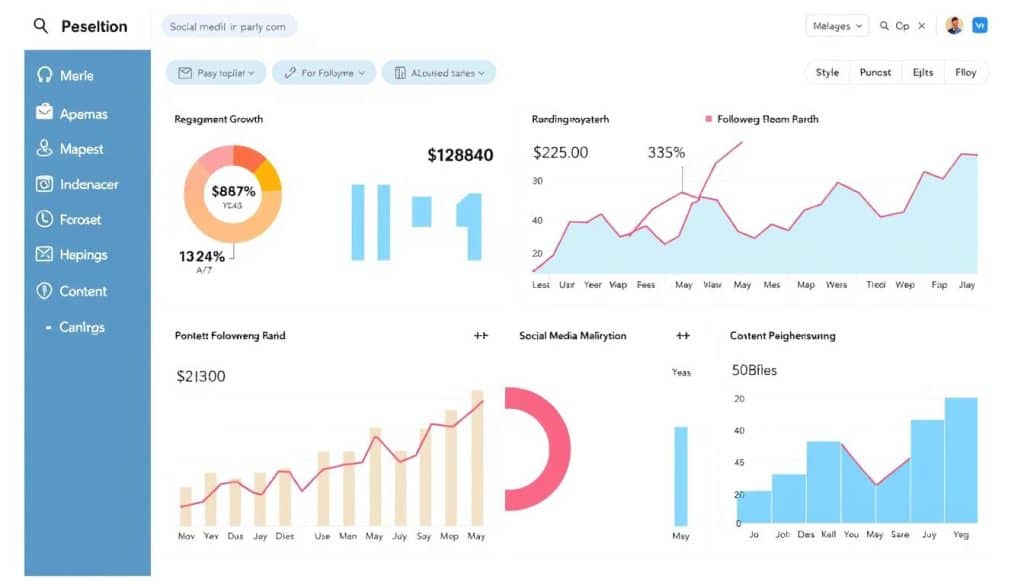
Measuring social media performance is not just about tracking metrics; it’s about deriving actionable insights to drive business growth. To effectively gauge the success of your social media strategy, you need to implement a comprehensive analytics approach.
A robust analytics strategy combines platform-native tools with third-party solutions, providing a holistic view of your social media performance. This integrated approach enables you to benchmark your results against industry standards and competitors.
Key Performance Indicators to Track for Different Goals
Identifying the right Key Performance Indicators (KPIs) is crucial for measuring the success of your social media efforts. The KPIs you choose should align with your specific business goals, whether it’s increasing brand awareness, driving website traffic, or generating leads.
For instance, if your goal is to boost brand awareness, you might track metrics such as follower growth rate, engagement rate, and reach. On the other hand, if your objective is to drive conversions, you may focus on click-through rates, conversion rates, and return on ad spend (ROAS).
Tools and Methods for Comprehensive Social Media Analytics
To gain a comprehensive understanding of your social media performance, you need to leverage a combination of native platform analytics and third-party tools.
- A robust analytics approach combines platform-native tools with third-party solutions to provide comprehensive performance insights.
- Platform-specific analytics (Instagram Insights, Facebook Analytics, LinkedIn Analytics) offer detailed data about post performance, audience demographics, and engagement patterns.
- Third-party analytics tools provide cross-platform reporting, competitive benchmarking, and advanced features like sentiment analysis and influencer tracking.
- UTM parameters and website analytics integration are essential for tracking the customer journey from social media to your website and measuring conversion impact.
- Custom dashboards that combine key metrics from multiple sources create executive-friendly visualizations that clearly communicate social media’s business impact.
By adopting a multi-faceted analytics strategy, you can gain a deeper understanding of your social media performance and make data-driven decisions to optimize your strategy.
Optimizing Your Strategy Based on Performance Data
To stay ahead in the competitive Qatari market, it’s essential to refine your social media strategy using data-driven insights. By analyzing performance data, we can identify areas of strength and weakness, allowing for informed decisions that drive business growth.
One effective method for optimizing your social media strategy is through A/B testing of content and campaigns. This involves comparing two versions of a piece of content or a campaign to determine which one performs better.
A/B Testing Social Media Content and Campaigns
A/B testing allows us to make data-driven decisions, reducing the risk of implementing ineffective strategies. For instance, testing different headlines, images, or calls-to-action can significantly impact engagement rates. By analyzing the results, we can refine our content to better resonate with our target audience.
Some key considerations for A/B testing include:
- Defining clear objectives for the test
- Ensuring a statistically significant sample size
- Analyzing results to inform future content decisions
Adapting to Algorithm Changes and Emerging Trends
Social media platforms constantly evolve their algorithms, requiring brands to stay informed and adapt their strategies to maintain visibility and engagement. Regular monitoring of platform announcements, industry news, and performance shifts helps identify algorithm changes early, allowing for proactive adjustments.
| Algorithm Change Impact | Adaptation Strategy | Expected Outcome |
|---|---|---|
| Reduced organic reach | Increase paid advertising | Maintain visibility |
| Preference for video content | Develop more video content | Increase engagement |
| Emphasis on user experience | Improve content quality and relevance | Enhance user interaction |
By staying agile and adapting to these changes, we can ensure our social media strategy remains effective over time. Surveys can also provide valuable insights into how well our strategy is meeting the needs and expectations of our audience, guiding future adjustments.
Leveraging Influencer Marketing in Qatar

As social media continues to evolve, influencer marketing has become an essential tool for brands looking to engage with their target audience in Qatar. The rise of influencer marketing has further enabled brands to deepen their reach and drive meaningful engagement. According to the Q1 2025 Sprout Pulse Survey, 90% of marketers reported that sponsored influencer content performed better in terms of engagement compared to organic content posted on their brand accounts.
Finding and Vetting the Right Influencers for Your Brand
Successful influencer partnerships in Qatar go beyond transactional relationships to create authentic collaborations that benefit both parties. To achieve this, it’s crucial to find and vet the right influencers for your brand. This involves analyzing their audience demographics, engagement rates, and content relevance to ensure alignment with your brand objectives. We recommend exploring influencer marketing services, such as those offered by Arabian Media, to streamline the process.
Creating Authentic and Effective Influencer Partnerships
Clear briefing is essential but should be balanced with creative freedom, allowing influencers to present your brand in their authentic voice rather than reading scripted messages. Long-term partnerships often deliver better results than one-off promotions, building genuine brand affinity that audiences recognize and trust. Moreover, compliance with Qatar’s advertising regulations is critical, with proper disclosure of sponsored content required to maintain transparency and legal compliance. Performance measurement should track both immediate metrics (engagement, reach) and longer-term impact (brand sentiment, conversion attribution) to assess true ROI.
By leveraging influencer marketing effectively, brands can enhance their social media presence, drive content engagement, and ultimately boost their marketing efforts in Qatar.
Building a Dedicated Social Media Team

To effectively leverage social media, businesses need to establish a dedicated team that can manage and optimize their online efforts. A well-structured social media team is essential for creating and implementing a successful social media strategy that drives engagement and conversions.
Defining Roles and Responsibilities
Defining clear roles and responsibilities within the social media team is crucial for efficient management. Team members should have distinct responsibilities, such as content creation, campaign management, analytics reporting, and customer service. By clearly outlining these roles, businesses can ensure that their social media efforts are well-coordinated and effective.
The right tools dramatically improve team efficiency, allowing you to manage more content across more platforms without proportional increases in time investment. Content management platforms streamline planning, approval, scheduling, and publishing workflows, ensuring consistent posting even with distributed teams.
Tools and Resources for Efficient Social Media Management
Utilizing the right tools and resources is vital for efficient social media management. Analytics tools provide comprehensive performance data across platforms, helping your team identify successful tactics and areas for improvement. Social listening and monitoring solutions alert you to mentions and messages requiring response, supporting timely customer service and reputation management.
- Content management platforms streamline planning, approval, scheduling, and publishing workflows.
- Analytics tools provide comprehensive performance data across platforms.
- Social listening and monitoring solutions support timely customer service.
- Project management and collaboration tools facilitate team coordination.
By leveraging these tools and defining clear roles, businesses can optimize their social media presence and achieve their marketing goals more effectively.
Preparing for Crisis Management on Social Media
With the ever-present risk of social media crises, businesses in Qatar must prioritize preparedness to safeguard their reputation and customer trust. In the digital age, a single negative comment or complaint can quickly escalate into a full-blown crisis if not managed effectively.
We understand that crisis management on social media is not just about responding to negative feedback; it’s about being proactive and having a well-thought-out plan in place. This involves understanding the potential risks, identifying the right response strategies, and knowing when to escalate issues.
Developing a Social Media Crisis Response Plan
A robust crisis response plan is essential for mitigating the impact of social media crises. This plan should outline the procedures for identifying potential crises, assessing their severity, and responding appropriately. Key elements include:
- Defining what constitutes a crisis for your business
- Establishing a crisis management team with clear roles and responsibilities
- Developing templates for initial response and follow-up communications
- Identifying the channels to be used for different types of crises
By having a structured plan, we can ensure that our response to social media crises is timely, effective, and consistent, thereby minimizing potential damage to our brand.
Best Practices for Handling Negative Feedback and Issues
Not all negative feedback constitutes a crisis, but all customer concerns deserve thoughtful, timely responses. When addressing issues publicly, transparency and accountability are key. This involves honest acknowledgment of problems and clear communication about the steps being taken to resolve them.
Research shows that 42% of customers expect replies within 60 minutes on social media, making rapid monitoring and alert systems essential. For complex issues, moving the conversation to private channels after initial public acknowledgment can help balance transparency with the need for detailed discussion.
By documenting all interactions, we can ensure consistency in follow-up communications and create valuable case studies for team training and process improvement. Effective crisis management on social media is about being prepared, responsive, and customer-centric.
Conclusion: Taking Your Social Media Success to New Heights
In today’s interconnected world, a strategic social media presence is pivotal for businesses in Qatar to drive growth and achieve their goals. As we’ve explored throughout this article, a comprehensive social media strategy transforms random posting into purposeful engagement that drives measurable business results and sustainable growth.
The seven-step framework we’ve outlined provides a proven roadmap for social media success, adaptable to businesses of all sizes across Qatar’s diverse economic landscape. By following this structured approach, companies can ensure their media efforts are aligned with their overall strategy and contribute to their bottom line.
Consistent implementation, regular measurement, and data-driven optimization are the keys to transforming your social media presence from a cost center to a revenue driver. As Qatar’s digital landscape continues to evolve, businesses that approach media strategically will gain significant competitive advantages in customer acquisition, brand building, and market influence.
The time to elevate your social media strategy is now. By implementing these proven techniques, you can watch as your digital presence transforms into a powerful business asset, driving success and helping you achieve your objectives.
FAQ
What is the primary goal of a business’s online presence?
The primary goal is to drive revenue growth through digital excellence while maintaining brand awareness and customer engagement.
How do I determine the most effective marketing channels for my business?
We analyze your target audience, industry trends, and competitive landscape to identify the most suitable platforms for your business objectives.
What role does content play in a marketing strategy?
High-quality, engaging content is crucial for resonating with your audience, establishing your brand identity, and driving conversions.
How can I measure the success of my marketing efforts?
We track key metrics such as engagement rates, website traffic, and conversion rates to evaluate the effectiveness of your marketing goals.
What is the importance of competitive analysis in marketing?
Conducting a thorough competitive analysis helps identify gaps and opportunities in the market, enabling you to refine your marketing strategy and stay ahead of the competition.
How often should I post content on my channels?
The optimal posting frequency depends on your audience, industry, and platforms; we help determine the best content calendar for your business.
What is listening and how can it benefit my business?
Listening involves monitoring brand mentions and industry conversations to uncover valuable insights and refine your marketing strategy.
How can I ensure my marketing efforts are data-driven?
We use analytics tools to track performance data, providing actionable insights to inform your marketing decisions and optimize your strategy.