

Can your business thrive in today’s competitive online landscape without a robust digital presence? The answer lies in understanding the crucial role that back end and front end developers play in driving digital growth.
We explore how the synergy between these two development disciplines creates scalable, user-friendly digital solutions that propel business success. By examining the technical components and business impact of both areas, we provide insights into leveraging developer expertise for digital transformation.
Investing in quality development resources directly correlates with improved user engagement, conversion rates, and business growth metrics. Our expertise in the Qatar market allows us to provide regionally-relevant insights on development trends and implementation strategies.
Key Takeaways
- Synergy between back end and front end development drives digital growth
- Critical roles of both development disciplines in creating robust digital solutions
- Strategic investment in quality development resources improves business metrics
- Expertise in Qatar market provides regionally-relevant development insights
- Right development approach creates competitive advantages through enhanced performance and security
Understanding Back End and Front End Development

As businesses strive for digital growth, it’s essential to grasp the fundamentals of back-end and front-end development and their roles in driving success. In the context of web development, these two terms refer to the different layers of an application or website.
The Car Analogy: Frontend as Exterior, Backend as Engine
To simplify the understanding of these complex concepts, consider a car analogy. The frontend is like the car’s exterior – it’s what users interact with and see. Conversely, the backend is akin to the car’s engine and internal machinery, which powers its functionality. Just as a car’s performance depends on both its exterior design and internal mechanics, a digital product’s success relies on the harmony between its frontend and backend.
How They Work Together to Drive Digital Growth
Front-end development focuses on creating intuitive user interfaces and engaging visual elements, while back-end development provides the infrastructure and business logic that powers the application. When these two disciplines work together seamlessly, they create digital experiences that are both visually appealing and highly functional. This synergy is crucial for driving digital growth, as it directly impacts user experience and, subsequently, business revenue.
The Impact on Business Revenue and User Experience
The integration of back-end and front-end development has a direct correlation with business outcomes. Well-designed and well-functioning digital products lead to improved user satisfaction, increased conversion rates, and enhanced customer retention. According to industry experts, “A well-designed user experience can lead to a significant increase in conversion rates, sometimes as high as 400%.” By investing in quality development, businesses can drive revenue growth and maintain a competitive edge in the digital landscape.
“The way to get started is to quit talking and begin doing.”
| Development Aspect | Front-end Development | Back-end Development |
|---|---|---|
| Focus | User interface, visual elements | Infrastructure, business logic |
| Impact | User experience, engagement | Application functionality, data processing |
The Core Differences Between Back End and Front End Developers

In the realm of digital development, back-end and front-end developers have distinct responsibilities that are vital to a project’s success. Understanding these differences is key to leveraging the right talent for your digital initiatives.
Development Goals and Objectives
Front-end developers focus on creating a positive user experience, optimizing applications for accessibility and performance, and designing responsive interfaces. Their primary goal is to ensure the frontend is user-friendly, well-designed, and responsive across various platforms and devices. In contrast, back-end developers build and maintain server-side operations, aiming to create a reliable architecture that performs application functions accurately and efficiently.
Technical Responsibilities and Focus Areas
Front-end developers are responsible for implementing HTML, CSS, and JavaScript to create intuitive and engaging user interfaces. Back-end developers, on the other hand, focus on server configuration, database management, and API development to create a robust foundation for the application.
| Developer Type | Primary Focus | Key Technologies |
|---|---|---|
| Front-end Developers | User Experience, Responsive Design | HTML, CSS, JavaScript |
| Back-end Developers | Server-side Operations, Database Management | Python, PHP, Ruby, Java |
Collaboration Points in the Development Process
Effective collaboration between front-end and back-end developers is crucial for the success of a digital project. Key collaboration points include API design, data structure planning, and performance optimization. By understanding these collaboration points, businesses can structure their development teams for optimal efficiency and ensure seamless integration between front-end and back-end components.
Essential Front End Development Technologies for Growth
Effective front-end development is key to delivering high-quality digital experiences that drive business growth. We help businesses understand and implement the most critical front-end technologies.
Languages: HTML, CSS, and JavaScript
The foundation of front-end development lies in HTML, CSS, and JavaScript. HTML provides the structural framework for web content using markup language, CSS delivers visual styling and responsive capabilities, and JavaScript enables dynamic interactivity.
Frameworks and Libraries: React, Angular, Vue.js
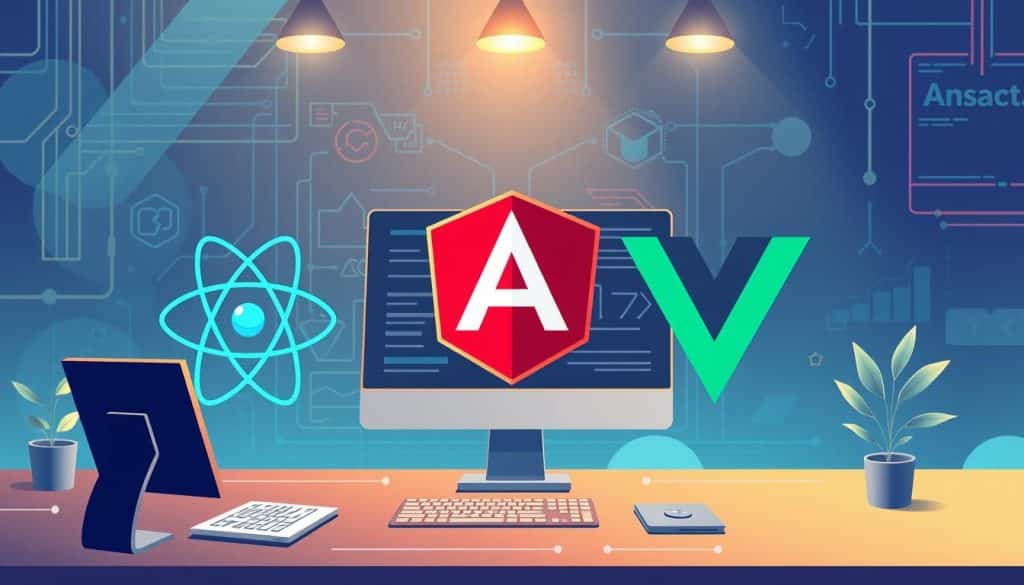
Front-end frameworks like React, Angular, and Vue.js accelerate development and enhance performance. For instance, our expertise in React helps businesses boost efficiency. React‘s component-based architecture, Angular‘s comprehensive solution for enterprise applications, and Vue.js‘s progressive framework approach enable faster development cycles and better performance optimization.
Tools for Optimizing User Experience
Front-end developers use various tools to optimize user experience, including testing utilities, performance monitoring solutions, and accessibility evaluation resources. These tools help ensure a smooth and engaging digital experience.

Critical Back End Development Technologies
The backbone of modern digital solutions lies in robust back-end development technologies. We provide a comprehensive analysis of these critical technologies that power digital growth.
Programming Languages: Python, PHP, Ruby, Java
Back-end development begins with the choice of programming languages. Popular options include Python, known for its versatility and data science capabilities; PHP, focused on web development; Ruby, emphasizing developer productivity; and Java, renowned for enterprise-grade reliability and performance.
Frameworks: Django, Rails, Express, Spring
Specialized frameworks accelerate development and enhance security. For instance, Django offers a “batteries-included” approach for Python, while Rails follows a convention-over-configuration philosophy for Ruby. Express provides lightweight flexibility for Node.js, and Spring boasts a comprehensive ecosystem for Java.

Database Management Systems and APIs
Database management systems form the critical data foundation for applications. Relational databases like MySQL and PostgreSQL are compared with NoSQL solutions like MongoDB for different business requirements. APIs serve as crucial communication bridges between front-end interfaces and back-end systems, enabling seamless data exchange. For expert PHP web app development services in Qatar, visit our specialized page.

How Back End and Front End Developer Solutions Drive Digital Growth
By integrating back end and front end developer solutions, businesses can achieve significant digital growth. The strategic integration of these solutions creates a powerful engine for digital expansion, delivering measurable business outcomes that impact the bottom line.
Enhancing User Experience and Engagement
Front-end developers play a crucial role in creating intuitive interfaces, responsive designs, and seamless interactions that directly increase engagement metrics, extend session duration, and improve conversion rates. By focusing on user experience, businesses can drive digital growth through enhanced customer satisfaction.
Improving Website Performance and Speed
Optimized website performance and speed are achieved through efficient front end code and robust back end architecture. This significantly reduces bounce rates and abandonment while improving search engine rankings, thereby driving digital growth.
Scaling Applications for Business Growth
Properly architected applications can scale efficiently to accommodate business growth, handling increased traffic and data volumes without degradation in performance or user experience. This scalability is crucial for businesses looking to expand their digital presence.
Our analysis demonstrates how the integration of back end and front end developer solutions drives digital growth through enhanced user experience, improved website performance, and scalable applications.
Full-Stack Development: Combining Front End and Back End Expertise
In the rapidly evolving digital landscape, full-stack development has emerged as a crucial strategy for businesses seeking to maximize their online potential. By combining front-end and back-end expertise, full-stack development enables companies to streamline their development processes, enhance collaboration, and improve overall project efficiency.
Benefits of Full-Stack Development for Businesses
Full-stack development offers numerous benefits, including streamlined communication, reduced handoff friction, and faster development cycles. This approach enables businesses to be more agile and responsive to market demands, ultimately driving digital growth and revenue.
Skills Required for Full-Stack Developers
Effective full-stack developers possess a broad skill set, including proficiency in front-end technologies like HTML, CSS, and JavaScript, as well as back-end languages and frameworks. They must also have expertise in database management, API development, and DevOps practices to deliver comprehensive solutions.
When to Choose Full-Stack vs. Specialized Developers
Businesses should opt for full-stack developers when they need to maximize development resources while maintaining agility, particularly for smaller projects or startups. However, for complex, large-scale projects, specialized front-end and back-end teams may be more suitable.
Security Considerations in Front End and Back End Development
As businesses in Qatar increasingly rely on digital solutions, security considerations in front end and back end development become paramount. Ensuring the security of both front end and back end components is crucial for protecting business assets, customer data, and brand reputation.
Frontend Security Best Practices
Frontend security focuses on user-facing components, including input forms and client-side scripts. Essential security strategies include input validation, disabling code entry in text boxes, and implementing multifactor authentication workflows.
Backend Security Implementations
Backend security is critical for data security in storage and transit. It involves secure coding practices, encrypting sensitive data, and secure authorization and authentication systems.
Data Protection Strategies for Qatar-Based Businesses
For businesses in Qatar, data protection strategies must address local regulatory requirements and data sovereignty considerations. Implementing robust security measures is essential for compliance and protecting business-critical systems.
Hiring and Building Effective Development Teams in Qatar
To succeed in Qatar’s competitive digital landscape, businesses need to assemble the right development team. This involves understanding the local market, identifying the right talent, and structuring the team for optimal workflow.
Current Market Rates and Salary Expectations
In Qatar, the average salary for a front-end developer is $80,796, while back-end developers earn around $90,652. Understanding these market rates is crucial for budgeting and attracting top talent.
Finding the Right Developer Talent for Your Project
To find the right developer talent, businesses should focus on technical assessments, portfolio evaluations, and effective interview strategies. This ensures that the selected developers align with the project’s specific requirements.
Team Structure for Optimal Development Workflow
An optimal development team structure in Qatar involves balancing front-end, back-end, and full-stack developers. This balance, combined with effective communication protocols and code review processes, enhances the overall workflow and project delivery.
Conclusion: Leveraging Developer Solutions for Sustainable Digital Growth
To achieve sustainable digital growth, businesses must prioritize quality back end and front end developer solutions. We emphasize the importance of viewing development as a strategic business function that drives revenue generation, customer satisfaction, and market positioning.
Our expert developer solutions help businesses create digital experiences that engage users and streamline operations. By integrating front end and back end development, companies can scale effectively and accommodate business growth.
For Qatar-based businesses, this means improved regional market penetration and enhanced customer experiences. We recommend continuous evolution in development approaches to maintain competitive relevance, ensuring long-term success in an increasingly digital marketplace.
FAQ
What is the primary difference between a full-stack developer and a specialized developer?
A full-stack developer has expertise in both front-end and back-end development, handling all layers of an application, whereas a specialized developer focuses on a specific area, such as user experience or database management.
How do I choose between hiring a full-stack developer and separate front-end and back-end developers?
Consider the complexity and scope of your project. For smaller projects or those requiring a broad range of skills, a full-stack developer may be ideal. For larger projects, separate specialists might be more efficient, allowing for a more scalable and maintainable application.
What are the key technologies used in front-end development?
Key front-end development technologies include HTML for structure, CSS for styling, and JavaScript for dynamic functionality. Popular frameworks and libraries like React, Angular, and Vue.js are also widely used to enhance user experience and application performance.
What programming languages are commonly used in back-end development?
Common back-end programming languages include Python, PHP, Ruby, and Java. These languages are used to create server-side logic, interact with databases, and manage APIs, ensuring the application’s core functionality and data integrity.
How do front-end and back-end development impact business revenue?
Effective front-end development enhances user experience, driving engagement and conversion rates. Meanwhile, robust back-end development ensures application performance, scalability, and security, all of which are crucial for maintaining customer trust and driving revenue growth.
What security considerations should be taken into account for both front-end and back-end development?
For front-end development, security best practices include validating user input and implementing content security policies. For back-end development, securing APIs, using secure protocols for data storage, and implementing authentication mechanisms are critical. Both aspects are essential for protecting sensitive data and ensuring application security.