

Can businesses in Qatar stay ahead of the digital competition without embracing the latest advancements in Search Engine Optimization (SEO)? With Google processing 5.9 million searches every minute, the integration of Artificial Intelligence (AI) into search algorithms has revolutionized how websites are ranked and discovered.
As AI continues to reshape industries, it’s transforming the future of SEO. Our expert approach leverages cutting-edge AI technologies to enhance every aspect of SEO strategy, from content optimization to technical implementations and performance tracking.
By combining human expertise with AI-driven insights, we create sustainable, future-proof SEO solutions for businesses of all sizes. But what does this mean for businesses in Qatar looking to boost their digital visibility?
Key Takeaways
- How AI is revolutionizing the SEO landscape and creating new opportunities for businesses.
- The importance of integrating AI into SEO strategies for improved digital visibility.
- Our expert approach to leveraging AI technologies for enhanced SEO performance.
- The benefits of combining human expertise with AI-driven insights for sustainable SEO solutions.
- Actionable insights on implementing AI-powered SEO strategies that deliver measurable results.
The Evolution of SEO in the AI Era
The rise of AI is revolutionizing the SEO industry, making it more sophisticated and user-centric. As we navigate this new landscape, it’s clear that Artificial Intelligence is transforming how we approach search engine optimization.
The traditional methods of SEO are being redefined by AI-driven technologies. Major search engines like Google have integrated sophisticated AI systems to better understand search queries and deliver more relevant results.
From Keyword Matching to AI-Driven Strategies
The focus of SEO has shifted from simple keyword matching to more complex, AI-driven strategies that prioritize user experience and search intent. This change is driven by advancements in AI technology, enabling search engines to interpret natural language and understand the nuances of search queries.
- AI technologies like BERT, MUM, and RankBrain are enhancing the capabilities of search engines.
- The integration of AI is allowing for more accurate and relevant search results.
- Our SEO strategies are adapting to these changes, ensuring our clients remain visible in an evolving search landscape.
How Search Engines Are Embracing AI Technology
Google’s Search Generative Experience (SGE) is a prime example of how AI is being used to improve search results. SGE combines traditional search listings with AI-generated summaries, providing users with immediate, relevant information.
| AI Technology | Functionality | Impact on SEO |
|---|---|---|
| BERT | Natural Language Processing | Improves search query understanding |
| MUM | Multitask Unified Model | Enhances result relevance and accuracy |
| RankBrain | AI-driven ranking algorithm | Optimizes search result ordering |
As AI continues to evolve, we can expect search engines to become even more sophisticated in their understanding of user queries and intent. This will require SEO strategies to become more nuanced and focused on delivering high-quality, relevant content that meets the needs of users.
Understanding Artificial Intelligence in SEO
As we dive into the world of Artificial Intelligence (AI) in SEO, it’s crucial to understand how this technology is revolutionizing our approach to search engine optimization. AI is not just a buzzword; it’s a game-changer that enables businesses to analyze vast amounts of data and adapt their SEO strategies in real-time.
Machine learning SEO has had a profound influence on SEO practices, enabling the analysis of vast amounts of data to identify patterns and trends that were previously impossible to detect. This has led to more sophisticated and effective SEO strategies that can adapt in real-time to changes in search engine algorithms and user behavior.
What Makes AI Different from Traditional SEO Tools
Traditional SEO tools rely heavily on predefined rules and manual analysis. In contrast, AI-powered SEO tools leverage machine learning to analyze complex patterns and make predictions. This fundamental difference enables AI tools to provide more accurate and actionable insights, helping businesses stay ahead of the competition.
- Machine learning has transformed search algorithms from static ranking systems to dynamic entities that continuously refine their understanding of content quality and relevance.
- Google’s core algorithm updates increasingly rely on machine learning to identify patterns in high-quality content that satisfies user needs, rather than following explicit ranking factors.

The Impact of Machine Learning on Search Algorithms
The introduction of machine learning has significantly impacted search algorithms, making them more sophisticated and effective. These learning systems analyze hundreds of signals simultaneously, weighing factors differently based on query context, user history, and content characteristics.
- The introduction of neural matching and natural language processing has enabled search engines to understand content at a conceptual level rather than merely matching keywords.
- Our SEO strategies incorporate an understanding of how these machine learning algorithms evaluate content, focusing on comprehensive topic coverage and demonstrable expertise rather than technical manipulation.
By understanding and leveraging AI in SEO, businesses can maintain their competitive edge and ensure their content remains relevant and visible in the ever-changing digital landscape.
Key Benefits of Implementing AI in Your SEO Strategy
Implementing AI in SEO strategies is revolutionizing the way businesses approach search engine optimization. By harnessing the power of artificial intelligence, companies can now analyze vast amounts of data more efficiently, automate repetitive tasks, and create more relevant content that resonates with their target audience.
Enhanced Data Analysis and Pattern Recognition
AI-powered tools enable businesses to dive deeper into data analysis, uncovering patterns and insights that were previously difficult to identify. This enhanced analysis capability allows for more informed decision-making and SEO strategies that are tailored to the specific needs of the target audience.
Time-Saving Automation of Repetitive Tasks
One of the significant advantages of integrating AI into SEO is the automation of repetitive tasks. AI can handle tasks such as data processing, keyword research, and content optimization, freeing up time for more strategic and creative work. This not only improves efficiency but also reduces the likelihood of human error.
Improved Content Relevance and User Experience
AI is making significant strides in content creation, enabling the production of high-quality, relevant content that resonates with target audiences. By analyzing user behavior and search intent, AI helps create content that is more aligned with what users are searching for, thereby improving user experience and relevance.
| Benefit | Description | Impact |
|---|---|---|
| Enhanced Data Analysis | AI-powered tools for deeper data insights | Informed decision-making |
| Automation of Tasks | AI handling repetitive SEO tasks | Increased efficiency and reduced errors |
| Improved Content Relevance | AI-driven content creation and optimization | Better user experience and engagement |
By embracing AI in SEO strategies, businesses can not only improve their search engine rankings but also provide a better experience for their audience. As AI technology continues to evolve, its role in shaping the future of SEO and digital marketing is set to become even more significant.
How AI is Transforming Keyword Research
AI’s impact on keyword research is profound, enabling companies to uncover hidden opportunities and predict search trends with unprecedented accuracy. As AI technology continues to evolve, it is revolutionizing the way businesses approach SEO and keyword research.
The predictive capabilities of AI are particularly noteworthy, as they analyze historical search data alongside current trends to forecast emerging search patterns before they appear in conventional keyword tools. This allows businesses to stay ahead of the competition and capitalize on emerging opportunities.
Uncovering Hidden Keyword Opportunities
Our AI-driven tools identify seasonal trends and anticipate demand fluctuations, enabling proactive content development that captures traffic as interest begins to rise. By leveraging these predictive insights, we help clients establish authority in emerging topic areas before competition intensifies, maximizing long-term SEO value.
- AI analysis of year-over-year search patterns reveals subtle shifts in user behavior and terminology preferences that inform future-focused keyword strategies.
- Advanced systems monitor related industries and news events to predict potential search trend impacts, providing a competitive advantage in rapidly evolving markets.
Predicting Search Trends Before They Happen
By analyzing vast amounts of data, AI provides businesses with the insights they need to make informed decisions about their keyword research and SEO strategies. Our predictive models make it possible to anticipate and prepare for future trends, giving businesses a critical edge in the market.
| AI-Driven Keyword Research Benefits | Description |
|---|---|
| Predictive Insights | AI analyzes historical data and current trends to forecast emerging search patterns. |
| Seasonal Trend Identification | Our AI tools identify seasonal trends and anticipate demand fluctuations. |
| Competitive Advantage | By leveraging AI-driven insights, businesses can establish authority in emerging topic areas before competition intensifies. |
For more information on how AI is transforming keyword research and SEO, visit our resource on using AI for keyword research and.
AI-Powered Content Optimization Techniques
AI technology is enhancing content optimization techniques, enabling businesses to stay ahead in search engine rankings. We leverage AI-powered tools to analyze and improve content performance, ensuring our strategies are data-driven and effective.
Creating Content That Satisfies Search Intent
To create content that resonates with the target audience, we use AI-driven insights to understand search intent. This involves analyzing user behavior, search trends, and competitor strategies to identify opportunities for improvement. By doing so, we craft content that not only meets but exceeds user expectations.
Key strategies include:
- Identifying and incorporating relevant keywords naturally
- Analyzing competitor content to identify gaps and opportunities
- Using AI-powered readability analysis to ensure content is accessible and engaging
Optimizing Existing Content with AI Tools
AI content optimization tools analyze existing pages to identify specific improvement opportunities, from missing subtopics to semantic keyword gaps that limit ranking potential. Our content enhancement process uses AI to compare underperforming pages against successful competitors, identifying precise elements that need strengthening.
| Optimization Technique | Description | Benefit |
|---|---|---|
| Keyword Gap Analysis | Identifies missing keywords and phrases | Improves search visibility |
| Content Readability Analysis | Ensures content is clear and concise | Enhances user experience |
| Competitor Comparison | Analyzes competitor strategies and identifies opportunities | Informs content improvement strategies |
By systematically applying AI-driven optimization to existing content assets, we help clients extract maximum value from their content investment while minimizing resource requirements. This approach not only improves search engine rankings but also enhances the overall user experience.
Artificial Intelligence in SEO: Technical Applications

The integration of Artificial Intelligence (AI) in technical SEO is revolutionizing how we approach website optimization. By leveraging AI, we can significantly enhance the technical aspects of SEO, leading to better website performance and search engine rankings.
Automated Site Audits and Issue Detection
AI-powered tools can conduct comprehensive site audits, identifying technical issues that could hinder a website’s performance in search engines. These tools analyze various aspects, including site architecture, crawl errors, and mobile usability, providing actionable insights to rectify detected issues.
By automating the audit process, we save time and reduce the likelihood of human error, ensuring that our SEO strategies are built on a solid technical foundation.
Intelligent Internal Linking Strategies
AI can significantly improve internal linking strategies by analyzing semantic relationships between content on a website. This analysis helps in creating a more cohesive and user-friendly site structure, enhancing both user experience and search engine crawlability.
Some key benefits of AI-driven internal linking include:- AI-powered tools identifying natural linking opportunities that might be overlooked by human editors.- Strategic distribution of link equity to strengthen underperforming pages and reinforce topical clusters.- Identification of orphaned content and recommendation of linking actions to integrate these pages into the site’s structure.- Enhanced user journey and content relationships analysis to improve navigation paths for users and search engine crawlers.
By implementing intelligent internal linking strategies, we help our clients build stronger topical authority and improve their website’s overall SEO performance.
Top AI SEO Tools for 2025

As we look ahead to 2025, the landscape of SEO is being transformed by artificial intelligence. The SEO industry is witnessing a significant shift with the introduction of sophisticated AI SEO tools that are redefining how businesses approach search engine optimization.
The AI SEO tools market is becoming increasingly crowded, with various platforms offering a range of functionalities. To navigate this landscape effectively, it’s essential to understand the different types of tools available and their applications.
All-in-One AI SEO Platforms
All-in-one AI SEO platforms offer comprehensive solutions that integrate multiple functionalities, making them a convenient choice for businesses looking to streamline their SEO efforts. These platforms often include features such as keyword research, content optimization, and technical SEO audits.
One notable example is Paige by Merchynt, which stands out in the local SEO software market by fully automating Google Business Profile management while allowing for brand voice control. This level of automation and customization is a significant advancement in AI-driven SEO.
Specialized AI Tools for Specific SEO Tasks
In addition to all-in-one platforms, specialized AI tools are emerging to address specific SEO tasks with greater precision. For instance, content-focused tools like NeuronWriter leverage AI content creation and NLP analysis to produce highly optimized content tailored to search intent.
Technical SEO specialists are also benefiting from tools like AlliAI, which offers bulk on-page optimization capabilities and automated SEO A/B testing using behavioral data to optimize page titles. These specialized tools are enhancing the efficiency and effectiveness of SEO strategies.
By leveraging these AI SEO tools, businesses can significantly improve their online visibility and drive growth through data-driven SEO strategies.
Implementing AI in Your SEO Workflow
The integration of Artificial Intelligence (AI) in SEO workflows is revolutionizing how businesses approach search engine optimization. As we explore the potential of AI in enhancing our SEO strategies, it’s crucial to understand the practical steps involved in implementing this technology.
Step-by-Step Integration Process
To effectively integrate AI into your SEO workflow, follow these key steps. First, assess your current SEO strategy to identify areas where AI can add value.
- Assess Your Current SEO Strategy: Evaluate your existing SEO practices to identify areas for improvement.
- Select Appropriate AI Tools: Choose AI-powered tools that align with your SEO goals, whether it’s for content optimization or technical SEO audits.
- Implement AI for Data Analysis: Utilize AI for analyzing large datasets, uncovering insights that can inform your SEO strategy.
By following these steps, you can harness the power of AI to enhance your SEO efforts and improve your online visibility.
Balancing AI Automation with Human Expertise
A key aspect of successfully implementing AI in SEO is finding the right balance between automation and human oversight. While AI excels at handling data-intensive tasks, human expertise is essential for strategic decision-making and ensuring content quality.
Our approach positions AI as an enhancement to human expertise rather than a replacement. Content created by AI always undergoes expert review for accuracy, brand alignment, and quality.

- Effective AI implementation requires striking the right balance between automation and human oversight.
- Human specialists remain essential for interpreting AI-generated insights and making nuanced decisions about strategy adjustments.
- The most successful implementations create clear delineation between AI and human responsibilities, maximizing efficiency while maintaining quality.
Measuring the Impact of AI on Your SEO Performance
The effectiveness of AI in enhancing SEO performance can be quantified through careful analysis of key metrics and performance indicators. As we integrate AI-powered tools into our SEO strategies, it’s crucial to assess their impact on our online presence and adjust our approaches accordingly.
Key Metrics to Track
To measure the success of AI-driven SEO initiatives, we focus on several key metrics. These include organic traffic growth, search engine ranking improvements, and the quality of leads generated through our optimized content. By monitoring these metrics, we can refine our SEO strategies to better align with the evolving search landscape.
For instance, AI-powered tools can help us identify patterns in user behavior and search trends, enabling us to create more targeted and effective content. By leveraging these insights, we can enhance our SEO performance and drive more relevant traffic to our site.
Setting Realistic Expectations for Results
Setting realistic expectations for AI-powered SEO requires understanding the typical timeline for different types of optimization efforts and the factors that influence results. We establish clear performance benchmarks based on industry averages and competitive analysis, providing realistic projections for traffic and ranking improvements over specific timeframes.
By balancing the transformative potential of AI in SEO with realistic expectations, we ensure that our clients understand both the benefits and the timelines for achieving measurable results. This approach enables us to manage expectations effectively and deliver successful SEO outcomes.
AI and Local SEO: Specialized Approaches
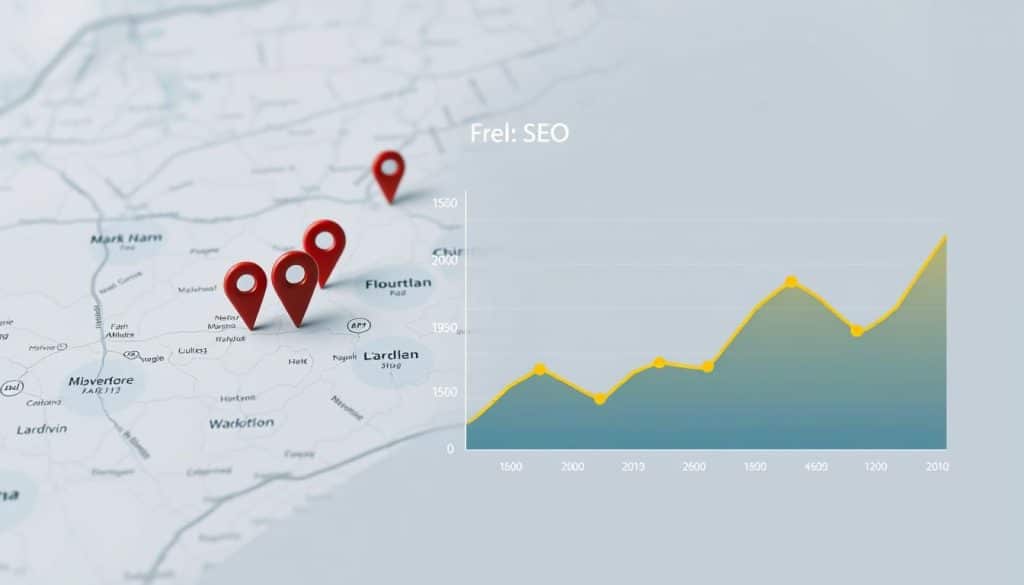
AI is transforming local SEO by providing insights that help businesses tailor their strategies to specific regions. Effective AI tools for local SEO are crucial for making a region or investment opportunity stand out, ensuring it ranks highly in search engine results and reaches potential investors.
Optimizing Google Business Profiles with AI
AI-powered tools can significantly enhance Google Business Profile optimization by analyzing customer reviews, competitor data, and local search trends. This analysis enables businesses to identify areas for improvement and opportunities to increase their local visibility.
By leveraging AI-driven insights, businesses can optimize their Google Business Profile to better match local search queries, improving their chances of appearing in the coveted “Local Pack.”
Location-Based Content Strategies
Our approach to location-based content strategies involves using AI to analyze geospatial data and local search patterns. This enables the creation of highly targeted materials that address specific regional user needs.
By implementing intelligent location-based content strategies, we help businesses establish an authoritative local presence while efficiently scaling across multiple geographic markets.
Overcoming Common Challenges with AI SEO Implementation
As organizations increasingly adopt AI in their SEO strategies, they often encounter challenges that require careful consideration. The role of SEO managers is expanding, and 90% of surveyed organizations plan to prioritize SEO more, leveraging AI to streamline optimization processes and enhance strategic thinking.
Effective AI SEO implementation involves addressing several key challenges. One of the primary issues is data quality. AI algorithms rely heavily on high-quality data to produce accurate results.
Addressing Data Quality Issues
To overcome data quality issues, it’s essential to ensure that the data used for AI SEO tools is accurate, comprehensive, and up-to-date. This involves regular data audits and validation processes.
| Data Quality Aspect | Importance | Action Required |
|---|---|---|
| Accuracy | High | Regular data validation |
| Completeness | High | Data enrichment processes |
| Currency | Medium | Periodic data updates |
Managing the Learning Curve for Teams
The learning curve associated with AI SEO tools represents a significant implementation challenge, requiring thoughtful change management and comprehensive training programs. Our implementation methodology includes customized training plans that address varying technical comfort levels within teams, from basic tool operation to advanced prompt engineering.
- Customized training plans for varying technical comfort levels
- Clear documentation and standard operating procedures for AI tool usage
- Establishing internal champions for advanced support
By managing the learning curve effectively, we help organizations minimize productivity disruptions while maximizing the long-term benefits of AI-powered SEO tools. This strategic approach enables SEO teams to focus on high-value tasks, driving revenue growth through digital excellence.
The Future of Search: AI-Generated Results and Their Impact
The emergence of AI-generated search results is transforming the digital landscape, presenting both opportunities and challenges for businesses. As search engines continue to evolve, understanding the implications of these changes is crucial for maintaining a competitive edge in the digital market.
One of the most significant developments in this space is Google’s Search Generative Experience (SGE). This AI-powered feature is changing the way search results are generated and presented to users.
Google's Search Generative Experience (SGE)
Google’s SGE represents a significant shift in how search results are generated and presented. By leveraging AI to create more comprehensive and contextually relevant search results, SGE is poised to redefine the search experience. This development underscores the importance of optimizing content for AI-driven search features.
To effectively optimize for SGE, businesses must focus on creating high-quality, relevant content that directly addresses user queries. This involves not only understanding the nuances of AI-driven search but also adapting content strategies to align with these emerging trends.
Optimizing for AI-Powered Search Features
Optimizing for AI-powered search features requires a strategic approach to content creation and optimization. Key strategies include:
- Structuring content with clear headings and concise definitions to facilitate AI understanding.
- Implementing question-based content optimization to directly address user queries.
- Utilizing structured data markup to provide context and relationships between concepts.
By adopting these strategies, businesses can improve their visibility and authority in AI-generated search results. The table below summarizes key optimization techniques and their benefits:
| Optimization Technique | Benefit |
|---|---|
| Clear Content Structure | Enhances AI understanding and information extraction |
| Question-Based Optimization | Increases citation rates in AI-generated results |
| Structured Data Markup | Provides context and relationships between concepts |
As AI continues to shape the future of search, staying ahead of these developments is crucial. By adapting our content strategies to align with AI-powered search features, we can maintain visibility and drive business growth in an increasingly competitive digital landscape.
Case Studies: Successful AI SEO Implementations
The application of AI in SEO has led to significant advancements in how businesses approach their digital marketing strategies. By leveraging AI technology, companies have achieved remarkable improvements in their SEO efforts, leading to enhanced online presence and growth.
AI-driven SEO implementations have shown remarkable results across various industries, transforming how businesses approach online visibility. Let’s examine some successful case studies that highlight the effectiveness of AI in SEO.
E-commerce Success with AI-Driven SEO
E-commerce businesses have particularly benefited from AI-driven SEO strategies. For instance, a regional development agency used AI-powered SEO to attract technology investors, resulting in a significant increase in inquiries and successful investments. By analyzing search trends and optimizing content accordingly, businesses can better position themselves to attract their target audience.
| Industry | AI SEO Strategy | Results |
|---|---|---|
| E-commerce | AI-powered content optimization | 43% increase in organic traffic |
| Digital Publishing | AI-driven content gap analysis | 37% growth in ad revenue |
Content Publishers Leveraging AI for Growth
A major digital publisher implemented our AI content optimization system across their archive of 10,000+ articles, resulting in a 43% increase in organic traffic and 37% growth in ad revenue. The AI-powered content gap analysis identified high-potential topics within their niche that competitors had overlooked or inadequately covered.
“By leveraging AI to identify emerging trends and optimize content, businesses can better position themselves to attract FDI.”
The implementation also included automated content refreshing using natural language generation, which updated outdated statistics and examples while preserving the original authors’ voices and core messaging. This case study demonstrates how content publishers can leverage AI to extract maximum value from existing content assets while strategically expanding into high-opportunity topic areas.
Ethical Considerations in AI-Powered SEO
The use of AI in SEO necessitates a thoughtful approach to ethical considerations. As we leverage AI to enhance our SEO strategies, it’s crucial to maintain the highest ethical standards.
One of the primary ethical concerns is maintaining content quality and authenticity. AI-generated content can sometimes lack the nuance and depth that human creators bring. To address this, we implement rigorous review processes to ensure that AI-assisted content meets our quality benchmarks and remains authentic.
Maintaining Content Quality and Authenticity
To maintain high content standards, we focus on using AI as a tool to augment human creativity, rather than replace it. This involves:
- Using AI to generate initial content drafts that are then reviewed and refined by human editors.
- Implementing AI-driven analytics to identify areas where content can be improved to better meet user needs.
Transparency in AI-Assisted Optimization
Transparency in AI-assisted optimization is another critical ethical consideration. We believe in being open with our clients about how AI tools are used in their SEO strategies. This includes:
- Clearly documenting AI decision-making processes to ensure clients understand the rationale behind optimization recommendations.
- Maintaining a clear distinction between AI-driven automation and human judgment, ensuring that clients are aware of the role of each in their SEO approach.
By prioritizing ethical considerations in our AI-powered SEO practices, we not only ensure compliance with emerging regulations but also build trust with our clients and stakeholders. Our approach to AI in SEO is centered on enhancing human capabilities, not replacing them, and on maintaining transparency in all our optimization efforts.
Conclusion: Building Your AI SEO Roadmap
As we look to the future of SEO, it’s clear that artificial intelligence will play a pivotal role in shaping our strategies. The integration of AI into SEO practices is not just a trend, but a significant shift that is redefining how businesses attract and engage with their target audiences.
To successfully implement AI in your SEO strategy, we recommend a thoughtful, phased approach that balances innovation with practical business outcomes. This begins with assessing your current SEO maturity and identifying areas where AI can deliver immediate value.
Key steps include selecting the right tools for your needs, establishing clear success metrics, and developing a realistic timeline for integration and optimization. By doing so, you’ll be well-positioned to thrive in the evolving search landscape, turning technological disruption into a sustainable competitive advantage.
We believe that the future of SEO belongs to organizations that effectively combine human expertise with AI capabilities, creating content and strategies that are both technically sophisticated and authentically engaging.
FAQ
How is artificial intelligence changing the field of search engine optimization?
We are seeing a significant shift in how search engines rank and display content, with AI-driven algorithms becoming increasingly sophisticated, enabling more accurate and relevant search results.
What are the benefits of using AI-powered tools for keyword research?
AI-powered tools can analyze vast amounts of data, uncover hidden patterns, and predict search trends, allowing us to identify the most effective keywords and phrases for our content.
How can AI enhance content creation and optimization?
AI can help us create high-quality, engaging content that resonates with our target audience, while also optimizing it for search engines through techniques such as content analysis and suggestion.
What role does machine learning play in search engine algorithms?
Machine learning enables search engines to learn from user behavior, adapt to changing search patterns, and improve the relevance of search results, making it a crucial component of modern search engine algorithms.
How can businesses measure the impact of AI on their SEO performance?
We track key metrics such as organic traffic, search engine rankings, and conversion rates to measure the effectiveness of our AI-driven SEO strategies and identify areas for improvement.
What are some common challenges associated with implementing AI in SEO, and how can they be overcome?
Common challenges include data quality issues and managing the learning curve for teams; to overcome these, we focus on ensuring high-quality data and providing ongoing training and support for our teams.
How is AI being used to optimize Google Business Profiles and local search results?
AI is being used to analyze and optimize Google Business Profiles, improve location-based content strategies, and enhance local search results, enabling businesses to better reach their target audience.
What are the ethical considerations when using AI in SEO, and how can they be addressed?
We prioritize maintaining content quality and authenticity, ensuring transparency in AI-assisted optimization, and avoiding manipulative tactics that can harm users or undermine the integrity of search results.