

Are you wondering what makes a robust and scalable web application? The answer lies in the foundation of modern web applications: server-side logic and database management. As businesses increasingly rely on digital solutions, the demand for skilled developers who can build secure and efficient applications is on the rise.
We are here to guide you through the essential skills required for effective backend development. With the U.S. Bureau of Labor Statistics projecting a 16% growth in web developer roles between 2022 and 2032, it’s clear that mastering backend development is a valuable career move. Our comprehensive guide will explore the core programming concepts, popular languages, database management, API development, and security practices that form the backbone of backend development.
Key Takeaways
- Understanding the foundation of modern web applications through server-side logic and database management.
- Essential skills required for effective backend development.
- Core programming concepts and popular languages used in backend development.
- Importance of database management and API development in building robust applications.
- Security practices to ensure the integrity of web applications.
What is Backend Development?

At the heart of every web application lies backend development, the unsung hero that makes digital experiences possible. Backend development, also known as server-side development, is the behind-the-scenes magic that powers the web. It refers to the part of a website or application that users don’t directly interact with but is crucial for its functionality.
The Server-Side of Web Applications
Backend development constitutes the server-side of web applications, handling everything that users don’t directly interact with but is essential for functionality. This includes server configuration, database management, and application logic. The server-side components process requests from the client-side (frontend), retrieve or manipulate data in databases, apply business logic, and return appropriate responses to create dynamic web experiences.
How Backend Works with Frontend
The relationship between frontend and backend is symbiotic. Frontend code sends requests to backend systems, which process data and return responses that the frontend then presents to users in a visually appealing and interactive format. Backend developers work with server-side languages like Python, Java, PHP, and Ruby to create the logic that powers web applications, focusing on performance, scalability, and security rather than visual design.
By understanding how backend development works in tandem with frontend development, we can appreciate the complexity and beauty of web applications. The backend is not just a supporting actor; it’s a crucial component that makes the frontend shine by providing the necessary data and logic.
The Role of a Backend Developer

The role of a backend developer is multifaceted, involving the creation of web services and APIs that enable frontend and mobile app developers to build their parts of the application. Backend developers are responsible for server-side web application logic and integrating the work done by front-end developers.
Key Responsibilities and Daily Tasks
Backend developers are tasked with designing, building, and maintaining the server-side components of web applications. Their daily tasks include writing server-side code, developing and optimizing database schemas, creating and maintaining APIs, debugging server issues, implementing security measures, and collaborating with frontend developers.
- Writing server-side code in languages such as Python, JavaScript, or Java
- Developing and optimizing database schemas for efficient data storage and retrieval
- Creating and maintaining APIs for communication between different software components
Backend vs. Frontend Development
While frontend developers focus on user interfaces, visual elements, and client-side interactivity using HTML, CSS, and JavaScript, backend developers work with server-side languages and databases to create the application’s core functionality. According to backend development experts, the distinction between roles is becoming increasingly blurred with the rise of full-stack development.
“Reflecting on a typical working day, I’d say I spend 50% of my time on project work, 20% in meetings and on general communication, and the remaining 30% working on immediate requests and bugs.” – Ali Bayat, Backend Developer
| Development Type | Focus | Average Salary |
|---|---|---|
| Backend Development | Server-side logic, database integration, API connectivity | $158,984 |
| Frontend Development | User interfaces, visual elements, client-side interactivity | $112,083 |
Backend Development Basics: Core Concepts
Backend development basics revolve around two primary elements: server-side logic and data management. These core concepts form the foundation upon which robust and scalable web applications are built. Understanding these elements is crucial for any developer looking to excel in backend development.
Server-Side Logic and Processing
Server-side logic is the backbone of backend development, determining how applications process requests, handle business rules, and generate responses. This is achieved through various programming paradigms, primarily object-oriented programming (OOP) and functional programming.
OOP focuses on the creation of objects, organizing code around properties and methods. Popular OOP languages include Java, Python, and C#. In contrast, functional programming is more “action”-based, using declarative language where statements can be executed in any order. Languages like SQL, F#, and R utilize this paradigm, particularly for data-intensive applications.
“The choice between OOP and functional programming depends on the project’s requirements and the type of problem being solved.”
Backend developers must be adept at both approaches to effectively design and implement server-side logic.
Data Management and Storage
Data management is a critical aspect of backend development, involving the design of database schemas, implementation of data access layers, and creation of efficient query mechanisms. Effective data management ensures that information is stored and retrieved efficiently, supporting the overall performance of the application.
Backend developers need to understand both statically typed languages, which catch errors at compile time, and dynamically typed languages, which offer more flexibility. The choice between these approaches depends on the project’s specific needs and the trade-offs between error detection and flexibility.
- Designing database schemas that are normalized and scalable.
- Implementing data access layers for secure and efficient data retrieval.
- Creating query mechanisms that optimize data processing.
By mastering these aspects, developers can ensure that their applications are not only functional but also efficient and scalable.
Essential Programming Languages for Backend Development
The backbone of any web application is its backend, powered by a suitable programming language. As we explore the essential programming languages for backend development, it’s crucial to understand the role each plays in shaping the digital landscape.
Python
Python has emerged as a leading backend language due to its readable syntax and versatility. It’s ideal for rapid development of web applications, data analysis, and AI integration. With frameworks like Django and Flask, Python simplifies the development process.
JavaScript (Node.js)
JavaScript, through Node.js, has revolutionized backend development by allowing developers to use the same language across the entire stack. Its event-driven, non-blocking I/O model enables the building of scalable network applications.

Java
Java remains a cornerstone of enterprise backend development due to its platform independence through the Java Virtual Machine (JVM). Its strong typing and exceptional performance capabilities power major platforms like LinkedIn and Uber.
PHP and Other Languages
PHP continues to dominate web development, powering over 76% of websites with known server-side languages. Other significant backend languages include Ruby, known for rapid development through Ruby on Rails, and Go, created by Google for performance and efficiency.
Backend Frameworks and Libraries
In the realm of backend development, frameworks and libraries are indispensable tools that accelerate development by providing structured environments with pre-built components, standardized patterns, and utilities. This eliminates the need to build common functionalities from scratch, thereby streamlining the development process.
Express.js and Node.js
Express.js is a minimalist web application framework for building web applications and APIs, known for its speed and minimalistic approach. It offers a thin layer of fundamental web application features without obscuring Node.js’s capabilities, making it ideal for building APIs and microservices with maximum flexibility.
Django and Flask (Python)
Django is a high-level web framework that encourages rapid development and emphasizes reusability and the “don’t repeat yourself” (DRY) principle. It provides a comprehensive ecosystem that includes an ORM, authentication system, admin interface, and form handling. Flask, on the other hand, is a micro web framework that is ideal for smaller applications and prototyping.
Spring (Java)
Spring provides comprehensive infrastructure support for developing Java applications, facilitating dependency injection and aspect-oriented programming. It has established itself as the de facto standard for enterprise Java applications, offering extensive integration capabilities that simplify the development of robust, scalable systems.
Laravel (PHP)
Laravel is known for its elegant syntax and comprehensive set of features, simplifying tasks like authentication, routing, and session management. It has modernized PHP development with its developer-friendly tools like Eloquent ORM, Blade templating, and Artisan CLI, making it the preferred choice for PHP developers building modern web applications. For expert PHP web app development services in Qatar, consider visiting our PHP development services page.
By leveraging these backend frameworks and libraries, developers can significantly enhance their productivity and build robust, scalable web applications.
Database Management for Backend Developers
Database management stands as a fundamental skill for backend developers, impacting application performance and data security. Effective database management involves designing efficient schemas, writing optimized queries, and ensuring data integrity.
SQL Databases: MySQL, PostgreSQL
SQL databases, such as MySQL and PostgreSQL, are relational databases that organize data into structured tables with predefined schemas. They offer ACID compliance, ensuring atomicity, consistency, isolation, and durability of database transactions.
These databases are ideal for applications requiring complex transactions and strong data integrity. They support powerful querying capabilities through SQL, making them suitable for a wide range of applications.
NoSQL Databases: MongoDB, Redis
NoSQL databases, such as MongoDB and Redis, provide flexible schema designs that accommodate unstructured or semi-structured data. They offer horizontal scalability, making them suitable for handling large volumes of data.
NoSQL databases are particularly useful for applications with rapidly evolving data structures or those requiring high scalability and performance. They support various data models, including document, key-value, and graph databases.
In conclusion, the choice between SQL and NoSQL databases depends on the specific requirements of the project. Backend developers must understand the strengths and weaknesses of each type to make informed decisions.
API Development and Integration
API development has become a cornerstone of modern backend development, facilitating the integration of various services and data sources. As we continue to build complex web applications, the role of APIs in enabling communication between different systems becomes increasingly important.
RESTful API Design Principles
RESTful APIs are designed following specific architectural constraints, including statelessness, client-server separation, and uniform interfaces. They use standard HTTP methods (GET, POST, PUT, DELETE) to perform CRUD operations on resources. Effective RESTful API design requires careful consideration of endpoint naming conventions, HTTP status code usage, and comprehensive documentation.
Key aspects include implementing proper versioning strategies and authentication mechanisms to ensure security and usability. By following these principles, developers can create scalable and maintainable APIs that support a wide range of client applications.
GraphQL as an Alternative
GraphQL has emerged as a powerful alternative to REST, allowing clients to request exactly the data they need in a single query. This approach reduces over-fetching and under-fetching of data, providing a more efficient data fetching mechanism. GraphQL’s strongly-typed schema serves as both documentation and validation, making it easier for developers to understand and work with the API.
As backend developers, mastering both API development and integration skills is crucial. This includes handling authentication flows, managing rate limiting, and implementing caching strategies to create reliable connections between systems. By understanding the strengths and weaknesses of different API approaches, we can choose the best solution for our specific needs.
Version Control and Collaboration Tools
Effective backend development relies heavily on robust version control and collaboration tools. These tools enable backend developers to manage code changes, track updates, and collaborate on projects without conflicts.
Git and GitHub Basics
Git is a fundamental version control system that allows multiple developers to work on the same project simultaneously. GitHub is a popular platform that extends Git’s functionality by providing collaborative features like pull requests and code reviews.

- Version control systems like Git enable code tracking and collaboration.
- Git’s distributed nature supports parallel development without conflicts.
Collaborative Development Workflows
Effective collaboration in backend development requires understanding of branching models like Git Flow. Tools like Jira for project management and Slack for communication further enhance team productivity.
- GitHub, GitLab, and Bitbucket provide features that streamline the development workflow.
- Collaboration tools like Confluence create an integrated development environment.
By leveraging these tools and practices, backend developers can improve their development process, ensuring efficient and high-quality project delivery.
Security Practices in Backend Development
In the realm of backend development, security is not just a feature, it’s a necessity that requires careful consideration. As developers, we must prioritize the protection of our applications and data from various threats and vulnerabilities.
Authentication and Authorization
Authentication and authorization form the foundation of application security. Authentication verifies user identity through mechanisms like username/password combinations or OAuth, while authorization determines what authenticated users can access. Implementing robust authentication and authorization protocols is crucial for safeguarding data and ensuring that only authorized users can interact with our secure web applications.
Data Encryption
Data encryption protects data both in transit and at rest. Using protocols like TLS/SSL for data in transit and encryption algorithms like AES for data at rest ensures that even if data is intercepted or systems are compromised, the information remains unreadable without proper decryption keys. This is a critical aspect of backend development that developers must not overlook.
Common Security Vulnerabilities
Backend developers must be vigilant against common security vulnerabilities including SQL injection, cross-site scripting (XSS), and cross-site request forgery (CSRF). Implementing proper input validation and output encoding is essential to mitigate these risks. By understanding and addressing these vulnerabilities, we can significantly enhance the security of our applications and systems.
Server Management and Deployment
The backbone of any robust backend application lies in its server management and deployment strategies. Effective server management involves setting up, configuring, and maintaining servers to ensure they run smoothly, which includes monitoring performance, managing resources, and keeping the server secure and updated.
Configuring Web Servers
Web servers like Apache and Nginx serve as the gateway between users and backend applications. They handle HTTP requests, serve static content, and implement security features like SSL termination.
Cloud Hosting for Backend Applications
Cloud hosting platforms such as AWS, Google Cloud Platform, and Microsoft Azure have revolutionized deployment by offering scalable, pay-as-you-go infrastructure. This includes services for computing, storage, databases, and networking without the need to manage physical hardware.

Streamlining Deployment with Docker
Containerization with Docker has transformed deployment practices by packaging applications with their dependencies into standardized units. This ensures consistency across different environments, eliminating the “it works on my machine” problem.

By leveraging these technologies and strategies, backend developers can ensure efficient server management and deployment, ultimately enhancing the performance and scalability of their applications.
Performance Optimization Techniques
Performance optimization is a critical aspect of backend development that involves minimizing response times and reducing resource consumption. As backend developers, we focus on improving the efficiency of our applications to handle increasing loads and provide a seamless user experience.
Database Query Optimization
Database query optimization is a key technique for improving application performance. This involves improving the efficiency of database queries to reduce response time and resource usage. Techniques such as proper indexing, query restructuring, and avoiding N+1 query problems can significantly reduce database load and improve response times.
By optimizing database queries, we can minimize the time spent on data retrieval and manipulation, resulting in faster application performance.
Caching Strategies
Caching strategies involve storing frequently accessed data in memory to reduce database load and improve response times. Common caching approaches include application caching, database query caching, and using specialized caching systems like Redis or Memcached. By implementing caching strategies, we can dramatically improve performance and reduce the load on our databases.
Load Balancing
Load balancing distributes incoming network traffic across multiple servers to ensure no single server becomes overwhelmed, improving reliability and availability. By distributing traffic across multiple servers or instances, we can prevent any single point of failure and enable horizontal scaling to handle increased user loads during peak times.
Effective load balancing is crucial for ensuring that our applications remain responsive and available, even under high traffic conditions.
By implementing these performance optimization techniques, we can significantly improve the efficiency and scalability of our backend applications, resulting in a better user experience and improved business outcomes.
Testing and Debugging in Backend Development
Testing and debugging are indispensable practices in backend development that help maintain code quality and prevent regressions. As backend developers, we must ensure our code works as intended, catching any issues early in the development process.
Unit and Integration Testing
Unit testing focuses on validating individual components in isolation, using frameworks like JUnit (Java), PyTest (Python), or Mocha (JavaScript) to verify that functions and methods behave as expected under various conditions. Integration testing examines how different components work together, testing the interactions between modules, services, databases, and external dependencies to ensure the system functions correctly as a whole.
By implementing continuous integration (CI) pipelines that automatically run tests on code changes, we can catch bugs early, maintaining code quality and reducing the cost of fixing issues.
Debugging Tools and Techniques
Effective debugging requires both tools and methodologies. Tools like logging frameworks, debuggers, and performance profilers help identify issues, while techniques such as binary search debugging, rubber duck debugging, and systematic hypothesis testing help resolve them. Examples of debugging tools include GDB (GNU Debugger), PyCharm Debugger, and Chrome DevTools.
DevOps and CI/CD for Backend Developers
The adoption of DevOps and CI/CD pipelines has become crucial for backend developers to ensure the smooth delivery of high-quality applications. DevOps practices have transformed backend development by breaking down silos between development and operations teams, creating a collaborative culture that emphasizes automation, measurement, and continuous improvement.
Continuous Integration Workflows
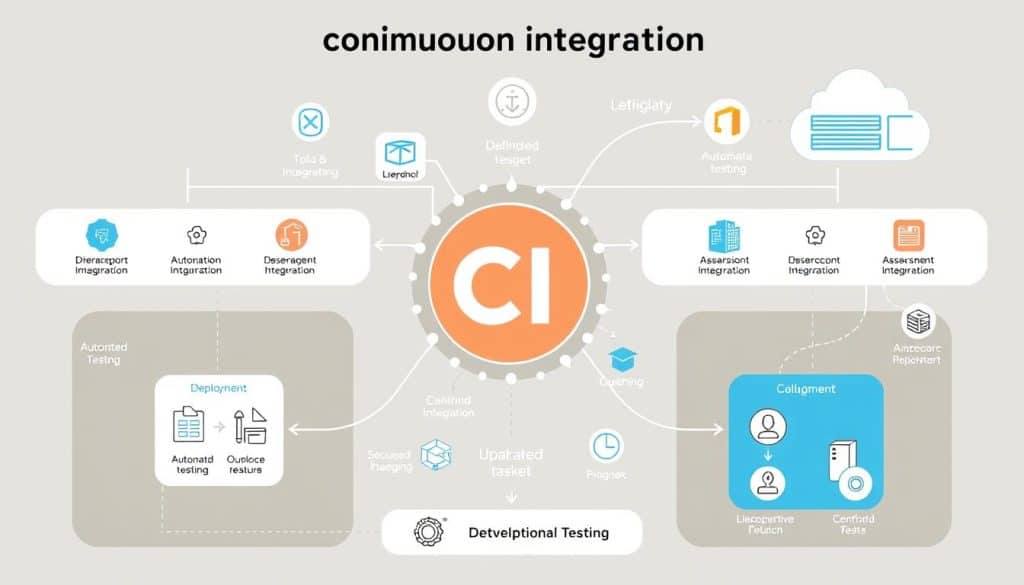
Continuous Integration (CI) workflows automatically build and test code changes when developers push to version control, catching integration issues early and ensuring that the main codebase remains in a deployable state. Tools like Jenkins, Travis CI, and CircleCI are popular for automating testing, integration, and deployment of code.
Monitoring and Logging
Comprehensive monitoring and logging systems provide visibility into application performance, resource utilization, and user behavior, allowing developers to identify issues proactively and make data-driven decisions about optimizations. Backend developers need to be familiar with Docker for containerization and Kubernetes for orchestration to effectively participate in modern software delivery processes.
By adopting DevOps practices and CI/CD pipelines, backend developers can significantly improve the quality and reliability of their applications, ultimately driving business growth and customer satisfaction.
Building Real-World Backend Projects
As we dive into the world of backend development, it’s crucial to apply theoretical knowledge to real-world projects. Building real-world backend projects is essential for cementing theoretical knowledge, developing practical skills, and creating a portfolio that demonstrates your capabilities to potential employers.
Project Ideas for Beginners
For those starting out, several beginner-friendly project ideas can help build a strong foundation. You can start by building a simple CMS blog using a framework like Django or Ruby on Rails. Another idea is to create a REST API to interface with a database like MongoDB or MySQL. Additionally, making a weather application that uses server-side APIs and displays data to a front-end site is a great project. Automating tasks by writing Python scripts to process Excel data or send emails is also a valuable exercise. Developing a user login system with encrypted passwords and sessions is another excellent project to undertake.
These projects not only help in understanding backend development concepts but also provide a chance to work with different technologies and frameworks. As you progress, you can take on more complex projects like e-commerce platforms, social media applications, or real-time chat systems.
Best Practices for Project Structure
When working on backend projects, following best practices for project structure is crucial. This includes organizing code into logical modules, separating concerns such as controllers, services, and data access, and implementing proper error handling. Creating comprehensive documentation is also vital for maintaining and scaling your projects. Successful backend projects require thoughtful planning, including defining clear requirements, designing database schemas and API endpoints before implementation, setting up proper testing frameworks, and implementing logging for troubleshooting.
By adhering to these best practices, you can ensure that your projects are maintainable, scalable, and efficient. This not only enhances your development skills but also makes your projects more attractive to potential employers or clients.
Learning Path: From Beginner to Professional Backend Developer
Embarking on a career as a backend developer requires a strategic approach to skill acquisition and professional growth. As we navigate this journey, it’s essential to understand the key milestones and skills required to progress from a beginner to a professional.
Essential Skills to Master First
To start, we need to focus on acquiring the foundational skills that form the backbone of backend development. This includes mastering a core programming language such as Python, JavaScript, or Java. Additionally, understanding basic data structures and algorithms, version control with Git, and fundamental database concepts including SQL are crucial. These skills provide a solid foundation upon which more advanced knowledge can be built.
Building Your Portfolio
As we progress in our backend development journey, building a comprehensive portfolio becomes increasingly important. This involves starting with simple applications and gradually incorporating more complex features, technologies, and architectural patterns. A robust portfolio demonstrates our capabilities to potential employers and showcases our growth as developers. It’s essential to include a variety of projects that highlight different aspects of backend development, such as API development, authentication and authorization, and database management.
Career Opportunities and Salary Expectations
Backend developers are in high demand, with career opportunities available across various industries and company sizes. According to the U.S. Bureau of Labor Statistics, the demand for web developers, including backend specialists, is expected to grow by 16% between 2022 and 2032. In terms of compensation, backend developers typically earn higher salaries than frontend developers, with an average salary of $158,984 compared to $112,083 for frontend developers. This makes backend development a lucrative and rewarding career path.
| Role | Average Salary | Projected Growth |
|---|---|---|
| Backend Developer | $158,984 | 16% |
| Frontend Developer | $112,083 |
Conclusion
The world of backend development is vast and intricate, requiring a broad skill set and continuous learning. As we’ve explored throughout this guide, backend development forms the foundation of modern web applications, encompassing a diverse range of skills that span programming languages, frameworks, databases, APIs, security practices, and deployment strategies.
The field continues to evolve rapidly, with new technologies and methodologies emerging regularly. This necessitates backend developers to remain adaptable and committed to ongoing education. While the learning curve can be steep, the structured approach outlined in this guide provides a clear pathway for aspiring developers to acquire the necessary skills and knowledge.
Investing in backend development skills offers significant returns, including strong demand across industries, competitive salaries, and the satisfaction of creating the systems that power digital experiences. For those beginning their journey, remember that mastery comes through consistent practice, building real-world projects, and engaging with the developer community.
As you embark on or continue your career in backend development, we emphasize the importance of staying curious and continually updating your skills to remain competitive in this dynamic field.
FAQ
What skills are required to become a proficient backend developer?
To become a proficient backend developer, one needs to possess skills in programming languages like Python, JavaScript, and Java, as well as knowledge of frameworks, databases, and APIs. Understanding server-side logic, data management, and security practices is also crucial.
How does backend development differ from frontend development?
Backend development focuses on the server-side of web applications, dealing with server-side logic, database integration, and API connectivity. In contrast, frontend development concentrates on the client-side, handling user interface, user experience, and client-side logic.
What are the most commonly used programming languages for backend development?
Popular programming languages for backend development include Python, JavaScript (with Node.js), Java, and PHP. Each language has its strengths and is suited for different types of projects.
What is the role of a database in backend development?
Databases play a crucial role in backend development, as they store and manage data used by web applications. Understanding database management systems, including SQL and NoSQL databases, is essential for backend developers.
How do backend developers ensure the security of web applications?
Backend developers ensure security by implementing authentication and authorization mechanisms, encrypting data, and protecting against common security vulnerabilities such as SQL injection and cross-site scripting (XSS).
What are some best practices for optimizing backend performance?
To optimize backend performance, developers can use techniques like database query optimization, caching strategies, and load balancing. These methods help improve the efficiency and scalability of web applications.
What is the importance of API development in backend development?
API development is crucial in backend development as it enables different systems to communicate with each other. Well-designed APIs facilitate data exchange, integration with third-party services, and microservices architecture.
How do backend developers collaborate with other teams?
Backend developers collaborate with other teams, such as frontend developers, designers, and DevOps engineers, using version control systems like Git and collaboration tools like GitHub. This ensures smooth project execution and integration.