

In today’s digital landscape, the importance of secure web app development cannot be overstated. With cyber threats on the rise, businesses in Qatar and beyond are facing an unprecedented challenge in protecting their digital assets.
Did you know that according to recent statistics, a significant percentage of businesses have experienced a data breach due to insecure web applications? This not only jeopardizes sensitive information but also erodes customer trust and can lead to substantial financial losses. At our company, we specialize in developing secure web app code solutions that safeguard your business data while delivering exceptional user experiences.
Our team of expert developers implements industry-leading security practices throughout the entire web application development lifecycle, ensuring that your digital presence is both robust and secure. By combining technical expertise with business acumen, we deliver web applications that meet both security requirements and business objectives.
Key Takeaways
- Understanding the importance of secure web application development in today’s digital landscape.
- Recognizing the role of expert developers in implementing industry-leading security practices.
- Learning how secure web app code solutions can protect business data and enhance user experiences.
- Discovering the comprehensive approach to creating secure web applications.
- Understanding how our solutions address the growing market for web applications in 2024.
Understanding Web Applications and Their Importance

As we dive into the world of web development, it’s crucial to understand what web applications are and their significance in today’s digital landscape. Web applications are interactive software programs that run on web servers, accessible through web browsers, and enable users to perform specific tasks online.
What Defines a Web Application
A web app is built using web technologies such as HTML, CSS, and JavaScript, and is characterized by its ability to store and manipulate data. Unlike traditional websites, web applications offer dynamic functionality and user interaction capabilities through client-server architecture. We define web applications as interactive software programs accessible through web browsers that store and manipulate data while enabling users to perform specific tasks online.
The Growing Market for Web Applications in 2024
The market for web applications is experiencing explosive growth, projected to reach $179.90 billion in 2024 according to Statista, demonstrating the increasing business demand for these solutions. Modern web apps leverage advanced frameworks like React, Angular, and Vue.js to deliver sophisticated functionality with improved development efficiency. We’ve observed that businesses increasingly rely on web applications to streamline operations, enhance customer experiences, and gain competitive advantages in their respective markets.
As noted by industry experts, “The evolution of web technologies has enabled the development of progressive web apps that combine the best features of web and mobile applications.” This highlights the growing importance of web applications in the digital landscape. For more information on how businesses can leverage digital solutions, check out our guide on digital marketing for business success.
Security Challenges in Web App Development

Web app development is fraught with security challenges that can have far-reaching consequences if not addressed properly. As we develop web applications, we regularly encounter numerous security issues that can expose businesses to significant risks.
Common Security Vulnerabilities
Some of the most common security vulnerabilities in web app development include SQL injection, cross-site scripting (XSS), broken authentication, sensitive data exposure, and XML external entities (XXE). These vulnerabilities are frequently exploited by malicious actors to gain unauthorized access to web applications and sensitive data.
- SQL injection attacks compromise databases by injecting malicious code.
- Cross-site scripting (XSS) allows attackers to inject malicious scripts into content.
- Broken authentication mechanisms can lead to unauthorized access.
The Cost of Security Breaches
The financial impact of security breaches extends beyond immediate remediation costs. It includes regulatory fines, legal liabilities, and long-term reputational damage that can devastate businesses. Our security-first approach identifies potential vulnerabilities early in the development process, significantly reducing the risk of costly breaches after deployment.
By implementing defense-in-depth strategies, we provide multiple layers of security controls to protect web applications even if one layer is compromised. This comprehensive approach is crucial for web apps handling sensitive user data and facing increasingly sophisticated attack vectors.
Essential Components of Secure Web App Code
Building a secure web application requires a comprehensive approach that encompasses both front-end and back-end security measures. We develop secure web app code by implementing essential security components across both development processes, ensuring the protection of user data and preventing security breaches.
Front-End Security Considerations
Front-end security is critical in preventing attacks that target the user interface and client-side vulnerabilities. We implement several key measures to secure the front-end of our web applications, including:
- Input validation to prevent malicious data from entering the application
- Output encoding to protect against Cross-Site Scripting (XSS) attacks
- Secure cookie attributes to safeguard user sessions
- Content Security Policy (CSP) implementation to define allowed sources of content
- Protection against Cross-Site Request Forgery (CSRF) to prevent unauthorized actions
By incorporating these security measures, we significantly reduce the risk of front-end vulnerabilities in our web app.
Back-End Security Fundamentals
The back-end of a web application is equally crucial in maintaining overall security. Our back-end security fundamentals focus on:
- Secure authentication mechanisms to verify user identities
- Proper session management to prevent session hijacking
- Data encryption to protect sensitive information
- Comprehensive access control systems to restrict unauthorized access
By implementing these back-end security measures, we ensure that our web app code is robust and resistant to common vulnerabilities, providing a secure experience for our users.
Planning Your Secure Web App Development Process
Secure web app development begins with a comprehensive planning phase. To make a data-centric web app from the bottom-up, you’ll want to understand the backend language, web front end, and DevOps. Our approach ensures that security is integrated into every stage of the development process.
Requirement Gathering and Security Analysis
We begin every secure web app development process with comprehensive requirement gathering that incorporates security considerations from the very beginning. Our security analysis during the planning phase identifies potential vulnerabilities and compliance requirements specific to your industry and application type. This involves understanding the backend language (e.g., Python, Ruby) that controls how your web app works, the web front end (HTML, CSS, Javascript) that determines the look and feel of your web app, and DevOps (Github, Jenkins) for deploying and hosting your web app.
- Identifying sensitive data flows and determining appropriate protection mechanisms
- Creating detailed security requirement specifications that become integral parts of the overall project requirements
- Conducting threat modeling exercises to identify potential attack vectors and establish mitigation strategies
Defining Project Scope with Security in Mind
Defining project scope with security in mind involves establishing clear security objectives and identifying sensitive data flows. We help clients understand the security implications of various technology choices, ensuring the selected stack supports robust security implementation. By incorporating security planning early in the development process, we reduce costly rework and security patches that often plague hastily developed web applications.
| Security Considerations | Description | Benefits |
|---|---|---|
| Backend Language | Controls how your web app works | Enhanced security through robust control |
| Web Front End | Determines the look and feel of your web app | Improved user experience with secure design |
| DevOps | Deploying and hosting your web app | Streamlined deployment with secure hosting |
For more information on how to optimize your web development process, you can refer to our guide on how to do SEO for a website.
Choosing the Right Technology Stack for Secure Web App Code
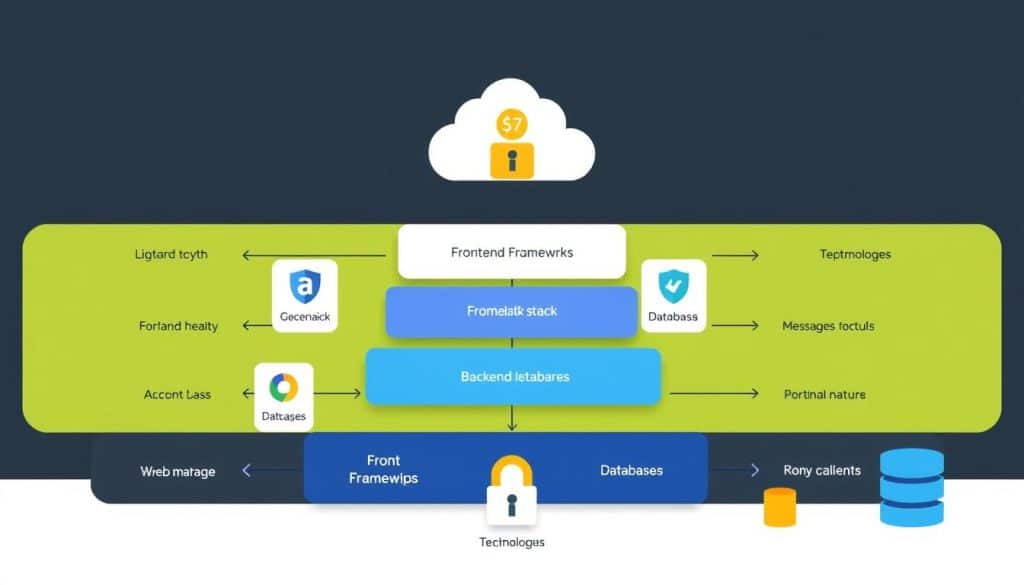
Building a secure web application starts with choosing the appropriate technology stack. The technology stack is the foundation upon which the security, scalability, and performance of a web application are built. We carefully evaluate various factors to select a stack that aligns with the project’s security requirements.
Our selection process involves considering the security features, community support, and alignment with project requirements. This ensures that the chosen technology stack is not only robust but also secure.
Programming Languages for Secure Applications
The choice of programming language is critical in developing secure web applications. Languages such as Python, JavaScript, and Java are popular choices due to their robust security features and extensive libraries.
For instance, Python with frameworks like Django and Flask offers robust security features. JavaScript with Node.js provides extensive security-focused libraries. Similarly, Java with Spring Boot is known for its security capabilities.
Frameworks and Libraries with Strong Security Features
When it comes to frameworks and libraries, we prioritize those with built-in security controls, regular security updates, and strong community support. Frameworks that implement security best practices by default are particularly valuable as they reduce the risk of developer oversight.
We consider the entire technology stack, including databases, authentication systems, and API frameworks, to ensure security compatibility across all components. Our expertise with multiple technology stacks enables us to recommend the optimal combination for specific security requirements and business objectives.
Implementing Secure Authentication and Authorization
Effective web app security relies heavily on implementing strong authentication and authorization protocols. As web applications continue to grow in complexity and importance, ensuring that only authorized users can access sensitive data is crucial. We implement robust authentication systems that go beyond simple username/password combinations to include multi-factor authentication, biometrics, and single sign-on capabilities where appropriate.
User Authentication Best Practices
Our user authentication best practices are designed to provide a secure and seamless user experience. We prioritize secure password storage using modern hashing algorithms, account lockout mechanisms to prevent brute-force attacks, and comprehensive logging of authentication attempts to detect potential security breaches. By implementing these measures, we significantly reduce the risk of unauthorized access to our web applications.
- Secure password storage using modern hashing algorithms
- Account lockout mechanisms to prevent brute-force attacks
- Comprehensive logging of authentication attempts
Additionally, we develop secure password reset flows that prevent account takeovers while maintaining positive user experiences during the recovery process. Our authentication implementations also include protection against common attacks such as credential stuffing, brute force attempts, and session hijacking.
Role-Based Access Control Implementation
We design role-based access control (RBAC) systems that enforce the principle of least privilege, ensuring users can only access the data and functions necessary for their specific roles. This approach minimizes the risk of data breaches and unauthorized actions within our web applications.
| Role | Permissions | Access Level |
|---|---|---|
| Admin | Full control over user management and data access | High |
| User | Limited to viewing and editing own data | Medium |
| Guest | Read-only access to public data | Low |
Our authorization frameworks include fine-grained permission systems that can be easily audited and modified as organizational requirements change. We also implement secure session management with appropriate timeout settings, secure cookie configurations, and protection against session fixation attacks.
Database Security for Web Applications
As web applications increasingly rely on databases, the importance of robust database security cannot be overstated. Web applications often require databases to store and manage data, making database security a critical component of overall web application security.
Preventing SQL Injection and Other Database Attacks
SQL injection remains one of the most significant threats to database security. To prevent such attacks, we implement comprehensive security measures, including the use of parameterized queries and stored procedures that properly sanitize user inputs. Our approach also involves utilizing ORM frameworks that limit the risk of SQL injection. Additionally, we ensure that database users have only the minimum privileges necessary for their functions, reducing the attack surface.
- Implementing parameterized queries to prevent SQL injection
- Using stored procedures to encapsulate database logic
- Utilizing ORM frameworks for secure database interactions
Secure Data Storage and Encryption Techniques
Secure data storage is another critical aspect of database security. We design data storage solutions that implement appropriate encryption for sensitive data both at rest and in transit. Industry-standard encryption algorithms are used to ensure that even if data is intercepted or accessed unauthorized, it remains unreadable. Furthermore, we implement database activity monitoring and logging to detect suspicious activities and provide audit trails for security investigations.
- Encrypting sensitive data at rest and in transit
- Implementing database activity monitoring and logging
- Regularly reviewing and optimizing database security configurations
Testing Your Web App Code for Security Vulnerabilities
To safeguard your web app, rigorous security testing is not just recommended, it’s essential. In today’s digital landscape, cyber threats are becoming increasingly sophisticated, making it crucial to identify and address vulnerabilities before they can be exploited.
Automated Security Testing Tools
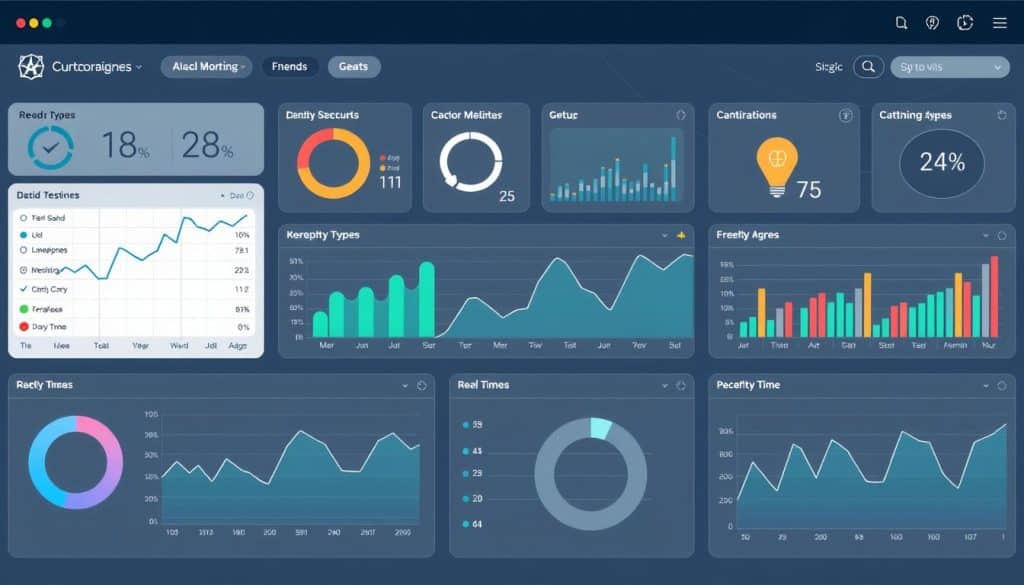
We utilize a combination of automated security testing tools to identify vulnerabilities in your web app code. These include:
- Static Application Security Testing (SAST) to analyze code without executing it
- Dynamic Application Security Testing (DAST) to test the application during runtime
- Interactive Application Security Testing (IAST) for real-time analysis
These tools help us detect potential security issues early in the development cycle, ensuring a more secure web application.
Manual Penetration Testing Approaches
While automated testing is crucial, we also employ manual penetration testing approaches to simulate real-world attack scenarios. This helps us understand how your web app would fare against actual malicious attempts, providing valuable insights into its security posture.
Our manual testing includes:
- Simulating various attack vectors to test the application’s defenses
- Conducting thorough code reviews with a focus on security aspects
- Performing vulnerability scanning, dependency checking, and configuration analysis
By combining automated and manual testing methods, we ensure comprehensive security coverage for your web application, protecting it against a wide range of potential threats.
Deployment and Hosting Considerations for Secure Web Apps
As we develop secure web app code solutions, deployment and hosting considerations play a crucial role. Ensuring that a web application is not only developed with security in mind but also deployed and hosted securely is vital for protecting against various threats.
Secure Deployment Pipelines
We design secure deployment pipelines that incorporate security checks at every stage, from code commits to production deployment. This includes practices such as code signing, artifact verification, and automated security testing integrated directly into CI/CD pipelines, ensuring that vulnerabilities are caught before they reach live environments.
Our deployment strategies also include proper environment segregation, ensuring that development, testing, and production environments are properly isolated. We implement secure configuration management to prevent sensitive information, such as API keys and database credentials, from being exposed in code repositories.
Choosing Secure Hosting Solutions
We help clients select secure hosting solutions that offer robust security features, including network isolation, DDoS protection, and regular security patching. Our deployment processes include proper access controls, ensuring that only authorized personnel can deploy code to production environments.
Additionally, we configure web application firewalls and other security controls during deployment to provide additional layers of protection for production applications. By doing so, we ensure that the web app is secure throughout its lifecycle, from development to deployment and hosting.
Maintaining and Updating Your Secure Web App
To keep your web app secure, we implement a comprehensive maintenance strategy that includes regular security audits and updates. This proactive approach ensures that your application remains protected against emerging threats and vulnerabilities.
Regular Security Audits and Updates
Our comprehensive maintenance strategy for secure web apps includes several key components. We perform regular security audits to identify vulnerabilities and implement necessary updates. Our approach to security updates prioritizes critical vulnerabilities while carefully testing patches to prevent service disruptions.
- Regular security audits to identify potential vulnerabilities
- Dependency updates to ensure you’re using the latest, most secure versions of third-party libraries
- Vulnerability assessments to detect and address potential security risks
We also implement automated dependency scanning to identify and address vulnerabilities in third-party libraries and components used in your web application. This ensures that your web app remains secure and up-to-date.
Monitoring for Security Threats
We establish continuous monitoring systems that detect and alert on suspicious activities, potential security breaches, and performance anomalies that might indicate security issues. Our security monitoring solutions provide real-time visibility into application security status, with dashboards and alerts customized to your specific security requirements.
| Monitoring Feature | Description | Benefit |
|---|---|---|
| Real-time Alerts | Immediate notification of potential security threats | Quick response to emerging threats |
| Customized Dashboards | Personalized views of your application’s security status | Enhanced visibility into security performance |
| Performance Anomaly Detection | Identification of unusual patterns that may indicate security issues | Proactive detection of potential security threats |
We develop and maintain incident response plans that enable quick and effective reactions to security threats when they are detected. This comprehensive approach to security monitoring and maintenance ensures that your web app remains secure and protected against emerging threats.
Conclusion: Building a Culture of Security in Web App Development
Building a culture of security within your organization is the key to developing truly secure web applications. We believe that truly secure web app development requires more than just technical solutions—it demands building a culture of security throughout the organization. Our approach helps clients establish security as a shared responsibility across development, operations, and business teams.
By providing training and resources, we help development teams understand the security implications of their design and coding decisions. Our security-focused development practices become part of your organization’s DNA, ensuring that security considerations are automatically incorporated into future projects. For more information on common threats and vulnerabilities, visit our blog post on the importance of security in web application.
By building a culture of security in web app development, organizations can reduce vulnerabilities, respond more effectively to threats, and build customer trust through demonstrated security commitment.
FAQ
What are the most common security vulnerabilities in web applications?
Common security vulnerabilities include SQL injection, cross-site scripting (XSS), and cross-site request forgery (CSRF). These vulnerabilities can be mitigated by following best practices in secure coding, validating user input, and implementing robust security measures.
How can I ensure the security of my web application’s database?
To secure your database, use prepared statements to prevent SQL injection, limit database privileges to the application’s database user, and encrypt sensitive data both in transit and at rest. Regularly updating and patching your database management system is also crucial.
What is the importance of secure authentication and authorization in web applications?
Secure authentication and authorization are critical to prevent unauthorized access to sensitive data and functionality. Implementing robust authentication mechanisms, such as multi-factor authentication, and role-based access control can significantly reduce the risk of security breaches.
How often should I perform security audits and updates on my web application?
Regular security audits and updates are essential to identify and address potential security vulnerabilities. We recommend performing security audits at least quarterly, and after any significant changes to your application.
What are the benefits of using automated security testing tools?
Automated security testing tools can help identify potential security vulnerabilities early in the development process, reducing the risk of security breaches and the cost of remediation. These tools can also help ensure compliance with security standards and regulations.
How can I choose the right technology stack for my secure web application?
When choosing a technology stack, consider factors such as the programming language, frameworks, and libraries used, as well as their security features and track record. We recommend selecting technologies with strong security features and a large, active community of developers who contribute to their security.
What are the key considerations for secure deployment and hosting of web applications?
Secure deployment and hosting involve implementing secure deployment pipelines, choosing secure hosting solutions, and ensuring that your hosting provider has a strong security track record. Regularly monitoring your application’s security posture is also crucial.