
Can your ecommerce business thrive in the competitive digital landscape without breaking the bank on paid advertising? The answer lies in effective SEO strategies that drive sustainable organic traffic and boost conversion rates. In today’s digital age, ecommerce SEO is crucial for online retailers seeking to maximize their return on investment.
By optimizing your website’s content and structure, you can increase visibility in search engine results, drive targeted traffic, and ultimately boost sales. Our comprehensive guide will walk you through the fundamentals of SEO for ecommerce businesses, providing actionable tips and expert insights to help you succeed in the Qatar market and beyond.
Key Takeaways
- Understand the importance of SEO for ecommerce businesses
- Learn how to optimize your website for search engines
- Discover strategies to drive targeted traffic and boost conversion rates
- Explore the benefits of sustainable organic traffic for ecommerce businesses
- Gain insights into the latest ecommerce SEO trends and best practices
Understanding the Value of SEO for E-commerce
E-commerce businesses in Qatar are increasingly recognizing the significance of SEO in driving sustainable growth and improving their online presence. As the digital marketplace becomes more crowded, the importance of appearing at the top of search results cannot be overstated.
What Makes SEO Essential for Online Stores
SEO is crucial for online stores as it enhances their visibility on Google search, driving more traffic to their websites. By optimizing their sites for search engines, e-commerce businesses can improve their rankings, making it more likely for potential customers to find them.
- Data indicates that organic search results receive significantly more clicks than paid advertisements, highlighting the value of strong organic rankings.
- By focusing on SEO, online retailers can reduce their reliance on paid advertising, potentially lowering their marketing costs over time.
The ROI Advantage of SEO Over Paid Advertising
While paid advertising can deliver immediate results, SEO offers a superior long-term return on investment (ROI) through sustained visibility in search results without the need for ongoing ad spend. We analyze the cost structures of SEO versus PPC, demonstrating how SEO’s upfront investment model creates diminishing marginal costs over time compared to the linear cost structure of paid marketing.
For online retailers in Qatar’s competitive market, combining initial paid advertising with strategic SEO can maximize visibility while building sustainable traffic. For more insights on maximizing online visibility, visit our page on SEO services for e-commerce websites.
The Fundamentals of SEO for Online Retailers
For online retailers, understanding the fundamentals of SEO is key to driving business growth and staying ahead of the competition. A well-implemented SEO strategy can significantly improve a retailer’s online visibility, drive more organic traffic, and ultimately boost sales.
How Search Engines Evaluate E-commerce Websites
Search engines like Google use complex algorithms to evaluate e-commerce websites, taking into account various factors such as site architecture, content quality, and user experience. To improve their search rankings, online retailers must ensure that their websites are technically sound, mobile-friendly, and provide valuable content to their customers.
The evaluation process involves assessing the relevance and authority of a website, as well as its ability to provide a seamless user experience. By understanding how search engines evaluate e-commerce websites, retailers can identify areas for improvement and optimize their sites accordingly.
Key SEO Metrics for Retail Success
To measure the success of their SEO efforts, online retailers need to track the right metrics. Key performance indicators (KPIs) such as organic traffic, conversion rates, and revenue attribution can help retailers understand the impact of their SEO strategy on their bottom line.
By monitoring these metrics, retailers can refine their SEO strategy, identify opportunities for improvement, and make data-driven decisions to drive business growth. Effective SEO metrics analysis enables retailers to quantify the impact of improved search visibility on sales, customer acquisition costs, and overall profitability.
Conducting Effective Keyword Research
In the competitive world of e-commerce, precise keyword research can be a game-changer. It enables online retailers to understand their target audience, identify high-value search terms, and optimize their website content accordingly. Effective keyword research is crucial for maximizing ROI with SEO.
Finding High-Value Commercial Keywords
Identifying the right keywords is essential for e-commerce businesses to attract relevant traffic and drive sales. To find high-value commercial keywords, we need to understand the search behavior of our target audience. This involves analyzing search volume, competition, and seasonal trends to prioritize optimization efforts. We can use tools like Google Trends to identify trending keywords and seasonal patterns.
For instance, a keyword like “summer dresses” may have a high search volume during the summer months, while “winter coats” may be more relevant during the winter season. By understanding these trends, we can optimize our content to match the search queries and improve our visibility in search engine results.
Analyzing Competitor Keywords
Analyzing competitor keywords is another crucial step in conducting effective keyword research. By examining the keywords used by our competitors, we can identify gaps in the market and opportunities to outrank them. We can use tools like Ahrefs or SEMrush to analyze competitor keyword strategies and identify areas for improvement.
| Competitor | Keyword | Search Volume | Competition |
|---|---|---|---|
| Competitor A | Summer Dresses | 1000 | High |
| Competitor B | Women’s Clothing | 500 | Medium |
| Competitor C | Fashion Trends | 2000 | Low |
Tools for E-commerce Keyword Research
The right research tools can dramatically improve the keyword discovery process. We can use a combination of free and paid tools to build comprehensive keyword lists. Google’s free tools, such as Keyword Planner, Search Console, and autocomplete, provide valuable insights into search trends and patterns.

Additionally, specialized e-commerce SEO platforms like Ahrefs, SEMrush, and Moz offer advanced features for keyword research, competitor analysis, and technical SEO audits. By leveraging these tools, we can develop a robust keyword strategy that drives traffic and sales.
To further enhance our keyword research, we can analyze product reviews for natural language patterns and mine Q&A platforms for customer questions. This helps us identify long-tail keywords and phrases that are relevant to our target audience.
Optimizing Site Architecture for E-commerce
A well-structured site architecture is crucial for e-commerce SEO success. It not only enhances the user experience but also improves search engine crawlability and indexing, leading to better rankings and increased online visibility.
Creating a Search-Friendly Site Structure
To create a search-friendly site structure, we need to focus on organizing categories and subcategories in a logical and intuitive manner. This involves understanding user behavior and search patterns to design a site that is both user-friendly and optimized for search engines. A well-planned site structure allows for efficient internal linking, which helps distribute page authority throughout the site.
When designing the site structure, we should consider the hierarchy of categories and subcategories. This hierarchy should mirror how users naturally navigate and search for products. For instance, broad categories can be broken down into more specific subcategories, allowing users to narrow down their search.
Managing Product Categories and Subcategories
Effective management of product categories and subcategories is vital for maintaining a clean and navigable site structure. This involves creating categories that are broad enough to encompass a range of products, yet specific enough to be relevant to user searches. For example, an online clothing store might have categories for different types of clothing, such as “Men’s Wear” and “Women’s Wear,” with subcategories for specific items like “T-Shirts” or “Dresses.”
We should also consider the use of filters and tags to further refine product listings without cluttering the site structure with too many subcategories. By balancing category organization with filtering options, we can create a seamless user experience that also supports SEO efforts.
Regularly reviewing and refining the category structure is essential to ensure it remains aligned with user behavior and search trends. This ongoing process helps maintain a competitive edge in search engine rankings and improves the overall performance of the online store.
Technical SEO Essentials for Online Stores
To achieve maximum ROI, online retailers must prioritize technical SEO, ensuring their websites are optimized for search engines and users alike. Technical SEO encompasses various elements that impact how search engines crawl, index, and rank e-commerce websites.
Site Speed Optimization for Higher Conversions
Site speed is a critical factor in both user experience and search engine rankings. Slow-loading websites can lead to higher bounce rates and lower conversion rates. We recommend optimizing images, leveraging browser caching, and minimizing HTTP requests to improve site speed. By doing so, online retailers can enhance user experience, increase engagement, and ultimately drive more conversions.
Tools like Google PageSpeed Insights can help identify areas for improvement and provide recommendations for optimization. Regularly monitoring site speed and making necessary adjustments is crucial for maintaining a competitive edge in the e-commerce landscape.
Mobile Optimization Strategies
With the majority of online shoppers using mobile devices, mobile optimization is no longer optional. We emphasize the importance of responsive design, ensuring that e-commerce websites adapt seamlessly to various screen sizes and devices. Mobile-friendly websites not only improve user experience but also contribute to better search engine rankings.
To optimize for mobile, online retailers should focus on simplifying navigation, reducing page load times, and ensuring that content is easily accessible on smaller screens.
Implementing HTTPS and Security Measures
Security is a top priority for online retailers, as it directly impacts both search engine rankings and consumer trust. Implementing HTTPS is essential for securing data transmission between the website and users’ browsers. We guide online retailers through the process of properly implementing HTTPS across their entire site, avoiding common pitfalls that can negatively impact search visibility during security migrations.
Additional security measures, such as implementing security headers and maintaining PCI compliance, are also crucial for building consumer trust and sending positive signals to search engines about the site’s legitimacy and trustworthiness.

On-Page SEO for Product Pages
To improve search engine rankings, e-commerce businesses must focus on on-page SEO for product pages. This involves optimizing various elements to make product pages more search engine friendly, thereby increasing their visibility and driving more sales.
Crafting Compelling Product Titles and Descriptions
Crafting compelling product titles and descriptions is a crucial aspect of on-page SEO. Product titles should be descriptive, concise, and include relevant keywords that customers might use when searching for the product. Descriptions should provide detailed information about the product, its features, and benefits, while also incorporating target keywords naturally. This not only helps in improving search engine rankings but also enhances the user experience by providing valuable information.
To maximize effectiveness, product titles and descriptions should be unique for each product, avoiding duplication and ensuring that they accurately reflect the content of the page.
Optimizing Product Images for Search
Product images play a significant role in e-commerce, influencing both search visibility and conversion rates. Optimizing product images involves several key strategies, including using descriptive file names that include target keywords, and providing alt text that accurately describes the image. This not only helps search engines understand the content of the images but also improves accessibility for visually impaired users.
Additionally, optimizing image file size to improve page load times without compromising quality is crucial. Techniques such as compression and lazy loading can significantly enhance the user experience and contribute to better search engine rankings.
Managing Duplicate Content Challenges
Managing duplicate content is a critical challenge for online retailers, as it directly affects their visibility in search results. Duplicate content can confuse search engines, making it difficult for them to determine which version of a page to index or display in search results.
One common scenario where duplicate content arises is with similar product variations. For instance, if an online store sells products that come in different colors or sizes, the product descriptions might be similar or identical, leading to duplicate content issues.
Dealing with Similar Product Variations
To address the issue of similar product variations, it’s essential to identify the variations and determine the best approach for each. One strategy is to use a single product page for all variations and use JavaScript or other methods to display the different options. This approach helps to avoid duplicating content across multiple pages.
Another strategy is to use canonical tags to specify the preferred version of a page. This is particularly useful when you have multiple pages with similar content but distinct differences.
Using Canonical Tags Effectively
Canonical tags are a powerful tool for managing duplicate content. By specifying a canonical URL, you’re telling search engines which version of a page is the original or preferred version. This helps to consolidate ranking signals and avoid dilution of page authority.
To use canonical tags effectively, identify the primary version of a page and apply the canonical tag to the duplicate or secondary versions. It’s also crucial to avoid common mistakes such as canonicalizing to a different domain or using multiple canonical URLs for the same page.
By understanding how to manage duplicate content and using tools like canonical tags, online retailers can improve their SEO and increase their visibility in search results. Effective management of duplicate content is crucial for maintaining a strong online presence.
Leveraging Structured Data for E-commerce
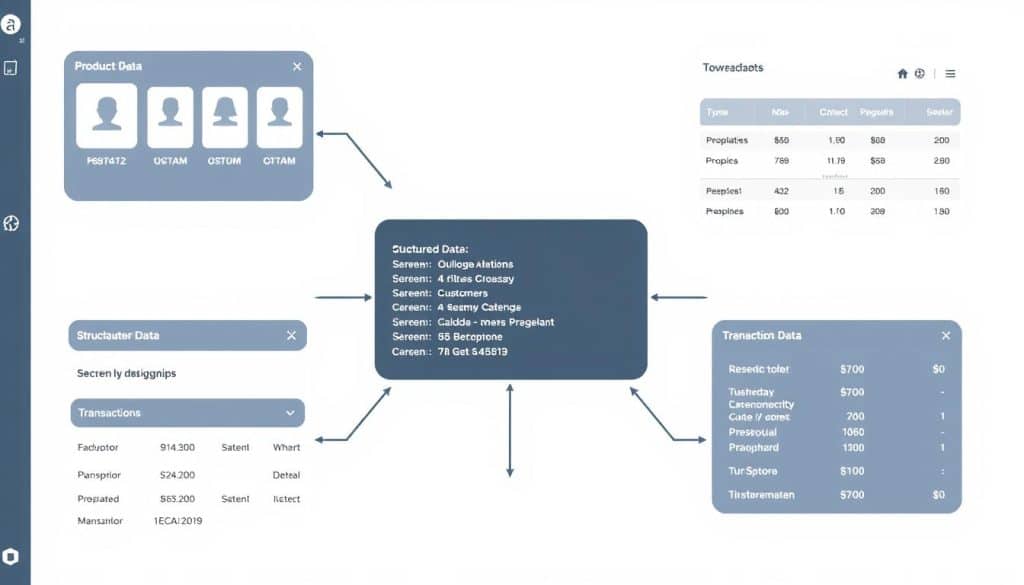
The strategic use of structured data can be a game-changer for online retailers looking to boost their search engine visibility. By providing search engines with additional context about your products, structured data helps improve the way your site is represented in search results.
Product Schema Markup Implementation
Implementing product schema markup is a crucial step in leveraging structured data for e-commerce. This involves adding specific code to your product pages to highlight details such as price, availability, and reviews. By doing so, you can enhance your product listings in search results, making them more attractive to potential customers.
Rich Snippets and Their Impact on CTR
Rich snippets are the enhanced search results that appear when your structured data is successfully interpreted by search engines. These can include features like price snippets, review stars, and product availability indicators. Studies have shown that rich snippets can dramatically improve click-through rates from search results, giving you a significant advantage over competitors.
To maximize the effectiveness of your structured data, it’s essential to understand Google’s eligibility requirements for different types of rich results. By focusing on the enhancements most likely to be displayed, you can optimize your implementation efforts. Regular monitoring and troubleshooting of your rich snippet performance will also help ensure that your enhanced listings appear consistently in search results.
Content Marketing Strategies for Online Retailers
Content marketing is a powerful tool for online retailers, enabling them to boost their SEO, educate customers, and ultimately drive sales. By creating valuable and relevant content, online retailers can attract and retain a clearly defined audience, driving profitable customer action.
Creating Valuable Blog Content
Creating valuable blog content is essential for online retailers aiming to enhance their SEO and engage their target audience. To achieve this, retailers should focus on producing high-quality, keyword-optimized content that addresses the needs and interests of their potential customers. As noted by industry experts, “A well-crafted content marketing strategy can significantly improve a retailer’s online visibility and credibility.” Building an audience online requires consistent effort and a deep understanding of your customers’ preferences.
- Conduct thorough keyword research to identify relevant topics and keywords.
- Develop a content calendar to ensure consistent publication of blog posts.
- Optimize blog posts with meta titles, descriptions, and headings.
Developing Buying Guides and How-To Content
Developing buying guides and how-to content is another effective strategy for online retailers. These types of content not only provide value to customers by educating them on products and their uses but also help in guiding potential customers through the sales funnel. According to a recent study, “Educational content can significantly influence purchasing decisions, making it a crucial component of any content marketing strategy.”
To maximize the impact of buying guides and how-to content, retailers should:
- Identify customer pain points and create content that addresses these needs.
- Incorporate relevant keywords naturally into the content to enhance SEO.
- Use a clear and concise writing style, making the content accessible to a wide audience.
By implementing these strategies, online retailers can improve their content marketing efforts, attract more potential customers, and ultimately drive sales.
Building a Strong Internal Linking Structure
For online retailers, building a strong internal linking structure is vital for both user experience and SEO success. A well-planned internal linking strategy helps search engines understand the site’s hierarchy and content relevance, improving crawlability and indexing. We will explore how to effectively connect related products and utilize breadcrumbs for enhanced navigation and SEO benefits.
Connecting Related Products Effectively
Connecting related products is a crucial aspect of internal linking. It not only enhances user experience by providing easy access to relevant products but also helps in distributing link equity across the site.
Effective product linking involves creating a logical connection between products that are relevant to each other. For instance, if you’re selling electronics, linking related accessories can improve user engagement. We recommend using a mix of anchor text variations to avoid over-optimization.
| Product Category | Related Products | Anchor Text Variations |
|---|---|---|
| Electronics | Headphones, Phone Cases | “Accessories”, “Related” |
| Fashion | Matching Accessories | “Complete the Look”, “Related Items” |
Using Breadcrumbs for Navigation and SEO
Breadcrumbs are another essential component of internal linking, providing users and search engines with a clear navigation path.
Breadcrumbs help users understand their current location within the site’s structure and facilitate easy navigation to higher-level categories. For search engines, breadcrumbs provide additional context about the site’s hierarchy, which can improve how the site is crawled and indexed.
Implementing breadcrumbs effectively involves using schema markup to provide search engines with additional context. Here’s an example of how breadcrumbs can be structured with schema markup:
Link Building Tactics for E-commerce Websites

A robust link building strategy is essential for e-commerce companies looking to improve their website’s authority and search engine rankings. We help e-commerce businesses thrive online by implementing effective SEO strategies, including link building, that drive results.
Partnering with Influencers and Industry Experts
Partnering with influencers and industry experts can be a powerful way to build high-quality backlinks to your e-commerce website. We identify relevant influencers in your niche and collaborate with them to create sponsored content, product reviews, or other linkable assets. For instance, a partnership with a popular influencer in the fashion industry can lead to a review of your clothing products on their blog, generating a valuable backlink to your website.
To maximize the effectiveness of influencer partnerships, we focus on building long-term relationships, ensuring that collaborations are mutually beneficial and lead to sustainable link building opportunities.
Resource Page and Broken Link Building
Resource page and broken link building provide systematic approaches to acquiring relevant backlinks. We outline implementation strategies specifically for e-commerce sites, helping you identify resource page opportunities in your industry and develop content assets designed to earn inclusion on these valuable pages.
By conducting broken link research, we find opportunities where your content can replace dead links, providing value to both the linking site and your SEO efforts. Crafting effective outreach communications is crucial for improving your success rate when requesting links from resource page curators and webmasters.
To scale these link building approaches across your team, we provide frameworks that help build a consistent program, steadily improving your backlink profile over time. By leveraging these strategies, e-commerce businesses can enhance their online presence, drive more traffic, and ultimately boost their search engine rankings.
Optimizing for User Experience and Conversions
Enhancing user experience and streamlining conversions are key to unlocking the full potential of e-commerce platforms. We understand that a well-designed online store not only attracts customers but also retains them, driving business growth and improving search engine rankings. A seamless user experience is crucial for reducing bounce rates and increasing the average order value.
To achieve this, we focus on two critical areas: improving site navigation and search functionality, and streamlining the checkout process. Both are essential for creating a frictionless online shopping experience that satisfies customers and boosts conversions.
Improving Site Navigation and Search Functionality
Effective site navigation and search functionality are vital for helping customers find what they’re looking for quickly and efficiently. We recommend implementing a robust search bar that includes features like autocomplete and product suggestions to guide users through your online store. Additionally, organizing products into clear categories and subcategories enhances the browsing experience, making it easier for customers to discover relevant products.
By improving site navigation and search functionality, we not only enhance the user experience but also contribute to better SEO outcomes. A well-structured site helps search engines understand the content and relevance of your pages, potentially improving your rankings.
Streamlining the Checkout Process
The checkout process is a critical point in the customer’s journey where friction can lead to abandonment. To minimize this risk, we suggest simplifying the checkout process by reducing the number of steps required to complete a purchase. Implementing a guest checkout option can significantly reduce friction, as can providing clear progress indicators that show customers where they are in the process.
Furthermore, ensuring that the checkout page is secure and trustworthy is paramount. This can be achieved by displaying trust badges and using HTTPS encryption. By streamlining the checkout process, we not only improve the user experience but also positively impact our SEO efforts, as a smoother checkout process contributes to overall site quality signals.
Local SEO Considerations for Retailers in Qatar
In Qatar’s competitive retail market, a robust local SEO strategy can be the key to standing out. As we explore local SEO considerations, we’ll focus on optimizing for local search terms and effectively managing your Google Business Profile.
Optimizing for Local Search Terms
To optimize for local search terms, retailers in Qatar should focus on keywords that include geographic modifiers, such as “in Doha” or “in Qatar.” This helps search engines understand the relevance of your business to local customers. We recommend incorporating these terms naturally into your website’s content, meta tags, and alt tags. “The key to successful local SEO is to make your website relevant to the local audience,” says an SEO expert. By doing so, you can improve your visibility in search results and attract more local customers.
Managing Google Business Profile for Retail
Google Business Profile serves as a critical touchpoint for local customers. To maximize its potential, ensure your profile is complete, accurate, and up-to-date. This includes adding high-quality images, responding promptly to customer reviews, and posting regular updates about your business. By leveraging features like product catalogs, special offers, and Q&A functionality, you can enhance your local search visibility and attract more customers. Effective management of your Google Business Profile is crucial for building trust signals that improve both local rankings and conversion rates.
By integrating your Google Business Profile strategy with your broader marketing efforts, including social media and email marketing campaigns, you can create a cohesive brand presence that drives business growth.
Measuring SEO Success for Online Stores
Evaluating the success of SEO efforts is essential for online stores to make data-driven decisions. To achieve this, online retailers must track key performance indicators and adjust their strategies accordingly.
Key Performance Indicators to Track
To measure SEO success, online retailers should monitor metrics such as organic traffic, search engine rankings, and conversion rates. These indicators provide insights into the effectiveness of their SEO strategies.
- Track keyword rankings to identify areas for improvement.
- Monitor organic traffic to measure the impact of SEO efforts.
Using Analytics to Guide Strategy
Analytics should drive continuous improvement in SEO strategies. By analyzing performance data, online retailers can refine their approaches and optimize their websites for better results. This involves conducting regular performance reviews to identify opportunities and issues, and using competitive benchmarking to contextualize performance data.
| Metric | Current Value | Target Value |
|---|---|---|
| Organic Traffic | 10,000 | 15,000 |
| Conversion Rate | 2% | 3% |
By leveraging analytics and adjusting their SEO strategy, online retailers can improve their online visibility and drive revenue growth.
Common SEO Mistakes Online Retailers Make
Many online retailers fail to maximize their SEO potential due to recurring mistakes that can be easily addressed. We will explore these common errors and provide insights on how to correct them, enhancing your online store’s visibility and performance.
Technical Pitfalls to Avoid
Technical SEO is foundational for online retailers. Common technical pitfalls include slow site speeds, poor mobile optimization, and inadequate security measures. Ensuring your site loads quickly is crucial, as slow sites can lead to higher bounce rates and lower search engine rankings. Similarly, mobile optimization is no longer optional, given the prevalence of mobile shopping. Implementing HTTPS is also essential for securing your site and protecting user data. By addressing these technical issues, online retailers can improve their search engine rankings and provide a better user experience.
Content and Keyword Strategy Errors
Content and keyword strategy are critical components of SEO. Misaligned keyword targeting, thin content, and duplicate product descriptions are common mistakes. Conducting thorough keyword research helps ensure that your content aligns with what your customers are searching for. Avoiding thin content by creating comprehensive and valuable content is also vital. For a step-by-step guide on improving your SEO, visit our comprehensive guide on how to do SEO for your.
Conclusion: Implementing a Sustainable SEO Strategy
Sustainable SEO success for online retailers requires a comprehensive and long-term SEO strategy. To achieve this, we need to outline a framework that addresses the highest-impact opportunities first while building toward comprehensive optimization.
Developing a prioritized roadmap is crucial. This involves identifying key areas that need improvement, such as site architecture, on-page optimization, and link building. By focusing on these areas, we can create a solid foundation for our SEO efforts.
Integrating SEO considerations into broader business processes is also vital. This includes product launches, content creation, and technical development. By doing so, we can ensure that our SEO strategy is aligned with our overall business goals.
To achieve SEO success, we must balance quick wins with foundational improvements. This approach helps create momentum while building lasting competitive advantages. We will provide guidance on resource allocation, skill development, and potential outsourcing to help implement a sustainable SEO program.
By adopting a systematic and long-term SEO strategy, online retailers in Qatar can improve their online visibility, attract more potential customers, and drive revenue growth. Our approach will help businesses stay competitive in the ever-evolving e-commerce landscape.
FAQ
How does keyword research impact the success of an e-commerce website?
Keyword research is crucial for e-commerce SEO as it helps identify relevant search terms that potential customers use, allowing businesses to optimize product pages and content to match user intent.
What is the significance of site architecture in e-commerce SEO?
A well-structured site architecture improves user experience, facilitates search engine crawling, and helps to establish a clear hierarchy of product categories and subcategories, making it easier for customers to find products.
How can duplicate content issues be resolved on e-commerce websites?
Duplicate content can be managed by using canonical tags to specify the preferred version of a page, and by minimizing product variations that can lead to duplicate content.
What role does structured data play in e-commerce SEO?
Structured data, such as schema markup, helps search engines understand the content and context of product pages, enabling rich snippets and enhancing search result visibility.
How can internal linking improve e-commerce SEO?
Internal linking helps to establish a clear site structure, distribute link equity, and facilitate user navigation, making it easier for customers to find related products and for search engines to crawl the site.
What are the benefits of link building for e-commerce websites?
Link building can improve search engine rankings, drive referral traffic, and increase brand visibility by acquiring high-quality backlinks from authoritative sources.
How can user experience be optimized for e-commerce conversions?
User experience can be optimized by streamlining site navigation, improving search functionality, and simplifying the checkout process, resulting in higher conversion rates and customer satisfaction.
What are the key performance indicators (KPIs) to track for e-commerce SEO success?
KPIs such as organic traffic, search engine rankings, conversion rates, and revenue growth should be tracked to measure the effectiveness of e-commerce SEO strategies.
How can technical SEO issues be identified and resolved on e-commerce websites?
Technical SEO issues can be identified through regular audits, and resolved by addressing site speed, mobile optimization, and security measures, such as implementing HTTPS.