
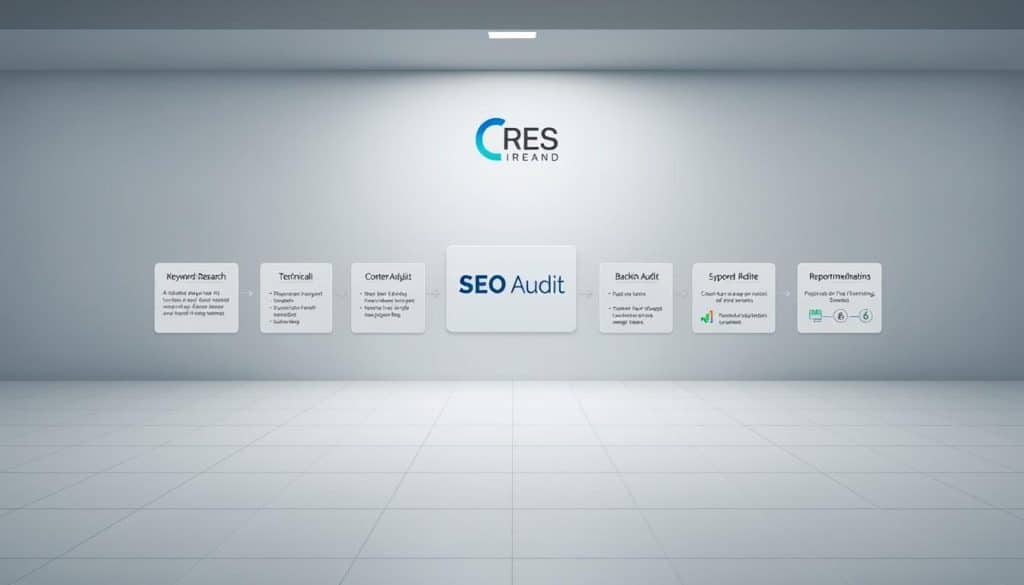
Are you struggling to boost your website’s visibility in search engine results, despite investing in various digital marketing strategies? Can a thorough analysis of your website’s SEO performance be the key to unlocking significant growth?
We’ve helped numerous businesses achieve remarkable results through our comprehensive SEO audit process. In fact, our recent audit and optimization efforts resulted in a 30% increase in organic traffic over the last year. In this expert guide, we’ll walk you through the essential steps of conducting an effective SEO audit, providing you with a roadmap to improve your website’s search visibility and drive sustainable digital growth.
Key Takeaways
- Understand the importance of regular SEO audits for maintaining and improving your website’s search engine performance.
- Learn how to identify critical SEO issues that impact your website’s visibility and growth.
- Discover actionable steps to enhance your website’s technical SEO and drive sustainable organic growth.
- Gain insights into how a comprehensive SEO audit can help businesses in Qatar strengthen their digital presence.
- Find out how to leverage SEO audit results to inform your digital marketing strategies and improve ROI.
Understanding the Value of an SEO Audit
Regular SEO audits are the backbone of a successful digital strategy, enabling businesses to adapt to changing search engine requirements. As the digital landscape continues to evolve, understanding the value of an SEO audit is crucial for companies aiming to enhance their online presence and drive sustainable growth.
What Is an SEO Audit?
An SEO audit is a comprehensive analysis of a website’s search engine optimization, aimed at identifying areas for improvement to increase the site’s visibility, credibility, and overall performance in search engine results. It involves a thorough examination of various aspects, including technical SEO, content quality, and link equity.
Why Regular SEO Audits Are Essential for Digital Growth
Regular SEO audits are crucial for digital growth because they help businesses stay ahead of the competition by identifying and addressing issues before they significantly impact search rankings. Here are some key reasons why regular audits are essential:
- Adapting to Algorithm Updates: Search engines constantly update their algorithms, and regular SEO audits help businesses adapt their strategies accordingly.
- Competitive Insights: Audits reveal competitive insights that can inform your digital strategy and help you stay ahead of competitors.
- Tracking Progress: SEO audits enable you to measure the impact of implemented changes on your website’s performance over time.
- Preventing Traffic Declines: Without regular audits, small issues can compound into larger problems, leading to gradual traffic declines.
| Benefits of Regular SEO Audits | Impact on Digital Growth |
|---|---|
| Improved Search Engine Rankings | Increased online visibility and credibility |
| Enhanced Website Performance | Better user experience and engagement |
| Competitive Advantage | Stay ahead of competitors in search results |
By conducting regular SEO audits, businesses can ensure their website remains optimized for current search engine requirements, ultimately driving digital growth and revenue.
Preparing for Your SEO Audit
Preparing for an SEO audit is a critical step that can significantly impact the effectiveness of your digital marketing strategy. A thorough preparation process ensures that the audit is comprehensive, identifying key areas for improvement that can drive digital growth.
Essential SEO Audit Tools
To conduct a comprehensive SEO audit, you’ll need the right tools. Some of the best SEO audit tools include those that can crawl your site, analyze backlinks, and assess content quality. Screaming Frog and Ahrefs are popular choices for site crawling and backlink analysis, while SEMrush offers a comprehensive site audit tool.

Setting Clear Objectives for Your Audit
Setting clear objectives before beginning your SEO audit ensures you focus on the most impactful areas for your business goals. We help clients establish specific, measurable objectives that align with their overall digital marketing strategy.
- Common audit objectives include improving organic traffic, addressing specific technical issues, enhancing content performance, or strengthening competitive positioning.
- Your objectives should be prioritized based on potential impact and resource requirements to create an efficient audit process.
- Understanding your current performance baseline is essential for setting realistic improvement targets.
- Different business types may require different audit focuses – ecommerce sites often prioritize product page optimization while service businesses may focus on local SEO elements.
- Clear objectives help prevent “analysis paralysis” by providing a framework for evaluating and prioritizing the issues discovered during your audit.
By setting clear objectives and utilizing the right tools, you can ensure a successful SEO audit that drives meaningful improvements to your site’s performance and digital growth.
Step 1: Analyzing Your Organic Traffic
To kick-start your SEO audit, we begin by examining your organic traffic patterns to uncover valuable insights. Understanding your website’s organic traffic is crucial for devising an effective SEO strategy.
Using Google Analytics to Assess Traffic Patterns
Google Analytics is a powerful tool that provides detailed insights into your website’s traffic patterns. To analyze organic traffic, navigate to the “Acquisition” tab, then select “All Traffic” and finally “Source/Medium.” Here, you can identify the volume of organic traffic visiting your site.
By examining the traffic patterns, you can determine which channels are driving the most visitors to your site and adjust your SEO efforts accordingly.
Identifying Top-Performing and Underperforming Pages
Before we move on to the next step, identify which pages on your site drive the most clicks from Google. Do this using the “Performance” report in Google Search Console and navigate to the “Pages” tab. Understanding which pages perform best—and which need work—will help you prioritize your efforts during and after your SEO audit.
- We use Google Search Console’s Performance report to identify which pages are driving the most organic traffic and which are underperforming.
- Top-performing pages often provide insights into what’s working well and can serve as models for optimizing other content.
- Underperforming pages with high potential represent valuable opportunities for quick wins.
- Pages with high impressions but low click-through rates indicate issues with meta titles and descriptions that can be easily improved.
- We analyze traffic patterns to identify content that may have been impacted by algorithm updates or changing search trends.
- Understanding page performance helps prioritize your SEO efforts, focusing resources on pages with the greatest potential impact.
- For each underperforming page, we develop specific recommendations based on competitive analysis and search intent evaluation.
By leveraging tools like Google Analytics and Google Search Console, you can gain a comprehensive understanding of your website’s organic traffic and SEO performance. This analysis will serve as the foundation for your SEO audit, enabling you to make data-driven decisions and improve your website’s search engine ranking.
Step 2: Running a Comprehensive Site Crawl
The second step in our SEO audit checklist involves running a comprehensive site crawl to analyze your website’s crawlability and overall health. This process is crucial for identifying technical SEO issues that could be hindering your website’s performance in search engines.
How to Use Screaming Frog for Site Crawling

Screaming Frog SEO Spider is a powerful tool for crawling your website and identifying potential SEO issues. To use it effectively, start by downloading and installing the software, then enter your website’s URL and begin the crawl process. The tool will analyze your site’s structure, identifying areas for improvement such as broken links, redirects, and meta tag issues.
For a more detailed analysis, you can refer to resources like Backlinko’s SEO Site Audit guide, which provides insights into using various SEO tools, including Screaming Frog.
Interpreting Crawl Data with Semrush Site Audit
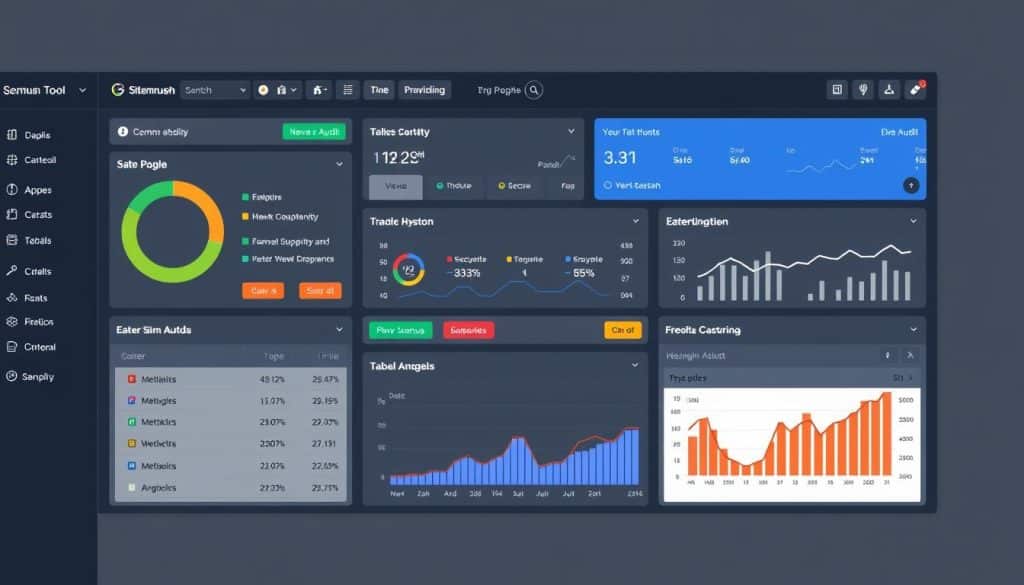
Semrush Site Audit is another comprehensive tool that not only crawls your site but also provides a detailed analysis of over 140 technical and on-page SEO factors. It categorizes issues into errors, warnings, and notices, helping you prioritize fixes based on severity. The tool’s “Overview” tab gives you a snapshot of your site’s health, while the “Issues” tab provides detailed explanations and recommendations for resolving identified problems.
For more information on how to use Semrush for SEO audits, you can visit this resource, which offers insights into leveraging Semrush for improving your website’s SEO.
By utilizing these tools and interpreting the crawl data effectively, you can uncover and address critical SEO issues, enhancing your website’s crawlability, user experience, and ultimately, its search engine rankings.
Step 3: Optimizing On-Page SEO Elements
On-page SEO elements play a significant role in determining your website’s search engine ranking and user experience. Optimizing these elements is crucial for improving your website’s visibility, driving more organic traffic, and ultimately achieving your digital marketing goals.
Title Tags and Meta Descriptions Best Practices
Title tags and meta descriptions are critical on-page SEO elements that directly influence search engine results and user click-through rates. We ensure each page has a unique title tag that includes the primary keyword and accurately describes the page content. For meta descriptions, we focus on crafting compelling, keyword-rich summaries that entice users to click through to your page. Optimizing your website title is a crucial step in this process.
Best practices for title tags include keeping them concise (under 60 characters) and descriptive, while meta descriptions should be between 150-160 characters, providing a clear value proposition.
Content Quality Assessment
High-quality, engaging content is essential for both user experience and search engine rankings. We assess content quality based on relevance, comprehensiveness, and user engagement metrics. Our analysis includes evaluating content length, keyword usage, and the presence of multimedia elements such as images and videos.
A key aspect of content quality is its ability to satisfy user intent. We analyze search queries and user behavior to ensure that the content addresses the needs and questions of your target audience.
Heading Structure and Keyword Placement
A well-organized heading structure is vital for both user experience and SEO. Proper heading structure creates a clear content hierarchy that helps both users and search engines understand your content organization. We ensure that each page has a single H1 tag that includes the primary keyword and accurately describes the page content.

Subheadings (H2s and H3s) are used to break content into logical sections and incorporate secondary and tertiary keywords naturally. Strategic keyword placement throughout headings helps search engines understand the relevance of your content to specific search queries.
| SEO Element | Best Practice | Benefit |
|---|---|---|
| Title Tags | Include primary keyword, under 60 characters | Improved search engine rankings |
| Meta Descriptions | Compelling, keyword-rich, 150-160 characters | Increased click-through rates |
| Heading Structure | Logical hierarchy, include keywords | Enhanced user experience and SEO |
Step 4: Enhancing Internal Linking Strategy
A strategic internal linking approach can significantly enhance your website’s crawlability and user engagement. By creating a clear structure, you help search engines understand your site’s hierarchy and content relevance, which is crucial for effective SEO.
Identifying Internal Linking Opportunities
To identify internal linking opportunities, we need to analyze our website’s content and structure. This involves reviewing existing pages and posts to find relevant links that can be added to enhance user experience and SEO. We look for pages that are related in content or topic and can be interconnected to guide users through their journey on our site.
Using tools like Semrush Site Audit, we can identify potential linking opportunities by analyzing page content, meta descriptions, and headings. This helps us understand how our content is interconnected and where we can add links to improve navigation and crawl depth.
Key considerations for internal linking include:
- Relevance: Links should be relevant to the content they are embedded in.
- Anchor Text: Use descriptive anchor text that indicates what the linked page is about.
- Link Placement: Place links in the main content area where they are most useful.
Reducing Crawl Depth for Important Pages
Reducing crawl depth is essential for ensuring that search engines can efficiently discover and index our most valuable content. Crawl depth refers to how many clicks it takes for a user to reach a page from the homepage. Ideally, important pages should be within three clicks from the homepage.
To achieve this, we analyze our site’s structure using tools like Semrush Site Audit to identify pages with excessive crawl depth. We then develop strategies to bring these pages closer to the homepage by restructuring navigation menus, adding strategic internal links, and reconsidering site architecture.
| Crawl Depth Level | Page Importance | Recommended Action |
|---|---|---|
| 1-2 clicks | High | Ensure these are critical pages like homepage, main categories. |
| 2-3 clicks | Medium to High | Target competitive keywords, high commercial value pages. |
| More than 3 clicks | Low to Medium | Restructure site architecture, add internal links to reduce depth. |
By enhancing our internal linking strategy and reducing crawl depth for important pages, we improve both user experience and search engine crawlability, ultimately boosting our site’s SEO performance.
Step 5: Optimizing for User Experience Signals
Optimizing for user experience signals is a crucial step in enhancing your website’s SEO rankings. In other words, your content needs to make users happy. When you do, you can improve your rankings in search results.
We noticed that a while back, an SEO campaign post on our site wasn’t ranking well. It was hovering between the 10th and 15th spots for our target keyword: “SEO Campaign.” Upon reviewing the content, we realized that it didn’t give people searching for “SEO campaign” what they wanted. Instead of steps, they got a case study of one specific strategy.
How UX Impacts SEO Rankings
User experience (UX) is a critical factor in determining your website’s SEO rankings. Search engines like Google prioritize websites that provide a positive user experience, as their primary goal is to deliver relevant and useful content to their users.
“The ultimate goal of search engines is to provide users with the most relevant and useful results.” When your website meets this criterion, you’re more likely to rank higher in search results.

Key user engagement metrics include time on page, pages per session, bounce rate, scroll depth, and conversion rates. We use analytics tools to establish baseline engagement metrics and identify pages with suboptimal user experience.
Measuring and Improving User Engagement Metrics
To improve user engagement, we need to measure it first. We analyze metrics such as time on page, bounce rate, and conversion rates to understand how users interact with our content.
- Content that fails to meet user expectations often shows high bounce rates and low time on page, indicating a mismatch with search intent.
- Improving engagement often involves restructuring content to better match search intent, enhancing readability, and adding interactive elements.
- A/B testing different content formats, layouts, and calls-to-action helps identify the most effective approaches for your specific audience.
By focusing on user experience and engagement metrics, we can create a more user-friendly website that not only improves our SEO rankings but also provides value to our users.
“A well-designed user experience strategy can be the difference between a successful SEO campaign and a mediocre one.”
Step 6: Capturing Featured Snippets and Rich Results
Featured snippets can dramatically boost your website’s traffic, making them a key focus for SEO efforts. By capturing these coveted spots, you can significantly increase your online visibility and drive more targeted traffic to your site. To achieve this, we need to focus on two critical aspects: structured data implementation and optimizing content for position zero.
Structured Data Implementation
Implementing structured data is a crucial step in capturing rich results. Structured data helps search engines understand your content better, increasing the chances of your page being featured in rich results. We achieve this by using schema markup to provide additional context about your content. For instance, using schema types like Review, Event, or Recipe can enhance your search listings and make them more appealing to users.
To implement structured data effectively, we follow these best practices:
- Identify the most relevant schema types for your content
- Use Google’s Structured Data Markup Helper to create and test your schema markup
- Ensure that your schema markup is accurate and up-to-date
For more insights on optimizing your website for search engines, you can check out our guide on maximizing your CPA firm’s online visibility with CPA website.
Optimizing Content for Position Zero
Optimizing for position zero involves creating content that directly answers the questions your target audience is asking. To capture featured snippets, your content needs to be concise, informative, and well-structured. We achieve this by using clear question-based headings and providing direct, concise answers.
Some key strategies for optimizing content for position zero include:
- Using lots of relevant headers (H2 and H3 tags)
- Including short answers to questions (around 40 words or less is often best)
- Optimizing your content for mobile devices, as many users search on-the-go
By implementing these strategies and focusing on structured data, you can significantly improve your chances of capturing featured snippets and enhancing your online visibility.
The Complete SEO Audit Checklist for Technical Issues
A comprehensive SEO audit involves a thorough examination of various technical aspects that can impact your website’s visibility and performance. Technical issues can hinder your site’s ability to rank well in search engine results, making it crucial to identify and address them promptly.
To ensure your website is technically sound, we focus on several key areas during an SEO audit. These include page rendering and JavaScript SEO, mobile-friendliness, and indexation issues, among others.
Page Rendering and JavaScript SEO
Page rendering and JavaScript SEO are critical components of technical SEO. Google’s ability to render pages correctly and execute JavaScript is essential for indexing your site’s content. Issues with JavaScript can lead to indexing problems, where content is not properly crawled or rendered by search engines.
To address JavaScript SEO, we check for issues such as blocked resources, incorrect implementations, and rendering problems. Ensuring that your site’s JavaScript is properly executed by Google is vital for maintaining optimal indexation and crawlability.

Mobile-Friendliness Assessment
With the majority of searches now conducted on mobile devices, having a mobile-friendly website is no longer optional but a necessity. A mobile-friendly site ensures that users have a positive experience regardless of the device they use to access your site.
During an SEO audit, we assess your site’s mobile-friendliness by checking for responsive design, page loading speeds on mobile devices, and overall user experience. Google’s mobile-first indexing means that a mobile-friendly site is crucial for achieving good rankings.
Indexation Issues and Solutions
Indexation issues can prevent your pages from appearing in search results, regardless of how well they’re optimized for target keywords. To identify these issues, we use Google Search Console’s Index Coverage and Pages reports.
- Common indexation problems include accidental noindex directives, robots.txt blocking, canonical tag errors, and crawl budget limitations.
- For large sites, analyzing crawl stats is essential to ensure Google is efficiently discovering and indexing your most important content.
- Orphaned pages often suffer from indexation issues and require strategic internal linking to resolve.
- We check for duplicate content issues that may cause Google to choose the wrong version of a page to index.
- After implementing fixes, we use Google Search Console’s URL Inspection tool to request recrawling of previously problematic pages.
By addressing these technical SEO issues, you can improve your site’s visibility, enhance user experience, and drive more traffic to your website.
Step 8: Improving Site Speed and Core Web Vitals
A slow website can be detrimental to your online success, making it imperative to focus on enhancing site speed and Core Web Vitals. We analyze various factors that impact your website’s performance, providing actionable insights to improve user experience and SEO rankings.
Understanding Core Web Vitals Metrics
Core Web Vitals are a set of metrics that measure the user experience of a webpage, focusing on loading performance, interactivity, and visual stability. These metrics are crucial for search engines to determine the quality and relevance of your website. The three main Core Web Vitals metrics are Largest Contentful Paint (LCP), First Input Delay (FID), and Cumulative Layout Shift (CLS).
To measure these metrics, we utilize tools like Google PageSpeed Insights, WebPageTest, and Chrome User Experience Report. These tools provide insights into how your website performs in terms of speed and user experience, helping us identify areas for improvement.
Image Optimization Techniques
Optimizing images is a critical step in improving site speed. Large, uncompressed images can significantly slow down your website. We recommend compressing images using tools like TinyPNG or ImageOptim, and using formats like WebP for better compression.
Additionally, using lazy loading techniques can improve page load times by loading images only when they come into view. This technique can be implemented using JavaScript libraries or built-in browser support.
Server Response Time Improvements
Server response time, also known as Time to First Byte (TTFB), is a foundational metric that affects all other page speed measurements. To improve it, we analyze hosting infrastructure to identify potential bottlenecks in server performance.
- Implementing caching solutions and optimizing database queries can significantly reduce server response times.
- Enabling HTTP/2 or HTTP/3 can improve page load times by allowing multiple requests to be sent over a single connection.
- For sites with global audiences, using Content Delivery Networks (CDNs) can reduce latency by serving content from geographically distributed servers.
- Upgrading to premium hosting can also improve server response times, as it typically offers better hardware and optimized configurations.
Finally, consider upgrading your hosting if you’re currently on a budget plan. We’ve seen significant improvements in site speed after switching to premium hosting, but it’s essential to implement other page speed best practices first.
Step 9: Cleaning Up “Zombie Pages” and Broken Links
The presence of ‘zombie pages’ and broken links can significantly impact your site’s user experience and SEO. ‘Zombie pages,’ or thin content pages, don’t provide value to users and can dilute your site’s overall quality. Similarly, broken links frustrate users and can waste crawl budget, potentially harming your site’s search engine rankings.
Identifying and Removing Thin Content
To identify thin content, we analyze your website’s pages to determine which ones lack substantial content or provide little to no value to your users. Thin content can include duplicate pages, very short pages, or pages with content that doesn’t align with your site’s purpose or user expectations.
Once identified, we recommend removing or consolidating these pages. If a page has some value but is weak, we can enhance it with more relevant content. For completely redundant or useless pages, removal is often the best course of action. This process not only improves user experience but also helps search engines understand your site’s structure and content hierarchy.
Finding and Fixing Broken Links
Broken links are detrimental to both user experience and SEO. We use specialized crawling tools to identify all broken internal and external links across your website. For internal broken links, we assess whether to fix the link, remove it, or implement a 301 redirect to a relevant alternative page. External broken links are updated to point to current resources or removed if no suitable replacements are found.
- Broken links create poor user experiences and can waste valuable crawl budget when search engines encounter them.
- We recommend implementing custom 404 pages that help users find relevant content when they encounter broken links.
- Regular link audits should be conducted to catch new broken links before they negatively impact user experience or search performance.
By cleaning up ‘zombie pages’ and fixing broken links, we enhance your site’s overall usability, improve user engagement, and support your SEO efforts. This step is crucial in maintaining a healthy, user-friendly website that search engines can crawl and index effectively.
Step 10: Conducting a Thorough Backlink Audit
A thorough backlink audit is crucial for ensuring your website’s link profile is healthy and contributing to your SEO success. We analyze backlinks to identify potential issues and opportunities for improvement.
Analyzing Your Backlink Profile
To start, we use specialized tools like Semrush’s Backlink Audit tool to analyze your backlink profile. This involves assessing the quality and relevance of linking sites.
We look for backlinks from real and relevant websites. For instance, links from blogs and news sites related to your industry are considered high-quality.
Identifying and Disavowing Toxic Links
Next, we identify toxic links that could potentially harm your site’s performance. Toxic backlinks can trigger Google penalties or algorithmic filters, negatively impacting your rankings.
We analyze factors such as domain quality, relevance, anchor text patterns, and linking site behavior to identify potentially harmful links. Common red flags include links from known spam networks, foreign language sites unrelated to your business, and sites with excessive outbound links.
- Toxic backlinks can potentially trigger Google penalties or algorithmic filters that negatively impact your site’s performance.
- We identify potentially harmful links by analyzing factors like domain quality, relevance, anchor text patterns, and linking site behavior.
- Common red flags include links from known spam networks, foreign language sites unrelated to your business, and sites with excessive outbound links.
- The Google Disavow Tool should be used cautiously and primarily in cases of obvious spam or when addressing manual penalties.
- We create comprehensive disavow files that include not just individual toxic URLs but entire problematic domains when appropriate.
- Before disavowing links, we attempt outreach to webmasters requesting removal of the most concerning links.
- Regular toxic link monitoring helps identify negative SEO attacks or problematic link building practices before they cause ranking issues.
By carefully analyzing your backlink profile and addressing toxic links, we can improve your website’s SEO health and protect it against potential penalties.
Step 11: Competitive Analysis for SEO Advantage
To gain a competitive edge in the digital landscape, conducting a thorough competitive analysis is crucial. This step involves understanding what your competitors are doing right and where they are falling short, providing you with opportunities to capitalize on their weaknesses.
Identifying Competitors’ Best-Performing Keywords
Analyzing your competitors’ keyword strategies is a vital part of competitive analysis. By identifying the keywords that drive traffic to their sites, you can refine your own SEO strategy to target similar terms. Tools like Semrush can help you uncover the best-performing keywords for your competitors. This insight allows you to understand what works in your industry and adjust your content accordingly.
For instance, if you discover that certain long-tail keywords are driving significant traffic to your competitors’ sites, you can create content targeting those keywords. This approach not only helps in attracting relevant traffic but also in outperforming your competitors in search engine rankings.
Analyzing Competitors’ Content and Backlink Strategies
Once you’ve identified your competitors’ top keywords, the next step is to analyze their content and backlink strategies. This involves examining the type of content that performs well for them and understanding how they acquire backlinks. By using tools like Semrush’s Backlink Analytics, you can gain insights into their backlink profiles, identifying potential link building opportunities for your own site.
Competitive content analysis reveals the formats, depth, and approaches that are working well in your industry. We analyze competitors’ top-performing content to identify patterns in length, structure, media usage, and update frequency. For example, if infographics are a common format among top-performing content, you might consider incorporating more visual content into your strategy. Additionally, backlink analysis helps identify potential link building opportunities and content types that naturally attract links.
- Understanding which sites link to multiple competitors helps build targeted outreach lists for your own link building campaigns.
- Analyzing the social sharing patterns of competitor content provides insights into what resonates with your target audience.
- This competitive intelligence informs our content strategy recommendations, helping you create resources that outperform competitors.
For a deeper dive into competitor analysis, you can refer to our detailed guide on SEO competitor analysis, which provides comprehensive insights and strategies for outranking your competitors.

Step 12: Creating 10x Better Content Based on Audit Findings
By analyzing audit findings, we can identify opportunities to create 10x better content that drives digital growth. This involves understanding user intent, analyzing competitor content, and developing a strategy to outperform them.
Content Gap Analysis
A content gap analysis is crucial for identifying areas where our content can outperform competitors. We start by analyzing existing content using tools like website content audit checklists to identify gaps and opportunities.
Key steps in content gap analysis include:
- Identifying top-performing content in our niche
- Analyzing competitor content to identify weaknesses
- Determining user intent and creating content that addresses it
- Using keyword research to inform our content strategy
By understanding these gaps, we can create a targeted content strategy that addresses user needs and outperforms competitors.
Content Enhancement Strategies
To create 10x better content, we need to focus on enhancement strategies that improve existing content and make it more engaging. Some effective strategies include:
- Creating comprehensive, authoritative content that addresses user questions more thoroughly than competing resources
- Using visual enhancements like custom images, infographics, charts, and videos to improve engagement and shareability
- Implementing structural improvements like short paragraphs, bulleted lists, and descriptive subheadings to make content more scannable and user-friendly
- Developing data-driven content with current statistics, case studies, and expert quotes to build credibility and demonstrate expertise
For a step-by-step guide on how to implement these strategies, refer to our comprehensive guide on how to do SEO for a. By incorporating these strategies, we can significantly improve our content’s quality and performance.
Regularly updating content ensures it remains accurate and relevant, signaling freshness to search engines and improving our SEO rankings over time.
Step 13: Implementing and Prioritizing SEO Fixes
After conducting a thorough SEO audit, the next step is to prioritize and implement the necessary fixes. This process involves creating a strategic plan to address the identified issues and measuring the impact of the changes made.
Creating a Priority-Based Action Plan
To effectively implement SEO fixes, we need to create a priority-based action plan. This involves assessing the severity of the issues identified during the audit and prioritizing them based on their potential impact on the website’s search engine rankings and user experience.
- Identify critical issues that require immediate attention, such as technical SEO problems or content quality issues.
- Prioritize tasks based on their potential impact on search engine rankings and user engagement.
- Develop a timeline for implementing the recommended changes, ensuring that sufficient time is allocated for each task.
By following this approach, we can ensure that the most critical issues are addressed first, maximizing the effectiveness of our SEO efforts.
Measuring the Impact of Implemented Changes
After implementing the SEO fixes, it’s essential to measure their impact on the website’s performance. This involves tracking key performance indicators (KPIs) such as organic traffic, search engine rankings, and user engagement metrics.
We use tools like Google Search Console (GSC) and Analytics to monitor the outcomes of our efforts. For instance, we check GSC Coverage to see if errors have decreased and assess Core Web Vitals again to identify any improvements. We also monitor keyword rankings and organic traffic for the pages we optimized.
“The key to successful SEO is not just implementing changes, but measuring their impact and adjusting strategies accordingly.”
By regularly monitoring these metrics, we can determine the effectiveness of our SEO efforts and make data-driven decisions to further improve our strategy.
SEO Audit for Qatar-Based Businesses
To dominate the Qatari market, businesses need an SEO audit that considers local SEO factors. We understand that conducting an SEO audit for businesses in Qatar involves a nuanced approach, taking into account the unique characteristics of the local market.
Local SEO Considerations for Qatar
When optimizing for local SEO in Qatar, several factors come into play. We analyze Qatar-specific search trends and user behaviors that may differ from global patterns. Understanding cultural nuances and seasonal factors unique to Qatar helps develop more effective content strategies.
- Identifying region-specific keywords and topics that may have lower competition but high relevance for the Qatar market.
- Evaluating which content formats and approaches resonate best with Qatar-based audiences.
Regional Competitive Analysis
A regional competitive analysis for Qatar businesses requires understanding both local competitors and international brands operating in the market. We analyze competitive landscapes in neighboring GCC countries for businesses targeting expansion beyond Qatar.
| Competitor | Keyword Strategy | Content Approach |
|---|---|---|
| Local Competitor | Focus on Qatar-specific keywords | Arabic content with local references |
| International Brand | Global keyword strategy with local adaptation | Multilingual content with a global perspective |
For a comprehensive analysis, we recommend getting your free website SEO report to identify areas for improvement and opportunities for growth in the Qatari market.
Conclusion: Maintaining SEO Health Through Regular Audits
Staying competitive in the digital market requires consistent SEO audit practices. Regular SEO audits are essential for maintaining and improving your site’s search performance over time. We recommend conducting comprehensive audits quarterly, with mini-audits monthly to catch issues early. This approach ensures that your site remains optimized and competitive.
Establishing an SEO maintenance calendar is crucial for consistent attention to both technical health and content freshness. The digital landscape and search algorithms evolve constantly, making regular audits necessary to stay ahead. For a comprehensive SEO audit, consider utilizing tools and resources, such as those found on Yoast’s SEO Audit guide, to streamline your process.
By committing to regular SEO audits, you’re investing in sustainable growth and maintaining your site’s overall SEO health over time.
FAQ
What is the primary goal of an SEO audit?
The primary goal of an SEO audit is to identify areas for improvement on your website to increase its visibility, drive more traffic, and boost search engine rankings.
How often should I conduct an SEO audit?
We recommend conducting an SEO audit at least once a year, or whenever you notice a significant drop in your website’s search engine rankings or traffic.
What tools are essential for conducting a comprehensive SEO audit?
Essential tools for an SEO audit include Google Analytics, Google Search Console, Screaming Frog, Semrush Site Audit, and other specialized tools for analyzing backlinks, content quality, and user experience.
How do Core Web Vitals impact my website’s SEO?
Core Web Vitals are a set of metrics that measure user experience, including page loading speed, interactivity, and visual stability. Improving these metrics can positively impact your website’s search engine rankings.
What is the significance of meta descriptions in SEO?
Meta descriptions provide a summary of a webpage’s content and can influence click-through rates from search engine results pages. Well-crafted meta descriptions can improve your website’s visibility and drive more traffic.
How can I optimize my website’s internal linking strategy?
To optimize internal linking, identify opportunities to link to relevant and useful content on your website, reduce crawl depth for important pages, and use descriptive anchor text.
What is the role of user experience in SEO?
User experience plays a crucial role in SEO, as search engines aim to provide users with relevant and useful results. Improving user experience metrics, such as engagement and bounce rates, can positively impact your website’s search engine rankings.
How can I improve my website’s page speed?
To improve page speed, optimize images, minify CSS and JavaScript files, leverage browser caching, and consider using a content delivery network (CDN).
What is the importance of local SEO for businesses in Qatar?
Local SEO is crucial for businesses in Qatar, as it helps them appear in search results for location-based queries, attracting local customers and driving foot traffic to their physical locations.