

Can a well-organized website be the key to unlocking your Qatar business’s online potential? In today’s digital landscape, a strategic site structure is crucial for enhancing user experience and improving search engine rankings.
A staggering 93% of online experiences start with a search, emphasizing the importance of effective SEO strategies for businesses in Qatar. By optimizing your website’s architecture, you can improve your online visibility and reach your target audience more effectively. We explore how a comprehensive SEO analysis can help identify areas for improvement, including technical SEO and content quality.
Understanding the intricacies of Qatar-specific SEO strategies is vital for businesses aiming to dominate the local digital market. A well-structured site is not just about aesthetics; it’s about creating a seamless user experience that drives engagement and conversion.
Key Takeaways
- Understanding the importance of site structure for SEO success
- Identifying key areas for improvement in your website’s architecture
- Optimizing your site for better user experience and search engine rankings
- Leveraging Qatar-specific SEO strategies to dominate the local market
- Improving online visibility and driving business growth through effective SEO
Understanding Site Structure and Its Importance
For businesses in Qatar and beyond, a well-planned website structure is vital for navigating the complexities of the digital marketplace. A well-organized site structure serves as the backbone of any successful online presence, enhancing both user experience and search engine optimization.
What Is Website Structure?
A website’s structure refers to the organizational framework that determines how pages are arranged and interconnected within a site. This framework creates a logical hierarchy that guides both users and search engines through the website. Essentially, it’s the architectural blueprint of your website, dictating how information flows and how easily users can navigate between related content.
- A well-structured website helps users find information quickly and efficiently.
- It enables search engines to understand the content relationships and determine page importance.
Why Site Structure Matters for Users and Search Engines
A logical site structure is crucial for user experience, as it directly impacts how visitors find information, navigate between pages, and ultimately convert on your site. For search engines like Google, the site structure helps in understanding content relationships, determining page importance, and efficiently crawling and indexing your content. A well-planned structure ensures that your most important pages receive the proper value, directly influencing your business’s visibility in search results.
By investing time in planning your site structure from the beginning, you can save significant resources later and gain a competitive advantage in Qatar’s growing digital marketplace.
The Impact of Site Structure on SEO Performance
A well-organized site structure is crucial for enhancing your website’s SEO performance and search engine rankings. It not only helps search engines understand your content but also improves user experience by making it easier to navigate your site.
How Google Crawls and Indexes Your Website
Google uses automated programs called crawlers to explore the web and discover new content. A well-structured site facilitates this process by providing a clear path for crawlers to follow, ensuring that all important pages are discovered and indexed. This is crucial because if Google can’t crawl and index your content, it won’t appear in search results.
| Crawling Factor | Impact on SEO | Site Structure Improvement |
|---|---|---|
| Crawl Efficiency | Faster indexing of new content | Clear hierarchy and minimal depth |
| Content Discovery | Better representation in search results | Logical categorization and linking |
| Link Equity Distribution | Enhanced page authority | Strategic internal linking |
Site Structure's Influence on Rankings and Visibility
A well-structured site directly influences your SEO performance by helping search engines understand the relationships between your content, the relevance of your topics, and the importance of each page. This understanding is crucial for achieving higher rankings and better visibility in search results.
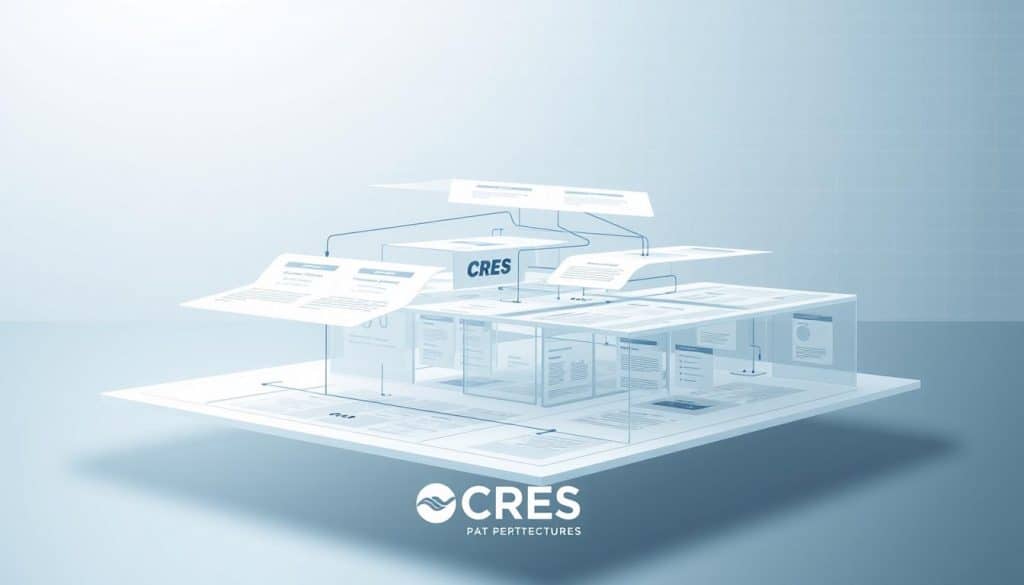
By organizing content in a logical and accessible manner, you improve not only the crawlability and indexability of your site but also the overall user experience. This, in turn, can lead to improved engagement metrics, such as lower bounce rates and longer time on site, which indirectly influence your search engine rankings.
Types of Website Structures for Different Business Needs
Website structure plays a pivotal role in determining how users navigate and interact with your online platform. Different businesses have unique requirements, and selecting the appropriate website structure is crucial for organizing content effectively and enhancing user experience.
Linear Structure: When and How to Use It
A linear structure connects pages in a sequential manner, guiding users through a predetermined path. This structure is ideal for small websites, tutorial sites, or businesses with a clear conversion path. For instance, a user might navigate from the main page to the service page and then to the request/quote page.
Network Structure: Benefits and Limitations
The network or web-linked structure allows each page to be accessible from any other page. While this offers flexibility, it can be challenging for larger sites. It’s suitable for websites with a limited number of interconnected pages.
Hierarchical Structure: The Most Versatile Option
The hierarchical or tree-like structure is the most popular and versatile, applicable to websites of any size. It organizes content in a hierarchical arrangement, moving from general to specific categories. This structure is particularly beneficial for businesses with diverse product offerings or content categories.
Database Structure: Dynamic Content Organization
A database website structure, also known as a dynamic structure, organizes and manages content through a database. This is perfect for large e-commerce sites, membership platforms, or content-heavy portals, as it dynamically adjusts content based on user preferences or behaviors.
| Structure Type | Ideal Use Case | Key Benefits | Potential Drawbacks |
|---|---|---|---|
| Linear | Small websites, tutorial sites | Guided user experience | Limited flexibility |
| Network | Websites with limited interconnected pages | High flexibility | Navigation challenges for larger sites |
| Hierarchical | Websites of any size with diverse content | Versatile, clear categorization | Requires careful planning |
| Database | Large e-commerce, membership platforms | Dynamic content organization | Complex implementation |
By understanding these different types of website structures, you can make an informed decision about which one best suits your Qatar business needs, balancing SEO performance with exceptional user experience.
SEO Site Structure Analysis: Key Elements to Evaluate
A comprehensive SEO site structure analysis can significantly boost your website’s performance and user experience. To achieve this, we need to evaluate several critical elements that determine how effectively your site communicates with both users and search engines.
Homepage Organization and Link Distribution
Your homepage is the pinnacle of your website’s structure, acting as a navigation hub for visitors. It’s essential to link to your most important pages from the homepage to guide visitors to the content you want them to engage with. However, be cautious not to clutter your homepage with too many links, as this can confuse visitors and dilute the importance of key pages.
Navigation and Menu Structure
The website menu is a crucial aid for navigation, helping visitors understand your site’s structure and find the information they need. A well-organized menu should be intuitive, making it easy for users to navigate your site while also signaling content importance to search engines.
URL Structure and Hierarchy
A logical URL structure is vital for both users and search engines, as it provides clear contextual signals about content relationships. Your URL hierarchy should reflect your site’s organization, making it easier for search engines to crawl and index your content.
Internal Linking Patterns
Internal linking is a powerful tool for distributing link equity, facilitating content discovery, and signaling topical relevance. By analyzing your internal linking patterns, you can identify opportunities to improve your site’s structure and enhance your SEO performance.
| Element | Importance | Best Practice |
|---|---|---|
| Homepage Organization | High | Link to key pages, avoid clutter |
| Navigation and Menu | High | Intuitive, clear, and concise |
| URL Structure | High | Logical, descriptive, and hierarchical |
| Internal Linking | High | Strategic, relevant, and contextual |

By evaluating these key elements and implementing best practices, you can significantly improve your website’s SEO performance, enhance user experience, and drive more traffic to your site.
Creating an Effective Site Structure for Qatar Businesses
In Qatar’s rapidly evolving digital landscape, a strategic site structure is vital for business visibility. As we explore the unique considerations for creating an effective site structure specifically tailored to Qatar’s diverse market, we’ll balance international best practices with local expectations.
Understanding Local User Behavior and Expectations
To create a user-friendly site structure, it’s essential to research and understand local user behavior patterns in Qatar. This includes analyzing device preferences, browsing habits, and cultural expectations that should influence your site’s structural decisions. By understanding these factors, you can design a site that meets the needs of your target audience.
Adapting Structure for Qatar's Multilingual Market
Qatar’s multilingual market requires a thoughtful approach to site structure. To accommodate this, consider implementing hreflang attributes, language-specific navigation, and content organization that respects language preferences. For a multilingual site, adding a language indicator to each URL is crucial. This approach ensures that your site is accessible to a broader audience and improves the overall user experience.
Optimizing for Qatar-Specific Search Trends
To enhance your site’s visibility in Qatar, it’s crucial to optimize your site structure for local search trends. This involves ensuring that your most valuable content aligns with local search behaviors and seasonal patterns unique to the Qatari market. By doing so, you can improve your site’s ranking and drive more targeted traffic to your site. For a comprehensive analysis of your site’s SEO, consider using tools like website SEO report to identify areas for improvement.
By understanding these key factors and adapting your site structure accordingly, you can create a robust online presence that resonates with Qatar’s business landscape and supports your overall optimization strategy.
Step-by-Step Guide to Building a Solid Site Structure
For Qatar businesses, a well-planned site structure is vital for improving user experience and search engine rankings. A solid site structure not only enhances the visibility of your website but also makes it easier for users to navigate and find the information they need.
Analyzing Competitor Website Structures
Start by examining the websites of your competitors. Identify who they are and analyze how they’ve built their websites, including the organization of information, the number of sections, and how they are interconnected. This analysis will help you identify industry standards, successful patterns, and opportunities for differentiation that can give your Qatar business a competitive edge.
| Competitor | Website Structure | Key Features |
|---|---|---|
| Competitor A | Hierarchical | Clear categorization, easy navigation |
| Competitor B | Linear | Simple, straightforward content presentation |
| Competitor C | Network | Interconnected pages, complex structure |
Keyword Research and Categorization
Having analyzed your competitors, it’s time to conduct further keyword research and collect a full keyword list for your website. Use tools like Google Keyword Planner or Ahrefs to identify relevant keywords. Once you’ve collected and filtered the relevant keywords, organize them into logical groups that form the basis of your site’s information architecture.
“Keyword research is the foundation of a successful SEO strategy. It helps you understand what your target audience is searching for and how to structure your content to meet their needs.”
Planning Your Site's Hierarchy
Begin by noting down all major sections and visualize the structure, moving on to subsections and specific pages. Use visualization tools like Mindmup and XMind to get a clear picture of the hierarchy, identifying pages that represent general categories and which ones are more specific, and determine how they should be interconnected.
Implementing a Clear URL Structure
Once you have planned your site’s hierarchy, implement a clear URL structure that reflects your site’s hierarchy, incorporates relevant keywords, and creates a logical path for both users and search engines to follow. A well-structured URL helps in improving the crawlability and indexability of your website.
By following these steps, you can create a solid site structure that enhances both user experience and SEO performance for your Qatar business website.
Optimizing Navigation for Better User Experience
User experience is significantly influenced by the navigation design on your website, making optimization critical. A well-designed navigation system not only enhances user satisfaction but also improves your site’s SEO performance. In Qatar’s competitive digital landscape, a user-friendly navigation structure can be a key differentiator.
Creating Intuitive Menus and Navigation Paths
To create intuitive menus, we need to understand user behavior and expectations. Clear categorization and logical grouping of content are essential. We should use descriptive labels for menu items and limit the number of top-level categories to avoid overwhelming users. By doing so, we can guide visitors efficiently toward conversion points on our site.
Implementing Breadcrumbs Effectively
Breadcrumbs are a valuable navigation aid that helps users understand their location within a website’s hierarchy. By implementing breadcrumbs, we can improve user experience and provide search engines with valuable structural signals. It’s recommended to use breadcrumb plugins or SEO tools like Yoast SEO to simplify the implementation process.
| Benefits of Breadcrumbs | Description |
|---|---|
| Improved User Experience | Helps users navigate and understand their location on the site |
| Enhanced SEO | Provides search engines with structural signals about the site’s hierarchy |
| Reduced Bounce Rates | Encourages users to explore more pages on the site |
Mobile Navigation Considerations for Qatar Users
With high mobile usage rates in Qatar, it’s crucial to optimize navigation for mobile devices. We should implement touch-friendly design and simplify menu structures to accommodate smaller screens. By doing so, we can ensure a seamless user experience across all devices commonly used in the Qatar market.
Internal Linking Strategies to Strengthen Site Structure
Internal linking strategies are essential for strengthening your site’s structure, enhancing user navigation, and improving search engine rankings. A well-planned internal linking approach helps distribute link equity across your site, ensuring that your most important pages receive the attention they deserve.
Contextual Internal Linking Best Practices
Contextual internal linking involves creating links within the body of your content that point to other relevant pages on your site. This not only helps users find related information but also assists search engines in understanding the context and relevance of the linked pages. To implement contextual linking effectively, ensure that the anchor text is descriptive and relevant to the content it’s linking to.
Using Cornerstone Content Approach
The cornerstone content approach involves creating comprehensive, authoritative content that serves as the foundation for your site’s topical clusters. These cornerstone pages should be linked to frequently from other relevant pages, signaling their importance to both users and search engines. By doing so, you create a clear hierarchy of content that helps search engines understand your site’s structure.
Avoiding Common Internal Linking Mistakes
Common internal linking mistakes can dilute link equity, confuse users, or create structural issues that harm both user experience and search visibility. To avoid these mistakes, ensure that your links are not broken, that you’re not over-linking to a single page, and that your anchor text is varied and descriptive. Regular audits can help identify and rectify these issues.
| Internal Linking Strategy | Description | Benefits |
|---|---|---|
| Contextual Linking | Links within content to other relevant pages | Enhances user experience, improves search engine understanding |
| Cornerstone Content | Authoritative content as the foundation for topical clusters | Creates clear content hierarchy, boosts important pages |
| Avoiding Linking Mistakes | Regular audits to fix broken links, over-linking, and poor anchor text | Maintains link equity, improves user experience and search visibility |
Content Organization and Taxonomy
A well-structured content taxonomy is the backbone of a successful website, enhancing both user navigation and search engine understanding. Effective content organization is crucial for businesses in Qatar to improve their online visibility and user engagement.
Creating Effective Categories and Tags
To organize your content into intuitive groups, you need to create effective categories and tags. Categories are broad topics that group related content together, while tags provide more specific labels for individual pieces of content. For instance, a clothing store website might use categories like “Men’s Clothing” and “Women’s Clothing,” and tags like “summer sale” or “new arrivals.” By using categories and tags effectively, you can help users find related information and signal content relationships to search engines. For more information on optimizing your website, check out our guide on optimizing your website title.
Content Silos for Topic Relevance
Content silos are a powerful way to group related content around central topics, creating strong topical relevance signals that can significantly improve your rankings for competitive keywords. By organizing your content into silos, you can demonstrate to search engines that your website is an authority on a particular topic. For example, a business in Qatar might create silos around topics like “Qatar market trends” and “industry insights.” This approach helps to establish your brand as a thought leader in your industry.
Balancing Depth and Breadth in Content Structure
When organizing your content, it’s essential to strike a balance between depth and breadth. You want to provide comprehensive coverage of your topics without overwhelming users with too much information. A well-structured content organization strategy can help you achieve this balance, ensuring that your website is both informative and easy to navigate. By using a combination of categories, tags, and silos, you can create a content structure that supports both your SEO goals and user experience objectives.
Technical Aspects of Site Structure Implementation
A well-planned site structure is the backbone of a successful SEO strategy, ensuring that search engines can efficiently crawl and index your content. Effective technical implementation is crucial for maximizing your site’s visibility and credibility.
Sitemaps: XML and HTML
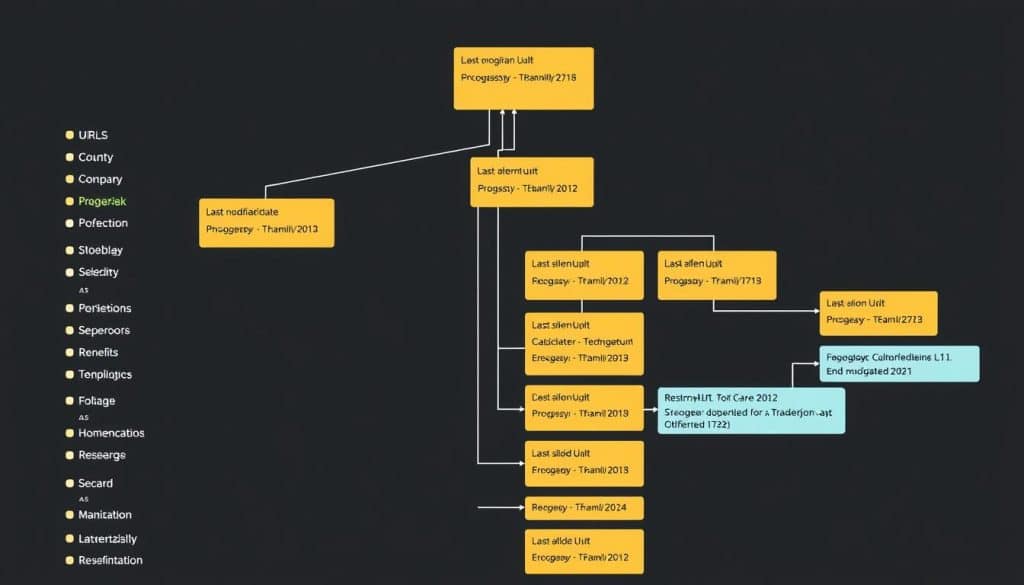
Creating and maintaining both XML and HTML sitemaps is essential for helping search engines discover and prioritize your most important content. An XML sitemap is particularly useful for search engines like Google, as it lists the URLs for your site, making it easier for their crawlers to discover new content.
Handling Pagination and Filtering
Category pages, product listings, and blog archives often use pagination and filtering, which can lead to duplicate content issues if not handled properly. To avoid this, implement rel=”next” and rel=”prev” tags or use a canonical URL to specify the preferred version of a page.
Managing Duplicate Content Issues
Duplicate content can occur when the same content is accessible through different URLs. To manage this, specify a canonical URL for each piece of content. This tells search engines which version to index and display in search results. Regularly review your site’s structure to prevent content duplication from the start.
By focusing on these technical aspects of site structure implementation, you can improve your site’s crawlability, indexability, and overall search engine visibility. This, in turn, enhances your Qatar business’s online presence and credibility.
Measuring and Improving Your Site Structure
As your Qatar business evolves, so should your website’s structure to maintain optimal performance and visibility. Regularly measuring and improving your site structure is crucial for enhancing both user experience and search engine rankings.
Key Metrics to Track Structure Effectiveness
To evaluate your site structure’s effectiveness, focus on metrics that reflect user behavior and search engine interaction. Navigation patterns and user flow provide insights into how visitors navigate your site, while crawl statistics indicate how search engines perceive your site’s structure. Additionally, engagement metrics such as bounce rates and time on site can signal structural strengths or weaknesses.
Tools for Analyzing Site Structure
Utilizing the right tools is essential for analyzing your site structure. From basic crawlers that identify structural issues to advanced visualization software that maps out your site’s hierarchy, there are numerous options available. Some popular tools include website structure analysis software that can help identify areas for improvement and provide recommendations for restructuring.
When and How to Restructure Your Website
Knowing when to restructure your website is critical. If your business goals or website content have significantly changed, it may be time to reassess your site structure. Risk assessment and planning processes are vital to minimize disruption during restructuring. Implement changes based on data-driven insights to ensure improvements are effective and sustainable.
By regularly assessing your site structure and making data-informed improvements, you can enhance your Qatar business’s online presence and maintain a competitive edge.
Conclusion
To maximize online visibility, Qatar businesses must prioritize a logical and user-friendly website structure. A well-structured site vastly improves your chances of ranking in search engines. By implementing a strategic site structure, you can enhance your website’s overall performance and drive more traffic to your site.
We’ve explored how a strategic approach to site structure analysis and implementation can dramatically improve your Qatar business’s search visibility and user experience. The comprehensive strategies outlined provide a clear roadmap for creating, analyzing, and optimizing your website structure to better serve both search engines and your target audience in Qatar.
To take the next steps, we encourage you to begin implementing these site structure improvements methodically, measuring results as you go, and continuing to refine your approach based on performance data and changing market conditions in Qatar. For more information on different website structure types, you can refer to our detailed guide on website structure types for SEO.
FAQ
How often should I review and update my website’s structure?
We recommend reviewing your website’s structure every six months to ensure it remains aligned with your business goals and adapts to changes in user behavior and search trends.
What is the ideal depth for a website’s hierarchy?
The ideal depth for a website’s hierarchy is typically considered to be three to four levels, allowing users and search engines to navigate your content efficiently.
How does a well-structured website impact user experience?
A well-structured website improves user experience by providing clear navigation, reducing bounce rates, and increasing engagement, ultimately driving conversions and revenue growth.
Can a poor site structure negatively affect my search engine rankings?
Yes, a poor site structure can hinder search engines’ ability to crawl and index your content, negatively impacting your rankings and visibility.
What role do internal linking patterns play in site structure?
Internal linking patterns help distribute link equity, facilitate crawling, and guide users through your website, reinforcing your site’s hierarchy and content relevance.
How do I optimize my website’s navigation for a multilingual market like Qatar?
To optimize navigation for a multilingual market, consider implementing language-specific menus, using clear and concise labels, and ensuring that your website’s architecture accommodates multiple languages.
What are the benefits of using a hierarchical site structure?
A hierarchical site structure offers flexibility, scalability, and clarity, making it easier for users and search engines to understand your website’s organization and content.
How can I measure the effectiveness of my website’s structure?
To measure the effectiveness of your website’s structure, track key metrics such as user engagement, bounce rates, conversion rates, and search engine rankings, using tools like Google Analytics and Search Console.