

Creating a cohesive content strategy that drives business results can be challenging, especially when it comes to planning, organizing, and executing content efforts effectively. Without a clear plan, businesses often end up with inconsistent messaging and missed opportunities for optimization.
By implementing a structured content calendar, companies can transform their approach to content creation, making it more strategic and results-driven. This comprehensive guide will explore how an SEO content calendar can serve as the backbone of successful content marketing strategies, helping businesses achieve their goals. For more insights, you can refer to effective SEO content calendar creation.
Key Takeaways
- Understand the importance of aligning your content strategy with business objectives.
- Learn how a well-designed content calendar can streamline workflows and improve content consistency.
- Discover the key components of an effective SEO content calendar.
- Find out how to incorporate search optimization elements into your content planning.
- Gain insights into managing and tracking content performance.
Understanding the Power of SEO Content Calendars
A content calendar is more than just a scheduling tool; it’s a key to unlocking SEO potential. As we delve into the world of content management, understanding the role of an SEO content calendar becomes crucial.
What Is an SEO Content Calendar?
An SEO content calendar is a strategic planning tool that integrates traditional editorial scheduling with search engine optimization principles. This integration enables businesses to maximize their content’s visibility and performance. By incorporating keyword research, search intent mapping, and competitive analysis, an SEO content calendar differs significantly from a standard content calendar.
The fundamental components of an effective SEO content calendar include publication dates, content types, target keywords, and performance metrics.
Why Content Organization Matters for SEO
Proper content organization directly impacts SEO results by ensuring consistent publishing schedules, strategic keyword targeting, and content freshness signals that search engines value.
An organized content system helps maintain quality control throughout the content production process, which is essential for meeting Google’s E-E-A-T guidelines. By using an SEO content calendar, businesses can ensure that their content is not only well-planned but also executed with precision, thereby enhancing their overall SEO strategy.
Key Benefits of Using an SEO Content Calendar
By utilizing an SEO content calendar, businesses can streamline their content production workflow, ensuring that all content is well-planned, executed, and aligned with the overall marketing strategy. This approach not only enhances the efficiency of the content creation process but also improves the overall quality of the content produced.
Streamlining Your Content Production Process
An SEO content calendar dramatically streamlines your content production workflow by establishing clear timelines, responsibilities, and deliverables for each piece of content. This clarity helps in managing the content creation process more effectively, reducing bottlenecks and improving productivity.

Maintaining Consistency in Publishing
Consistent publishing schedules, made possible through proper calendar planning, signal reliability to both your audience and search engines, potentially improving your site’s authority and ranking potential. Regularly posting high-quality content keeps your audience engaged and coming back for more.
Aligning Content with Strategic Goals
A well-structured calendar helps align your content efforts with broader marketing strategy objectives, ensuring every piece serves a specific purpose in your customer journey. This alignment is crucial for maximizing the impact of your content and achieving your business goals.
Facilitating Team Collaboration
Team collaboration is significantly enhanced through the use of a content calendar, as it creates transparency around deadlines, responsibilities, and content status. This transparency is particularly valuable for organizations with multiple stakeholders involved in content creation, ensuring everyone is on the same page.
By implementing an SEO content calendar, businesses can save time and optimize their content production processes, leading to improved efficiency and effectiveness in their digital marketing efforts.
Essential Elements of an Effective SEO Content Calendar
To maximize your content’s impact, you need a well-structured SEO content calendar. An effective SEO content calendar is the backbone of any successful digital marketing strategy, enabling you to plan, organize, and optimize your content across various channels.
Let’s dive into the key components that make up an effective SEO content calendar. These elements are crucial for ensuring that your content resonates with your audience and performs well in search engine rankings.
Content Types and Formats
A diverse range of content types and formats
is essential for appealing to different segments of your audience throughout their buyer journey. This includesblog posts,social media content,videos, and more. By incorporating various content formats, you can cater to different preferences and increase engagement.
Publication Dates and Deadlines
Tracking publication dates and internal deadlines is vital for a smooth content creation process. This ensures that your team has sufficient time for content creation, optimization, and quality assurance before publishing. A well-planned calendar helps prevent last-minute rushes and reduces the likelihood of errors.
Keyword and Topic Planning
Incorporating keyword research and topic planning directly into your calendar helps prioritize content based on search volume, competition, and business relevance. This strategic approach ensures that your content is optimized for search engines and aligns with your business goals. For more insights on building a content calendar with SEO research, visit Momentic Marketing’s guide.
Assignment and Accountability Tracking
Clearly assigning responsibilities to team members for each piece of content is crucial for accountability and efficiency. Your SEO content calendar should track the status of each content piece, from initial research to final publication and promotion, ensuring that everyone is on the same page.
| Content Piece | Author | Status | Due Date |
|---|---|---|---|
| Blog Post on SEO Tips | John Doe | In Progress | 2023-04-15 |
| Social Media Campaign | Jane Smith | Planned | 2023-04-20 |
| Video on Content Marketing | Bob Johnson | Published | 2023-04-10 |
How to Create Your SEO Content Calendar
Developing an effective SEO content calendar involves several key steps that ensure content relevance and consistency. By following these steps, you can create a robust content strategy that aligns with your business objectives.
Step 1: Review Your Content Strategy
Begin by reviewing your existing content strategy to ensure it aligns with your business objectives and audience needs. This step is crucial in determining the type of content you should create and publish.
Step 2: Choose the Right Tool or Template
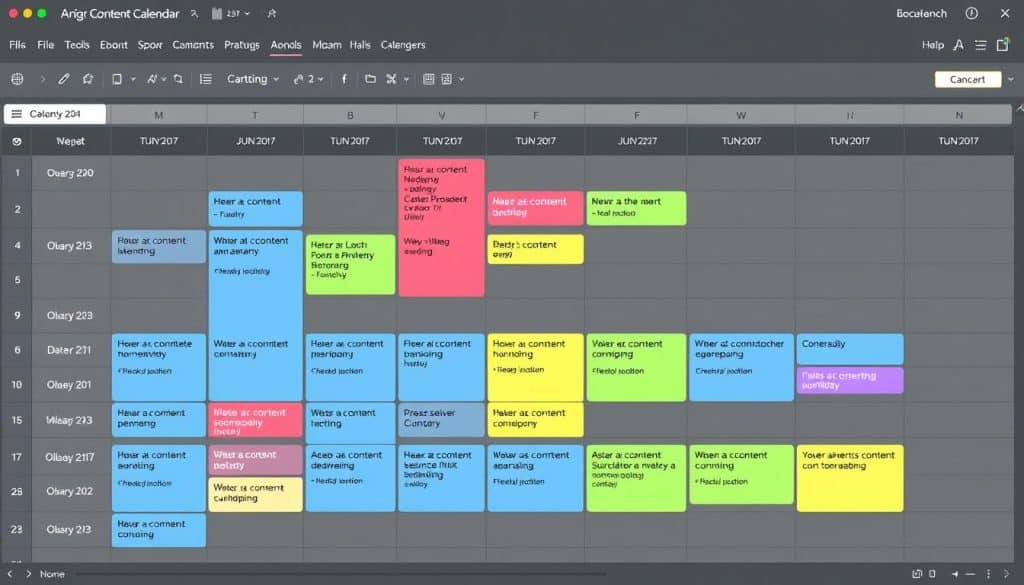
Selecting the right tool or template for your SEO content calendar is vital. You can choose from a variety of options, including basic spreadsheets or specialized content management software. The key is to select a tool that fits your team’s size, workflow complexity, and integration requirements.
Step 3: Set Up Your Calendar Structure
Setting up your calendar structure involves defining essential fields such as content type, target keywords, assigned team members, deadlines, and status tracking. This structure will help maintain visibility throughout your content pipeline.
Step 4: Establish Your Publishing Cadence
Establishing an optimal publishing cadence is critical to ensure consistency without sacrificing quality. Consider your resource capacity, audience expectations, and competitive landscape when determining your publishing schedule.
By following these steps, you can create an SEO content calendar that streamlines your content production process, maintains consistency in publishing, and aligns your content with strategic business goals. A well-planned content calendar is essential for maximizing the impact of your content marketing efforts.
Integrating SEO Best Practices into Your Content Calendar
Integrating SEO best practices into your content calendar is a game-changer for digital marketing success. By doing so, we can ensure that our content not only resonates with our target audience but also ranks well in search engine results pages (SERPs).
Before entering content ideas into our calendar, we must conduct thorough research to ensure that our content performs well in the SERPs. This involves comprehensive keyword research to identify relevant terms and phrases that our target audience uses.
Keyword Research and Implementation
To integrate keyword research directly into our content calendar workflow, we need to identify relevant keywords and phrases. This process involves analyzing search volume, competition, and relevance to our content. By doing so, we can optimize every piece of content for search visibility from the planning stage.
Content Freshness and Updates
Regular content audits and updates are crucial for maintaining freshness signals that search engines value. By scheduling these updates within our calendar, we can keep our existing content relevant and competitive. This process involves reviewing and revising content to ensure it remains valuable and informative.
Seasonal and Trending Topics
Planning for seasonal trends and timely topics months in advance allows our team adequate preparation time while ensuring content is published when search interest is peaking. This strategy enables us to capitalize on trending topics and increase our content’s visibility.
Performance Tracking and Optimization
Incorporating performance tracking metrics into our calendar creates a feedback loop that informs future content decisions based on actual search performance. By analyzing these metrics, we can refine our content strategy and improve our SEO efforts.
By integrating these SEO best practices into our content calendar, we can create a comprehensive content strategy that drives both immediate traffic and long-term search visibility.
Top Content Calendar Templates and Tools
With numerous content calendar templates and tools available, finding the perfect fit is key to optimizing your content strategy. The right tool can streamline your content planning, enhance collaboration among team members, and improve overall efficiency.
Spreadsheet-Based Templates
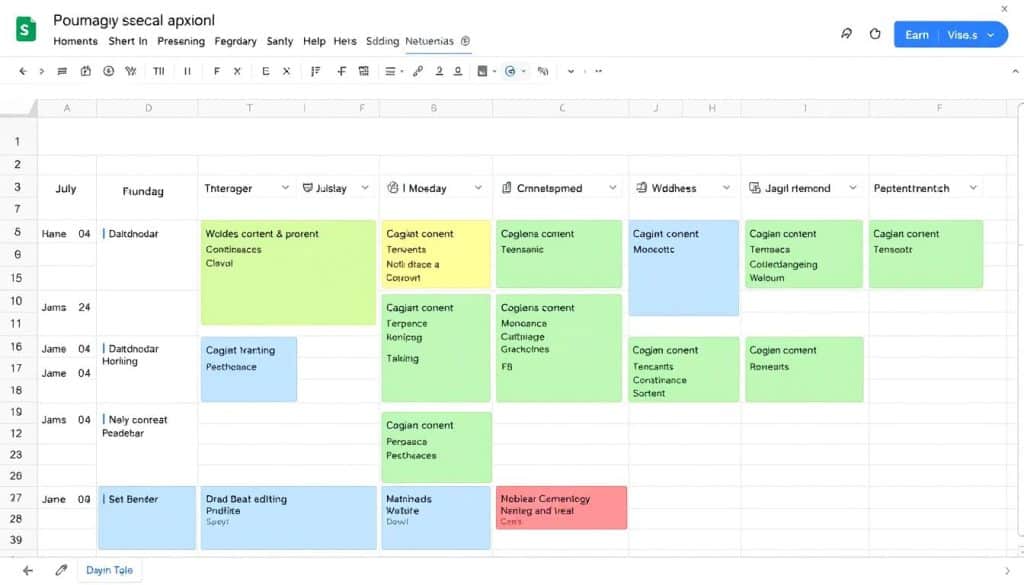
Spreadsheet-based templates, such as Google Sheets and Excel, offer flexibility and customization without significant investment. For instance, HubSpot’s free Social Media Content Calendar is a versatile option that can be adjusted to suit your brand’s needs. To get started, simply insert the month and year into the Monthly Planning Calendar tab, and manage updates across your social channels with precision.
Project Management Platforms
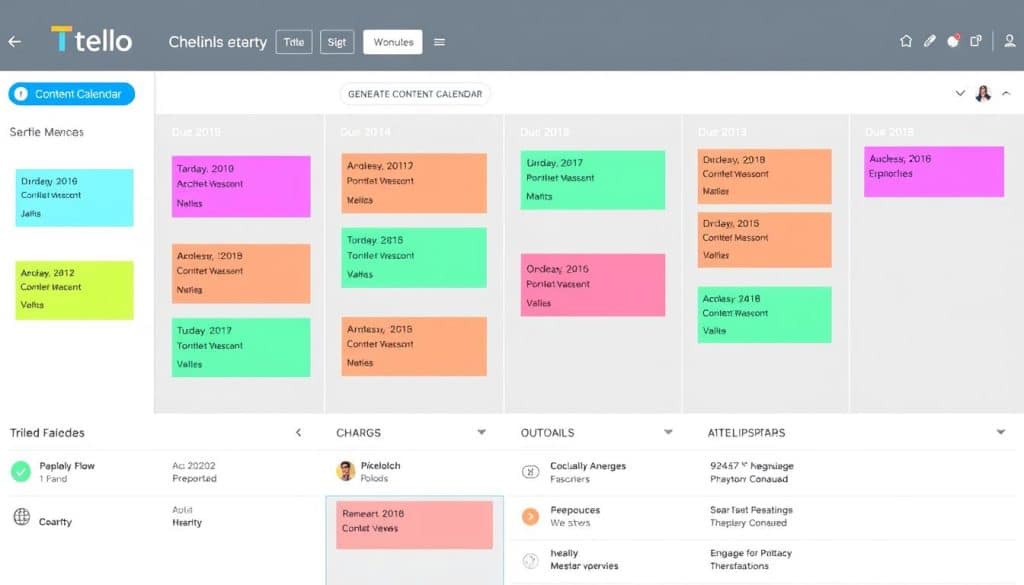
Project management platforms like Trello, Asana, and Monday.com can transform your content calendar into a visual workflow system. These tools offer drag-and-drop functionality, team collaboration features, and the ability to track progress. They are ideal for teams looking to manage complex content projects and workflows.
Specialized Content Calendar Software
Specialized content calendar software is designed specifically for marketing teams, offering unique features that streamline the content planning and production process. These tools often integrate with existing marketing stacks, including CMS platforms, social media schedulers, and analytics tools, to create a seamless content ecosystem.
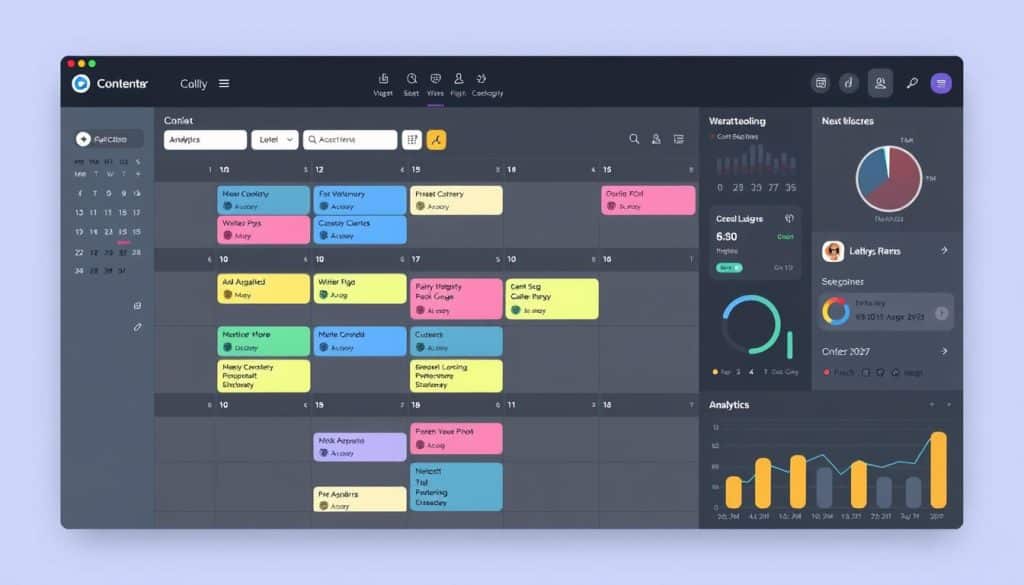
When selecting a content calendar template or tool, consider your team size, budget constraints, and specific workflow requirements. By choosing the right solution, you can enhance your content strategy, improve collaboration, and drive better results.
Real-World Examples of Successful SEO Content Calendars
The power of SEO content calendars is evident in their successful implementation across diverse business models. By examining real-world examples, we can gain insights into how different businesses adapt and benefit from using these calendars.
Small Business Approach
A small business with limited resources can greatly benefit from a streamlined content calendar. For instance, Hiba Amin at HyperContext uses a simple yet effective spreadsheet-based calendar that covers essential fields such as publication date, title, content type, funnel stage, and audience/persona. This approach allows her to maintain quality and consistency in her publishing schedule while maximizing efficiency.
Enterprise-Level Content Planning
At the enterprise level, content planning becomes more complex, involving multiple teams, content types, and channels. A sophisticated calendar system with clear workflows and approval processes is crucial. For example, a large enterprise might use a project management platform like Trello or Asana to coordinate their content efforts, ensuring that all teams are aligned and working towards common goals.
| Business Size | Content Calendar Approach | Key Benefits |
|---|---|---|
| Small Business | Simple spreadsheet-based calendar | Maximized efficiency, maintained quality and consistency |
| Enterprise | Sophisticated project management platform | Coordinated multiple teams, content types, and channels |
Conclusion: Maximizing the Impact of Your SEO Content Calendar
As we conclude our exploration of SEO content calendars, it’s clear that this strategic tool is essential for driving measurable results in content marketing. An effective SEO content calendar transforms random content creation into a systematic approach, coordinating efforts across teams and channels while maintaining focus on SEO objectives.
To get the most out of your content calendar, make sure to regularly review and adapt it to changing business priorities, search trends, and performance insights. This will enable you to continuously improve results and achieve your content marketing goals.
By implementing an SEO content calendar, you’ll be able to streamline your content production process, maintain consistency in publishing, and align your content with strategic goals. Start building your content strategy today and reap the benefits of improved search visibility, audience engagement, and marketing efficiency.
FAQ
What are the key elements to include in an effective content planning system?
An effective content planning system should include content types and formats, publication dates and deadlines, keyword and topic planning, and assignment and accountability tracking to ensure a streamlined production process.
How often should we update our content to maintain consistency in publishing?
To maintain consistency, we recommend establishing a publishing cadence that aligns with your marketing strategy and target audience needs, whether it’s weekly, biweekly, or monthly.
What tools can we use to create and manage our content planning system?
You can use spreadsheet-based templates like Google Sheets or Excel, project management platforms like Trello, Asana, or Monday.com, or specialized content calendar software to create and manage your content planning system.
How do we integrate SEO best practices into our content planning system?
To integrate SEO best practices, focus on keyword research and implementation, maintain content freshness and updates, incorporate seasonal and trending topics, and track performance metrics to optimize your strategy.
Can a content planning system help with team collaboration?
Yes, a well-structured content planning system facilitates team collaboration by providing a clear overview of tasks, deadlines, and responsibilities, ensuring everyone is aligned and working towards common goals.
How do we measure the success of our content planning system?
To measure success, track key performance metrics such as engagement rates, website traffic, and conversion rates, and adjust your strategy accordingly to maximize impact and drive revenue growth.